




Carved Wooden Magazine Stand
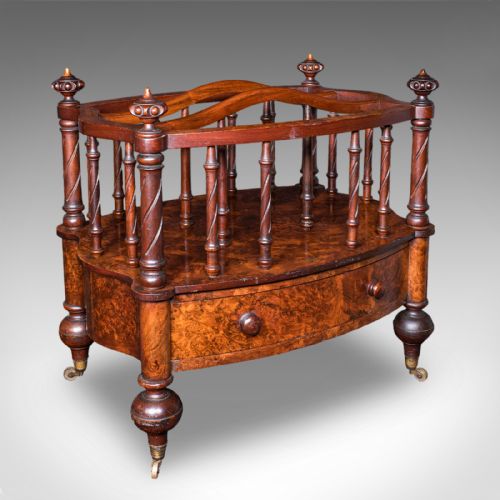
A carved wooden magazine stand organises periodicals with the warmth of burr walnut, mahogany, and rosewood.
Carved Wooden Magazine Stand
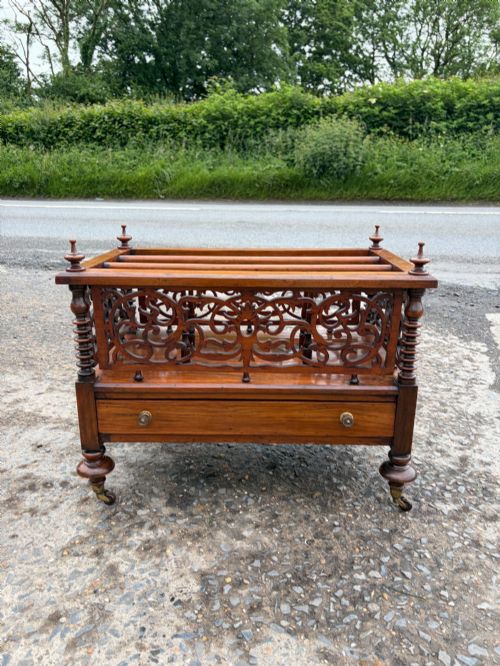
A carved wooden magazine stand encompasses traditional forms such as the nineteenth century Canterbury, the folding book rack, and the music stand. These pieces serve to hold newspapers, folios, and periodicals within sitting rooms and libraries.
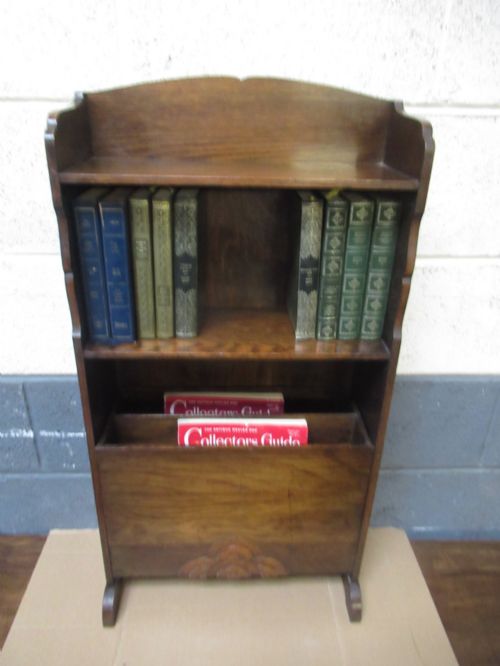
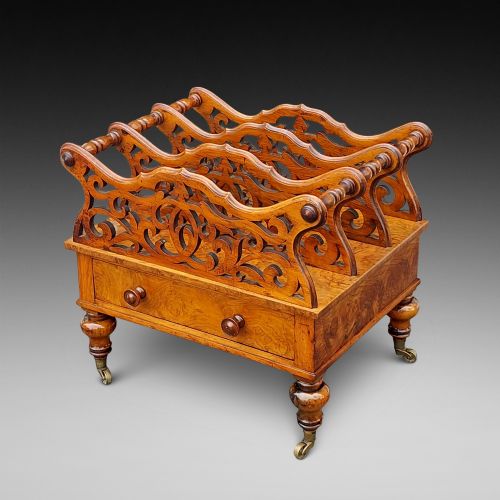
The version most commonly met on this page is the Victorian burr walnut or rosewood Canterbury, often featuring divided partitions above a single drawer and supported on castors. Makers during the Regency, William IV, and Edwardian periods also produced these items in mahogany, satinwood, and oak.
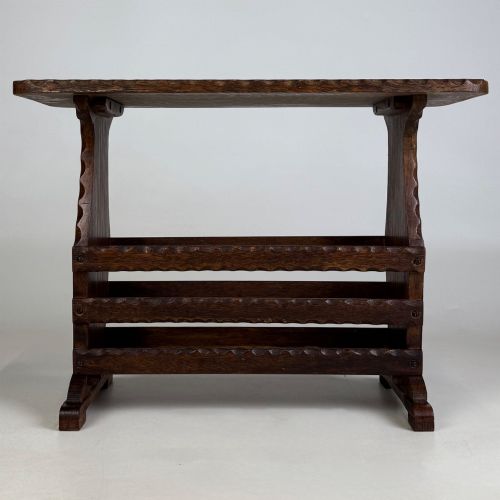
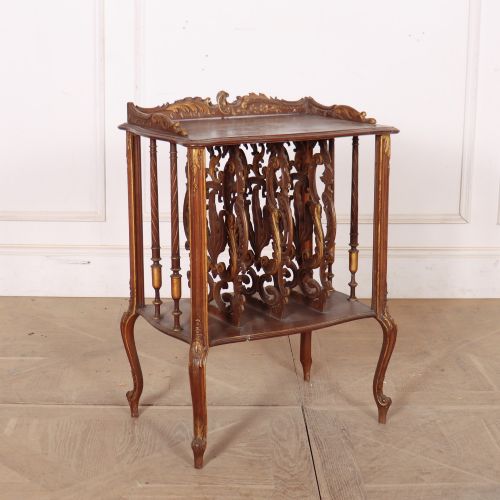
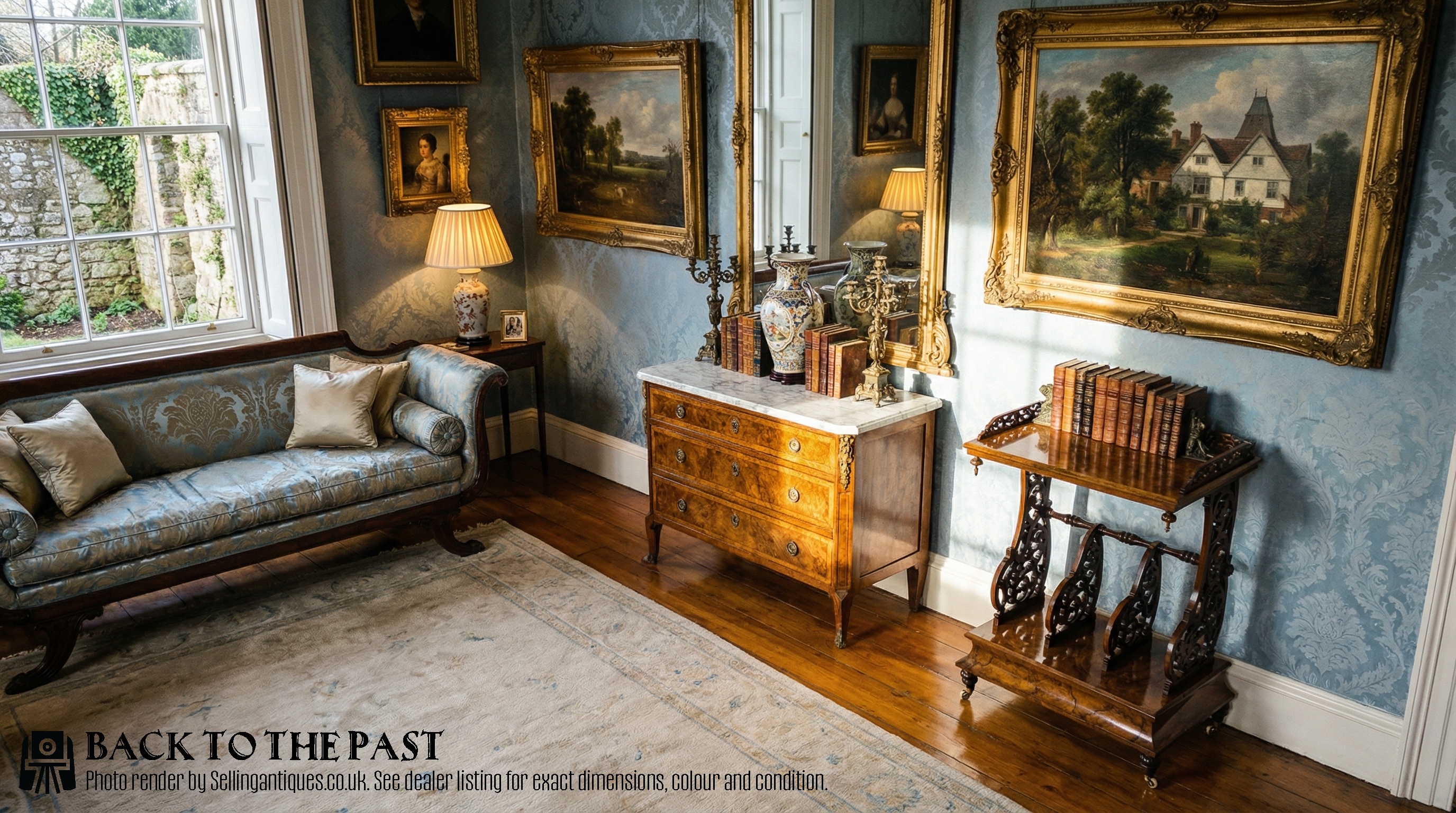
Makers often combined storage with occasional tables or whatnots, producing multifunctional furniture for nineteenth century domestic interiors. Pieces range from straightforward oak racks to intricate French Rococo Revival and Anglo-Indian designs.
Judging quality and execution
The distinction between standard production and exceptional work lies in the depth and crispness of the carving, the selection of highly figured burr timber, and the subtlety of pierced scrollwork. Superior examples exhibit harmonious proportions across the divided tiers and drawers.
The integration of secondary details, such as finely turned spindle legs, original castors, and precise mother of pearl inlay, elevates the standing of an individual piece within its period.
Carved Wooden Magazine Stand Retail Price Guide 2026
Typical asking prices for carved wooden magazine stand among the pieces listed under this phrase on Sellingantiques today, from the lower quarter to the upper quarter. They describe what is for sale here now, not the wider market.
Some nineteenth century stands folded flat when not in use, anticipating modern space-saving furniture by over a century.
Gillows of Lancaster·J C Loudon
The Carved Wooden Magazine Stand Glossary
- Canterbury
- A low, freestanding stand with partitioned sections designed to hold sheet music, newspapers, or periodicals. It frequently incorporates a small drawer beneath the divisions.
- Folio stand
- A piece of furniture designed for holding large books, prints, or portfolios, often featuring adjustable folding frames.
- Burr walnut
- Timber taken from a growth on the walnut tree, prized by cabinet makers for its swirling, highly figured grain patterns.
- Whatnot
- An open set of multi-tiered shelves used for displaying ornaments or holding books, sometimes combined with a Canterbury base.
- Pierced scroll
- woodwork cut through to create open, curving patterns along the divisions of a rack.
Carved Wooden Magazine Stand: Frequently Asked Questions
What is a Canterbury stand?
A Canterbury is a specific type of low stand featuring upright divisions designed to hold sheet music, newspapers, and periodicals near a seating area.
Originating in the late eighteenth century, these items evolved through the Regency and Victorian eras to serve multiple domestic storage needs.
How do I date a wooden magazine rack?
Dating relies on identifying timber choices, such as rosewood and burr walnut in the nineteenth century or plain oak in Edwardian pieces, alongside stylistic cues like Regency scrollwork or Arts and Crafts simplicity.
Construction methods and hardware, including the presence of drawers or original castors, also offer clues to the decade of manufacture.
Where were these stands used?
These stands sat beside reading chairs in libraries, drawing rooms, and country house sitting rooms to keep current publications close at hand.
Their open divisions allowed for easy access to daily newspapers and weekly periodicals before the advent of modern coffee tables.
Are music stands different from magazine racks?
Music stands were originally built to hold bound volumes of scores or folios for parlour musicians, whereas magazine racks developed primarily for unbound periodicals and newspapers.
Over time, makers adapted both forms, leading to overlapping designs that accommodated various reading materials.