
Walnut Marquetry Commode
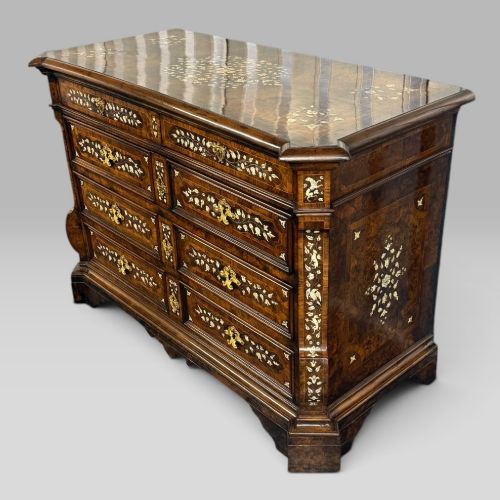
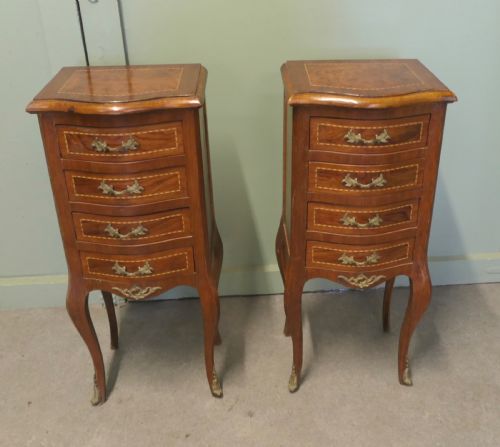
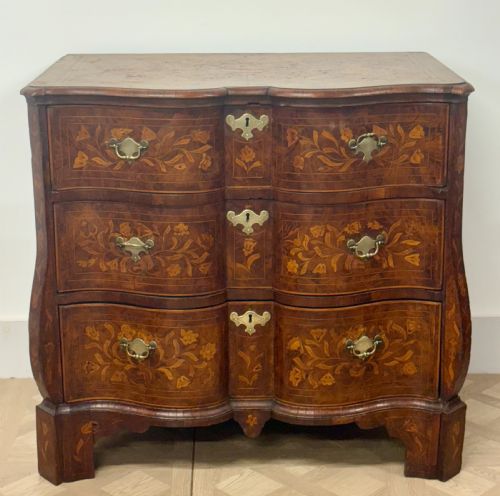
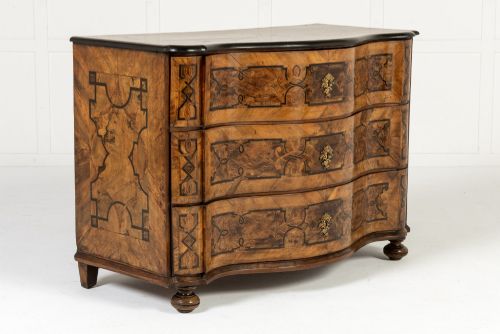
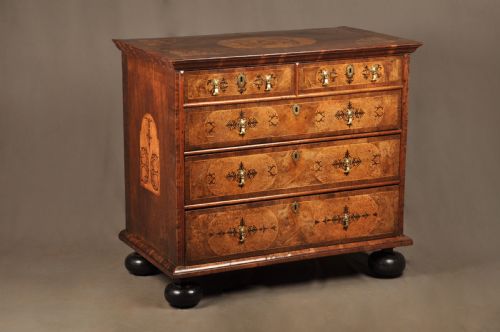
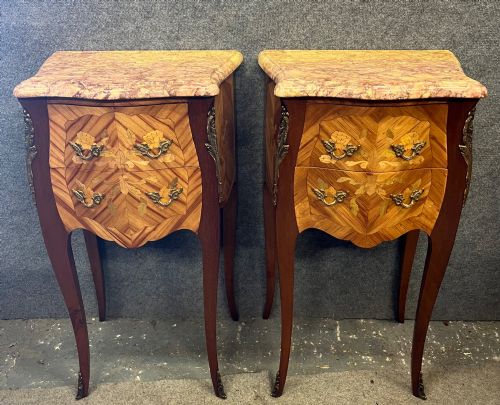
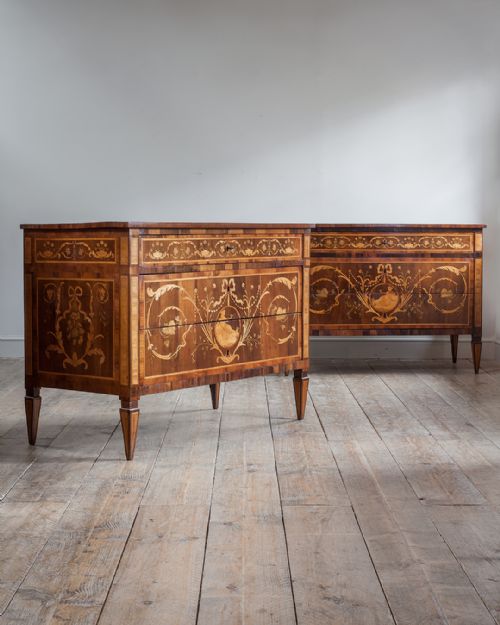
A walnut marquetry commode brings intricate floral and geometric wood inlay together with the functional form of a grand storage chest.
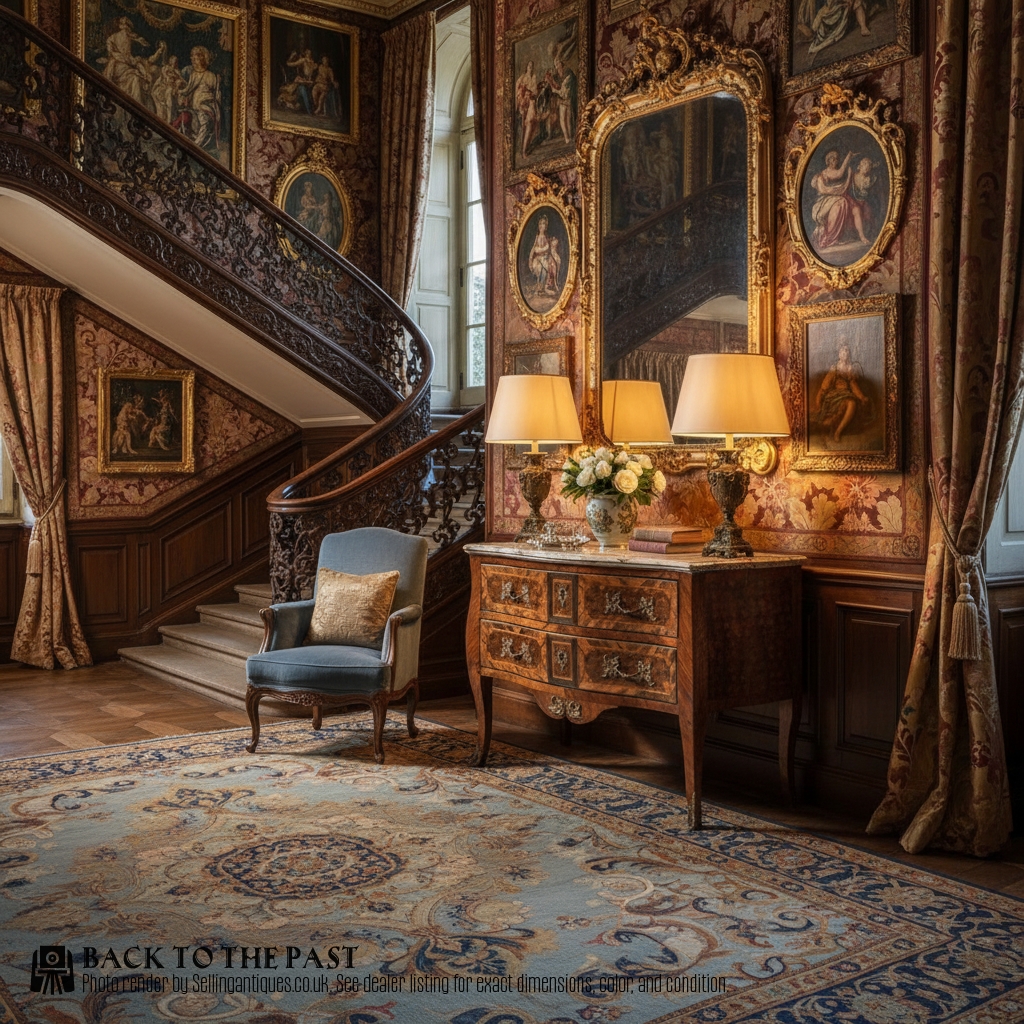
Walnut Marquetry Commode
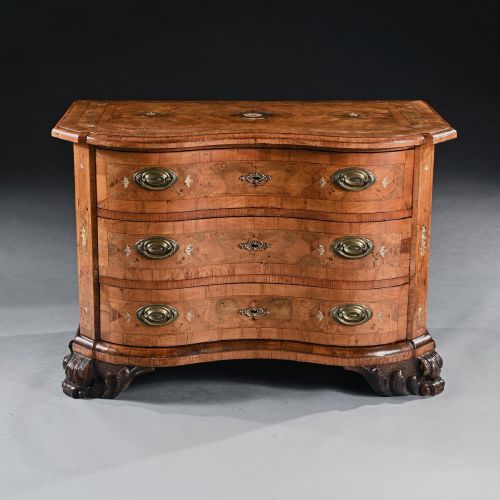
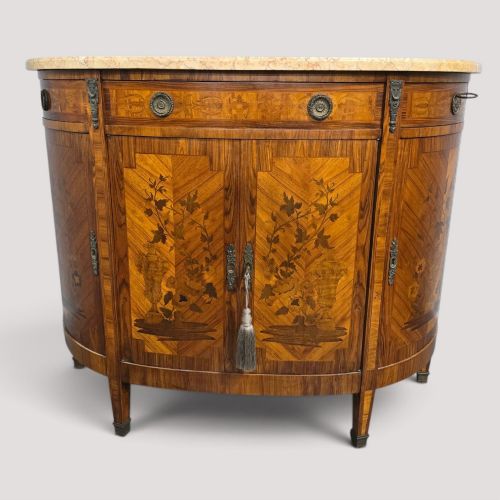
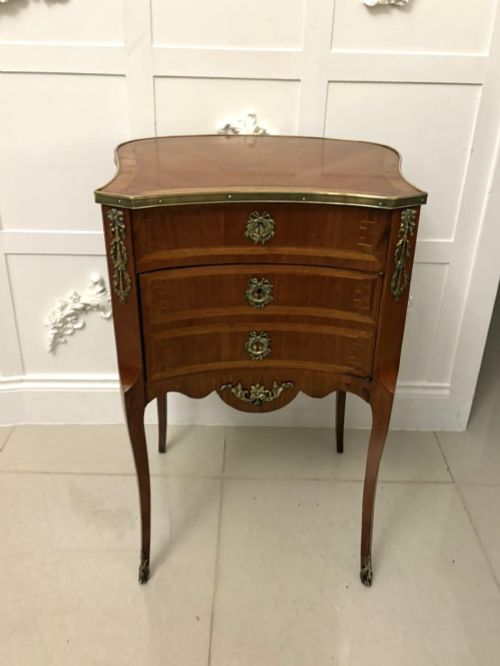
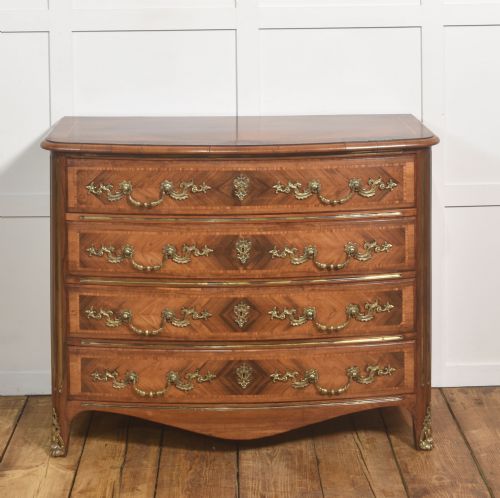
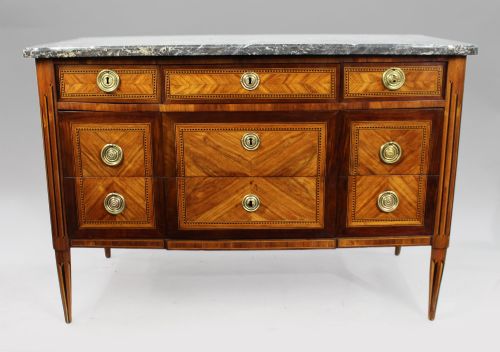
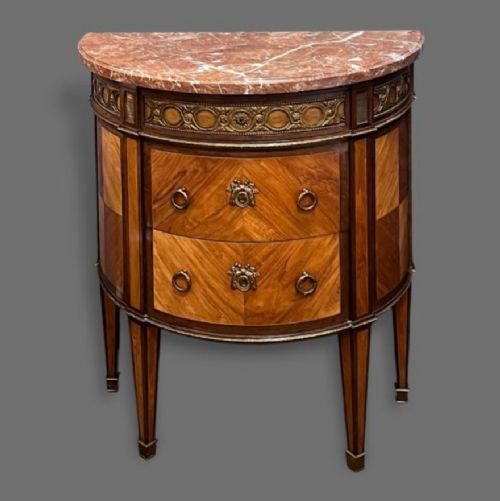
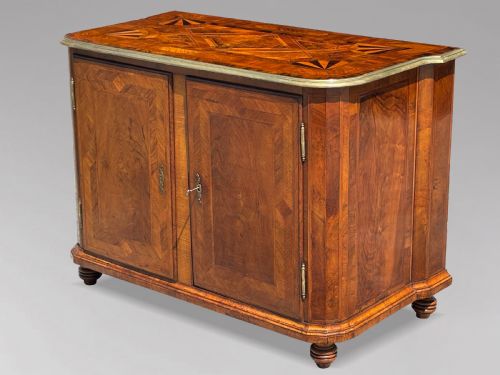
When you search for a walnut marquetry commode, you encounter low-standing timber storage chests decorated with contrasting veneer designs, frequently styled after French Louis XV, Louis XVI, or Italian Baroque periods. These statement pieces function as practical drawer storage while serving as decorative focal points in principal rooms.
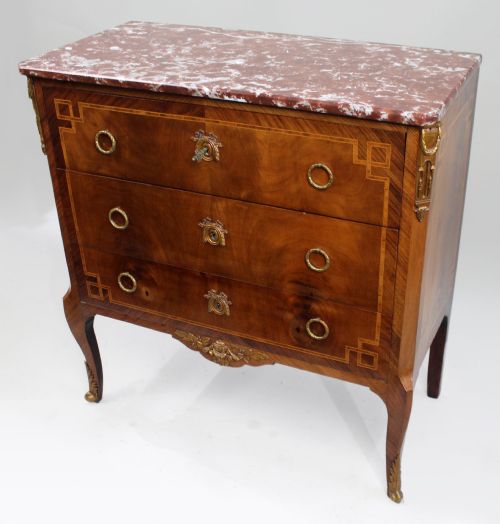
The pieces appearing on this page span from the seventeenth century through to revivals in the nineteenth and twentieth centuries, incorporating regional variations from Germany, Italy, France, Malta, and the Netherlands. The most common manifestations on this page are serpentine or bombe chests of drawers fitted with marble tops and elaborate floral or arabesque inlays.
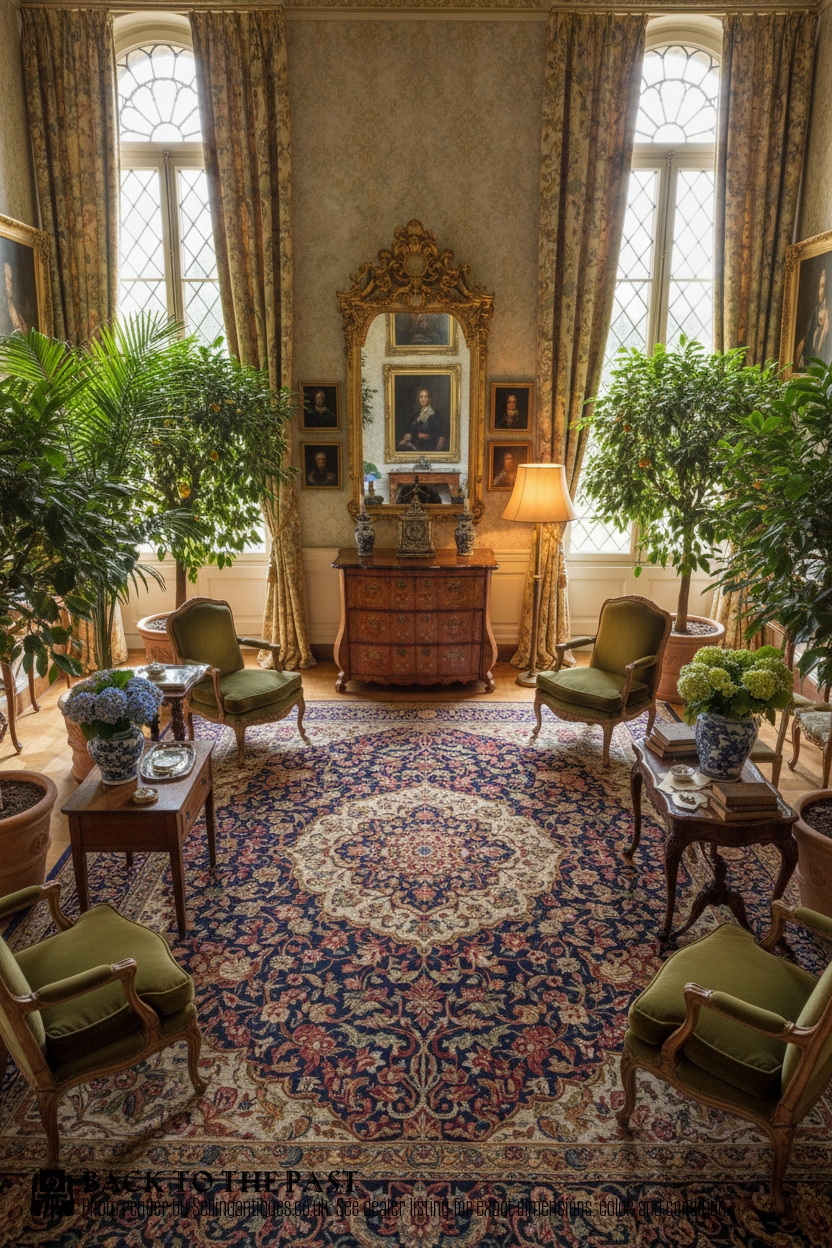
How they were made
Cabinetmakers constructed these pieces using a solid timber carcase - predominantly walnut alongside supportive secondary woods - then applied delicate sliced veneers of walnut, fruitwood, kingwood, and rosewood. Craftsmen cut intricate floral and geometric patterns into these thin wood sheets by hand, assembling the contrasting sections like a puzzle before gluing them to the surface.
Mounts cast in ormolu and gilt bronze frequently framed the corners, handles, and aprons, while heavy slabs of marble - such as rouge or white varieties - formed finished desk and tabletop surfaces. Pewter and ivory inlays added further tonal variation to the wooden scenes on seventeenth and eighteenth-century examples.
Walnut Marquetry Commode Retail Price Guide 2026
Typical asking prices for walnut marquetry commode among the pieces listed under this phrase on Sellingantiques today, from the lower quarter to the upper quarter. They describe what is for sale here now, not the wider market.
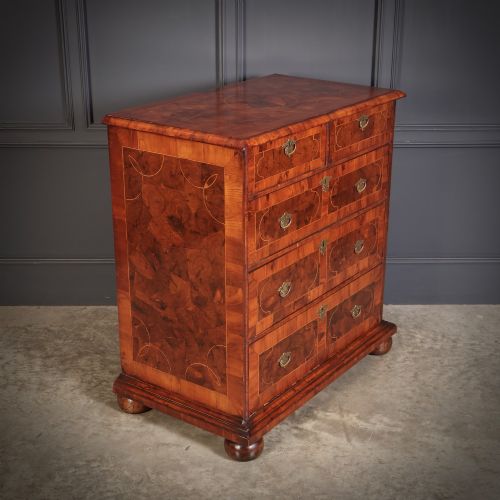
The listings on this page span styles from William & Mary and Louis XV to Neoclassical, incorporating woods like walnut, kingwood, fruitwood, and rosewood.
What varies in quality
The standard of a walnut marquetry commode rests upon the precision of the veneer cutting and the complexity of the pictorial design. Superior items display tight, seamless joins in the marquetry where contrasting woods meet without excessive filler, maintaining crisp botanical or geometric details across curved serpentine and bombe contours.
Construction methods and hardware integration also define the hierarchy of these chests. Top-tier pieces utilise substantial marble tops, finely chased ormolu mounts that fit the timber contours perfectly, and secondary woods appropriate to the claimed period of manufacture.
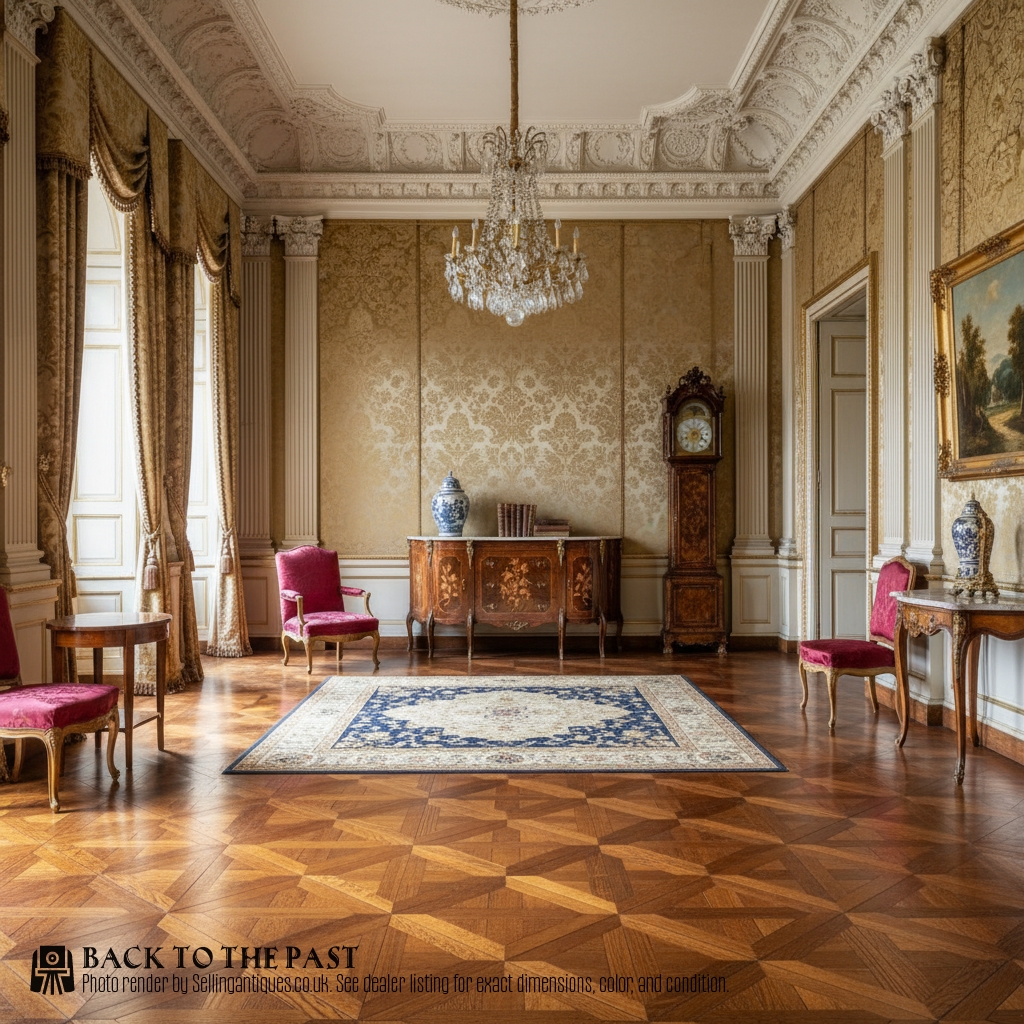
Grand Ducal Workshops
The Walnut Marquetry Commode Glossary
- Marquetry
- A technique where small pieces of veneer are arranged into pictorial or geometric patterns on a wooden carcase. This decorative surface art distinguishes standard wood furniture from high-status display pieces.
- Bombe
- A swelling, outward-curving chest profile characteristic of mid-eighteenth-century continental cabinetmaking. This voluptuous shape demands exceptional skill from the veneer cutter to follow the complex three-dimensional curves.
- Serpentine
- A front profile shaped with a central concave curve flanked by two convex sweeps, or vice versa. This undulating outline appears frequently on eighteenth-century commodes and side cabinets.
- Oyster Veneer
- Cross-sections sliced horizontally from small branches or roots to reveal concentric circular growth rings. This technique creates a speckled, patterned surface popular on seventeenth-century English and continental furniture.
- Ormolu
- Gilded brass or bronze mounts applied to furniture edges, feet, and drawer pulls for decorative accent. The quality of these metal fittings often indicates the workshop status of the commode.
Walnut Marquetry Commode: Frequently Asked Questions
How do I care for a marquetry surface?
Keep these historic wooden surfaces away from direct sunlight and extreme humidity shifts to prevent the delicate veneer from lifting or drying out. Dust regularly with a dry cloth and apply occasional specialist wax polish sparingly.
Avoid placing damp items or unsealed planters directly on the wood or marble tops. Protective pads under decorative objects help safeguard the historic polish and intricate inlay work.
Where should I place a commode at home?
These low storage chests suit entrance halls, living rooms, and principal bedrooms where their decorative tops and drawer space can be fully utilised. Pair them with a matching mirror or hang artwork above to anchor the piece visually within the room.
Ensure adequate clearance around curved serpentine or bombe fronts so the proportions of the furniture can be appreciated without obstruction from surrounding seating.
How do I distinguish eighteenth-century pieces from later revivals?
Examine the interior drawer construction, timber shrinkage patterns, and the underside of the carcase for signs of period hand-tool marks and natural ageing. Eighteenth-century examples typically feature pegged joinery and hand-cut dovetails that differ from nineteenth and twentieth-century production methods.
Review the specific style indicators, such as the crispness of the floral marquetry and the casting quality of any ormolu mounts, which often reflect the prevailing tastes of nineteenth-century revival periods.
What is the difference between marquetry and parquetry?
Marquetry involves arranging intricate pictorial designs, such as flowers, birds, and scrolls, using various contrasting wood veneers. This technique creates flowing, organic compositions across the front and sides of the cabinet.
Parquetry relies on geometric arrangements like cubes, chequers, or lozenges to form repeating patterns. Many continental commodes combine both techniques across the drawer fronts and top panels.