


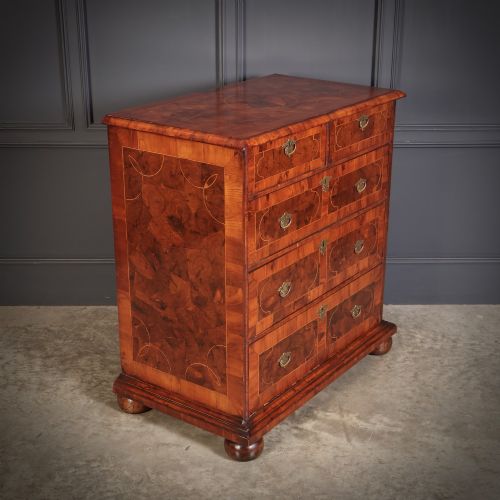
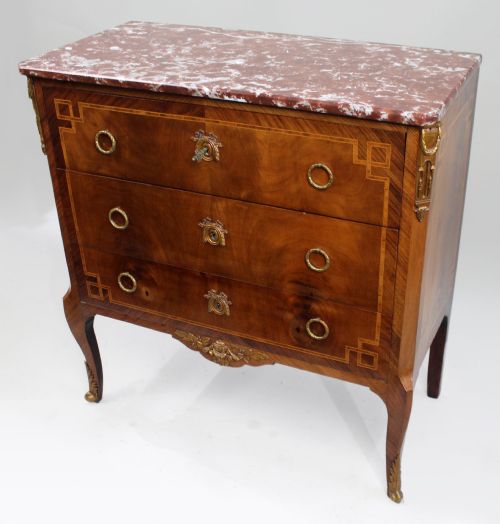
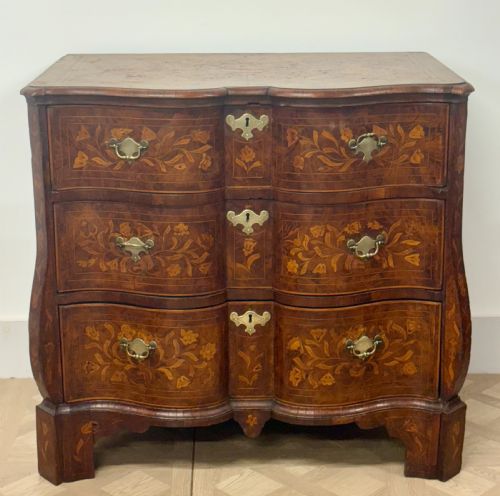
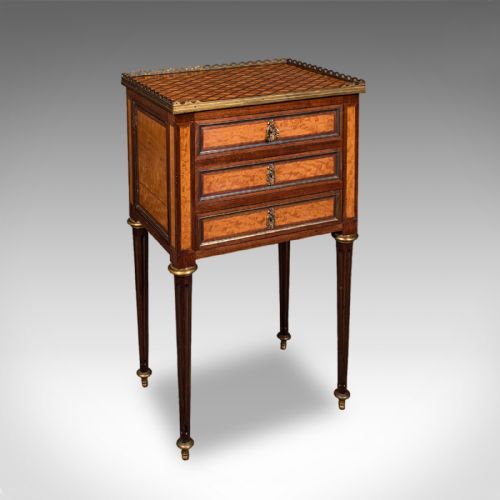
Walnut Marquetry Chest
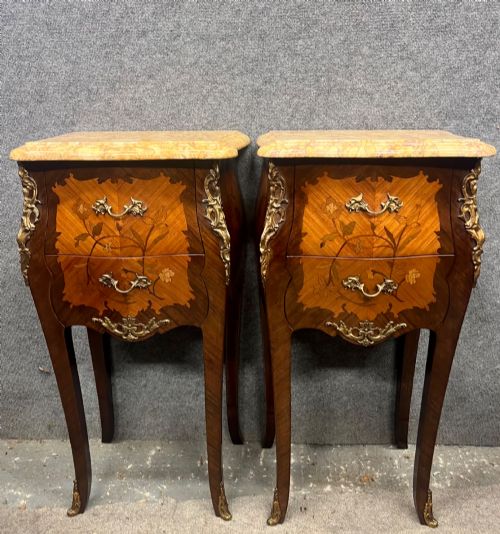
A walnut marquetry chest brings together rich timber and intricate inlaid flora or arabesques, offering timeless storage with serious visual presence.
Walnut Marquetry Chest
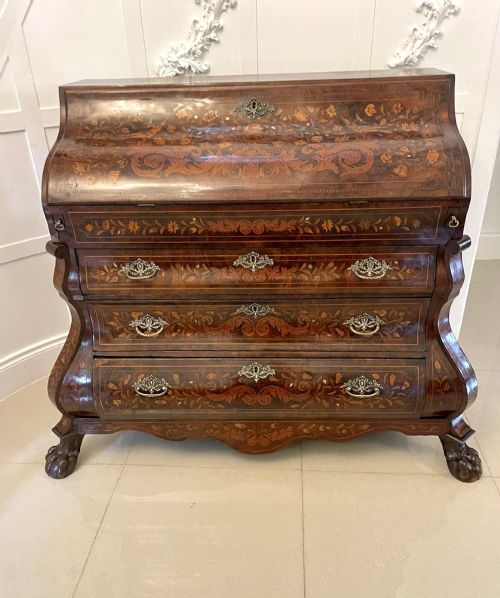
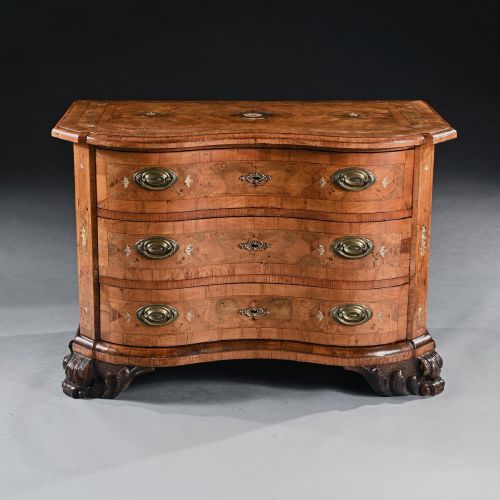
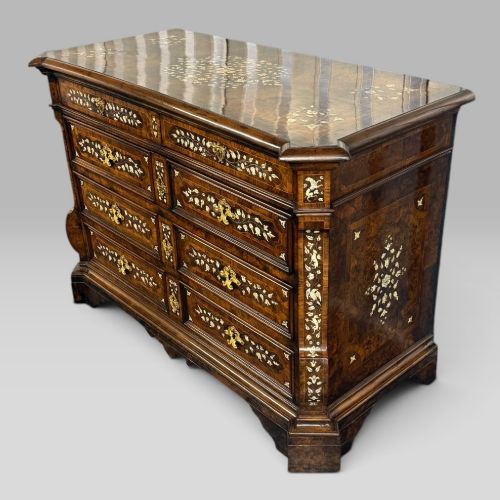
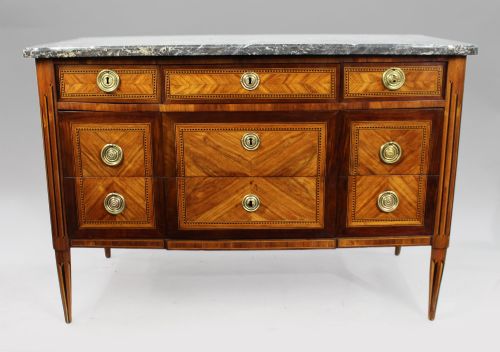
When searching for a walnut marquetry chest, one encounters a range of forms spanning centuries of cabinet making, from robust seventeenth-century constructions to elegant eighteenth-century Dutch bombe commodes and nineteenth-century revivals.
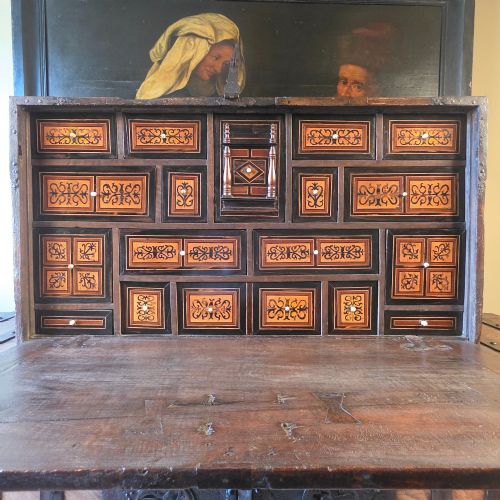
The selections on this page frequently include chests of drawers, display cabinets, and bureau bookcases that showcase elaborate pictorial or geometric wooden inlays set against dark walnut grains.
Continental workshops, particularly in Holland, Germany, and France, dominate the origins of these pieces, bringing distinct regional interpretations to the craft of marquetry furniture.
How they were made
Cabinet makers utilised walnut veneers, burr walnut, and fruitwoods cut into thin sheets to construct detailed pictorial scenes and floral motifs across the drawer fronts and surfaces.
Many seventeenth and eighteenth-century examples integrate contrasting materials such as pewter, ivory, and bone into the wooden inlays, adding metallic shimmer and tonal depth to the floral designs.
Structural carcasses often rely on solid secondary timbers to support the complex marquetry layouts, while later nineteenth-century pieces adopt similar veneering traditions within revival styles.
Walnut Marquetry Chest Retail Price Guide 2026
Typical asking prices for walnut marquetry chest among the pieces listed under this phrase on Sellingantiques today, from the lower quarter to the upper quarter. They describe what is for sale here now, not the wider market.
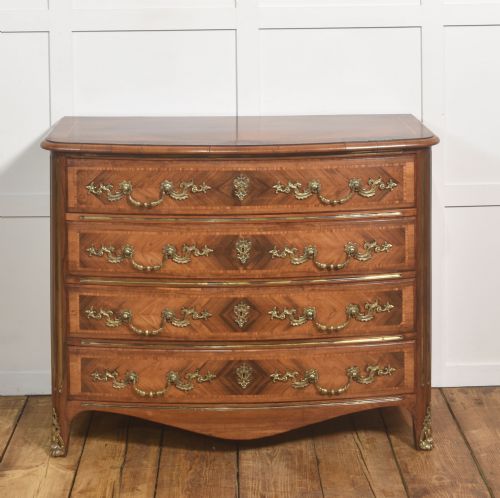
Regional forms on this site range from Dutch Baroque cabinet presses to French Louis XV style serpentine commodes.
What varies in quality
The sophistication and precision of the inlaid botanical or geometric patterns dictate the upper tiers of the range, where individual wood species create subtle shading without relying heavily on ink staining or surface paint.
Richer visual depth often emerges from the selection of highly figured burr walnut or oyster veneers for the background panels, contrasting sharply against plainer timbers used in lesser examples.
The architectural harmony of the carcase - whether a swelling bombe contour or a clean-lined William and Mary stand - underpins the overall execution and balance of the piece.
Edwards and Roberts·Henry Hollamby
The Walnut Marquetry Chest Glossary
- Marquetry
- A decorative technique where small pieces of wood veneer, and occasionally other materials like ivory or pewter, are arranged into pictorial or geometric patterns on a carcase.
- Bombe
- A swelling, outward-curving contour typical of eighteenth-century continental furniture shapes.
- Oyster veneering
- The practice of slicing small branches crosswise to produce circular or oval ring patterns resembling oysters, popular in the seventeenth century.
- Commode
- A low chest of drawers, often associated with French and continental cabinet making from the eighteenth century onwards.
- Escritoire
- A writing cabinet featuring a fall-front flap that conceals fitted drawers and pigeonholes inside.
Walnut Marquetry Chest: Frequently Asked Questions
How do I date a walnut marquetry chest?
Dating relies on examining the structural carcass, hardware, and the specific style of the marquetry inlay. Seventeenth-century pieces often feature seaweed or bold arabesque patterns, whereas eighteenth-century examples frequently display floral urns and undulating serpentine or bombe outlines.
Later nineteenth-century revivals borrow these earlier motifs but typically employ machine-sawn veneers and different internal construction methods. Comparing the secondary timbers and edge joints helps clarify the exact period of manufacture.
Where were most walnut marquetry chests made?
The majority of these chests originate from continental workshops, with Dutch, German, and French cabinet makers producing the most prolific examples. Dutch makers specialised in elaborate floral marquetry on bold bombe or cabinet-on-chest forms.
English makers also adopted the technique during the William and Mary and Georgian periods, though often with a quieter geometric restraint compared to their continental contemporaries.
What is the difference between marquetry and parquetry?
Marquetry involves cutting and assembling various wood veneers and decorative materials to form pictorial scenes, urns, flowers, or scrollwork. It requires high artistic precision to shade and fit organic shapes together.
Parquetry, by contrast, arranges geometric blocks of wood, such as cubes, diamonds, or triangles, into repeating abstract patterns. Both techniques often appear across the surfaces of eighteenth-century commodes and cabinets.
How should I care for a walnut marquetry surface?
Maintaining these surfaces requires protecting the delicate wood veneers from direct sunlight and sharp fluctuations in humidity, which can cause timber to dry and lift. Gentle dusting with a soft, dry cloth prevents particulate accumulation without introducing moisture.
Application of a traditional beeswax polish helps nourish the burr walnut and fruitwood inlays, preserving the rich contrast of the grain without forming a synthetic buildup.
Can I use a marquetry chest as a bedside table?
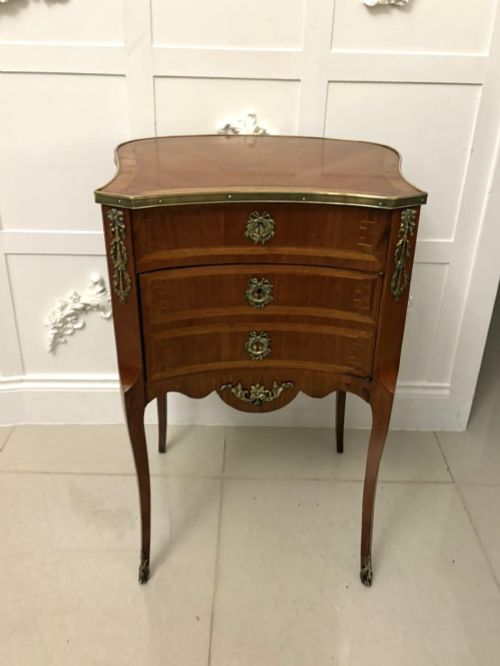
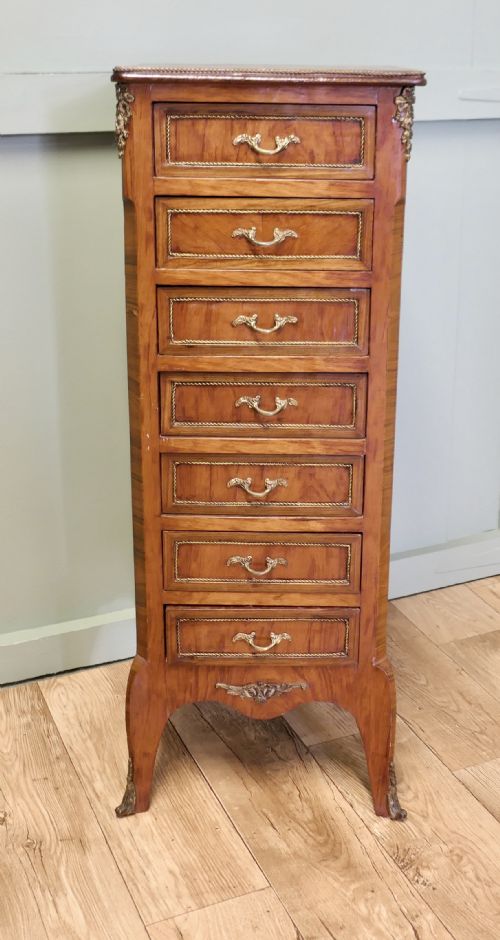
Smaller formats, such as bedside chests and lamp tables from the twentieth or Victorian revival periods, function well beside a bed. Their inlaid tops and compact drawer space provide practical placement for lamps and nighttime items.
Larger chests of drawers and commodes are generally unsuited for bedside use due to their height and deep footprints, making them better adapted for living rooms, hallways, or dining spaces.