







Walnut Marquetry Breakfast Table
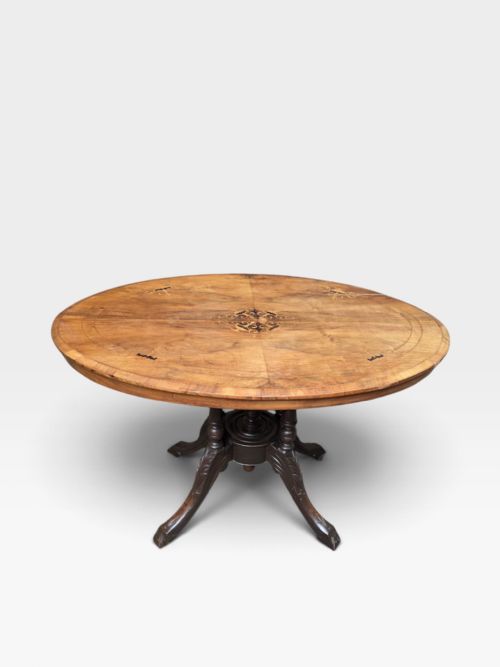
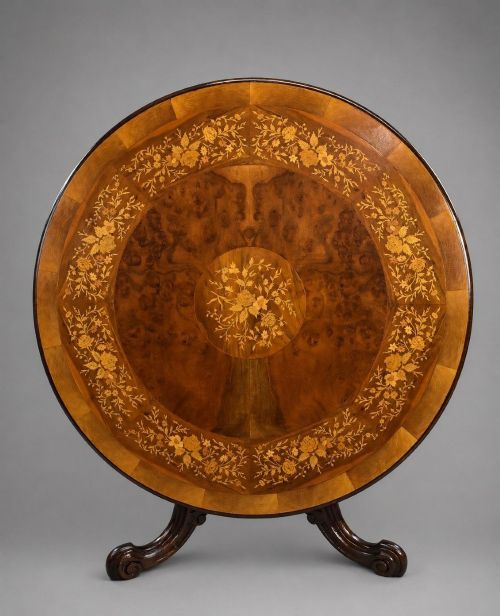
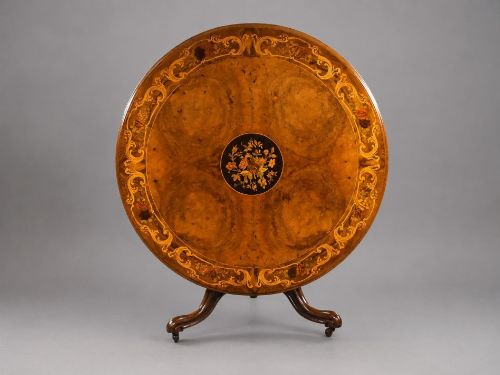
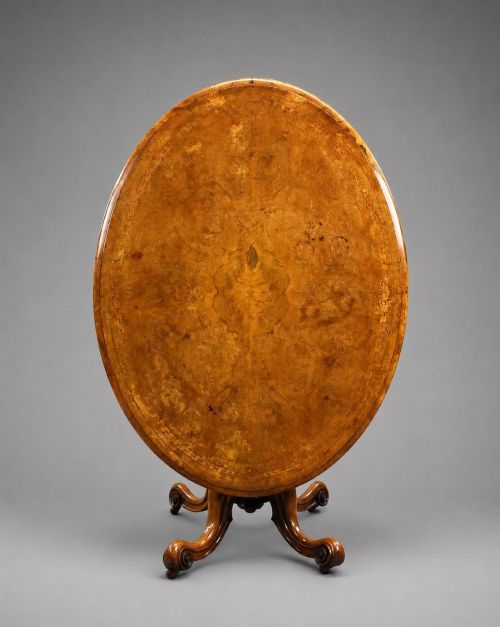
These walnut marquetry breakfast tables combine figured timbers with intricate decorative veneers to anchor a principal room.
Walnut Marquetry Breakfast Table
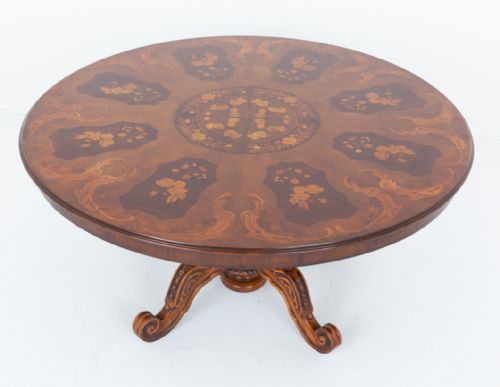
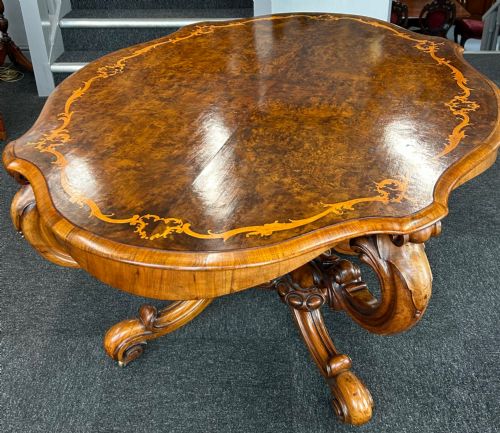
A walnut marquetry breakfast table is primarily a Victorian production, emerging in circular, oval, and loo table formats designed for morning dining or central drawing room placement. The pieces seen here span from the mid-nineteenth century through to Edwardian iterations, with Victorian examples dominating the selection.
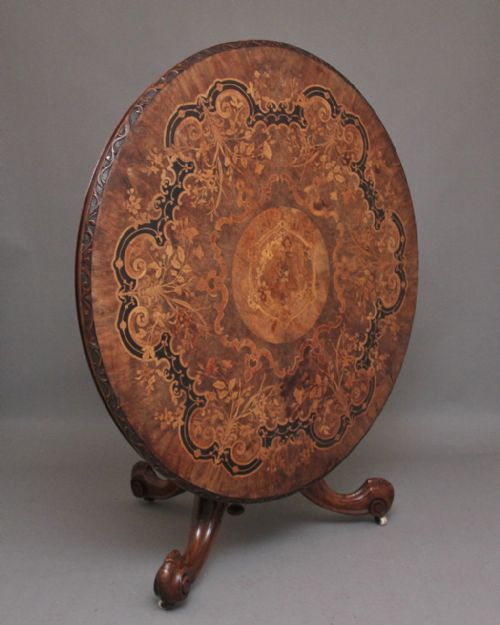
Most variations take the form of tilt-top or snap-top tables featuring pedestals, allowing the surfaces to be cleared and stored against a wall when not in use. Oval and circular formats appear frequently, alongside dedicated centre tables and dining variants built from rich timbers.
Makers and workshops constructed these objects to serve both domestic utility and formal display, utilising expansive tops to showcase elaborate wood inlays. Buyers meet round breakfast formats and oval loo tables most often, characterised by robust central pedestals and substantial timber dimensions.
Assessing quality
Quality rests upon the selection and matching of the burr walnut veneers, where symmetrical grain patterns and rich colour gradation indicate superior timber. The crispness and complexity of the fruitwood and boxwood marquetry further distinguish high-grade examples from simpler inlaid surfaces.
Structural integrity in the pedestal and the precision of the tilt-top mechanism dictate the longevity and daily usability of the table. Pieces showing exhibition-grade execution display seamless veneer work across both the central field and the outer borders.
Walnut Marquetry Breakfast Table Retail Price Guide 2026
Typical asking prices for walnut marquetry breakfast table among the pieces listed under this phrase on Sellingantiques today, from the lower quarter to the upper quarter. They describe what is for sale here now, not the wider market.
Listings feature walnut, burr walnut, fruitwood, and boxwood inlay across Victorian and Edwardian periods.
John Kendal
The Walnut Marquetry Breakfast Table Glossary
- Marquetry
- Decorative veneer work arranged in pictorial or geometric patterns using various coloured woods. This technique provides the intricate floral and scroll designs seen across the tabletops.
- Burr walnut
- Timber taken from the growth excrescences on walnut trees, yielding highly figured and swirling grain patterns. Cabinetmakers prized this material for its rich visual texture.
- Loo table
- A large round or oval Victorian table originally used for the card game loo. These pieces typically feature tilt-top mechanisms supported by central pedestals.
- Tilt-top
- A hinged tabletop mechanism allowing the surface to be rotated into a vertical position. This design enabled tables to be stored flat against walls when not in use.
- Centre table
- A freestanding table finished on all sides, designed to sit in the middle of a room rather than against a wall. They served ornamental and functional roles in Victorian interiors.
Walnut Marquetry Breakfast Table: Frequently Asked Questions
How do you use a tilt-top table?
The tilt-top mechanism allows the surface to rotate from horizontal to vertical using a secure pivot catch.
This function enabled historical owners to store the large tables against walls to free up floor space.
How do I identify a Victorian breakfast table?
Victorian examples display characteristic burr walnut timbers, central pedestals, and detailed boxwood or fruitwood inlay.
They frequently incorporate oval or circular formats designed for central room placement.
Where should I place a centre table?
Centre tables are finished on all sides and are intended to stand freely in the middle of a room.
They function well as display surfaces or gathering points in large living spaces.