


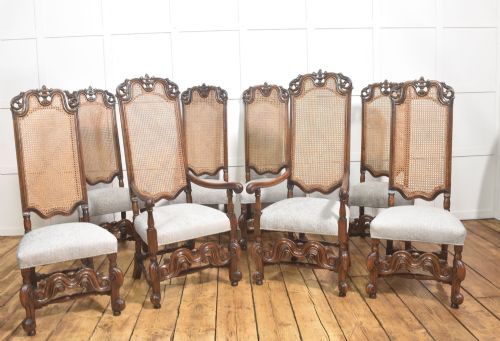
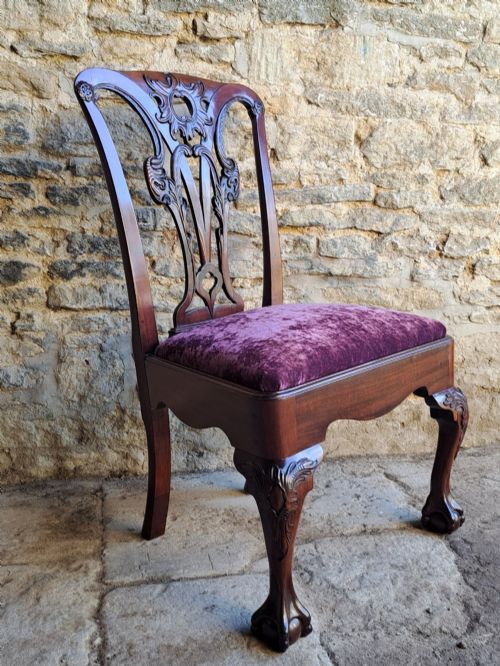
Walnut Dining Side Chairs
Walnut dining side chairs are seating without arms fashioned in rich timber, bringing period character and sturdy elegance to a dining table.
Walnut Dining Side Chairs
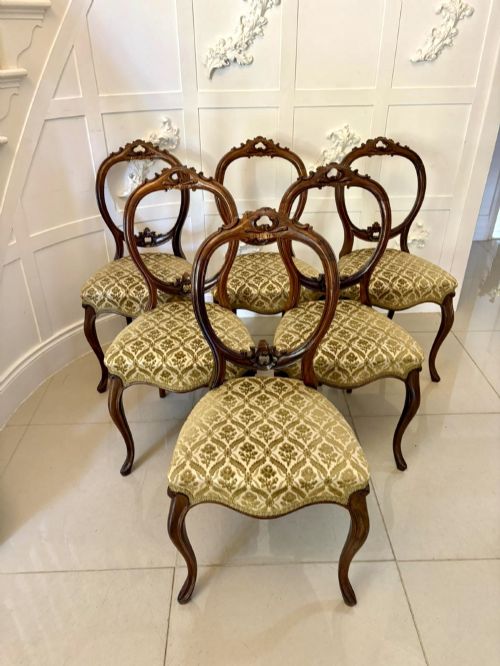
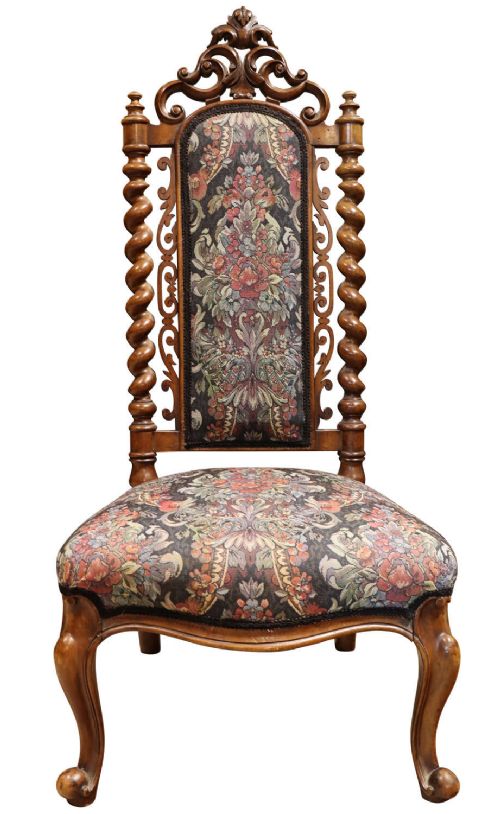
When you search for walnut dining side chairs, you encounter seating designed for the dining room table without armrests, spanning several centuries of cabinet making. The pieces found here range from early eighteenth-century examples to Victorian and Art Deco interpretations, reflecting diverse regional aesthetics.
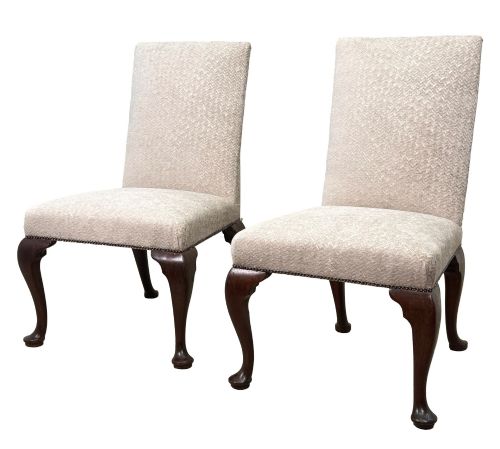
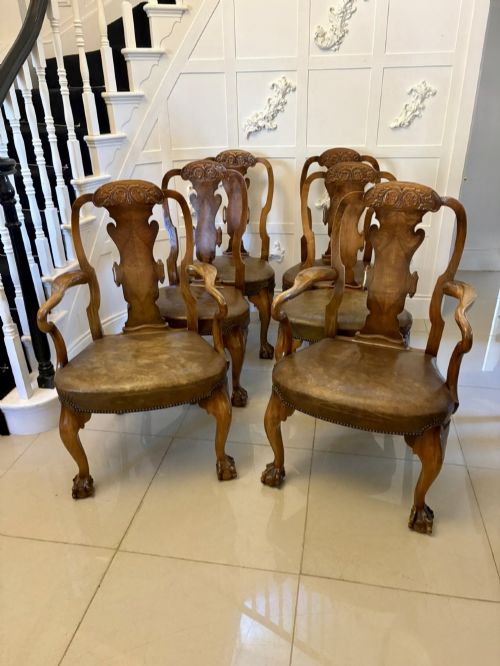
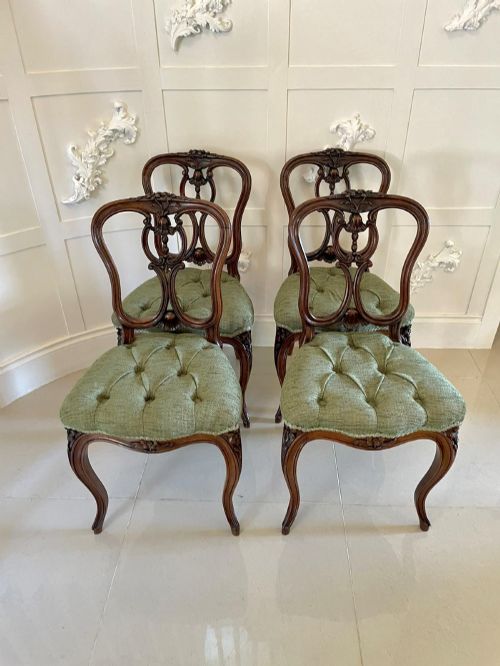
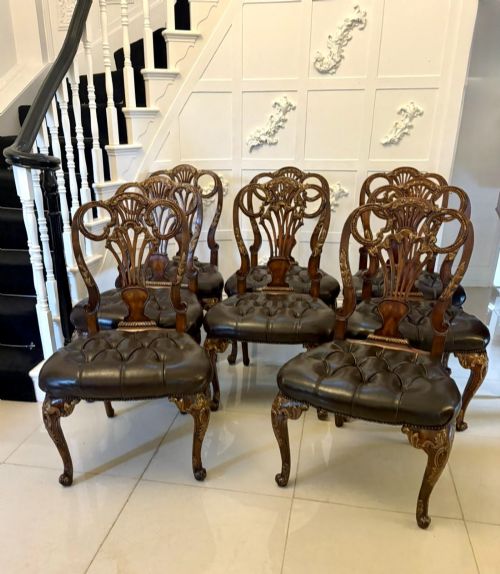
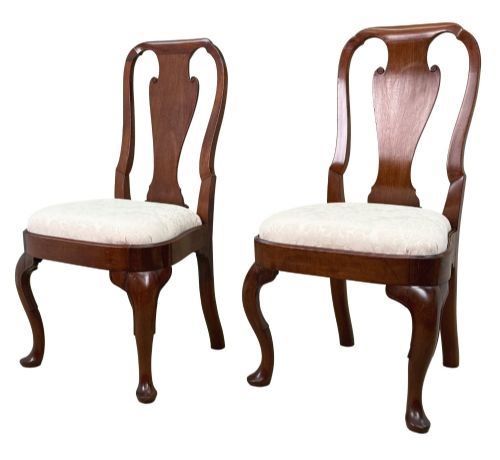
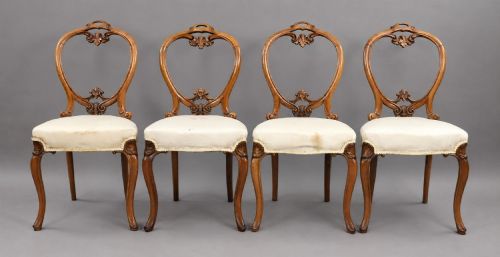
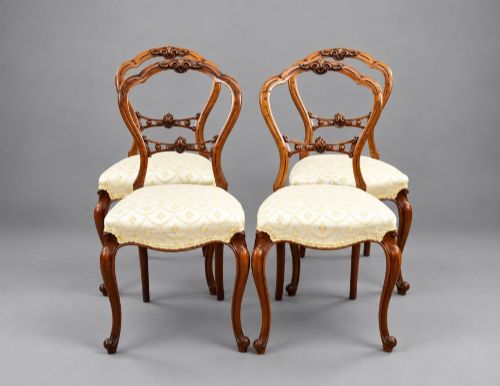
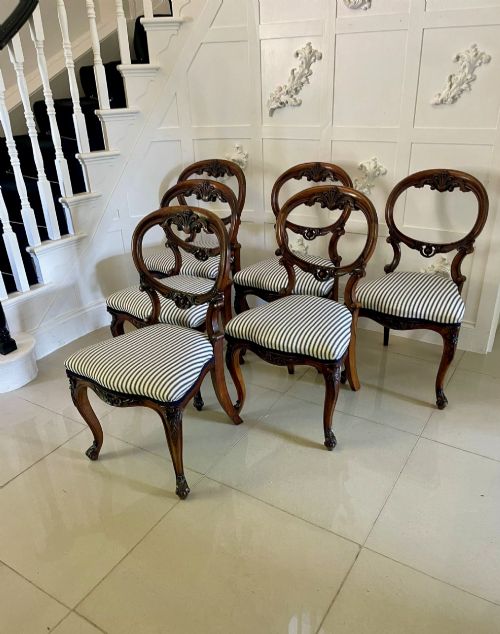
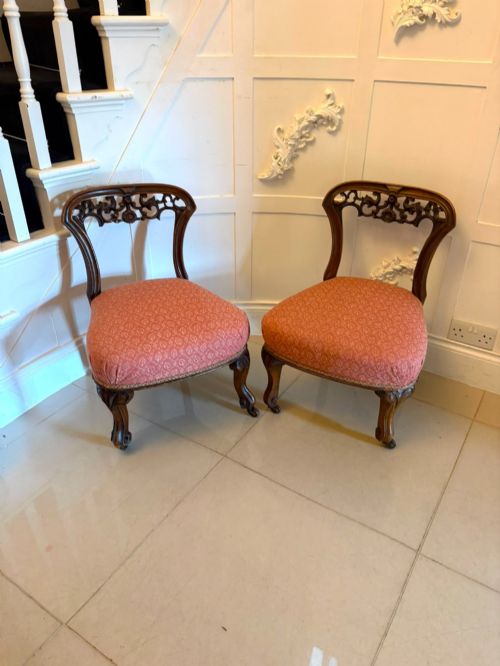
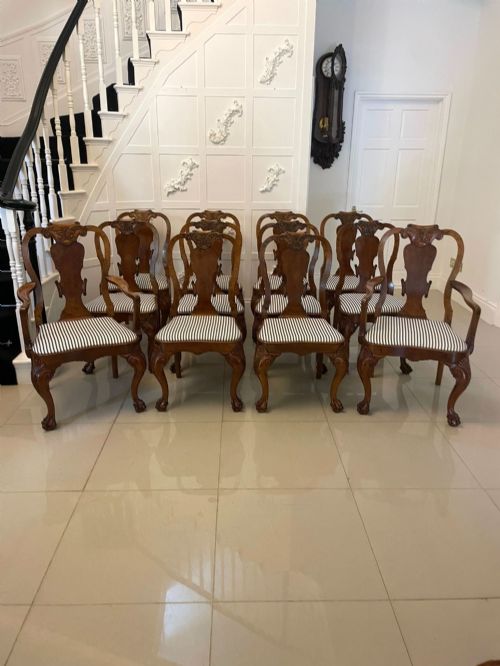
The most common forms on this page are Victorian balloon back seats and eighteenth-century Queen Anne or George II styles featuring cabriole legs. You also find sets numbering from pairs up to twelve pieces, alongside individual seating items suited for desks or salons.
Origins vary from English workshops to French and Portuguese makers, utilising distinct regional carving traditions. Buyers select these items to anchor a dining space with deep wood tones and historical craftsmanship.
How they were made
Makers shaped these seats using solid walnut and burr walnut veneers, prized for rich grain patterns and warm coloration. Timber selection dictated the structural integrity of the frame, particularly in load-bearing legs and back splats.
Upholstery materials such as fabric, leather, velvet, and tapestry were integrated into drop-in seats or fixed pads using traditional webbing and stuffing. Decorative accents often included brass detailing, gilding, and intricate hand-carved motifs like scrolling or cabriole shaping.
Listings span multiple eras from the early eighteenth century through the Victorian period, utilising solid walnut, burr walnut, and upholstered textiles.
What varies in quality
The distinction between standard examples and the finest pieces lies in the crispness of the hand-carving and the depth of the walnut figure. Superior items display harmonious proportions, seamless timber matching across sets, and robust frame construction that withstands centuries of use.
Upholstery choices and secondary woods also indicate grade, with top-tier specimens retaining original or period-appropriate covering materials alongside precise joinery. The integrity of the timber finish without excessive restoration separates average chairs from distinguished ones.
Charles Tozer
The Walnut Dining Side Chairs Glossary
- Cabriole leg
- A furniture leg that curves outward at the knee and tapers inward toward the ankle, often ending in a pad or claw foot. This design became prominent during the Queen Anne and George II periods.
- Balloon back
- A rounded, oval-shaped chair back that swells outward, highly characteristic of Victorian seating design. It provides ergonomic lumbar support while offering a graceful silhouette.
- Burr walnut
- Timber taken from a tree growth or burl, yielding swirling, highly decorative grain patterns. Cabinet makers prized this veneer for high-status furniture fronts and chair backs.
- Drop-in seat
- A removable upholstered frame that fits into a recess within the chair rails. This construction allowed for straightforward reupholstery without dismantling the main frame.
- Splat
- The vertical central strip of wood down the middle of a chair back. Georgian and Queen Anne examples frequently shaped this element into vase or fiddle contours.
Walnut Dining Side Chairs: Frequently Asked Questions
How do I spot a Queen Anne walnut chair?
Queen Anne walnut chairs feature characteristic vase-shaped back splats, smooth cabriole legs, and often pad feet without excessive ornamentation. The emphasis rests on clean, curving lines and the natural grain of the timber rather than heavy carving.
Many examples from this era also utilise slip seats that lift out easily for recovering. Checking the stretcher configuration underneath helps confirm the period construction.
Are Victorian walnut chairs sturdy for daily use?
Victorian walnut dining side chairs are generally robust, built from dense hardwoods designed to withstand regular domestic seating. Balloon back and carved Victorian frames distribute weight effectively across traditional mortise and tenon joints.
Periodic checks of the glue joints and under-framing ensure they remain stable. Treating the walnut timber with appropriate wax preserves the structural integrity over years of use.
What is the difference between side chairs and dining chairs?
Side chairs lack armrests, making them compact enough to line up along the sides of a dining table without crowding. While many dining chairs are technically side chairs, the broader category can also include occasional chairs used in hallways or bedrooms.
When selected for a dining room, side chairs pair with larger armchairs placed at the head of the table. Their open design allows for flexible arrangement and easy storage beneath the table surface.
How should I care for antique walnut furniture?
Antique walnut requires stable indoor humidity levels and protection from direct sunlight to prevent the timber from drying out or fading. Applying a microcrystalline wax periodically cleans the surface and nourishes the historic polish.
Avoid using modern silicone-based sprays, which can penetrate the grain and damage the original patina. Gentle dusting with a soft cloth maintains the natural lustre of the wood.