


Padded Back Side Chairs
Padded back side chairs bring practical seating and period character to a room, spanning styles from Georgian walnut to Art Deco.
Padded Back Side Chairs
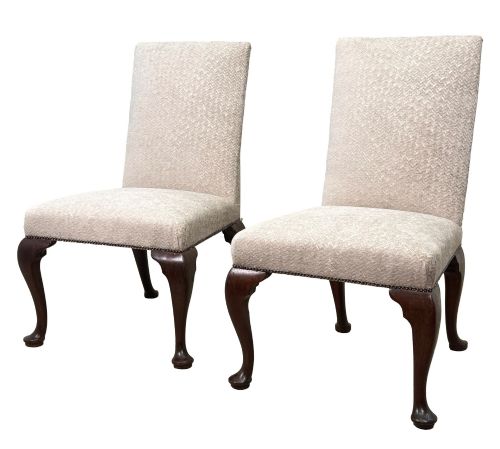
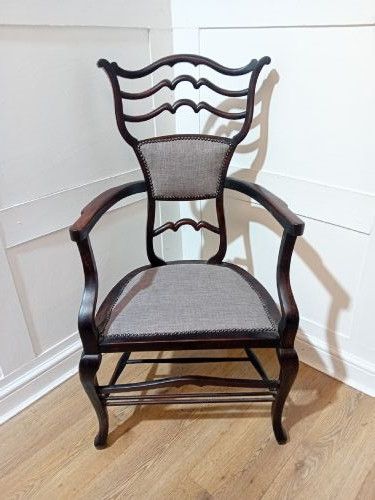
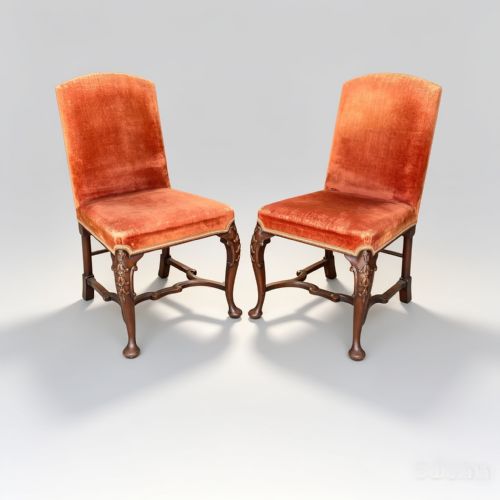
Padded back side chairs include dining chairs, bedroom chairs, and occasional seating sourced from the Victorian, Georgian, Edwardian, and Art Deco periods. These forms appear in walnut, mahogany, oak, and maple, often upholstered in various fabrics, velvet, leather, or silk cotton.
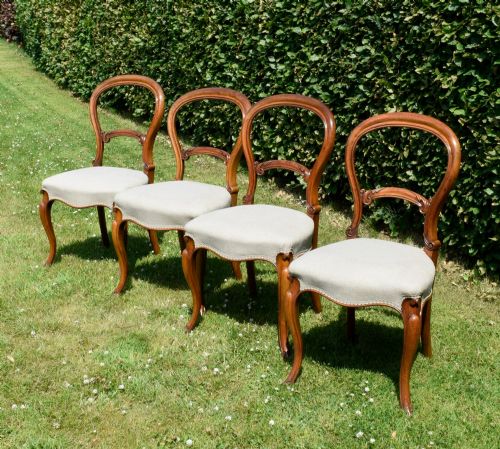
Buyers will most frequently encounter Victorian walnut dining chairs with balloon backs, alongside Edwardian mahogany designs and Georgian walnut examples. Sets ranging from pairs up to ten or twelve chairs turn up regularly alongside individual side chairs.
The selection encompasses stylistic revivals such as Queen Anne style, Louis XVI revival, and Edwardian Empire revival alongside pieces attributed to makers like Blyth and Sons, Hille, and Holland and Son.
How they were made
Frames are constructed from solid timbers including mahogany, walnut, oak, and maple, frequently shaped with carved details or inlay. Joinery methods of the 18th, 19th, and early 20th centuries secure the legs and frames to withstand regular seating use.
Upholstery involves traditional padding techniques applied to backs and seats, covered in textiles, velvet, leather, fabric, or silk cotton. Brass elements sometimes accent the construction or upholstery finish of these chairs.
Listings feature periods spanning from Georgian and William IV through Victorian, Edwardian, and Art Deco eras.
What varies in quality
The degree of hand-carving on the wooden frames and the selection of figured timbers like walnut and mahogany distinguish standard production from finer cabinetmaking. Matching sets of four, six, or more chairs command different attention compared to individual pieces or pairs.
The integrity of the frame construction and the preservation of original or period-appropriate upholstery materials contribute significantly to the standing of an individual chair or set.
Blyth and Sons·Hille·Holland and Son·Gillows
The Padded Back Side Chairs Glossary
- Balloon back
- A rounded, oval-shaped wooden chair back popular during the Victorian period. This curved design provides lumbar support while offering a distinctive aesthetic silhouette.
- Side chair
- A chair without arms intended primarily for dining or occasional use around a room. These pieces fit neatly against tables or walls.
- Carver
- An armchair designed to match a set of dining side chairs, typically placed at the head of a table. These feature supportive side arms.
- Upholstery
- The padded and covered components of a chair back and seat. Materials range from traditional horsehair and textiles to modern fabrics.
- Revival style
- A design approach that looks back to earlier periods such as Queen Anne or Louis XVI. Makers interpreted these historical forms using contemporary woodworking techniques.
Padded Back Side Chairs: Frequently Asked Questions
How do I spot a Georgian chair?
Georgian chairs generally date from the 18th century, utilising dense walnut or mahogany timbers with restrained carving. Look at the joinery and timber grain to determine the age.
These pieces often display classic proportions associated with cabinetmakers of that century, predating the more exuberant styles of the Victorian era.
Can I mix dining chairs?
Mixing chairs allows you to combine side chairs and carvers from related periods, such as pairing Victorian walnut sets with earlier Georgian occasional seats. Balance the wood tones and scale to create a cohesive seating arrangement.
Many buyers choose to group matched pairs or sets around a dining table while placing individual armchairs or bedroom chairs in secondary spaces.
How do I care for antique wood?
Maintain wooden frames by dusting regularly with a soft cloth and avoiding placement near direct heat sources or strong sunlight. Proper humidity control protects the timber and prevents the joints from drying out.
Condition the wood periodically using traditional wax polish appropriate for antique furniture to preserve the finish.