
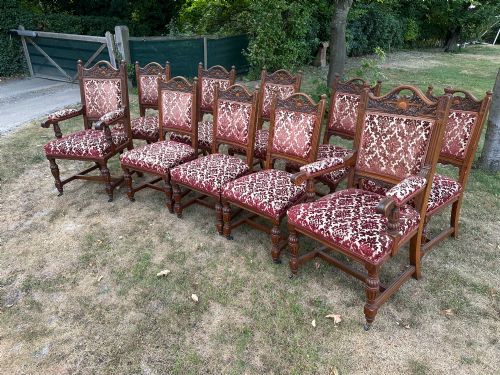
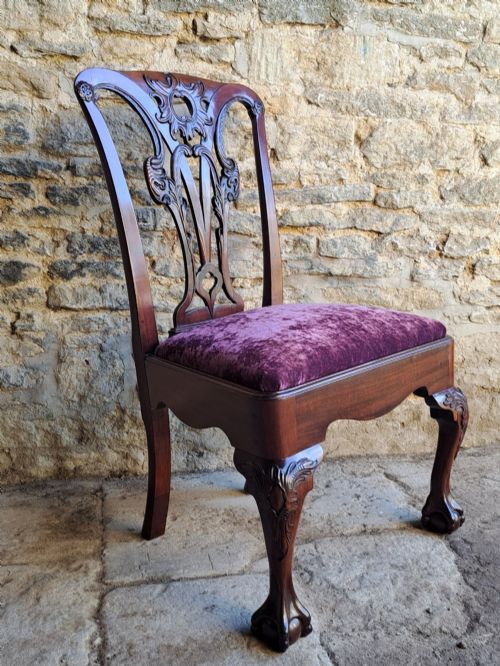
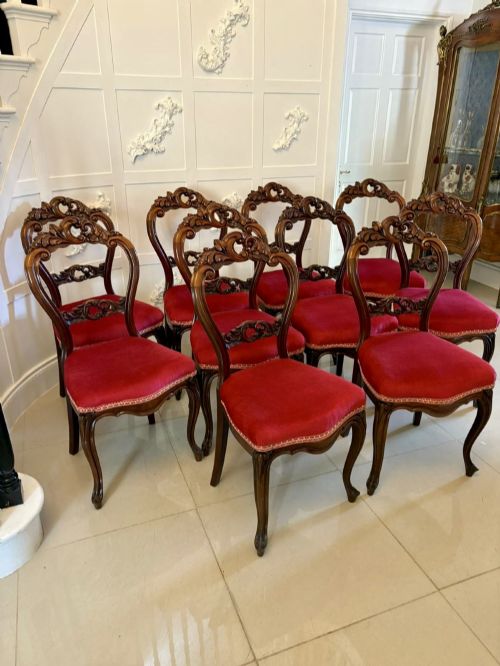
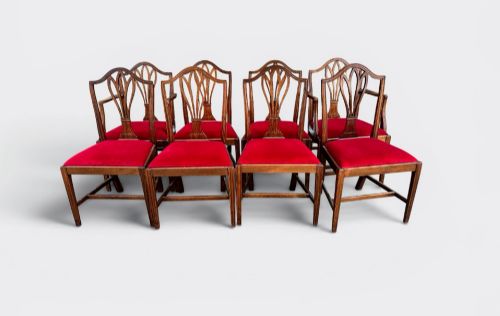
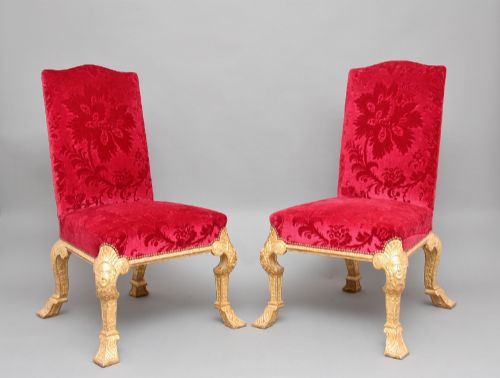


Red Velvet Side Chairs
Red velvet side chairs bring tactile warmth and rich colour to a room, offering practical seating shaped by centuries of cabinet-making.
Red Velvet Side Chairs
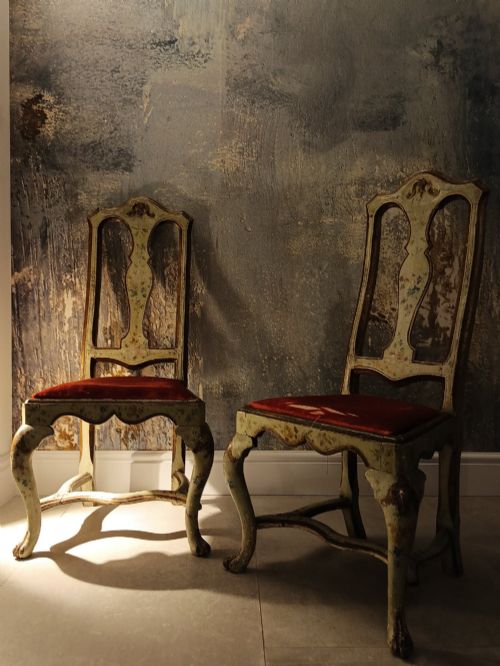
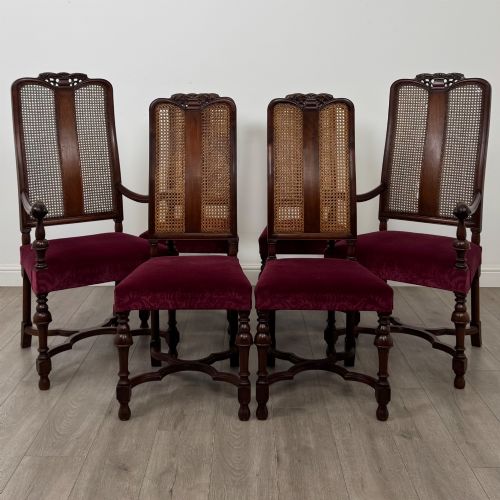
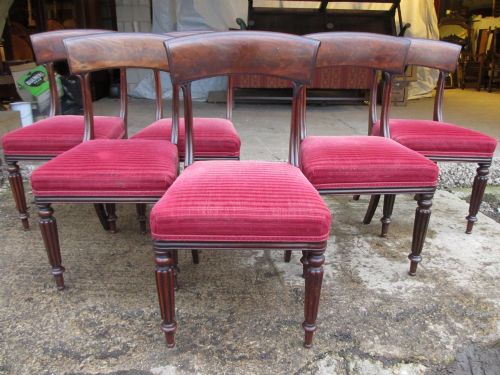
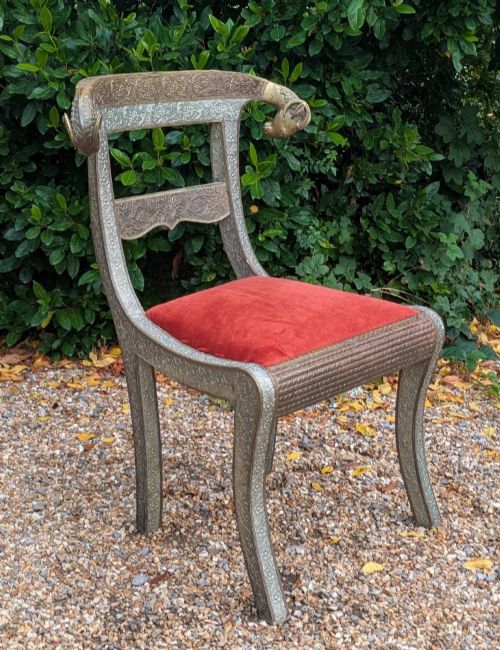
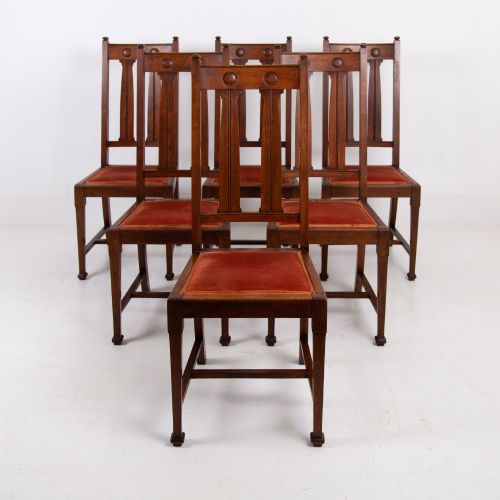
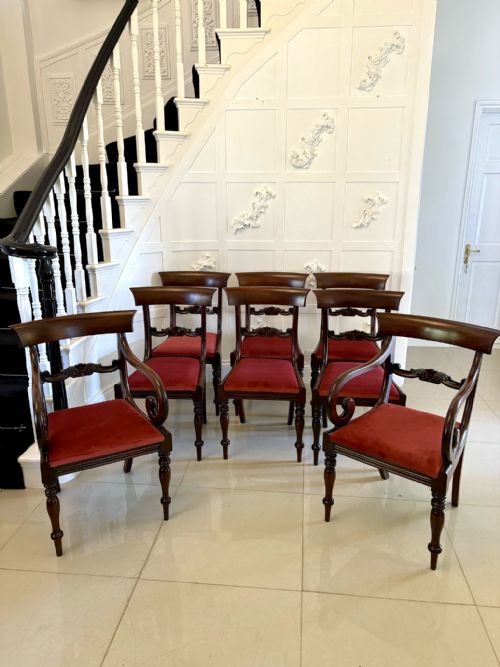
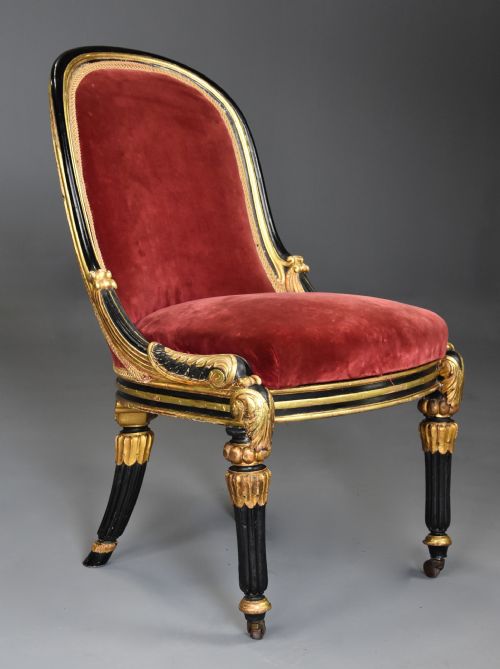
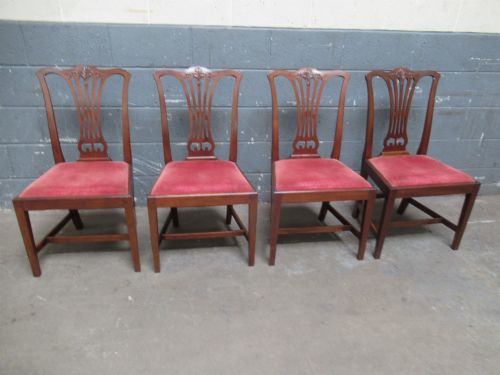
When searching for red velvet side chairs, buyers encounter pieces spanning the 18th century, Regency, Victorian, and Edwardian periods. These seating forms appear primarily as dining chairs, occasional chairs, and hall chairs fashioned in mahogany, walnut, oak, and rosewood. The listings demonstrate a clear tradition of upholstered seating framed in sturdy timbers.
The most frequent examples combine dark hardwoods with textile upholstery, drawing on Georgian, Victorian, and Edwardian styles. Makers constructed these chairs for domestic parlours and dining rooms, where vibrant fabric upholstery complemented polished wood frames.
Materials and Construction
Craftsmen built these frames using dense timbers such as mahogany, walnut, oak, and rosewood, often shaping the wood through carving and turning. Brass and gilt accents occasionally highlight the structural woodwork.
Upholsterers applied fabric and velvet over traditional stuffing, securing the textiles to the wooden bases with precision. This combination of heavy hardwood framing and soft textile surfaces defined the construction of period seating.
Red Velvet Side Chairs Retail Price Guide 2026
Typical asking prices for red velvet side chairs among the pieces listed under this phrase on Sellingantiques today, from the lower quarter to the upper quarter. They describe what is for sale here now, not the wider market.
Several chairs double as musical instruments' companions or wedding thrones, proving that historical seating arrangements catered to very specific social duties.
Distinctions in Quality
The division between standard examples and superior work rests in the depth of the timber carving and the precision of the joinery. Master cabinet-makers invested greater time in sculptural details along the crest rails and cabriole legs.
The selection of timber grain and the integrity of the original frame construction determine the standing of each piece. Heavier timber frames with refined proportions indicate a higher standard of workshop production.
Holland And Sons·J Proctor
The Red Velvet Side Chairs Glossary
- Side chair
- A chair without arms, designed primarily for dining or occasional use around a room.
- Velvet
- A closely woven textile featuring a dense, short pile that provides a soft surface texture and deep colour reflection.
- Mahogany
- A durable tropical hardwood favoured by 18th- and 19th-century cabinet-makers for its rich reddish-brown tone and stability.
- Regency
- An English architectural and decorative style spanning the early 19th century, known for classical restraint and elegance.
- Gothic Revival
- An architectural and decorative movement of the 19th century that reinterpreted medieval pointed arches and tracery.
Red Velvet Side Chairs: Frequently Asked Questions
How do I identify a Victorian side chair?
Victorian side chairs often feature heavy carved mahogany or walnut frames with pronounced structural ornamentation. The proportions reflect the industrial manufacturing capabilities and stylistic preferences of the mid to late 19th century.
Upholstery techniques from this era typically involved deep buttoning or firm sprung bases. Comparing the turning on the legs and the weight of the timber helps distinguish them from lighter Edwardian pieces.
What woods were commonly used for antique chairs?
Cabinet-makers relied heavily on mahogany, walnut, and oak for structural durability and attractive grain patterns. Rosewood also appeared in finer Victorian and William IV dining and parlour seating.
These timbers were selected for their ability to hold intricate carved details without splitting. The choice of wood often aligns with the prevailing fashion of the chair's period.
How should I care for antique velvet upholstery?
Antique velvet requires gentle maintenance to preserve the pile and prevent flattening of the fibres. Regular light brushing with a soft-bristled tool helps keep the textile clean and free from dust.
Direct sunlight should be avoided to prevent the rich red dye from fading over time. Professional textile cleaning is recommended for deeper maintenance.
Are these chairs suitable for daily dining?
Many period dining chairs remain structurally sound for everyday use when the timber joints are secure. Solid hardwood frames provide the necessary strength for regular seating at a dining table.
Checking the stability of the legs and seat rails ensures the chair can handle daily weight loads safely. Lighter occasional or hall chairs are better suited for decorative placement.