


Edwardian Inlaid Bedroom Chairs
Edwardian inlaid bedroom chairs bring lightness and refined woodwork to a room, offering both decorative elegance and practical seating.
Edwardian Inlaid Bedroom Chairs
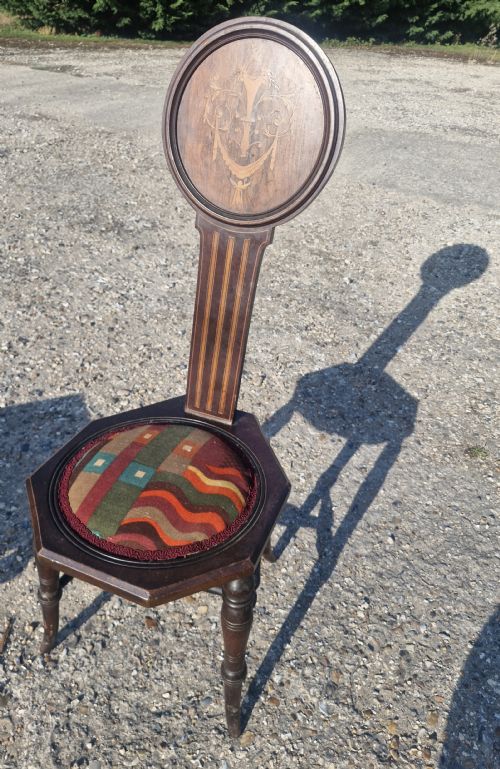
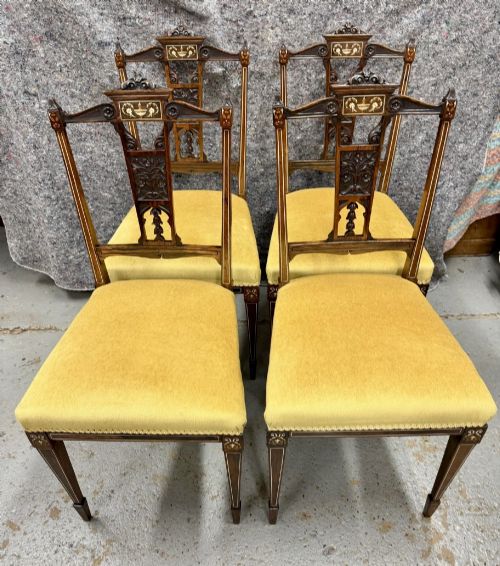
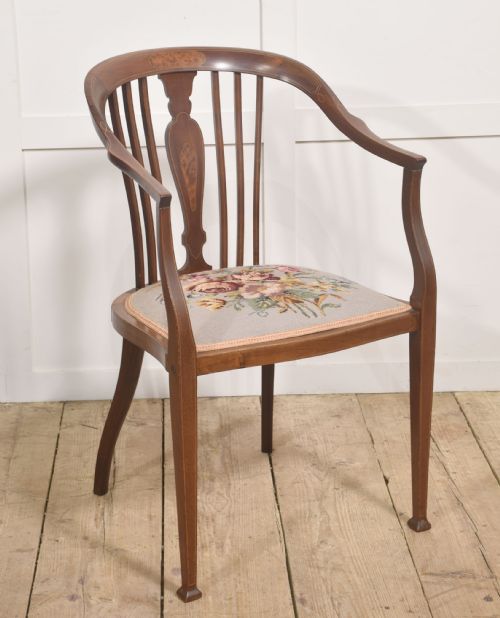
The selections span various seating forms associated with private chambers and reception spaces, including nursing chairs, corner chairs, and side chairs. These pieces often feature upright backs and slender legs, aligning with the domestic interior styles of the era.
Materials and Techniques
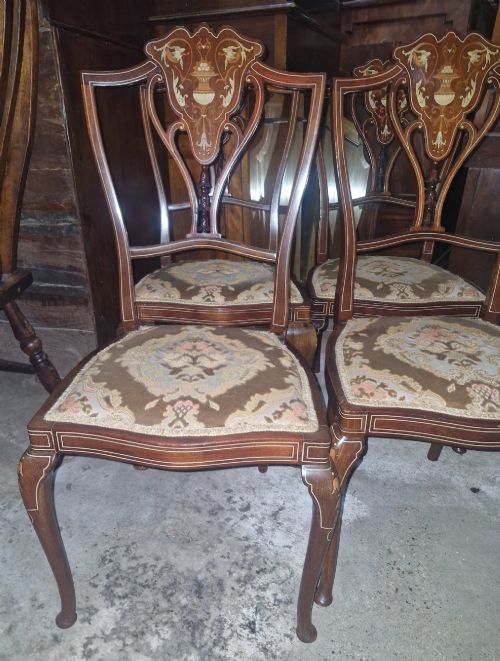
Makers utilise mahogany as the primary structural timber, frequently complemented by contrasting satinwood and rosewood veneers. Wood inlay and string inlay provide delicate linear ornamentation across the backrests and rails.
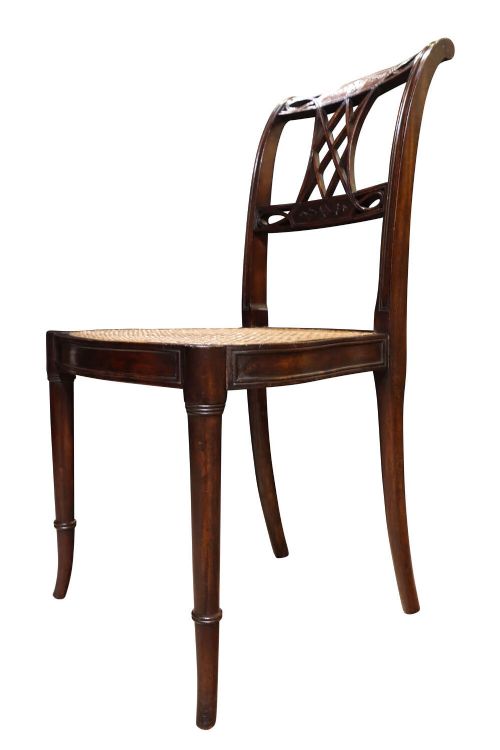
Surface decoration often incorporates marquetry alongside light wood elements such as boxwood. Seating surfaces utilise fabric upholstery, silk, or woven cane inserts fitted into the wooden frames.
Listings incorporate pieces spanning from the late nineteenth century through to nineteen twenty, featuring mahogany, satinwood, and rosewood.
Craftsmanship and Proportion
Quality rests in the crispness of the wood inlay and the precision of the joinery connecting the slender framing members. Superior examples maintain structural rigidity without relying on heavy timbers, keeping the graceful profile intended by the maker.
The refinement of the carving and the complexity of the marquetry distinguish standard domestic seating from finer salon pieces. Selection of grain and the harmonious contrast between woods further define the standing of individual chairs.
The Edwardian Inlaid Bedroom Chairs Glossary
- String inlay
- A narrow strip of contrasting wood embedded flush into the surface to create fine border lines. It defines the edges of panels and stiles on Edwardian furniture.
- Marquetry
- Formed by fitting together pieces of various coloured veneers to create pictorial or geometric designs. This technique decorates the crest rails and splats of finer salon chairs.
- Cane seat
- Woven plant material forming a porous, flexible surface for the occupant. It appears on lighter bedroom and occasional chairs.
- Corner chair
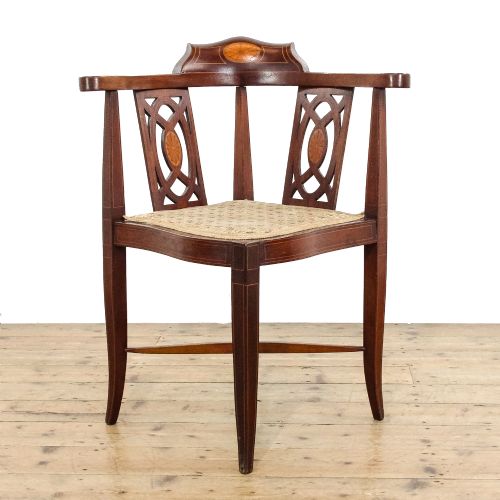
- A seating form designed to fit into room angles, featuring a diagonal orientation and a continuous curved armrest supported by multiple columns.
- Nursing chair
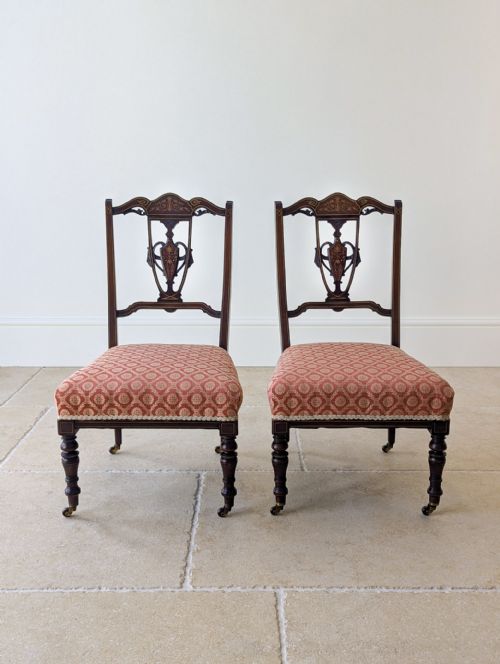
- A low-seated chair historically used for tending to infants or sitting near a fireplace. These pieces often possess upholstered backs and shortened legs.
Edwardian Inlaid Bedroom Chairs: Frequently Asked Questions
What defines Edwardian inlaid bedroom chairs?
These chairs combine slender proportions with contrasting wood inlays, designed specifically for private chambers during the early twentieth century. They utilise light timbers like mahogany and rosewood.
Craftsmen integrated decorative stringing and marquetry into the backrests and rails, producing pieces that function as both seating and ornamental room accents.
How were bedroom chairs used?
Occupants placed them beside dressing tables, in corners, or near washstands for temporary seating while dressing or reading. Their lighter weight allowed easy movement around the chamber.
Unlike heavier dining furniture, these seats prioritized portability and aesthetic contribution to the bedroom interior.
How do I identify the period?
Look for construction traits characteristic of nineteen hundred, such as slender turned legs, mahogany frames, and delicate boxwood stringing. The revival of Sheraton styles heavily influenced this era's output.
Matching the wood types and inlay patterns to typical Edwardian manufacturing methods confirms the age of the piece.
How should I care for the wood?
Keep the furniture away from direct sunlight and sudden temperature shifts to protect the delicate veneer and inlaid sections from drying out. Gentle dusting with a dry cloth preserves the polished surface.
Avoid excessive moisture, especially around cane inserts and upholstered areas, to maintain the structural integrity of the joints.