




Walnut Desk Clock
These walnut desk clock pieces bring together mid-century geometry and traditional timber warmth for any room.
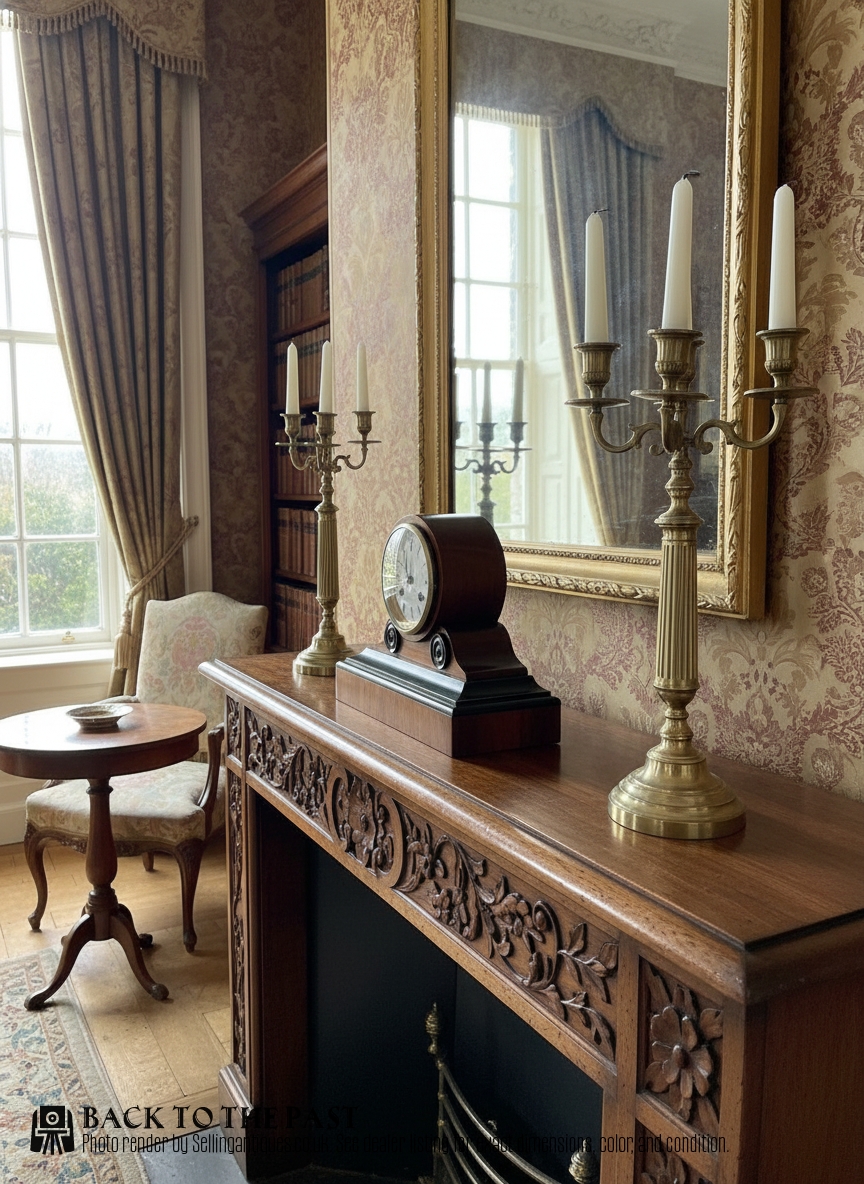
Walnut Desk Clock
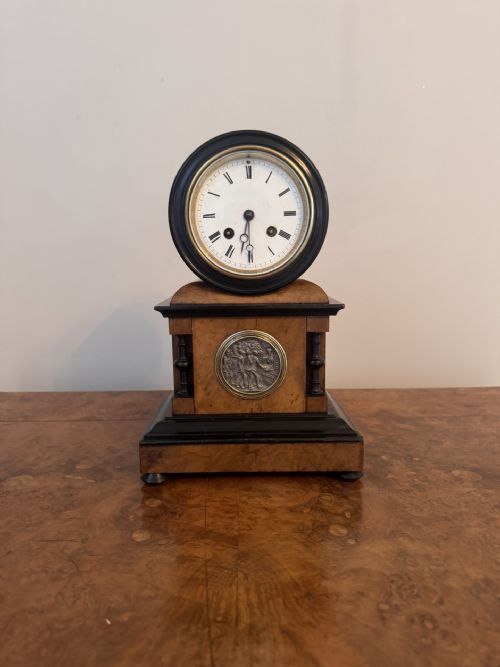
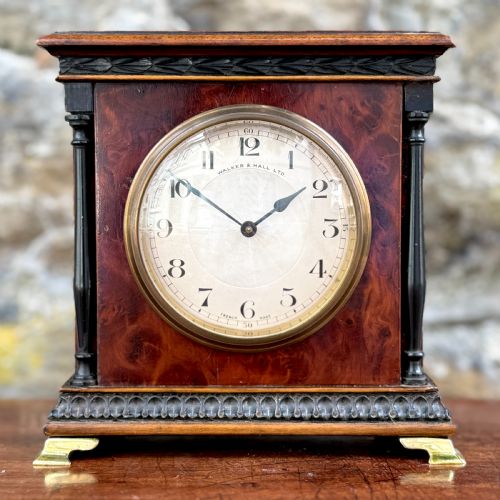
A walnut desk clock combines functional timekeeping with the rich figuring of timber, appearing across styles from Victorian and Edwardian iterations to Art Deco designs. Buyers searching for a walnut desk clock encounter everything from small bureau timepieces to substantial mantel clocks housed in burr walnut or ebonised wood.
The selection ranges across several decades, notably featuring pieces from the nineteenth century alongside later twentieth-century productions. Origins span English workshops as well as German and French makers, incorporating movements like those by Mauthe and Lenzkirch.
Materials and construction
Cases combine solid walnut, burr walnut, and ebonised wood, often paired with glass bezels and brass or gilt ormolu mounts. Carved wood examples demonstrate traditional craftsmanship from the Black Forest region.
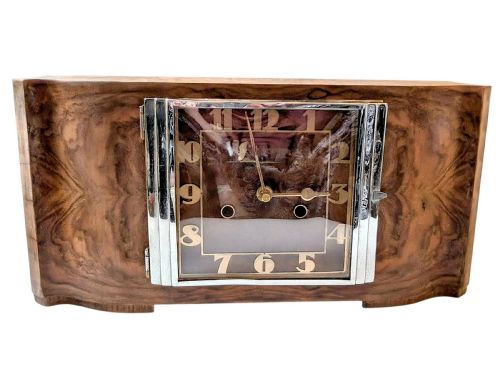
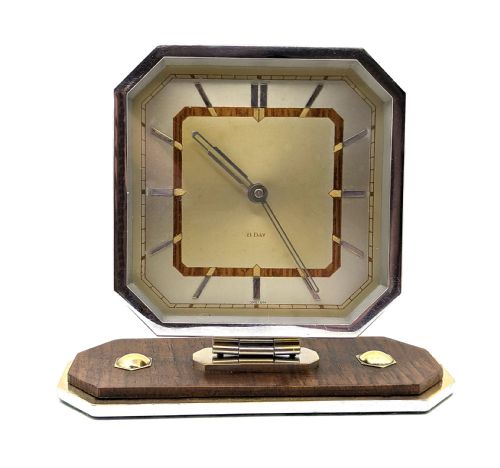
Later twentieth-century iterations introduce chrome and geometric wooden veneers to complement the natural timber grain. Movements are housed securely within these timber enclosures, ranging from eight-day mechanisms to fourteen-day striking systems.
Materials documented across the inventory include walnut, burr walnut, ebonised wood, brass, glass, and chrome.
Evaluating craftsmanship
Quality separates standard production items from finer pieces through the selection of figured timber veneers and the precision of the case joinery. Burr walnut surfaces display tighter, more intricate grain patterns that elevate the visual weight of the piece.
The sophistication of the internal movement further distinguishes the range, with recognised makers providing superior escapements and striking mechanisms. Details such as cast brass bezels, enamel dials, and crisp wood carving indicate higher levels of original workshop execution.
Mappin and Webb·Walker and Hall·Bravingtons Ltd of London·Lenzkirch·Elliott of London·John Taylor of London·Baldwin of Loughborough
The Walnut Desk Clock Glossary
- Burr walnut
- A timber harvested from the tree's burl, displaying swirling, highly decorative grain patterns prized for decorative clock cases.
- Mantel clock
- A portable clock designed to sit on a mantelpiece or desk, commonly driven by a spring-wound movement.
- Ormolu
- Gilt bronze or brass mounts applied to furniture and clock cases, common in French Rococo and revival styles.
- Escapement
- The internal mechanism that controls the release of power to keep time accurately, such as a tic tac escapement.
Walnut Desk Clock: Frequently Asked Questions
How do I wind my clock?
Most mechanical desk clocks use a small key inserted into winding holes on the dial face to tension the mainspring.
Take care not to overwind the movement, stopping as soon as resistance is felt to protect the internal components.
Where should I place a mantel clock?
Position the clock on a stable, level surface away from direct sunlight, drafts, and sources of moisture.
A flat desk or mantelpiece ensures the pendulum or balance wheel maintains an even beat for accurate timekeeping.
How do I identify an Art Deco clock?
Art Deco pieces typically feature geometric shapes, symmetrical stepped cases, and contrasting materials like walnut and chrome.
These designs emerged around nineteen thirty, moving away from ornate Victorian carvings toward streamlined modernity.
What is Black Forest carving?
Black Forest carving refers to highly detailed wooden sculpture originating from the forested mountain region in Central Europe.
Clocks from this tradition often incorporate deeply carved foliage or animal motifs directly into the solid walnut case.