
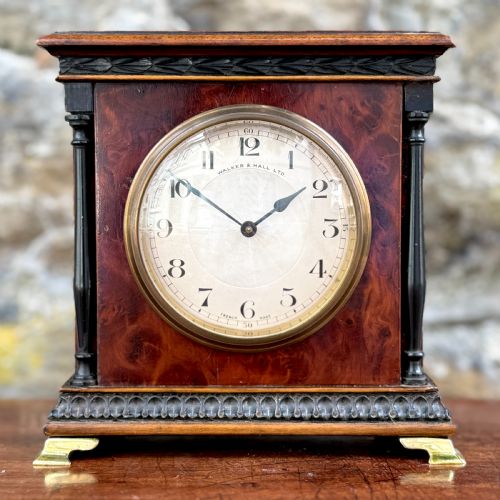


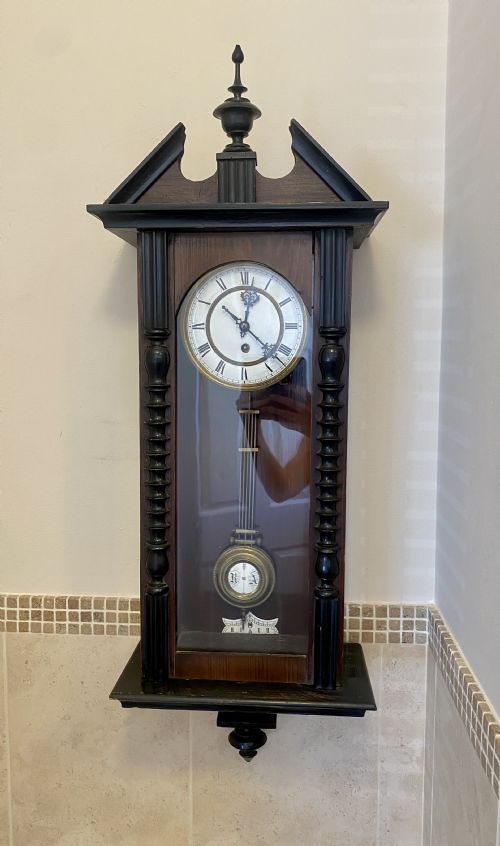


Ebonised Walnut Clock
An ebonised walnut clock brings dark-toned elegance and precise mechanical movement to a room, combining warm timber with contrasting black details.
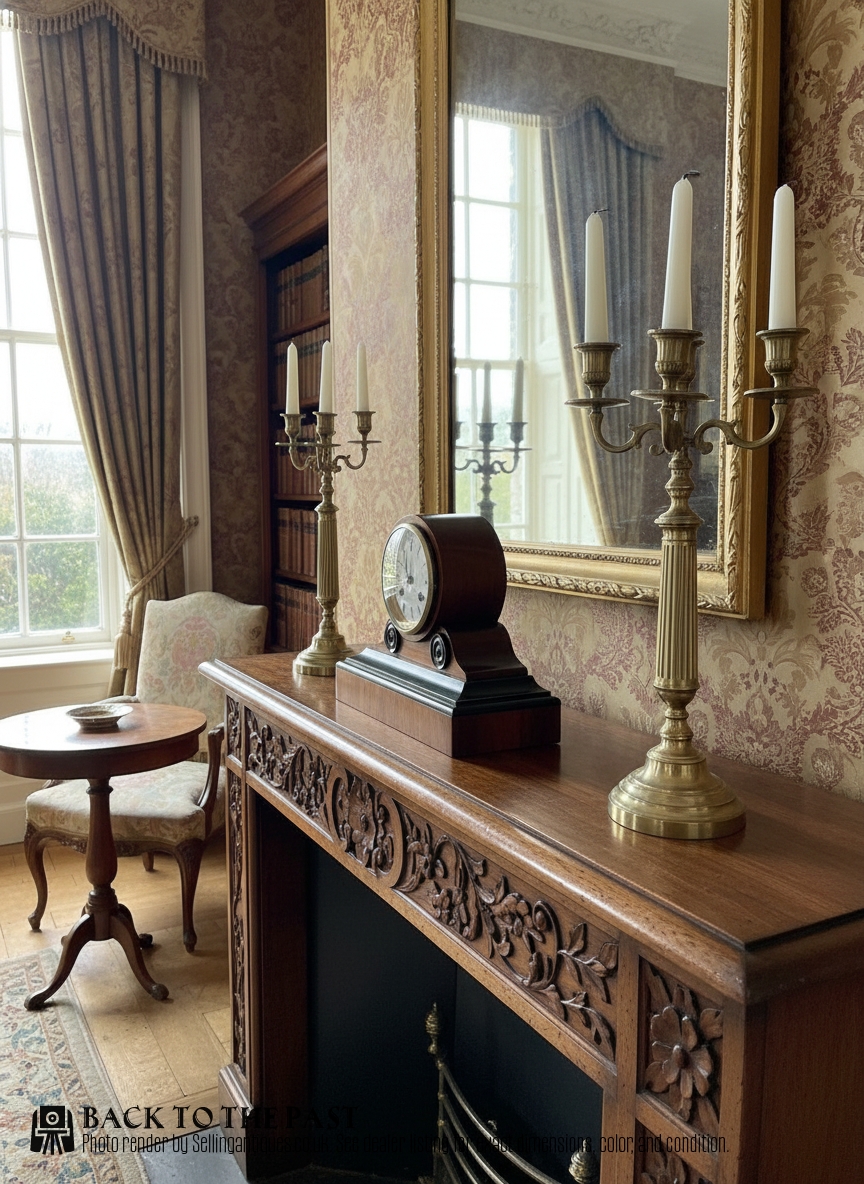
Ebonised Walnut Clock
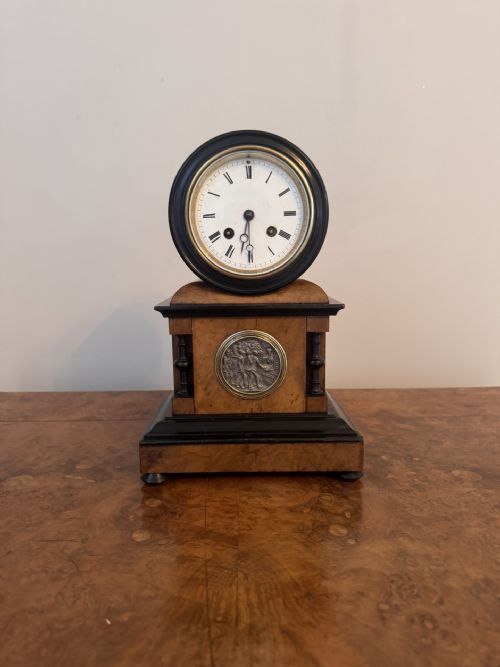
An ebonised walnut clock combines the rich grain of walnut timber with deep black ebonised highlights, creating a striking visual contrast that defines these pieces. When searching for an ebonised walnut clock, buyers encounter several distinct formats designed for different domestic settings.
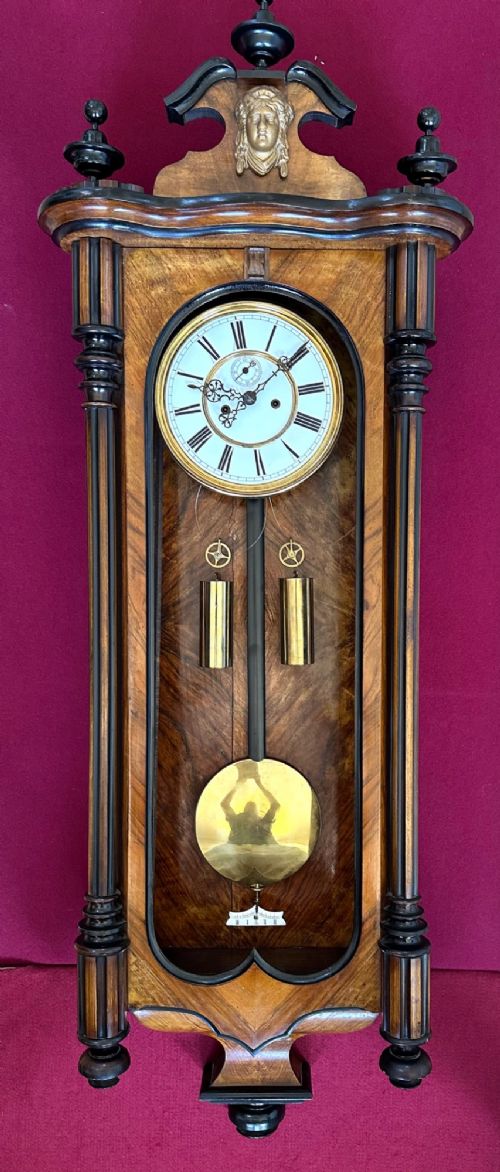
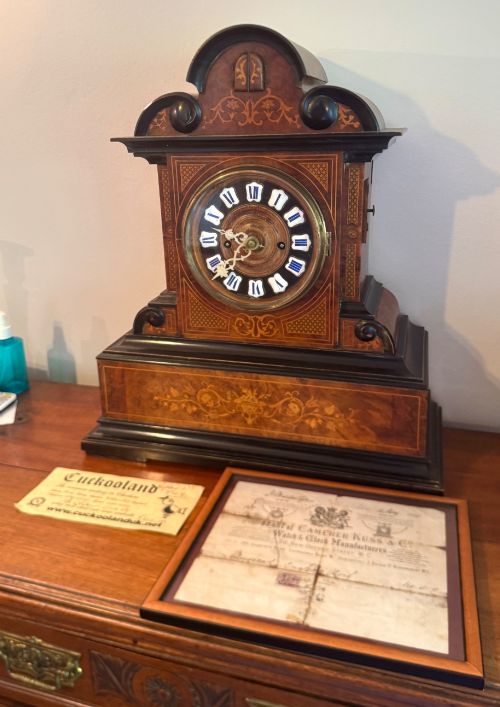
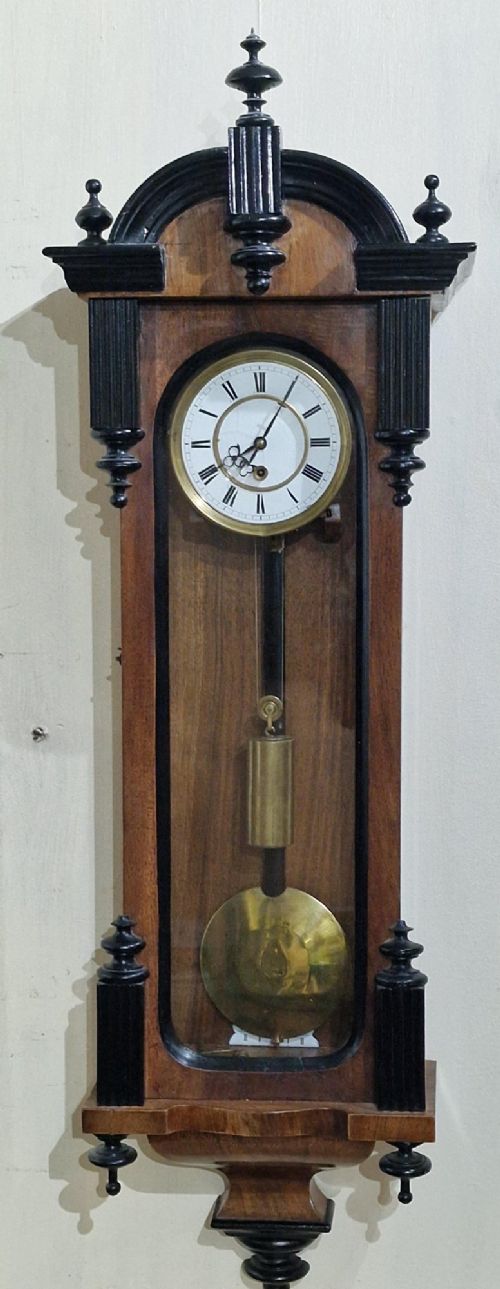
Wall-mounted examples dominate the selection, ranging from slim-line Vienna regulators to larger double-weighted styles. Mantel clocks and smaller desk clocks also appear frequently, often featuring architectural cases or bracket designs.
Most pieces date from the nineteenth century, particularly the Victorian era and the eighteen-eighties, alongside occasional Edwardian examples from nineteen-ten. The Biedermeier style also makes an appearance among these nineteenth-century items.
How they were made
Cabinet makers utilised solid walnut and figured burr walnut veneers, applying dark ebonised finishes to mouldings, columns, and bezel surrounds to create sharp tonal contrast. Enamel dials, often protected behind glass doors, display crisp roman or arabic numerals alongside delicate brass hands.
Movements span eight-day striking mechanisms, month-duration gear trains, and simple timepieces powered by brass springs or heavy lead weights. Cases frequently incorporate carved details, serpentine shapes, and intricate marquetry work set into the walnut body.
Listings span the nineteenth and early twentieth centuries, featuring walnut, burr walnut, glass, brass, and enamel across wall, mantel, and desk clock formats.
What varies in quality
The sophistication of the movement largely dictates the standard of the piece, moving from standard eight-day striking setups to complex month-duration Vienna regulators. Superior examples showcase highly figured burr walnut veneers paired with deeply polished ebonised mouldings rather than flat painted finishes.
Case construction and carved ornamentation reveal the maker's hand, where well-proportioned architectural details and crisp marquetry distinguish finer items from simpler production models. The clarity of the enamel dial and the presence of original brass hardware further separate standard domestic timepieces from exhibition-grade works.
Walker and Hall·Baldwin of Loughborough·Gustof Becker
The Ebonised Walnut Clock Glossary
- Ebonised wood
- Timber treated with a dark stain or finish to imitate ebony. This technique highlights surrounding walnut grain through strong contrast.
- Vienna Regulator
- A precision wall clock developed in Austria during the nineteenth century. These clocks typically feature long glazed cases and weight-driven movements.
- Burr walnut
- Wood taken from a walnut tree growth containing swirling grain patterns. Cabinet makers prized this figured material for decorative veneer panels.
- Timepiece
- A clock that indicates the time without striking hours or quarters. These movements focus purely on the passage of time.
- Marquetry
- Inlays of different woods applied to a wooden structure to create decorative patterns. The technique adds geometric or floral motifs to clock cases.
Ebonised Walnut Clock: Frequently Asked Questions
How do I wind a Vienna regulator?
Most Vienna regulators rely on suspended weights that require careful pulling via the chain or cord to lift them back to the top of the case. Take care not to pull past the stop point.
Ensure the pendulum hangs freely before starting the movement. Gentle momentum sets the pendulum swinging evenly.
Where should I place a wall clock?
Hang your wall clock on a sturdy internal wall away from direct sunlight and damp environments. Stable temperatures help maintain accurate timekeeping.
Ensure the mounting point supports the full weight of the wooden case and movement. A level surface prevents the pendulum from striking the inside of the case.
What is the difference between a timepiece and a striking clock?
A timepiece simply indicates the hours and minutes without producing any sound. These movements contain fewer internal gears.
Striking clocks feature an additional train of wheels and hammers that chime on the hour or half-hour. This mechanism requires a separate winding arbor for the strike train.
How do I care for ebonised wood?
Dust the ebonised and walnut surfaces regularly with a soft, dry cloth to prevent build-up. Avoid using modern silicone polishes that can damage historic finishes.
Apply a light microcrystalline wax occasionally to protect the timber and ebonised highlights from drying out. Keep the clock away from radiators and open fires.