

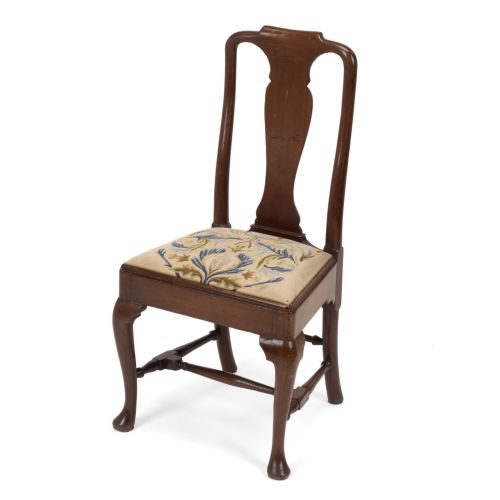
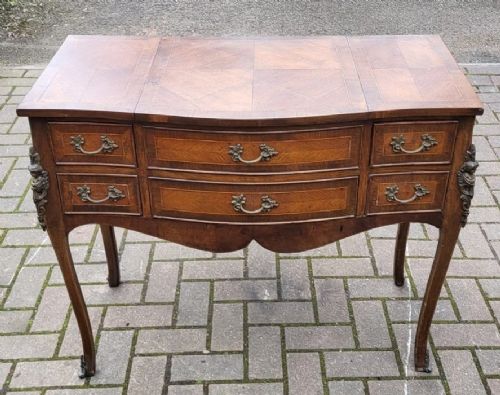
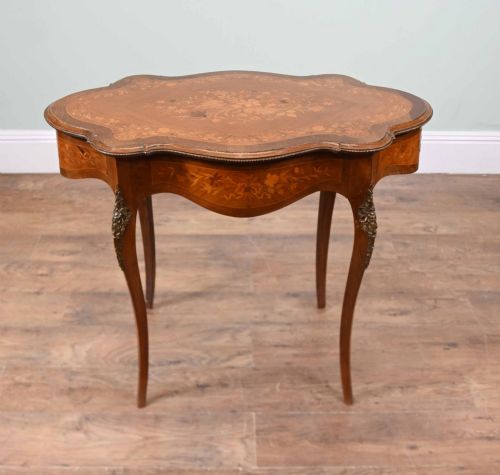
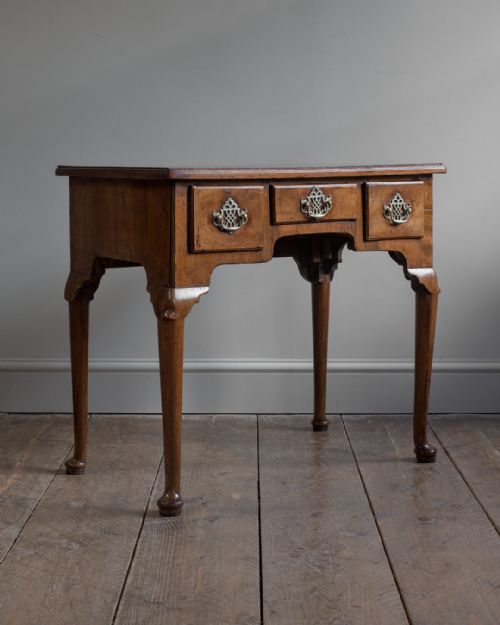
Walnut Cabriole Leg Desk
These walnut cabriole leg desk examples combine figured timbers and curving supports to provide practical writing surfaces rooted in historic cabinet-making traditions.
Walnut Cabriole Leg Desk
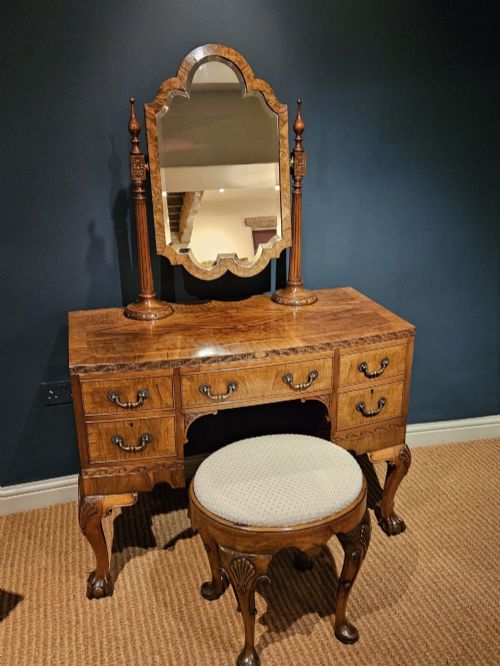
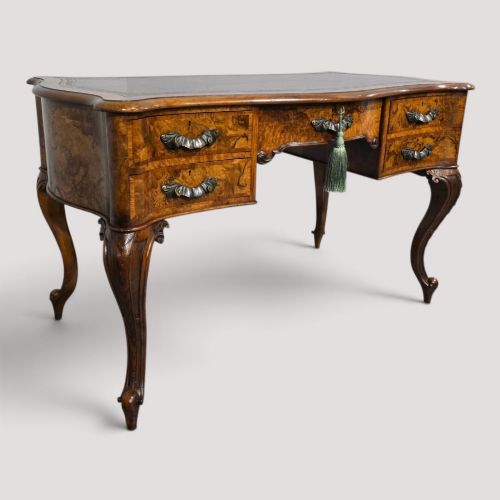
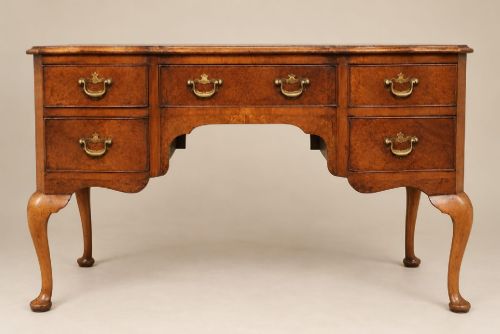
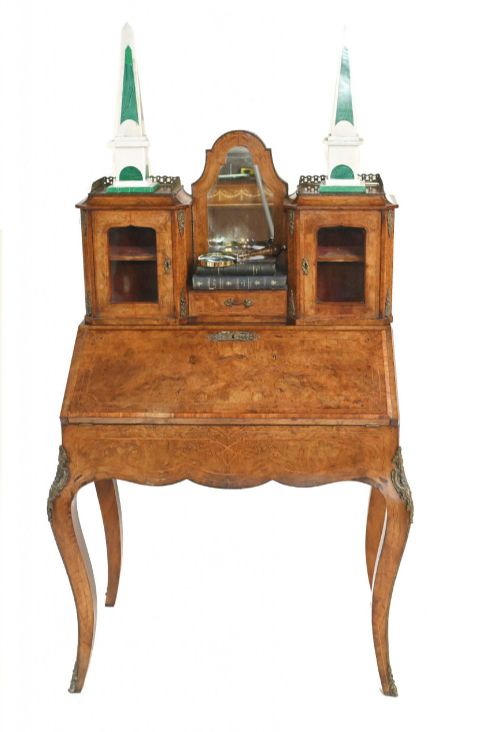
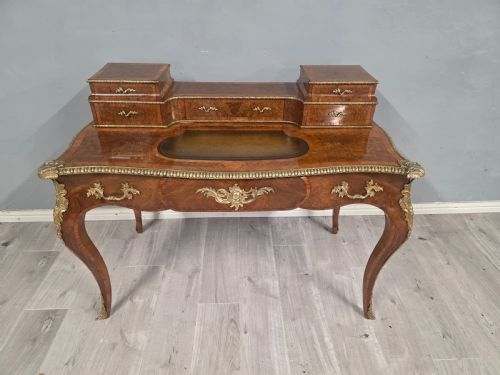
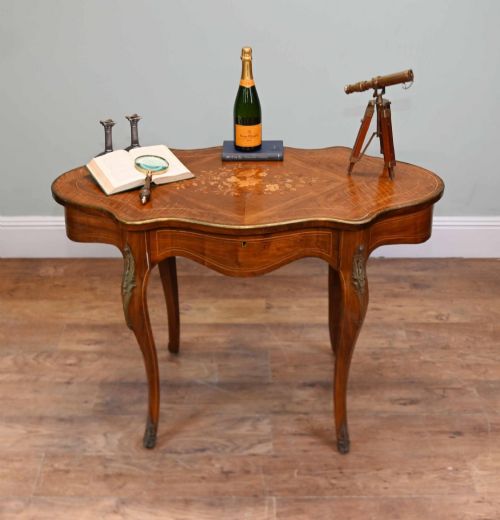
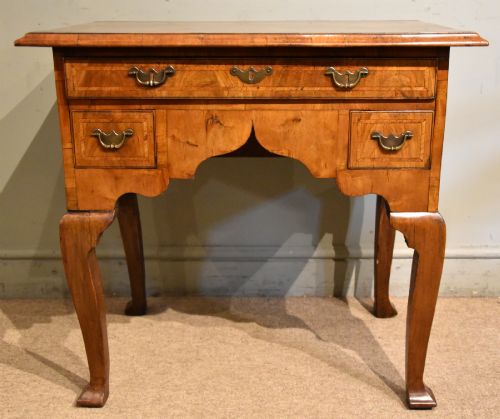
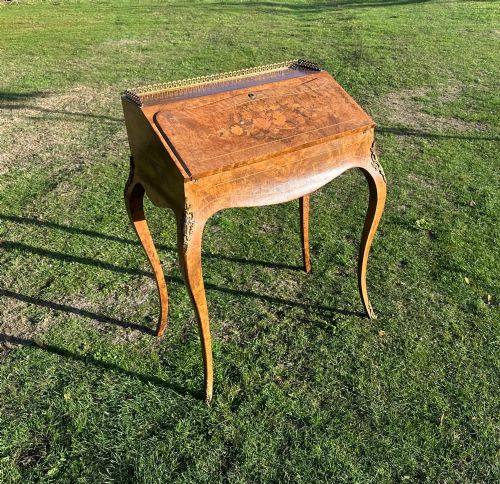
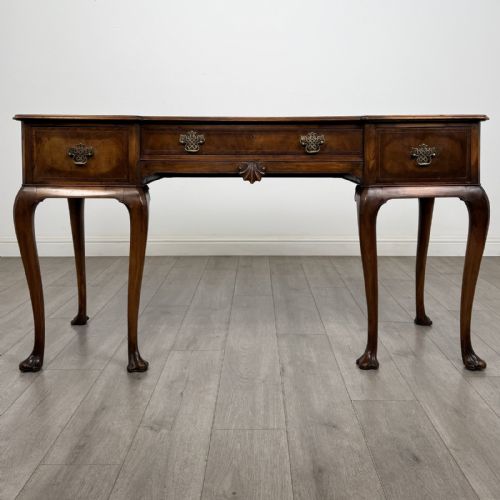
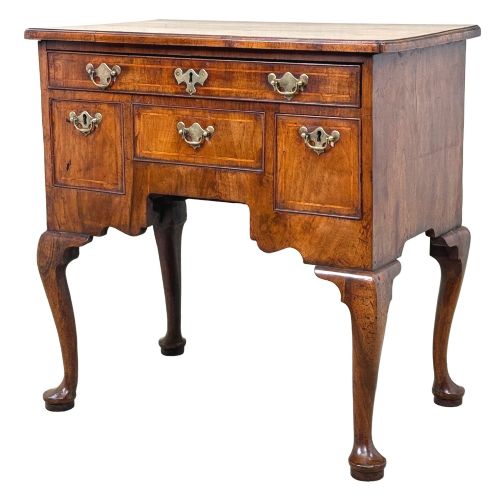
The selection ranges from traditional bureaus and pedestal desks to writing tables, bureau plats, and lowboys fitted with the characteristic double-curved leg. Walnut predominates as the primary timber, often enhanced by burr or figured grain patterns across the writing surfaces and drawer fronts.
Materials and construction methods
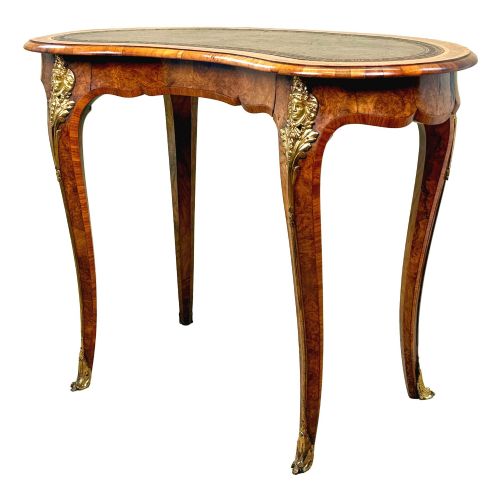
Cabinet-makers utilised solid walnut and applied burr walnut veneers over secondary timbers to achieve rich surface patterns on writing furniture. Marquetry and parquetry inlays frequently decorate French and Dutch examples, utilising contrasting woods alongside floral motifs.
Structural integrity relies on traditional joinery, with cabriole legs shaped from solid timber to form curving supports that sometimes feature carved details or pad feet. Brass handles, key escutcheons, and occasional gilt ormolu mounts complete the hardware, while leather writing inserts provide functional surfaces.
Walnut Cabriole Leg Desk Retail Price Guide 2026
Typical asking prices for walnut cabriole leg desk among the pieces listed under this phrase on Sellingantiques today, from the lower quarter to the upper quarter. They describe what is for sale here now, not the wider market.
The listings span the eighteenth century, Victorian era, Edwardian period, and nineteen-twenties, featuring walnut, burr walnut, and leather.
Differentiating quality across examples
The choice of timber grain fundamentally dictates visual appeal, with selected burr walnut veneers offering superior depth compared to plain planks. Precision in matching grain patterns across drawer fronts and top surfaces marks higher workshop standards.
The execution of the cabriole leg itself separates standard production from finer cabinet-making, particularly in the grace of the double curve and the crispness of any hand carving. Original hardware and well-fitted internal drawers contribute further to a piece's standing.
Charles Tozer·Wylie & Lochhead Glasgow
The Walnut Cabriole Leg Desk Glossary
- Cabriole leg
- A furniture leg featuring a double curve, typically bowing outward at the knee and tapering inward to an ankle and foot. This design originates from ancient animal legs and gained prominence in seventeenth and eighteenth-century furniture.
- Burr walnut
- A veneer sliced from a tree growth or wart, producing intricate, swirling grain patterns highly prized for cabinet fronts. It offers intense visual texture compared to straight-grained walnut.
- Bureau plat
- A flat-topped freestanding writing table, usually fitted with drawers across the frieze. Originating in France, this form often stands on slender cabriole legs.
- Lowboy
- A small kneehole table with drawers, commonly standing on four cabriole legs and functioning as a dressing table or writing stand. It emerged during the late seventeenth and early eighteenth centuries.
- Marquetry
- The art of applying decorative veneer pieces in wood and other materials to form pictorial or geometric designs. Craftsmen cut contrasting timbers to create patterns across tabletops and fall-fronts.
Walnut Cabriole Leg Desk: Frequently Asked Questions
How do I date a walnut desk?
Dating relies on examining construction techniques, timber preparation, and stylistic markers such as hardware and leg profiles. Eighteenth-century pieces display hand-cut joinery and specific veneer thicknesses, whereas revival items from the Edwardian period or nineteen-twenties reflect later manufacturing standards.
Secondary woods inside drawers and the nature of the polish also help establish the era of manufacture. Comparing these elements with documented examples provides a reliable timeframe for each piece.
What is a bureau on stand?
A bureau on stand consists of a sloping writing compartment placed upon a separate base fitted with legs. This form allows for a lighter appearance than a full pedestal desk while providing internal document compartments.
The separation between the writing box and the supporting frame is a defining characteristic of this configuration. Many examples utilise cabriole legs to elevate the writing surface.
Are these desks suitable for daily use?
These writing pieces function effectively for modern tasks when treated with appropriate care for their historic surfaces and leather inserts. Many standard writing tables and pedestal desks offer sufficient space for contemporary writing implements.
Placing them away from direct heat sources and sunlight protects the walnut veneer and polished finishes. Using blotters safeguards leather writing surfaces from wear during regular work.
What distinguishes Queen Anne style from original pieces?
Original pieces date from the early eighteenth century and exhibit specific structural traits and ageing patterns unique to that period. Revival versions produced during the Edwardian era or the twentieth century reproduce these classic outlines using later machinery and timber preparation methods.
Examining the construction inside the drawers and the underside of the frame reveals the manufacturing era. Both periods maintain the characteristic cabriole leg and shaped apron associated with the design.