
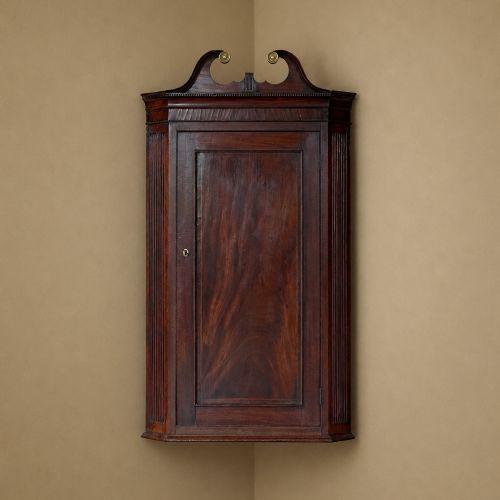
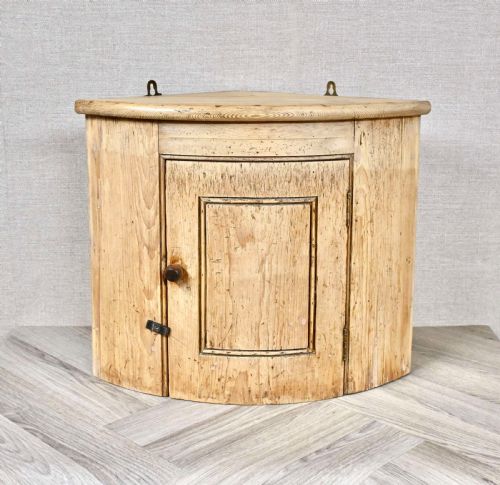
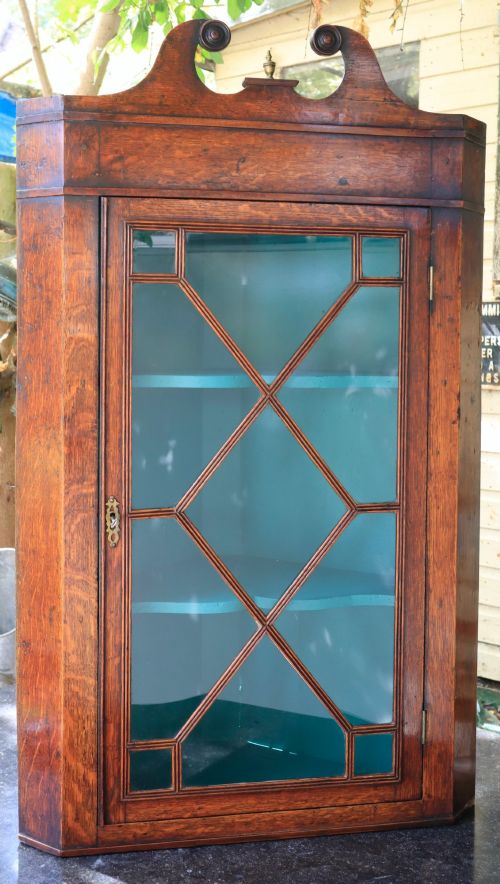
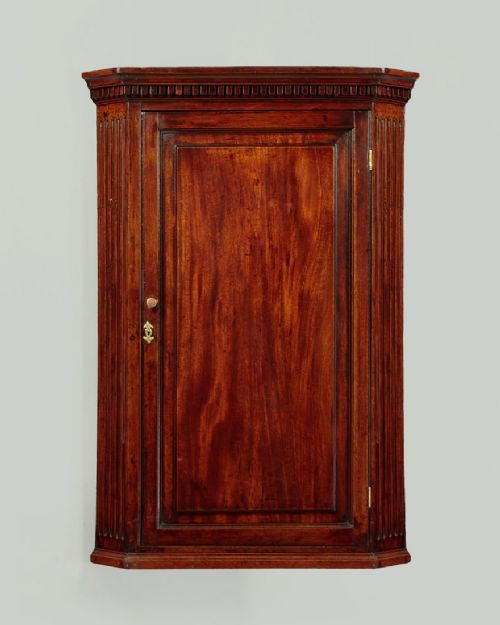


Wall Mounted Corner Cupboard
A wall mounted corner cupboard makes intelligent use of awkward room angles while keeping floor space entirely clear.
Wall Mounted Corner Cupboard
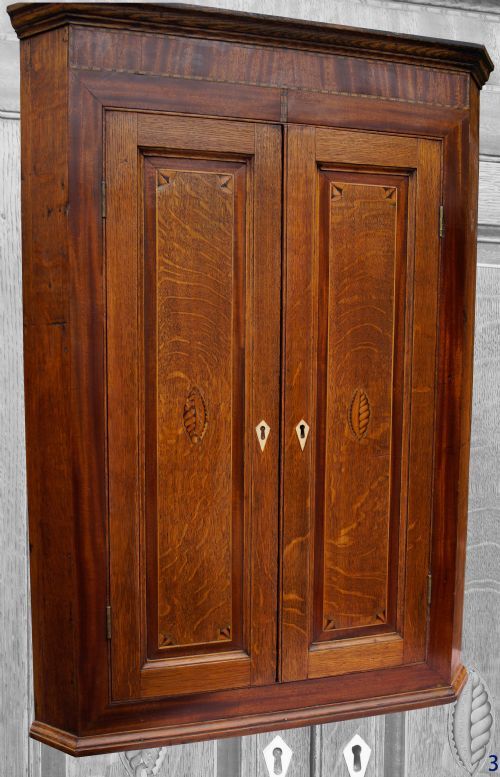
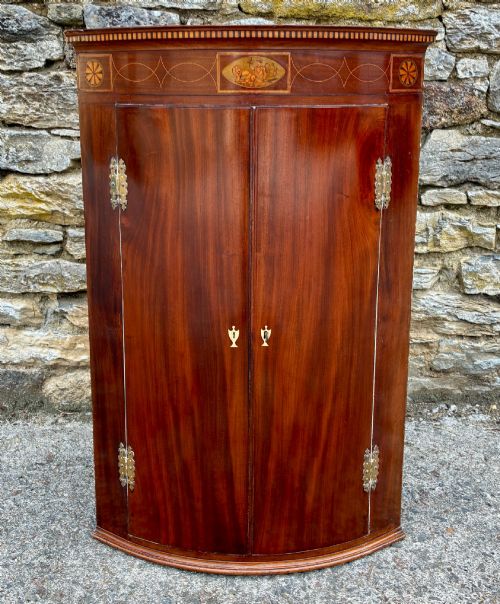
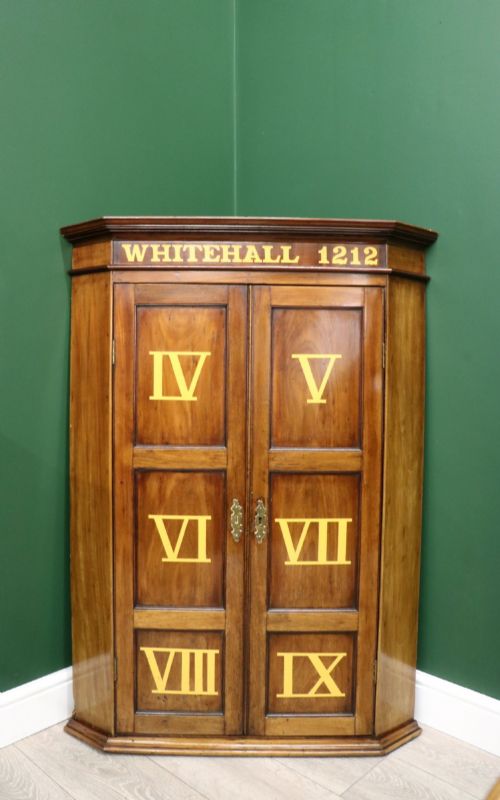
A wall mounted corner cupboard is a clever storage solution designed to fit snugly into the ninety-degree junction of two walls, making use of otherwise dead architectural space. The form emerges frequently in Georgian, Victorian, and Edwardian guises, often constructed with either a flat panelled face or a curved bow front.
Most examples found here span the eighteenth and nineteenth centuries, ranging from simple provincial pine and oak pieces to highly refined mahogany and burr walnut creations. These cabinets serve traditionally to display glassware or conceal household provisions, hanging securely from upper wall brackets.
Buyers encounter a variety of door configurations, including single timber panels, glazed viewing panes for display purposes, and tambour fronts. Interior arrangements typically feature shaped wooden shelves suited for cups, bottles, or small ornaments.
Materials and Construction
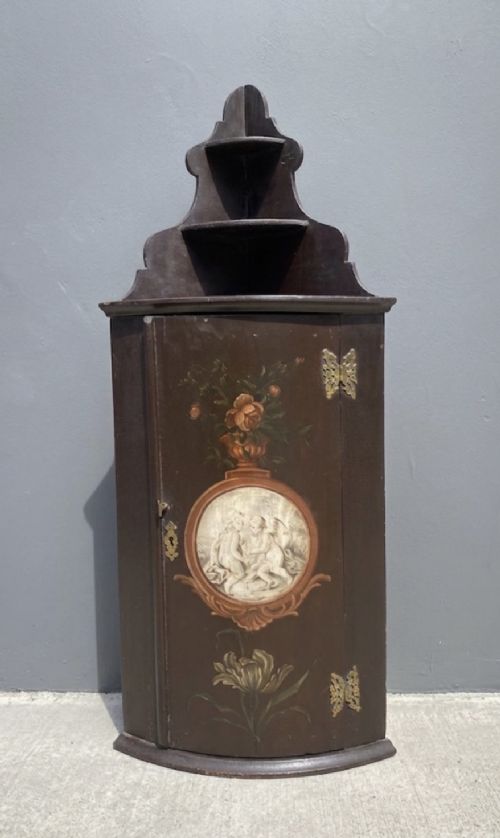
Cabinet makers relied predominantly on native timbers such as oak and mahogany, occasionally employing walnut, pine, or fruitwoods depending on regional availability and the desired finish. Surfaces were frequently embellished with intricate wood veneers, subtle string inlay, or finished with a flat paint coat.
Construction techniques prioritised stability in awkward spaces, utilising sturdy dovetail joints for the main carcass and specialised hanging brackets to bear the weight safely. Brass hardware, including H-hinges, escutcheons, and working locks with keys, provides both structural support and decorative contrast.
Wall Mounted Corner Cupboard Retail Price Guide 2026
Typical asking prices for wall mounted corner cupboard among the pieces listed under this phrase on Sellingantiques today, from the lower quarter to the upper quarter. They describe what is for sale here now, not the wider market.
Some cupboards conceal tiny interior drawers behind the main doors, perfect for hiding secret love letters or stray corkscrews.
Evaluating Quality
Quality rests heavily on the selection of timber grain, such as figured flame mahogany or burr walnut, matched with crispness in any inlaid stringing or carved pediments like the broken arch design. Superior cabinets display thoughtful proportion where the projection from the corner balances harmoniously with the height.
Internal joinery and secondary timbers tell a clear story of craftsmanship, distinguishing local utility pieces from metropolitan cabinet maker workshops. Original brasses, intact working locks, and undamaged glass panes further elevate a piece above standard utilitarian examples.
The Wall Mounted Corner Cupboard Glossary
- Bow front
- A convex curved cabinet face that projects forward from the corner angles. This shape softens the room's geometry and requires skilled woodworking.
- Tambour front
- A sliding shutter formed from narrow vertical strips of wood glued to a fabric backing. It allows access in confined spatial settings.
- Broken arch pediment
- A decorative architectural gable top that is parted at the apex, often featuring a central plinth or finial. It signals formal eighteenth-century design ambitions.
- Escutcheon
- A protective plate surrounding the keyhole. It is usually made from brass and secures the timber from wear around the lock.
- H-hinge
- A surface-mounted hinge shaped like the capital letter H. These hinges are typical of earlier hanging cupboards and cabinets.
Wall Mounted Corner Cupboard: Frequently Asked Questions
What is the difference between an 18th-century and Edwardian cupboard?
Eighteenth-century examples generally showcase rich, dense mahogany or characterful oak with hand-cut dovetails and heavy brass H-hinges. Their construction often reflects regional British vernacular traditions.
Edwardian pieces tend to employ lighter framing techniques, frequently featuring satinwood or boxwood inlay on mahogany surfaces. They mirror a revivalist interest in earlier Georgian aesthetics adapted for more brightly lit Edwardian interiors.
Can these cabinets support heavy dinnerware?
Most interiors feature fixed or shaped wooden shelves designed for lighter porcelain, glassware, or decorative objects. Placing excessively heavy items on older shelves can strain the historical glue joints.
It is best to check the thickness of the shelf supports and the condition of the interior dado grooves. Use them primarily for display rather than heavy storage.
How do I care for the mahogany wood?
Keep the timber away from direct heat sources and strong sunlight to prevent the mahogany finish from fading or splitting. Regular dusting with a soft, dry cloth maintains the natural lustre.
Applying a traditional beeswax polish occasionally helps nourish older wood surfaces. Avoid modern silicone sprays, as they can degrade historical finishes over time.