
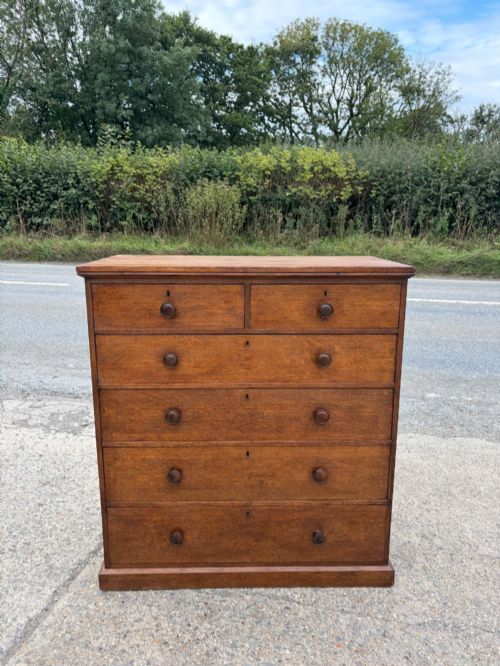
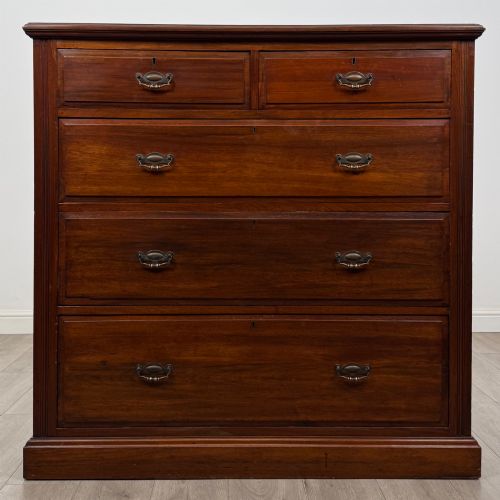
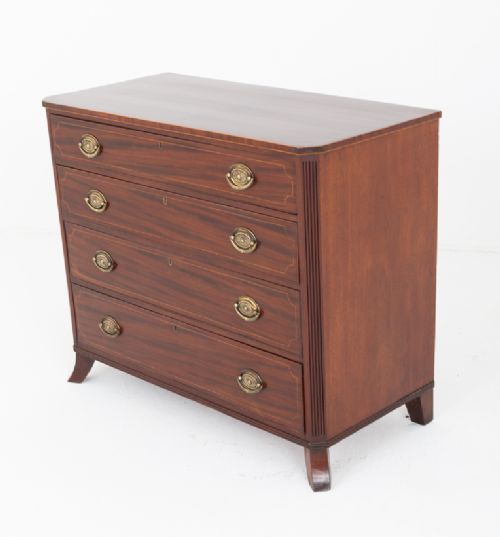
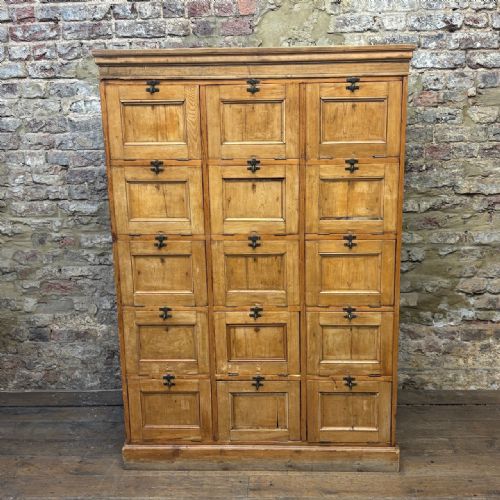
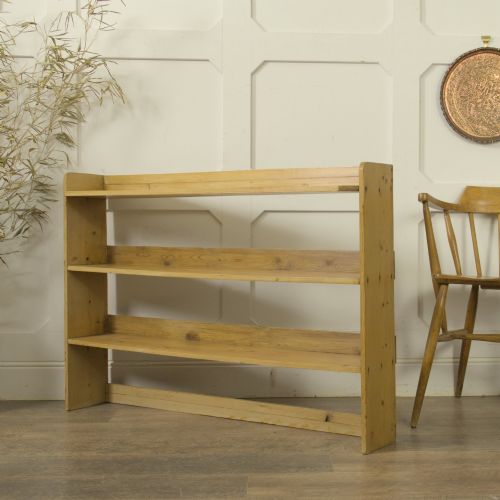
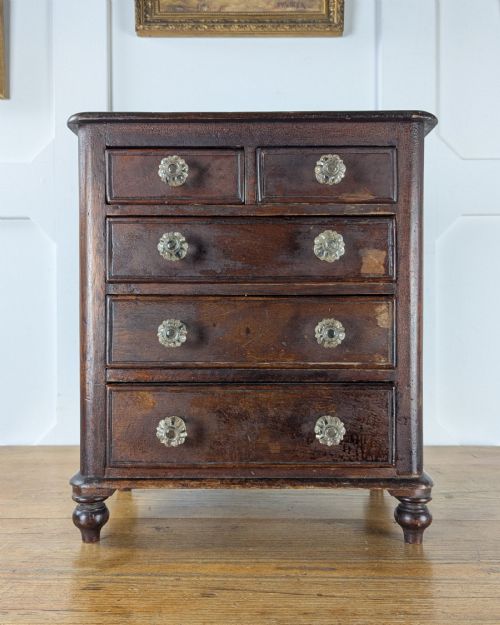
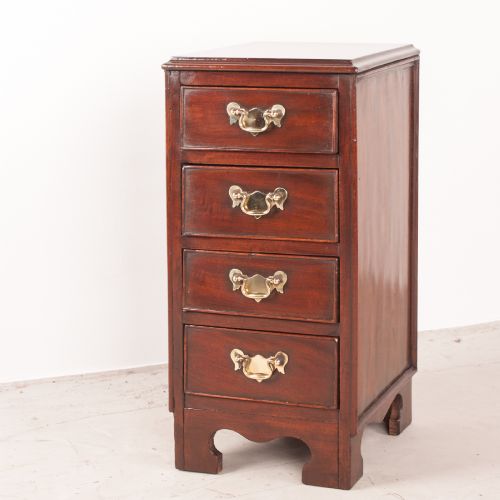
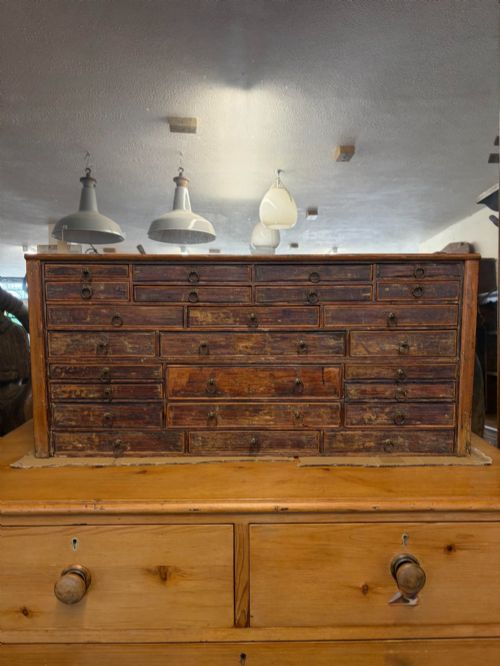
Vintage Wooden Storage Unit
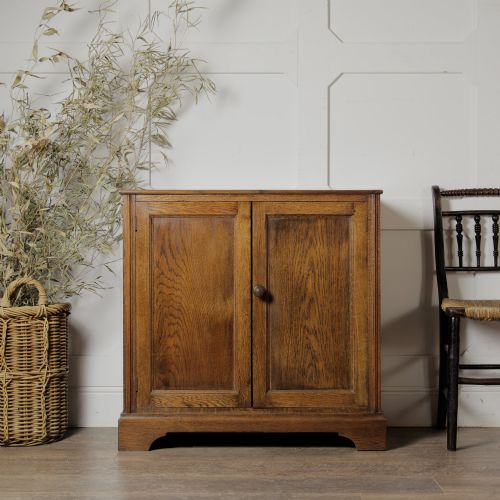
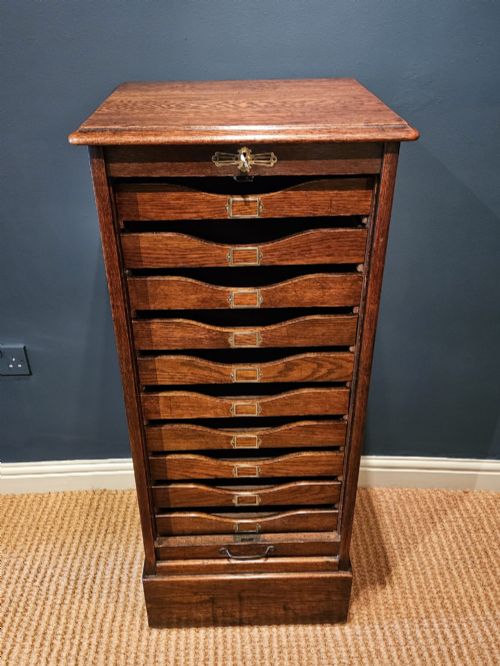
A vintage wooden storage unit organises space through timber and metal, ranging from oak filing cabinets to pine lockers.
Vintage Wooden Storage Unit
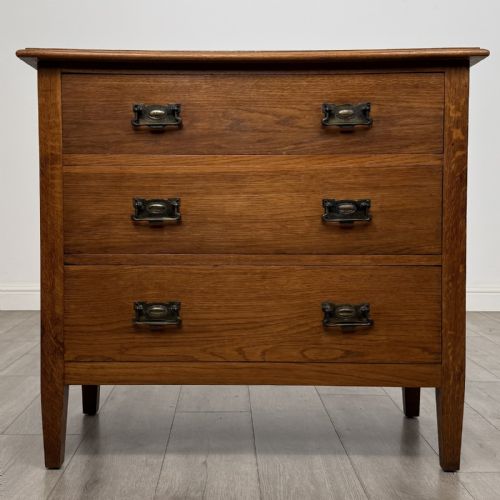
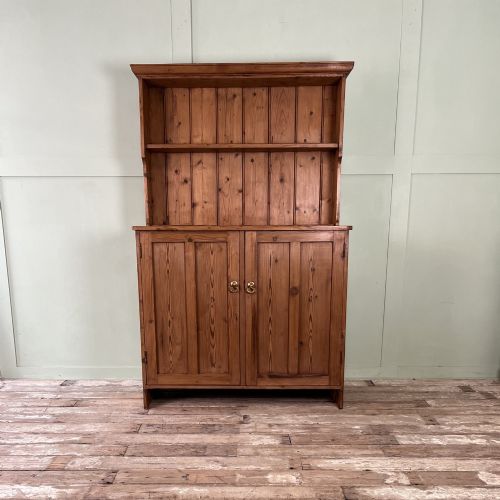
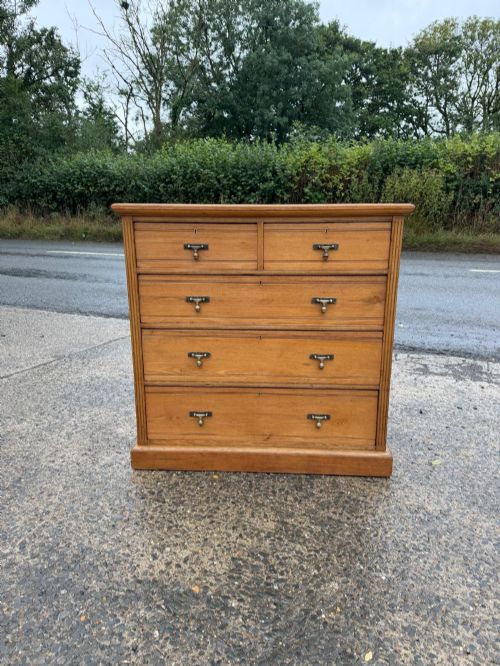
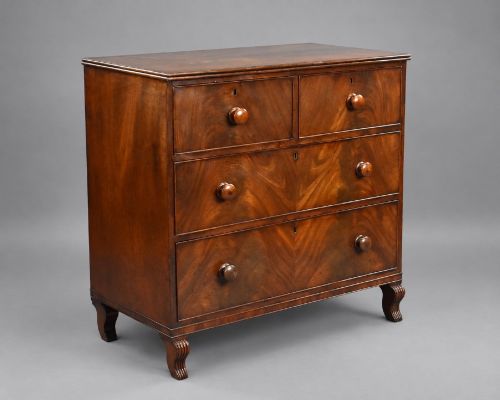
A vintage wooden storage unit serves domestic and commercial needs through diverse forms like chests of drawers, filing cabinets, cupboards, and bookcases. These pieces originate from periods spanning the eighteenth century through the 1930s, encompassing Regency, Victorian, Edwardian, and Art Deco eras.
How they were made
Construction relies primarily on solid hardwoods such as oak and mahogany, alongside softer timbers like pine and structural elements in brass, iron, and glass. Cabinet makers utilised traditional joinery to build durable carcases, drawers, and shelving units.
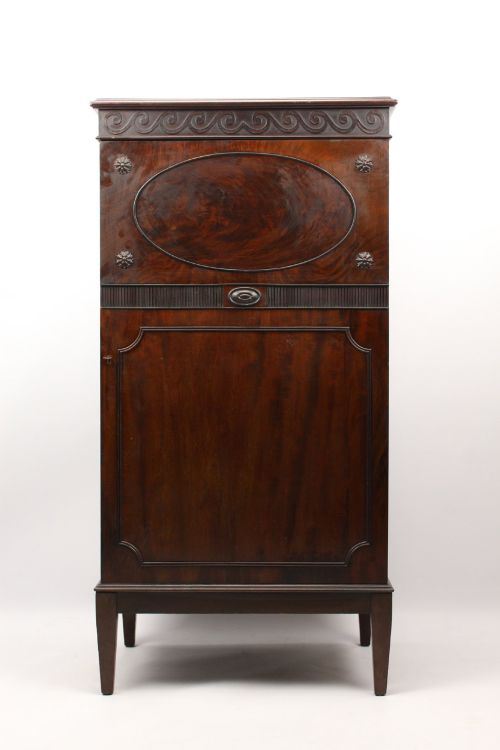
Surface finishes include wax polish on pine, flame mahogany veneers, and intricate inlay work on Edwardian music cabinets. Functional hardware such as brass handles, metal tambour mechanisms, and iron locker doors complement the timber frames.
Listings feature storage units spanning the eighteenth century through the 1930s, constructed in oak, mahogany, pine, and teak.
What varies in quality
Quality separates through the selection of timber grain, such as flame mahogany or figured oak, and the precision of cabinet construction. Pieces bearing maker attributions or specific retail provenance exhibit superior craftsmanship in their joinery and hardware details.
The integrity of original elements, from tambour slats on filing cabinets to turned feet and inlaid banding, dictates the distinction between standard utility items and finer workshop productions.
Denby & Spinks·Luxmore's of Ilfracombe
The Vintage Wooden Storage Unit Glossary
- Tambour front
- A flexible door made of narrow wooden slats attached to canvas, allowing it to slide smoothly around a curved track in filing cabinets.
- Flame mahogany
- A distinctive wood veneer cut from timber fork where branches meet the main trunk, creating a fiery and patterned grain appearance.
- Apprentice piece
- A small-scale model demonstration item created by a trainee craftsman to prove competency before joining a trade guild.
- Pigeon holes
- A series of small recessed compartments designed for sorting letters, documents, or papers within a desk or wall-mounted unit.
Vintage Wooden Storage Unit: Frequently Asked Questions
How do I date an oak filing cabinet?
Dating relies on observing construction methods, timber selection, and hardware styles typical of the Edwardian period and early twentieth century. Tambour mechanisms and brass pulls often correspond to office furniture manufacturing trends of those decades.
Makers frequently incorporated specific locking systems and panel configurations that help narrow down the production era when compared against dated examples.
What is a bank of drawers?
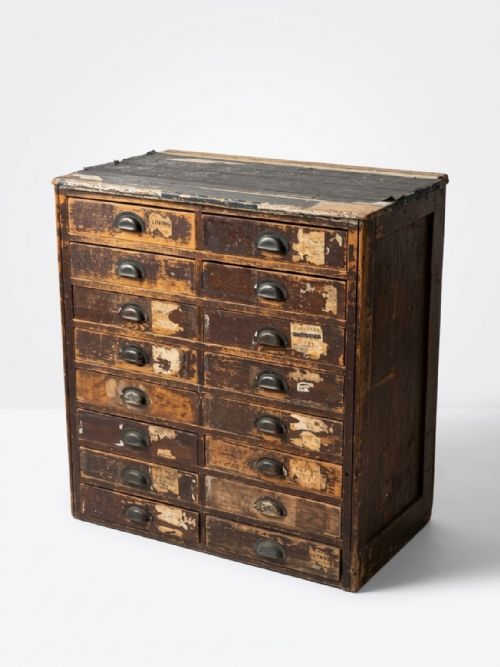
A bank of drawers comprises a large framework housing numerous shallow compartments, originally designed for industrial, retail, or archival filing purposes. These multi-drawer units served commercial environments like railway offices and mercantile stores.
In domestic settings, they provide extensive compartmentalised storage for collections, paperwork, or accessories while retaining a functional industrial aesthetic.
How do I care for antique pine furniture?
Maintaining antique pine involves applying appropriate wax polishes to preserve the waxed surface and prevent the timber from drying out. Keeping pieces away from direct heat sources protects the joints and older softwood construction.
Regular dusting with a soft cloth maintains the finish without introducing moisture that could damage the antique wood.
Where were tambour cabinets used?
Tambour cabinets primarily functioned in Edwardian and early twentieth-century offices as secure, space-saving storage for files and correspondence. The sliding slat door allowed access in restricted desk areas where swinging cabinet doors proved impractical.
Over time, these units transitioned into domestic studies and libraries as compact alternatives to traditional bookcases and cupboards.