
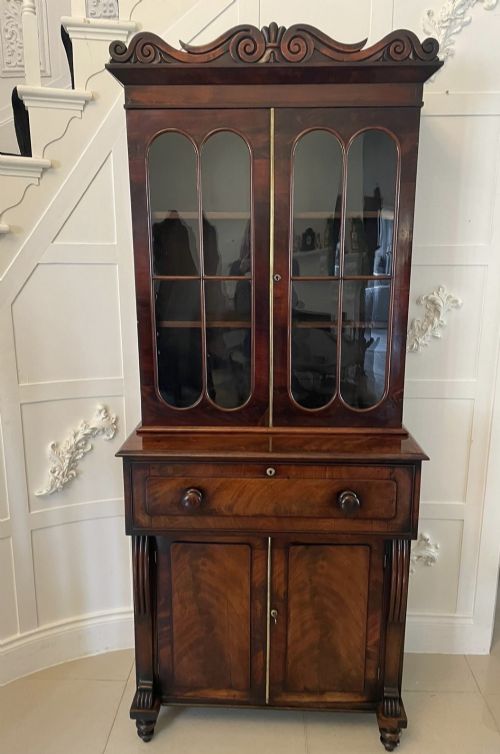
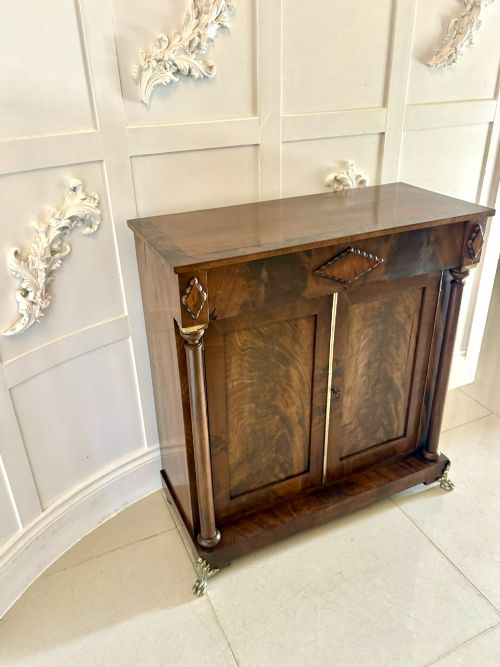
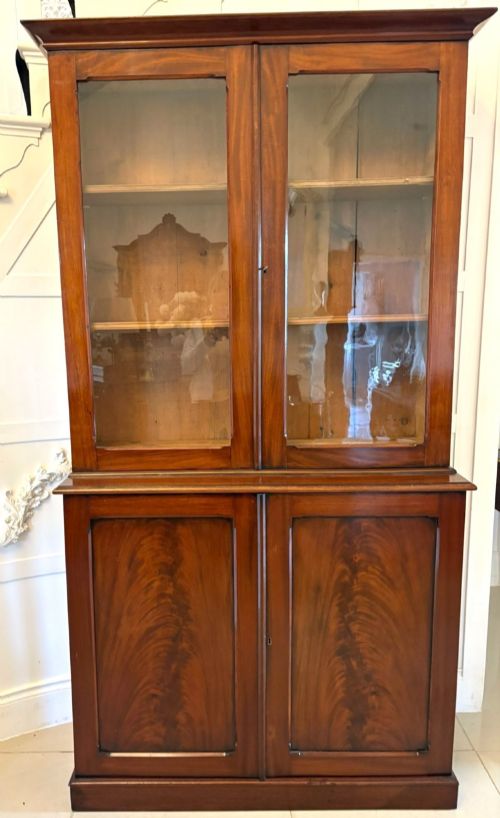
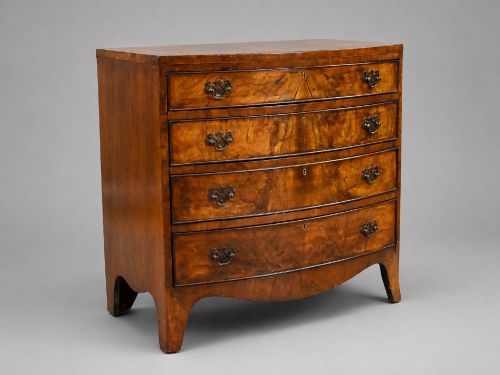


Figured Wood Cabinet
A figured wood cabinet displays timber chosen for its swirling grain, uniting utility with the natural decorative qualities of walnut, mahogany, and rosewood.
Figured Wood Cabinet
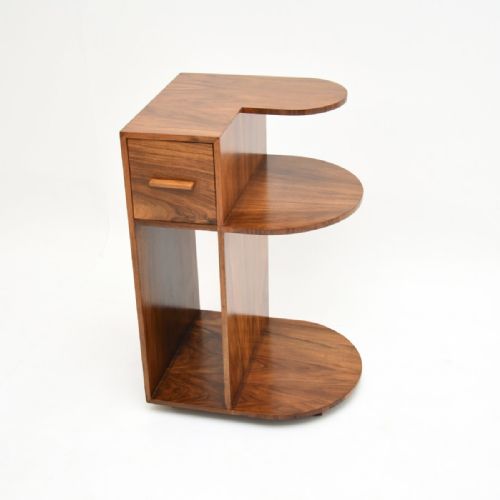
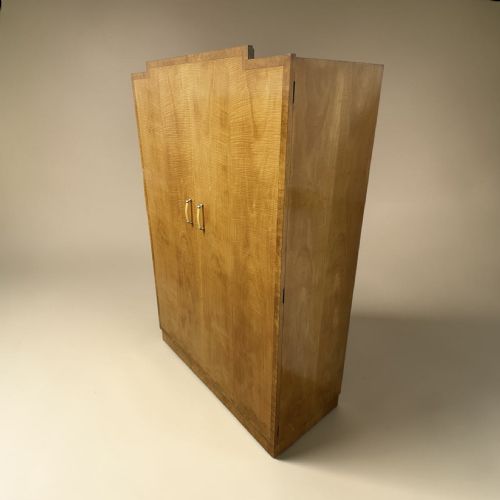
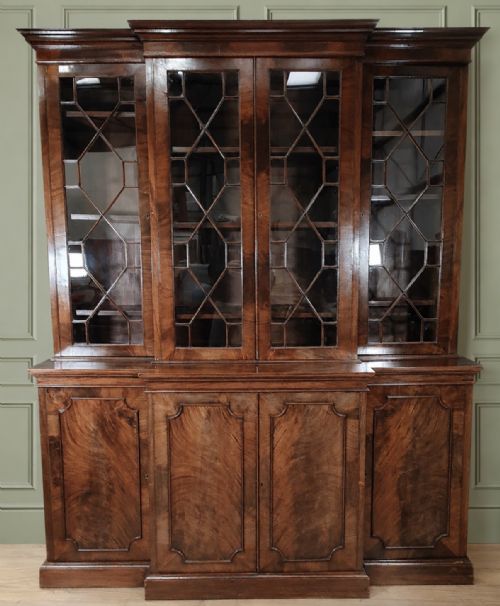
A figured wood cabinet encompasses a broad selection of storage forms designed to highlight decorative timber veneers and solid boards. When searching for a figured wood cabinet, buyers encounter pieces ranging from compact bedside stands and music cabinets to large breakfront bookcases, wardrobes, and pedestal sideboards.
The pieces originating across the Georgian, Victorian, Edwardian, and Art Deco periods utilise specific native and exotic timbers. Walnut and mahogany dominate the selection, appearing alongside rosewood, satinwood, and elm within domestic interiors spanning three centuries.
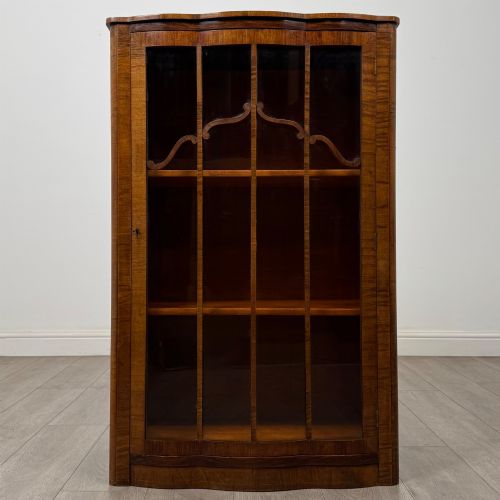
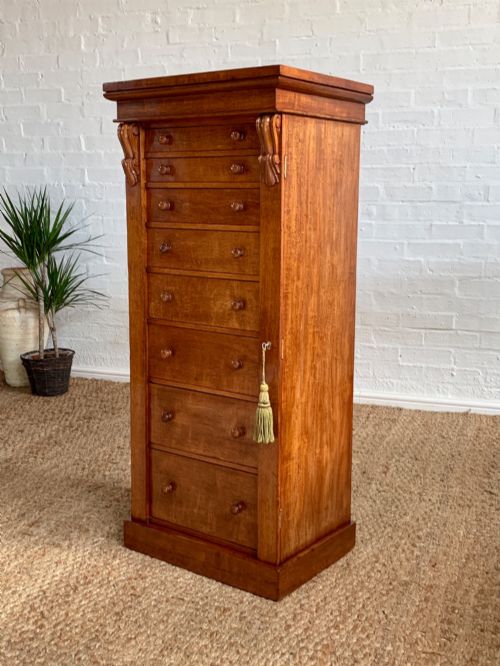
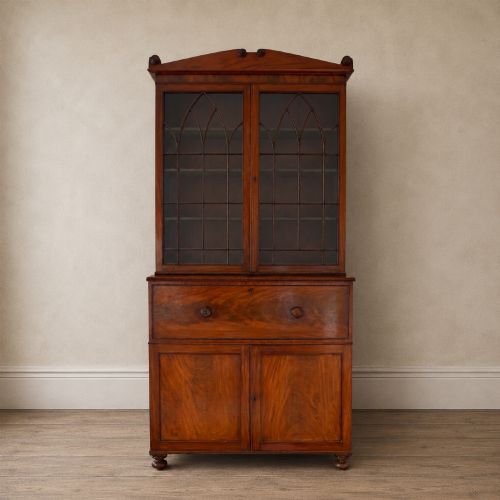
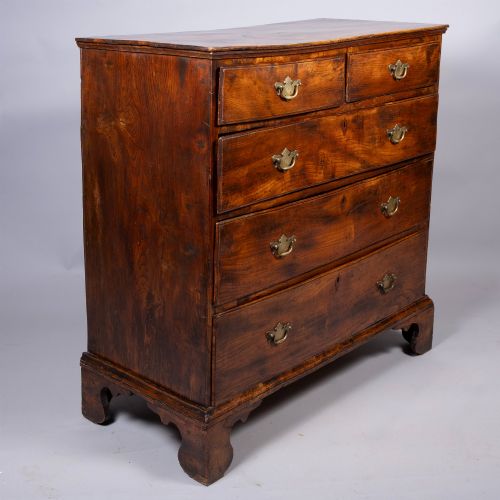
Forms vary from utilitarian cupboards and Wellington chests to glazed display cabinets and bureau bookcases. Each object relies upon the natural pattern of the grain to provide the primary visual interest, often enhanced by brass mounts, glass panels, or marquetry inlay.
Construction and materials
Cabinet makers applied thin slices of figured timber veneer over stable secondary woods like oak or pine to create striking symmetrical patterns on large surfaces. Solid timbers such as mahogany, walnut, and elm formed the structural frames, drawer fronts, and mouldings.
Finishing techniques involved French polishing or waxing to deepen the natural lustre of the grain. Brass handles, knobs, and key escutcheons provided functional hardware, while glass was incorporated into doors for display bookcases and cabinets.
Some nineteenth-century Wellington chests include a locking side bar that secures all seven drawers simultaneously with a single turn of the key.
Distinguishing quality
Quality rests upon the selection and matching of the timber grain across the visible surfaces of the cabinet. Master makers arranged veneer leaves symmetrically to create harmonious patterns, whereas simpler pieces used random boards.
Construction methods dictate longevity, seen in the use of hand-cut dovetails for drawer boxes and solid timber secondary framing. Finer examples integrate secondary decorative elements such as satinwood stringing, marquetry inlay, or finely turned wooden knobs rather than relying solely on the primary timber.
Simon Troger·Betty Joel·The Bowman Brothers·Heal's·Holland & Sons·Whytock & Reid
The Figured Wood Cabinet Glossary
- Figuring
- The natural pattern or design produced in wood grain by irregular growth, branching, or twisting. This characteristic creates distinctive visual motifs such as flame, curl, or burl.
- Marquetry
- The art of applying pieces of veneer to a structure to form decorative patterns or pictures. Craftsmen combined different coloured woods like satinwood and walnut to achieve pictorial depth.
- Breakfront
- A piece of furniture having a central section that projects forward from the flanking sections. This architectural form adds depth and shadow to large bookcases and sideboards.
- Wellington chest
- A tall, narrow chest of seven drawers secured by a hinged locking stile on one side. The design originated in the nineteenth century for compact storage.
Figured Wood Cabinet: Frequently Asked Questions
How do I date a figured wood cabinet?
Dating relies on combining stylistic markers, construction methods, and timber choices typical of specific eras. Georgian pieces often display different proportions and secondary woods compared to Victorian or Art Deco equivalents.
Examining drawer joints, backboards, and hardware provides further physical evidence to narrow down the decade of manufacture.
What is figured walnut?
Figured walnut refers to timber taken from specific parts of the walnut tree, such as burls or stump wood, which exhibit swirling grain patterns. Cabinet makers prized this material for its rich colour and decorative movement.
It appears frequently on high-status pieces from the seventeenth century onwards, particularly on bureau cabinets and display furniture.
Where should I place a cabinet?
These cabinets suit principal reception rooms, dining areas, or studies where their decorative grain can be appreciated in natural light. Display cabinets and bookcases require stable environments away from direct heat sources to protect veneers.
Positioning them against flat interior walls allows doors and drawers to function correctly without distortion from uneven floors.
How do I care for antique wood?
Maintenance involves dusting with a soft cloth and applying traditional beeswax periodically to nourish the polish. Avoid synthetic sprays and keep furniture away from radiators and direct sunlight to prevent timber shrinkage.
Consistent indoor humidity levels protect both the solid carcase and the delicate applied veneers from splitting.