

Vintage Wooden End Table
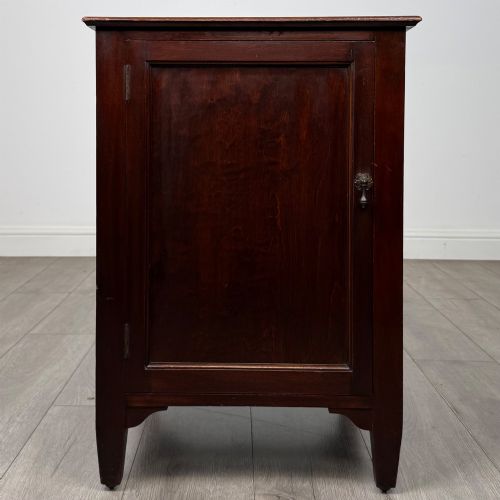
A vintage wooden end table brings practical surface space and period character to a room, spanning Edwardian, Victorian, and later twentieth-century designs.
Vintage Wooden End Table
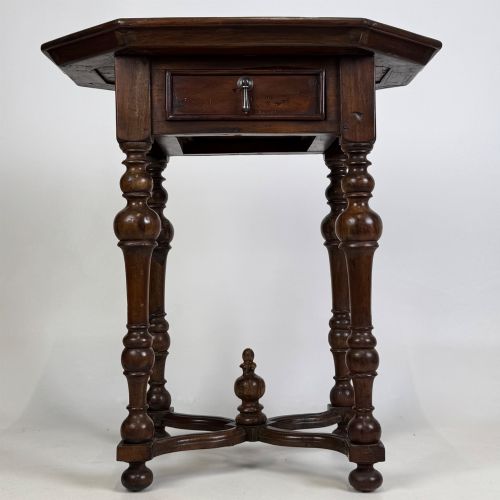
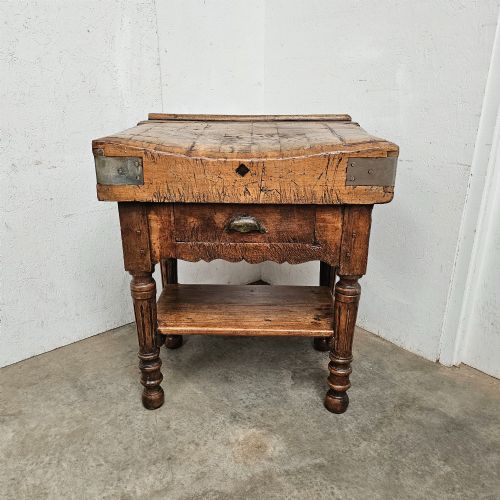
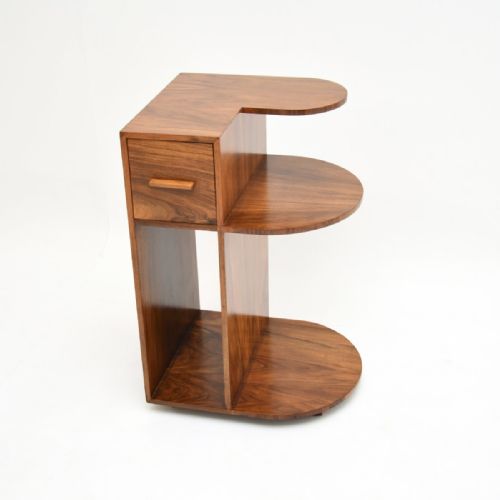
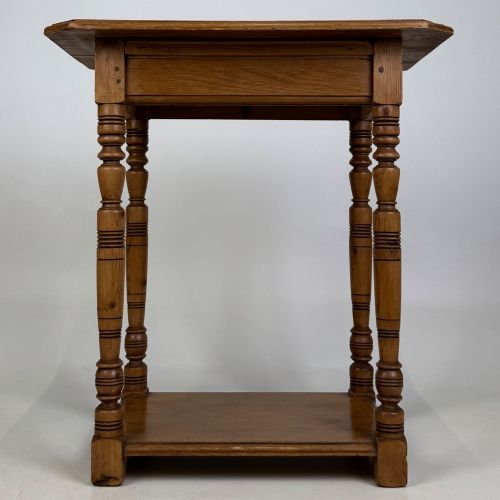
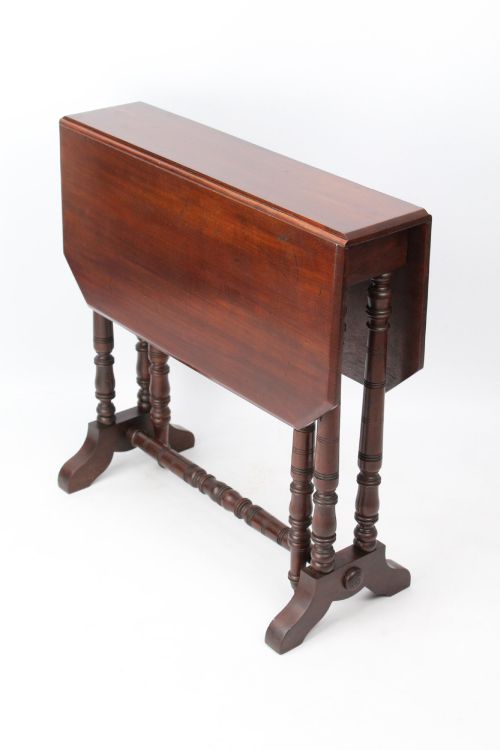
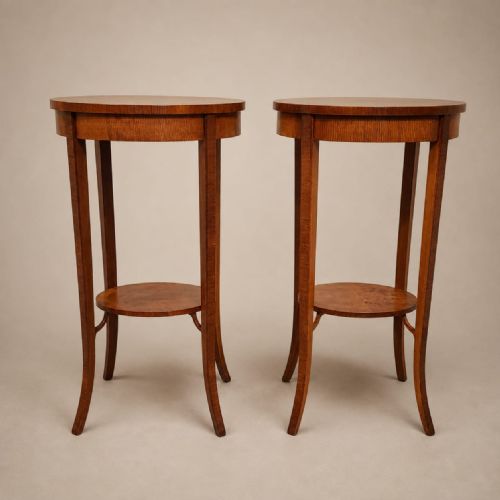
A vintage wooden end table encompasses various compact surfaces designed for placement beside seating or beds, frequently appearing as side tables, occasional tables, lamp tables, and nests of tables. When searching for a vintage wooden end table, buyers encounter forms that range from simple Edwardian oak designs to sophisticated Victorian rosewood and walnut folding variants like Sutherland tables.
The selection extends across multiple historical periods, notably the nineteenth century, Victorian, Edwardian, and the 1920s and 1930s. Alongside standard four-legged side tables, the category includes drop-leaf formats, tiered nests, and specialised bedside cabinets constructed to fit domestic spaces of differing scales.
What varies in quality
Quality in these tables is determined by the selection of timber figures, such as figured walnut or matched mahogany grains, and the precision of decorative techniques like marquetry inlay and chip carving. Finer pieces demonstrate careful attention to proportion, sturdy construction using solid hardwoods, and integration of complementary metal fittings like brass galleries.
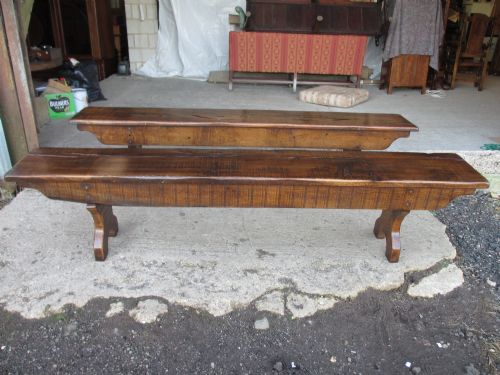
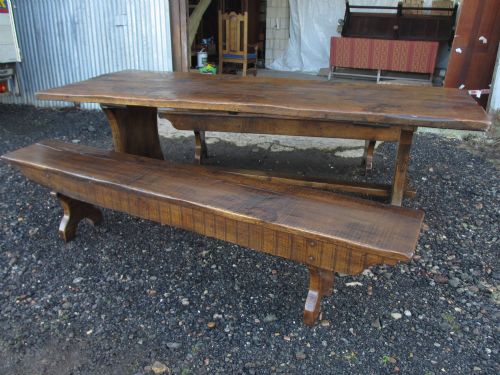
The sophistication of the design dictates much of the distinction within the range, moving from utilitarian oak benches and simple side tables to complex multi-tiered nests, drop-leaf mechanisms, and documented workshop attributions. The cohesiveness of pairs and sets also influences the standing of the pieces.
The listings feature woods including oak, mahogany, walnut, rosewood, satinwood, and teak, spanning the Edwardian, Victorian, and Art Deco periods.
Hindley and Sons
The Vintage Wooden End Table Glossary
- Sutherland table
- A narrow drop-leaf table with hinged flaps that drop nearly vertically, supported by pivoting swing legs. This form allows the table to fold into a very compact footprint when not in use.
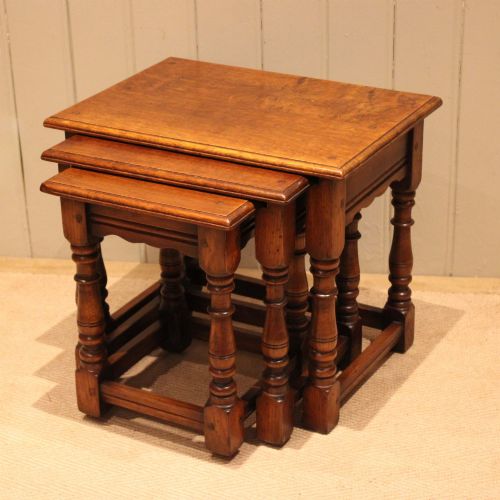
- Nest of tables
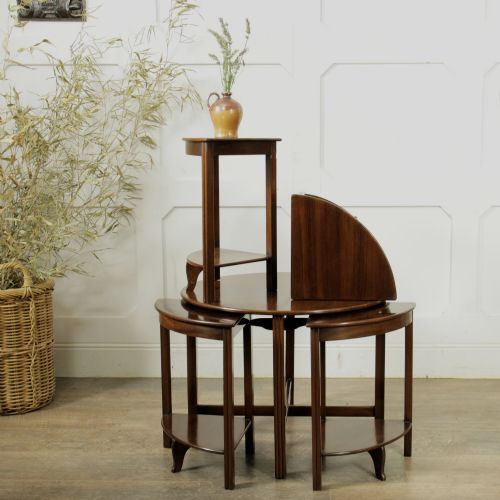
- A set of graduated tables designed to fit neatly one beneath another to save floor space. They are frequently found in sets of three or five.
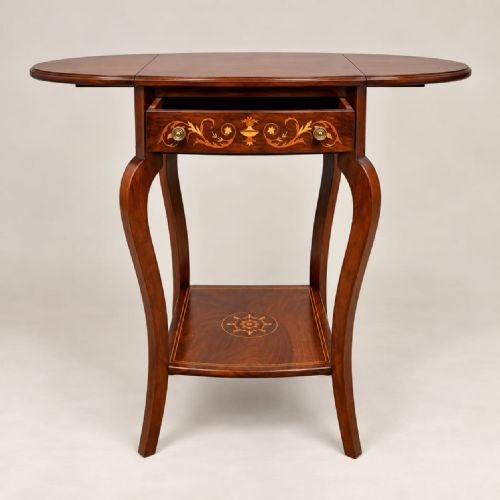
- Marquetry
- The art and craft of applying pieces of veneer to a structure to form decorative patterns and pictures. It appears frequently on tabletops from the Georgian style and later periods.
- Brass gallery
- A low pierced metal railing fitted around the edge of a tabletop to prevent items from sliding off. This feature is commonly seen on lamp and corner tables.
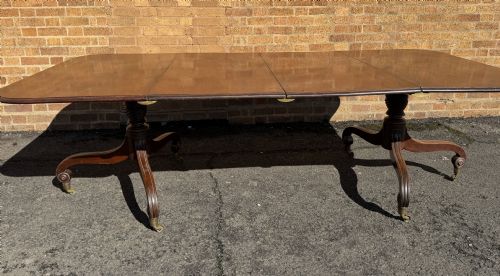
- Drop leaf
- A table top configuration featuring fixed centre sections with hinged flaps on either side that can be raised or lowered. This mechanism adjusts the surface area according to immediate needs.
Vintage Wooden End Table: Frequently Asked Questions
What defines a vintage wooden end table?
A vintage wooden end table is a small, movable surface designed to hold lamps, books, or drinks beside chairs and beds. These pieces utilise woods such as oak, mahogany, walnut, and rosewood across various historical periods.
They function practically within living spaces while exhibiting stylistic traits from the nineteenth century through the Art Deco era, including turned legs, inlaid veneers, and drop-leaf configurations.
How do I identify an Edwardian end table?
Edwardian tables often feature lighter timbers, straightforward geometric lines, or barley twist legs in oak. They frequently appear as nests of tables or compact side surfaces tailored to domestic interiors of the early twentieth century.
Compared to heavier Victorian designs, these pieces emphasise practical forms, sometimes incorporating inlaid mahogany or simpler structural bracing like trestle ends.
What is a Sutherland table used for?
A Sutherland table serves as a versatile occasional surface that easily transforms from a narrow console to a wider table by raising its hinged drop leaves. The pivoting legs swing out to support the extended flaps securely.
Historically utilised in Victorian drawing rooms for tea or reading materials, these tables store compactly against a wall when the leaves are dropped.
Where should I place a lamp table?
Lamp tables suit corners, bedside areas, or spaces beside armchairs where localized lighting is required. Their compact dimensions allow them to fit into tighter perimeters of a room without obstructing movement.
Many examples include lower shelves or brass galleries, making them functional surfaces for holding reading lamps, books, and decorative objects.