



French Art Deco Side Table
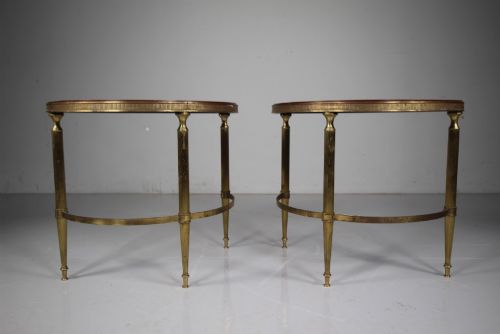
These french art deco side table pieces combine architectural form and rich timbers, offering practical surface space with distinct interwar character.
French Art Deco Side Table
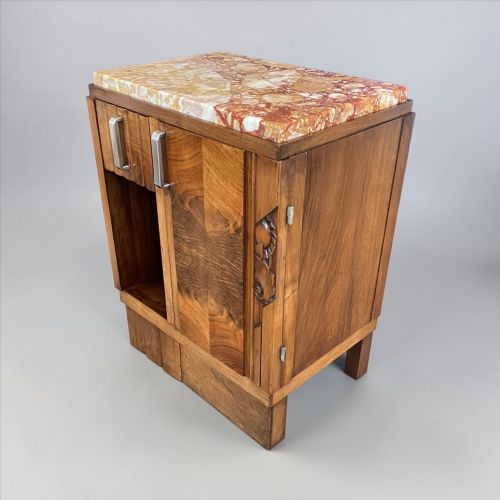
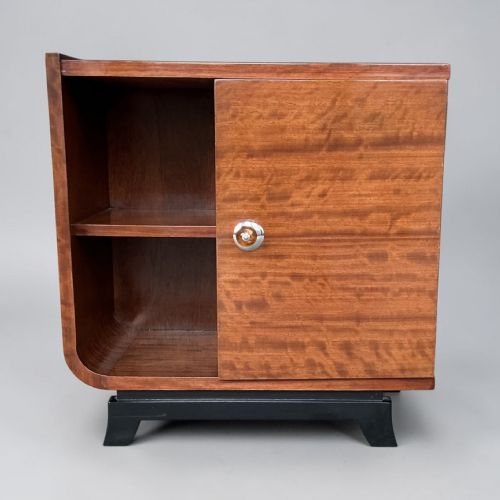
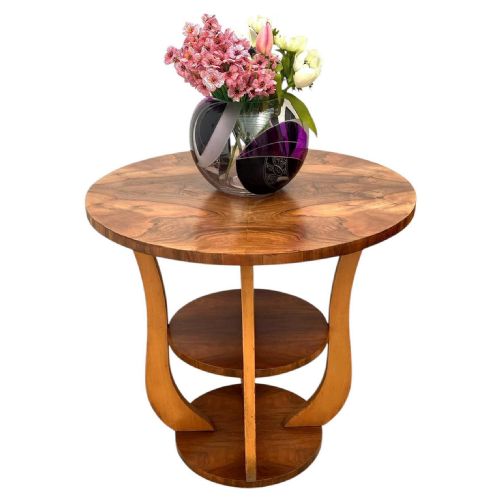
A french art deco side table bridges functional domestic utility and striking interwar design, appearing frequently in forms such as compact bedside cabinets, low occasional tables, and tiered centre pieces. These items serve smaller display duties or sit neatly beside seating, providing compact utility without dominating a room.
The pieces on this page originate predominantly from the 1920s, 1930s, and 1940s, reflecting the progression of modernism and neoclassical restraint during the period. Buyers encounter walnut, mahogany, and occasional rosewood structures, frequently paired with glass, marble, or brass elements.
Alongside standard side tables, related forms like nesting tables and console tables appear within the selection. These variations provide a cohesive aesthetic language centred on geometric clarity and refined material pairing.
Materials and construction methods
Cabinetmakers utilise dense hardwoods such as walnut, mahogany, ebony macassar, and rosewood, often applying figured veneers to create striking surface patterns. These timber frames combine with structural metals like brass, chrome, nickel, and wrought iron to establish the characteristic interwar contrast.
French Art Deco Side Table Retail Price Guide 2026
Typical asking prices for french art deco side table among the pieces listed under this phrase on Sellingantiques today, from the lower quarter to the upper quarter. They describe what is for sale here now, not the wider market.
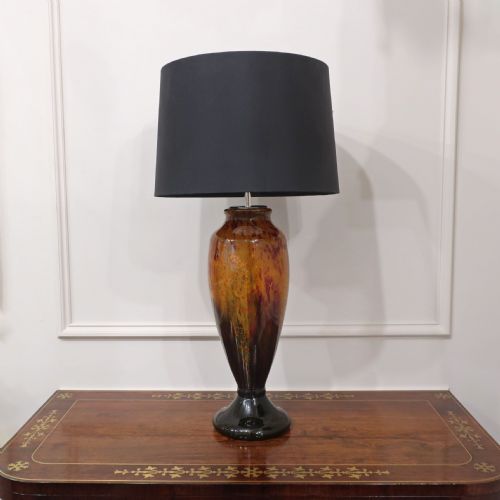
A whimsical seagull balances on a wave within one lamp design, proving interwar designers embraced lighthearted nature motifs.
Judging quality and execution
Quality rests upon the selection of timber veneers and the precision of the joinery linking wooden frames with metal or glass components. Superior examples display thoughtful grain matching across figured walnut or mahogany surfaces, whereas simpler pieces rely on plain timber.
The integration of secondary materials dictates the tier of the piece, distinguishing standard utility items from high-end console tables or signed artistic works. Heavy marble slabs, specialised glass shades, and intricate metalwork elevate an object from basic domestic furniture to a sophisticated design statement.
Charles Schneider·Daum·Muller Bros·Baccarat·Majorelle·Michel Dufet
The French Art Deco Side Table Glossary
- Gueridon
- A small French occasional table, often round, supported by a central pillar or columns. These pieces function well as compact side surfaces.
- Demi Lune
- A half-moon shape used for tables designed to sit flush against a wall. This profile saves floor space while maintaining display utility.
- Occasional table
- A small, movable table intended for specific, intermittent use around a room. They appear in various tier counts and geometric forms.
- Macassar ebony
- A heavily figured exotic hardwood featuring dark brown and black stripes with golden brown undertones. Makers prize it for high-end modernist surfaces.
- Frosted glass
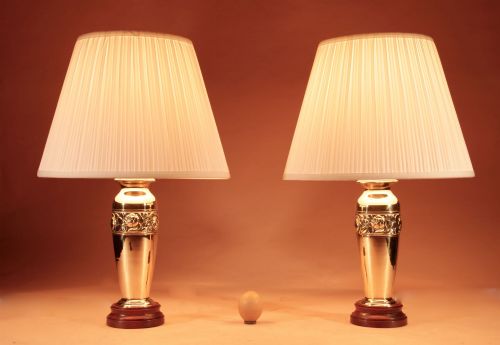
- Glass treated to impart a milky, opaque appearance that diffuses light gently. It appears frequently in interwar lamps and table accents.
French Art Deco Side Table: Frequently Asked Questions
What defines a French art deco side table?
These tables combine geometric interwar silhouettes with rich materials like walnut, mahogany, brass, and marble. They reflect design trends from the 1920s to the 1940s.
Craftsmanship focuses on clean lines, contrasting textures, and practical forms suited for modern living spaces.
How do I date these tables?
Dating relies on stylistic shifts from opulent 1920s detailing toward the streamlined modernist forms of the 1930s and 1940s. Material choices also offer clues.
Heavier wrought iron and ornate glass often point to the earlier decade, while sleek chrome and ebony macassar suggest the mid-1930s.
Where should I place a side table?
These compact tables fit beside armchairs, sofas, or beds, providing a convenient surface for lamps and daily items. Their varied heights accommodate different seating arrangements.
Nesting tables offer flexible expansion when extra surface area is required during gatherings.
How do I care for wooden surfaces?
Maintain polished wood and veneer by dusting with a soft cloth and avoiding direct sunlight or excessive moisture. Natural waxes help preserve the timber grain.
Protect marble and glass inserts with appropriate coasters to prevent staining or scratching on delicate vintage surfaces.