


Vintage Wooden Desk Organiser
A vintage wooden desk organiser brings order to papers and pens while anchoring a workspace with period character.
Vintage Wooden Desk Organiser
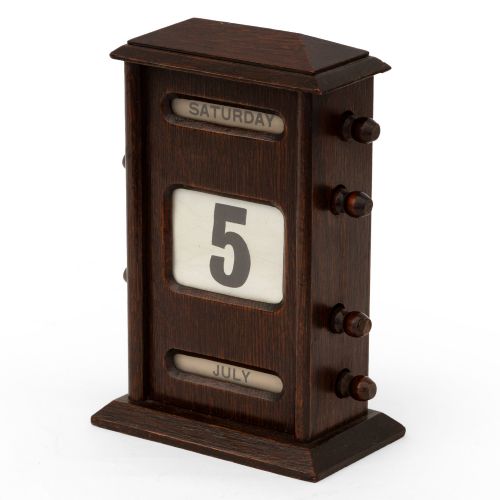
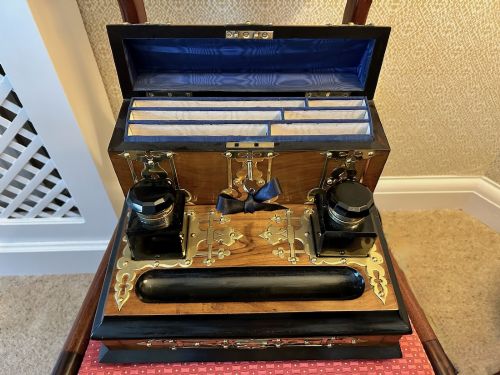
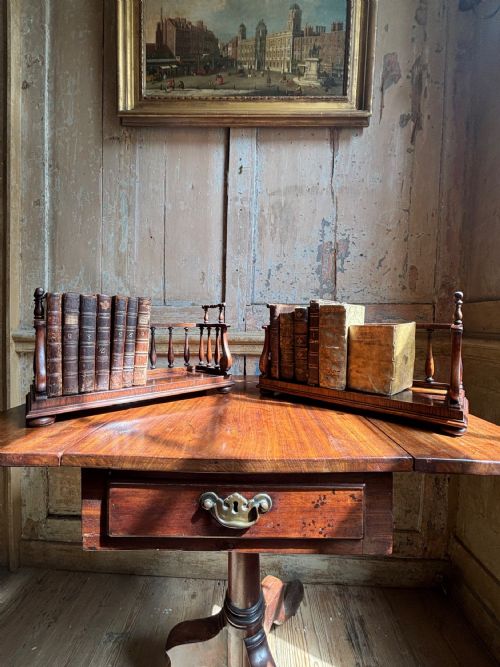
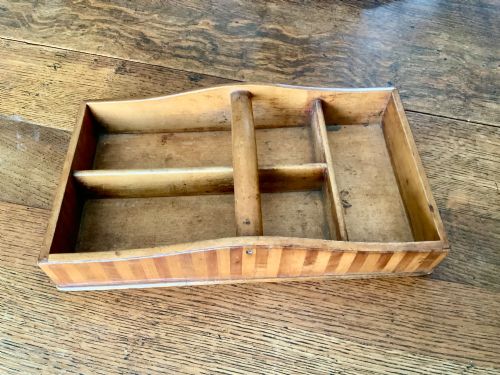
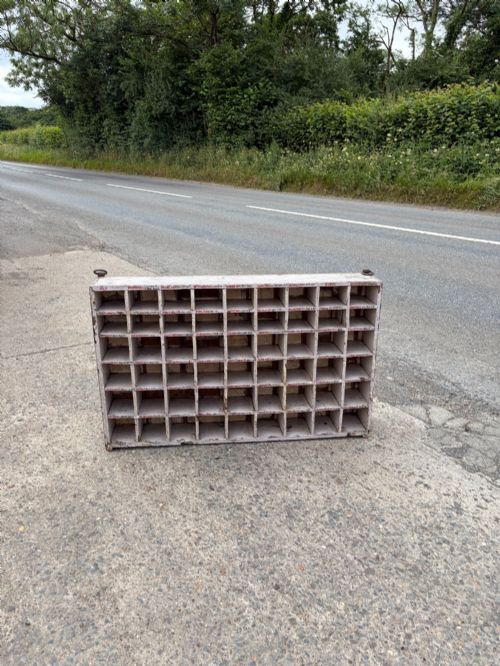
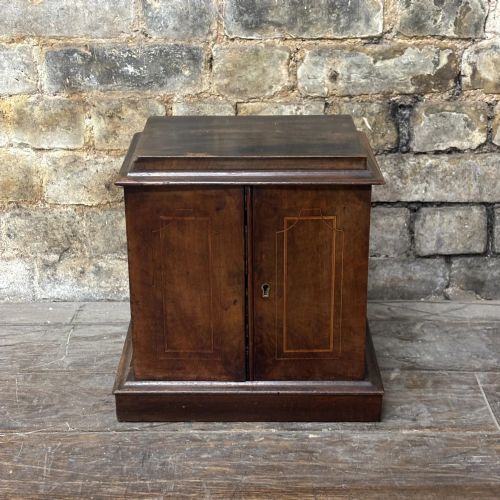
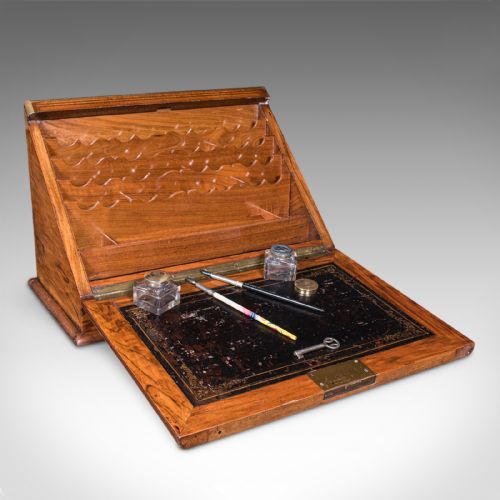
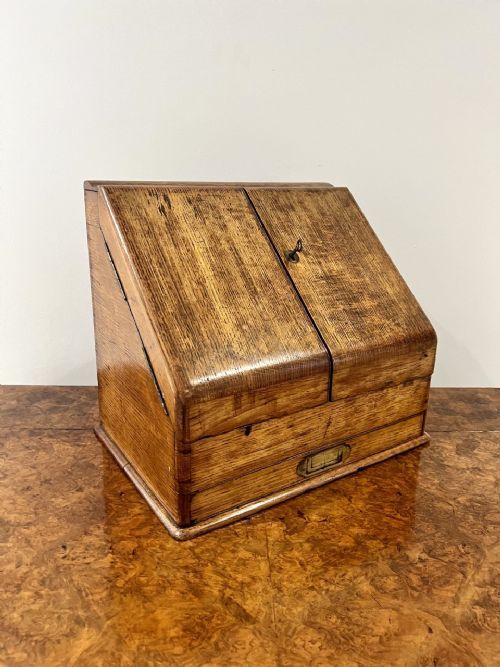
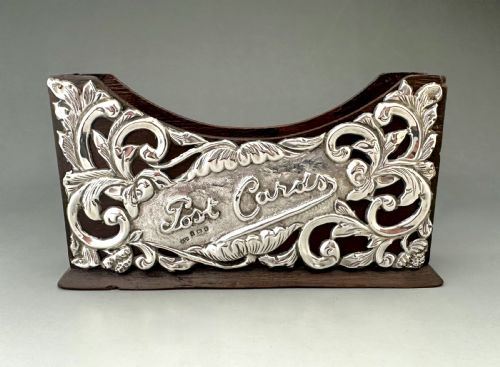
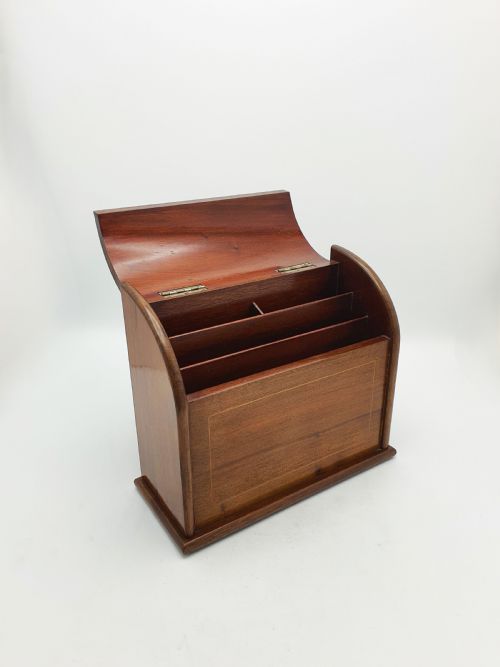
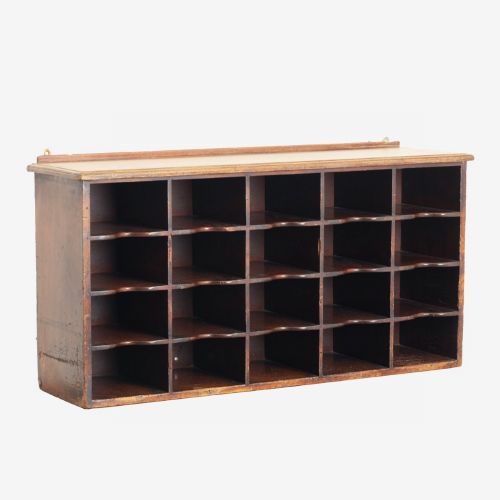
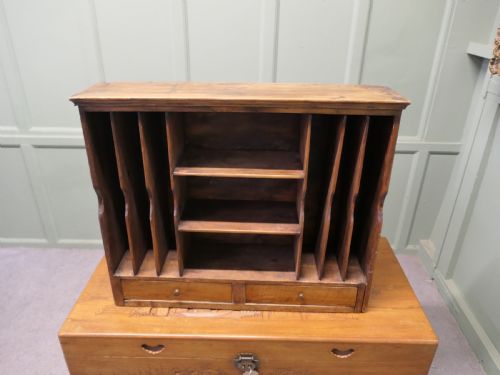
A vintage wooden desk organiser encompasses various tabletop accessories designed for sorting correspondence, holding inkwells, and managing documents. These pieces range from simple letter racks and expanding book slides to substantial stationery cabinets and pigeon hole units.
The selections encountered here span several decades and styles, including Victorian, Edwardian, and Arts and Crafts examples. Makers utilised durable timbers to construct items that served busy offices, studies, and writing rooms.
Buyers look for functional desktop containers that retain their original compartments and fittings. The forms reflect the clerical habits of past centuries, offering designated spaces for pens, stamps, and letters.
Materials and Construction
Cabinetmakers built these organisers using dense hardwoods such as mahogany, oak, walnut, and coromandel, often selecting figured veneers for decorative effect. Brass hinges, handles, and mounts provided both structural reinforcement and polished contrast against the dark wood.
Joinery techniques included dovetailed drawer construction and precise mortise and tenon frames to withstand daily office use. Carved details, marquetry inlays, and silver mounts appeared on finer pieces intended for prominent display in domestic libraries.
Interior components like pigeon holes, sliding book rests, and removable inkwell trays required careful carpentry to ensure smooth operation. Pine and secondary timbers often lined the concealed spaces and drawer interiors.
Oak, mahogany, and walnut dominate the listed materials, appearing across Victorian and Edwardian stationery boxes, inkstands, and pigeon holes.
Distinctions in Quality
Quality reveals itself in the selection of timber and the precision of the joinery rather than mere decorative elaboration. Superior pieces feature solid timber carcasses with clean dovetailing, well-fitted internal drawers, and original brass hardware that remains firmly seated.
The sophistication of the internal mechanism separates standard boxes from exceptional examples. Smoothly extending book slides, cleverly concealed secret drawers, and complete original inkstand fittings demonstrate superior craftsmanship.
Proportion and balance dictate the visual success of a desktop accessory. Pieces that maintain elegant lines while accommodating practical storage requirements represent the pinnacle of period design.
The Vintage Wooden Desk Organiser Glossary
- Stationery cabinet
- A tabletop housing featuring doors or a hinged lid that opens to reveal pigeon holes, letter slots, and small drawers for writing paper and envelopes.
- Inkstand
- A tray or stand holding one or more inkwells, often accompanied by pen troughs and sometimes incorporating a drawer or a letter rack.
- Book slide
- An expanding or adjustable rack designed to hold a small row of books upright on a desktop, frequently featuring hinged ends decorated with carving or inlay.
- Pigeon hole
- An open compartment within a desk organiser or cabinet used for sorting incoming and outgoing correspondence.
- Marquetry
- The art of applying pieces of veneer to a structure to form decorative patterns, commonly seen on Edwardian stationery boxes.
Vintage Wooden Desk Organiser: Frequently Asked Questions
What fits inside a vintage desk organiser?
These compartments suit modern letters, notebooks, pens, and small stationery items. The pigeon holes and drawers accommodate everyday desktop clutter while keeping surfaces tidy.
Larger stationery cabinets easily hold standard envelopes and pads. Smaller letter racks focus strictly on mail and incoming correspondence.
How do I care for wooden desk accessories?
Keep wooden organisers away from direct heat sources and strong sunlight to prevent the timber from drying out. An occasional application of traditional beeswax maintains the finish.
Avoid excessive moisture on unsealed interior surfaces, especially around old brass fittings or leather-lined writing slopes.
Are these organisers suitable for modern offices?
Many people use these pieces on contemporary desks to manage mail, stationery, and small electronics. The compact footprints fit standard work surfaces without dominating the room.
Period desk tidies add warmth and traditional character to minimalist modern interiors.
How can I tell the period of an organiser?
Stylistic clues like Gothic Revival arches, Arts and Crafts simplicity, or Edwardian marquetry point toward specific eras. Construction methods, such as hand-cut dovetails versus machine-made joints, also help date the piece.
Hardware styles, including brass drop handles and escutcheons, offer further evidence for the decade of manufacture.