


Victorian Walnut Desk Stand
A victorian walnut desk stand brings figured timber and substantial brass mounts to the desktop, offering an organised writing surface rooted in the nineteenth century.
Victorian Walnut Desk Stand
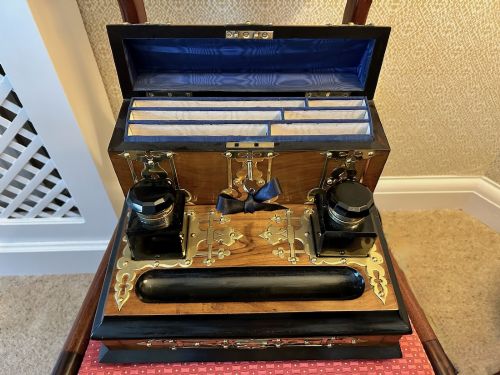
A victorian walnut desk stand is a desk accessory designed to hold inkwells, pens and stationery, appearing frequently alongside related items like book slides and inkstands in the evidence. These pieces date principally from the nineteenth century, spanning periods such as eighteen eighty and eighteen seventy.
The objects take various forms on the page, from compact writing equipment to larger desk sets and fitted inkstands incorporating brass mounts. Walnut and burr walnut dominate the selection, often complemented by cut glass or porcelain inserts.
Makers and workshops of the era utilised these materials to create both utilitarian writing aids and decorative library furnishings. The surviving examples demonstrate how Victorian desk accessories combined dense timbers with functional brass work.
Materials and Construction
Makers built these pieces primarily using solid walnut and highly figured burr walnut veneers applied to secondary timbers. The rich grain patterns of the wood provide the primary visual interest across the surfaces.
Brass mounts, hinges and galleries were screwed or pinned to the timber structures to hold glass inkwells and pen trays securely. Some examples incorporate porcelain plaques, silk or bone details alongside the core combination of walnut and brass.
Listings show walnut combined with brass mounts, cut glass and porcelain across nineteenth-century desk stands.
Evaluating Quality and Craftsmanship
Quality rests upon the selection of the burr walnut veneer and the weight of the brass fittings. Superior examples display dense, lively grain figures across every exposed surface rather than plain timber.
The integration of internal components, such as hinged lids on inkwells and smooth sliding mechanisms on book slides, marks the distinction between standard production and finer library pieces.
Maple and Co·Howard and Son·Betjemanns
The Victorian Walnut Desk Stand Glossary
- Burr walnut
- A veneer sliced from the growth excrescences of the walnut tree, prized for its swirling, highly figured grain pattern. It appears frequently on high-status Victorian library furniture and desk accessories.
- Inkstand
- A fitted tray or stand holding one or more inkwells, sanders and pen troughs for use on a writing desk. Many examples combine walnut frames with chased brass mounts and glass bottles.
- Book slide
- An expanding rack designed to hold a row of books upright on a desktop or table, often fitted with extending walnut leaves and brass ends. They share the same construction methods as desk stands.
- Brass mount
- A decorative or structural fitting cast from brass and attached to the corners, edges or feet of wooden desk items. They reinforced joints while adding metallic contrast to the dark timber.
- Cut glass
- Glassware shaped with faceted or wheel-cut geometric patterns, commonly used for the removable inkwells fitted inside nineteenth-century desk stands.
Victorian Walnut Desk Stand: Frequently Asked Questions
What is a victorian walnut desk stand?
A victorian walnut desk stand is a portable or stationary desktop accessory designed to hold ink, pens and sometimes writing paper. These pieces incorporate compartments for glass inkwells and channels for pens.
They reflect the formal correspondence habits of the nineteenth century, keeping essential writing tools together on a library table or Davenport desk.
How do I care for burr walnut?
Burr walnut requires minimal intervention, needing only a gentle dusting with a dry, soft cloth to maintain its finish. Avoid placing walnut items in direct sunlight or near heat sources to prevent the veneer from drying out.
Applying a traditional beeswax polish occasionally helps nourish the wood and preserves the depth of the grain pattern.
Are the inkwells original?
Many surviving desk stands retain their original cut glass inkwells, often fitted with brass collars or hinged lids. Because glass is fragile, some pieces may feature replacement bottles that match the period style.
Checking the fit within the wooden apertures helps determine whether the components have remained together since the nineteenth century.
How are these stands dated?
Dating relies on stylistic clues, construction techniques and materials associated with the Victorian period. The presence of specific brass mounting styles, patent stamps or registration marks can narrow the date of manufacture.
Comparing the piece to documented examples by makers like Betjemanns provides further confirmation of the likely decade.