


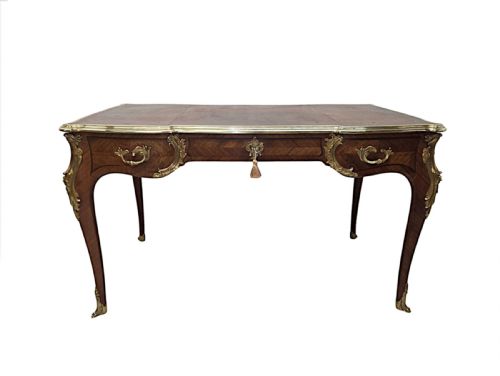
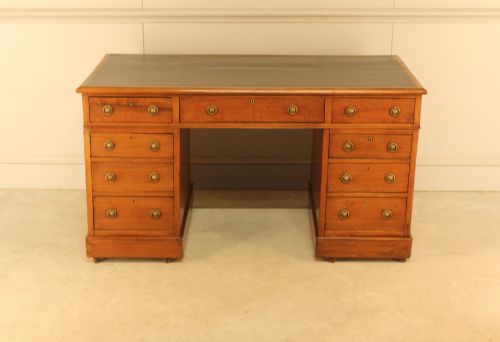
Vintage Walnut Writing Desk
A vintage walnut writing desk brings warmth and practical surface area to a room through rich timber grain and considered proportions.
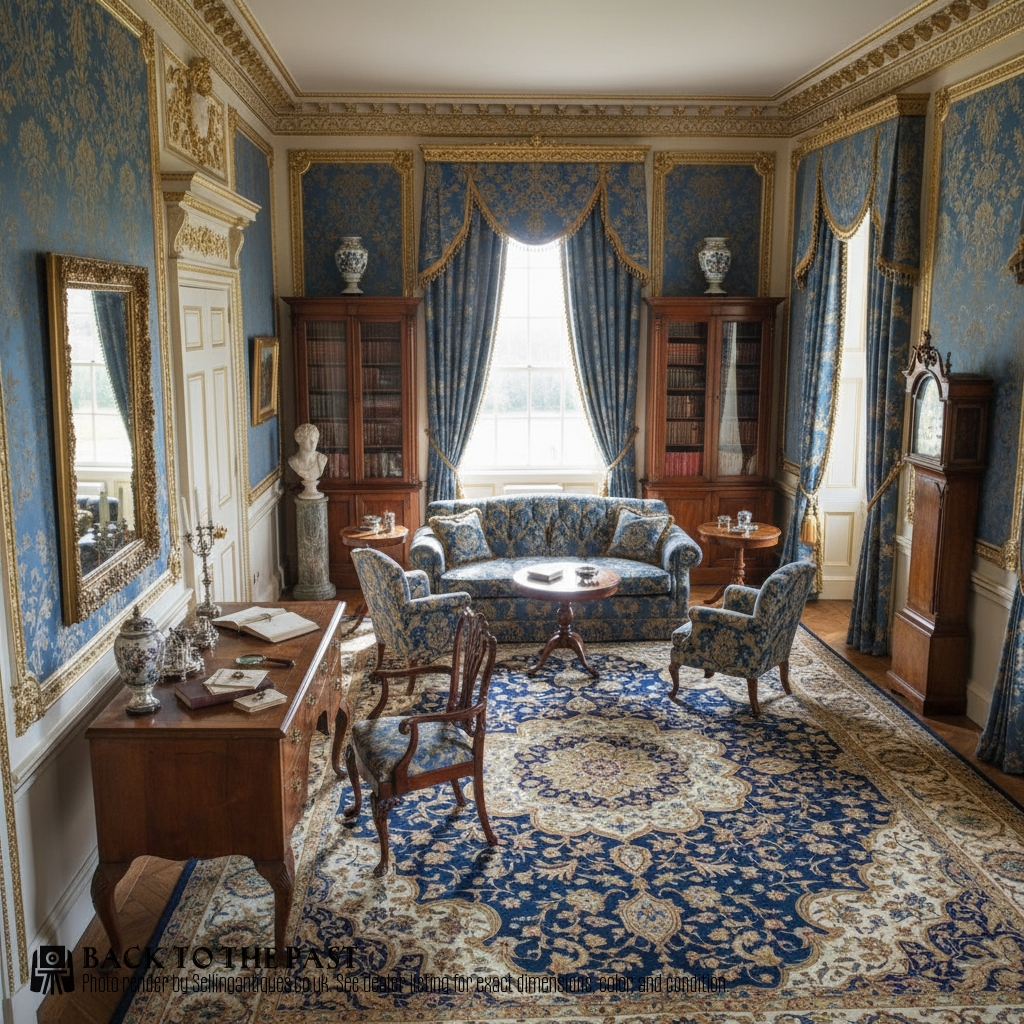
Vintage Walnut Writing Desk
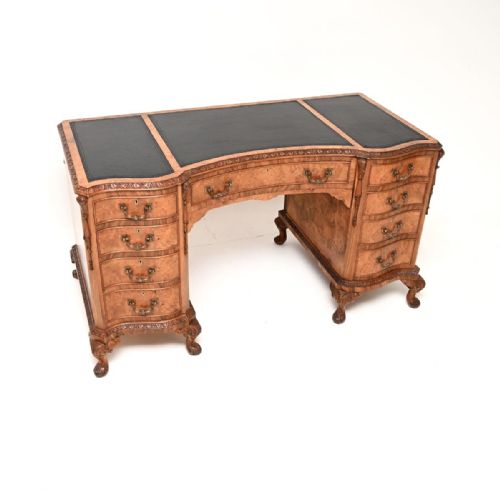
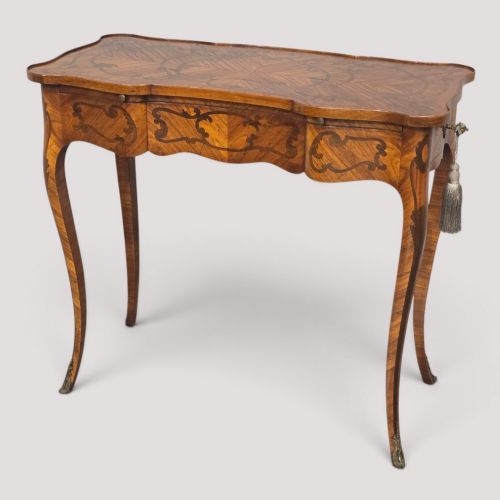
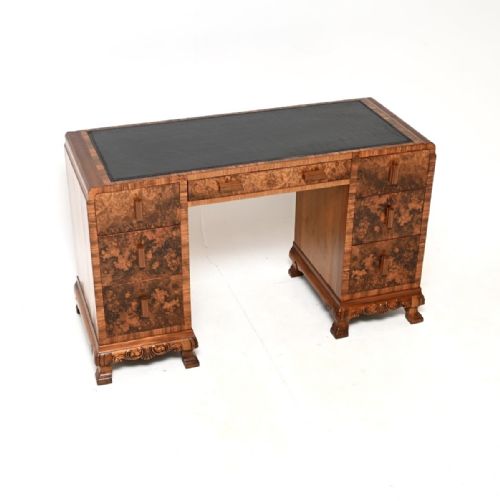
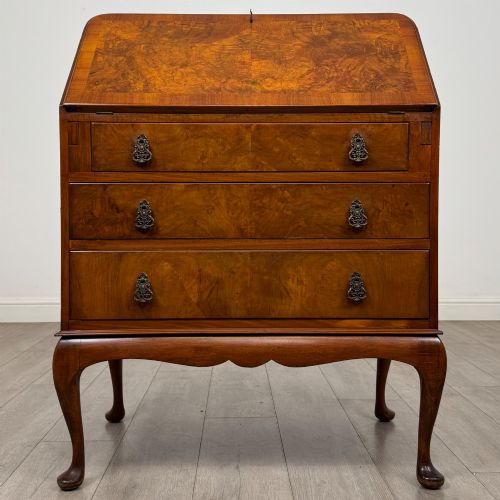
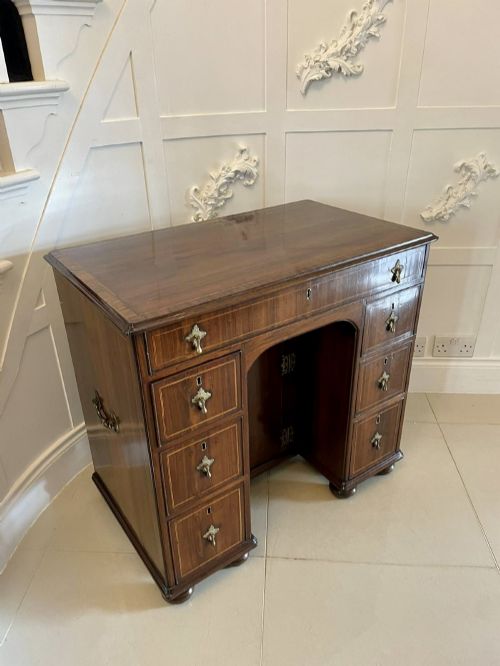
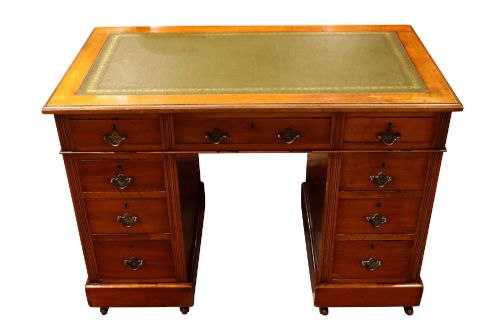
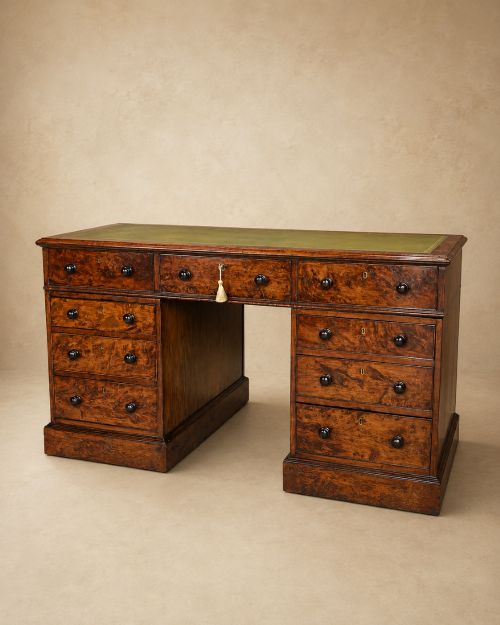
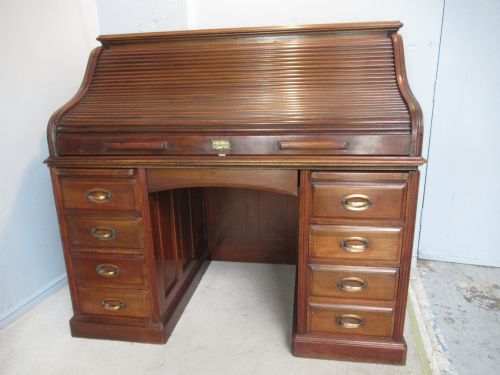
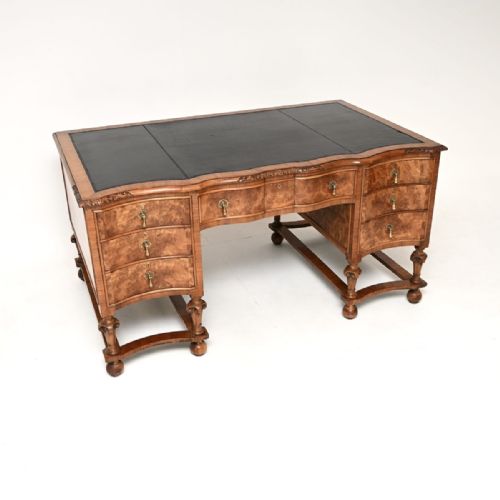
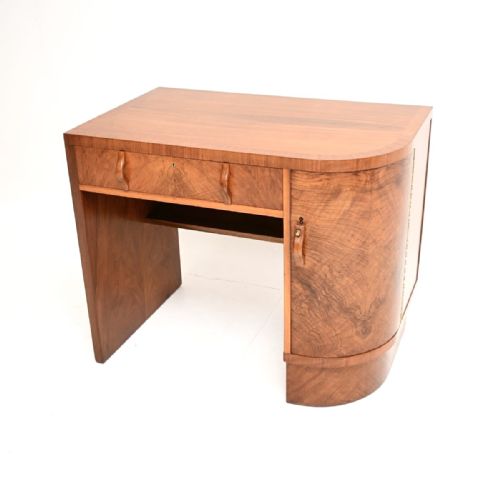
A vintage walnut writing desk encompasses everything from Edwardian pedestal forms to Art Deco streamlined surfaces and Georgian-inspired bureaux. Buyers searching for a vintage walnut writing desk encounter varied configurations, including kneehole desks, partners desks, and bureau bookcases.
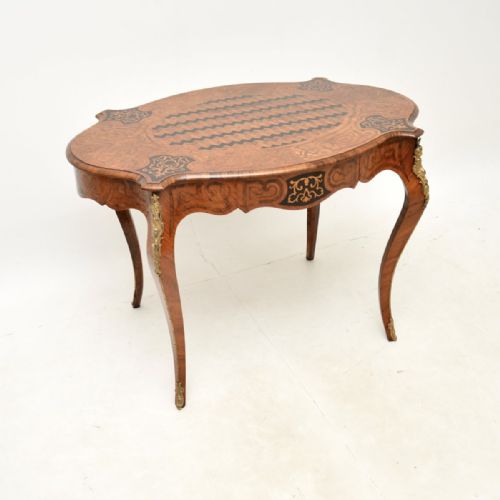
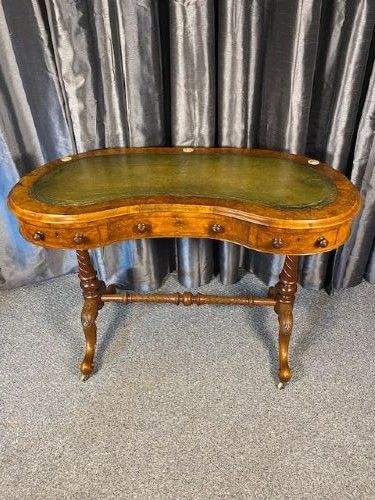
The materials span plain walnut, figured veneers, and burr walnut, frequently paired with inset leather writing surfaces and brass handles. Pieces emerge from diverse periods ranging from the eighteenth century through to nineteen thirty, showing styles such as Queen Anne revival, Victorian, and French Louis XV.
Materials and construction methods
Cabinet makers utilised solid walnut and decorative veneers like burr walnut over secondary timbers, applying French polish to accentuate the natural figure of the wood. Inset writing surfaces utilised dyed and tooled leather, whilst drawers frequently incorporated traditional dovetail joinery.
Brass hardware, including drop handles, escutcheons, and occasional ormolu mounts, provided functional and decorative accents. Marquetry inlay and boxwood stringing appeared on specific French and English pieces to delineate panels and borders.
Vintage Walnut Writing Desk Retail Price Guide 2026
Typical asking prices for vintage walnut writing desk among the pieces listed under this phrase on Sellingantiques today, from the lower quarter to the upper quarter. They describe what is for sale here now, not the wider market.
Some nineteenth-century writing desks include hidden secret compartments behind removable internal drawer blocks for storing private correspondence.
Assessing quality and craftsmanship
Superior examples display continuous grain matching across drawer fronts and book-matched burr walnut veneers that exhibit deep figuring and rich colour. Inferior execution shows mismatched timber panels, dry or flaking polish, and clumsy secondary wood replacements.
The precision of dovetailing in the drawer construction and the original patination of the brass hardware separate standard workshop production from finer cabinet work. Structural integrity in the legs and carcase indicates robust assembly that survives decades of daily use.
Maple and Co·Wylie and Lochhead Glasgow
The Vintage Walnut Writing Desk Glossary
- Burr walnut
- A wood veneer taken from the knotted growth of a walnut tree, prized for its swirling, highly decorative pattern. It creates a striking visual texture on desk surfaces and drawer fronts.
- Bureau
- A sloping desk with a hinged flap that opens to reveal internal pigeonholes and small drawers. This form often stands on bracket feet or a dedicated frame.
- Partners desk
- A large pedestal desk designed with drawers and cupboards on both sides so two people can work opposite each other. These usually feature generous leather writing surfaces.
- Kneehole desk
- A compact pedestal desk with a central recess for the user's legs, flanked by banks of drawers. They offer substantial storage within a restrained footprint.
- Ormolu
- Gilt bronze mounted onto furniture for decorative effect, common on French revival writing tables. It provides a bright metallic contrast against dark walnut timber.
Vintage Walnut Writing Desk: Frequently Asked Questions
How do I care for a leather desk top?
Clean the leather gently with a slightly damp cloth, avoiding harsh chemical cleaners that strip the finish. Apply a specialised leather balm periodically to maintain flexibility and prevent cracking.
Keep the desk away from direct sunlight and radiators to protect both the leather insert and the underlying walnut timber from drying out.
Are these desks suitable for daily computer work?
Many vintage writing desks accommodate modern laptops and desktop accessories, provided the dimensions and kneehole clearance match your ergonomic needs. Pedestal and partners desks offer ample surface space for daily tasks.
Consider the interior depth of drawers if you intend to store keyboards or electronic equipment when not in use.
How do I distinguish Edwardian walnut from earlier periods?
Edwardian pieces, dating around nineteen hundred, often combine lighter construction methods with revival styles like Queen Anne or Georgian influences. They frequently feature figured walnut veneers over oak or mahogany carcases.
Earlier eighteenth and nineteenth-century pieces display heavier timber construction, hand-cut dovetails, and deeper natural patination developed over longer periods of use.
What is the difference between a bureau and a writing table?
A bureau incorporates a sloping lid that folds down to create a writing surface while concealing internal compartments and stationery drawers. This design keeps paperwork neatly out of sight when closed.
A writing table or bureau plat provides an open, flat surface supported by legs, prioritizing unobstructed knee space and immediate access to the top.