
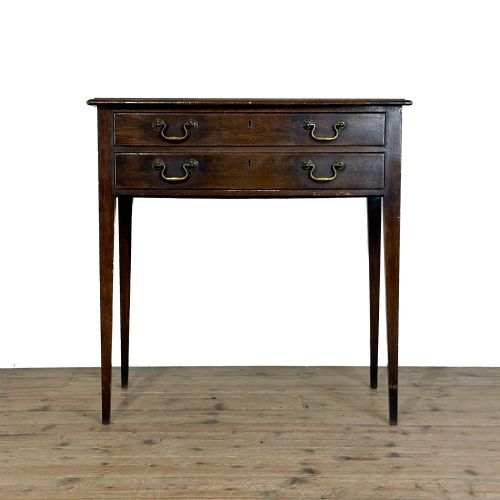
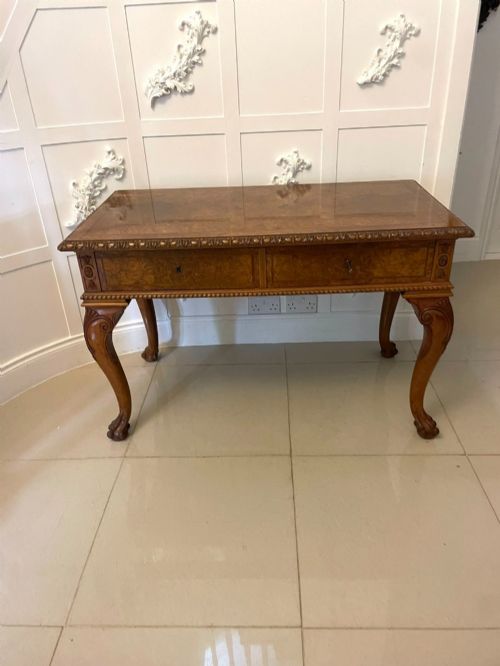
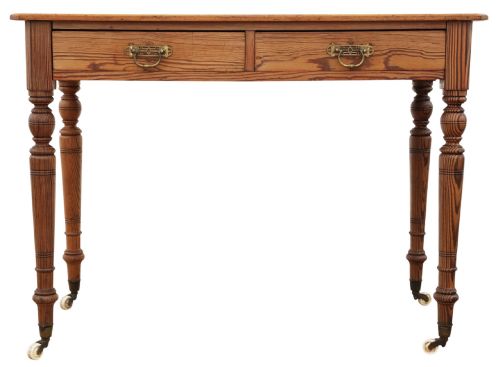
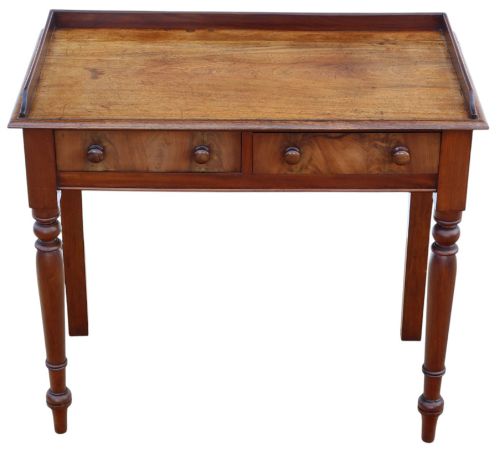
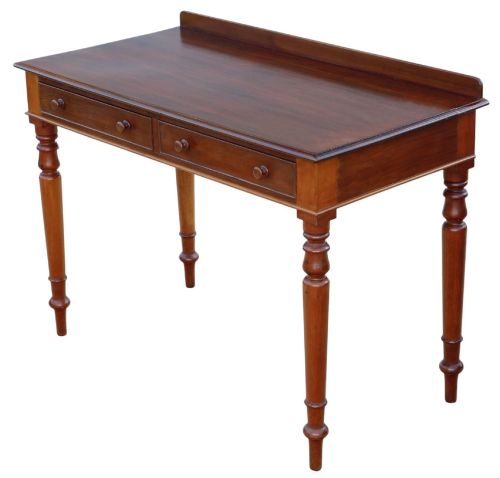
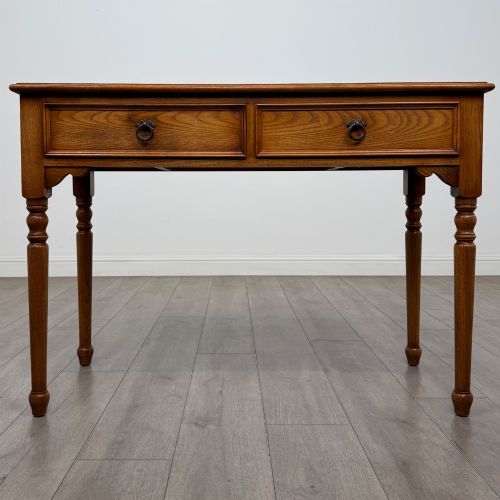

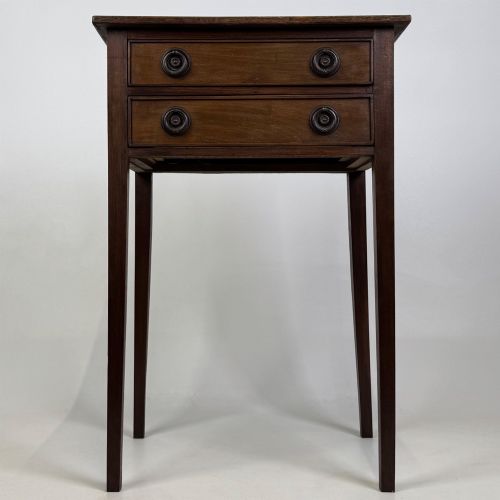
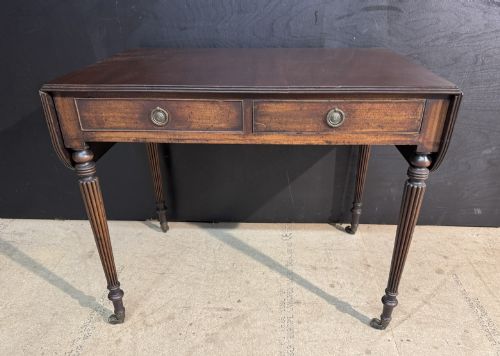
Two Drawer Hall Table
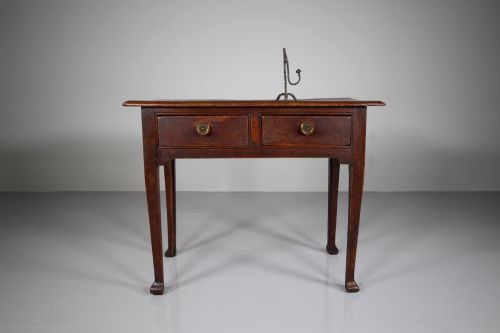
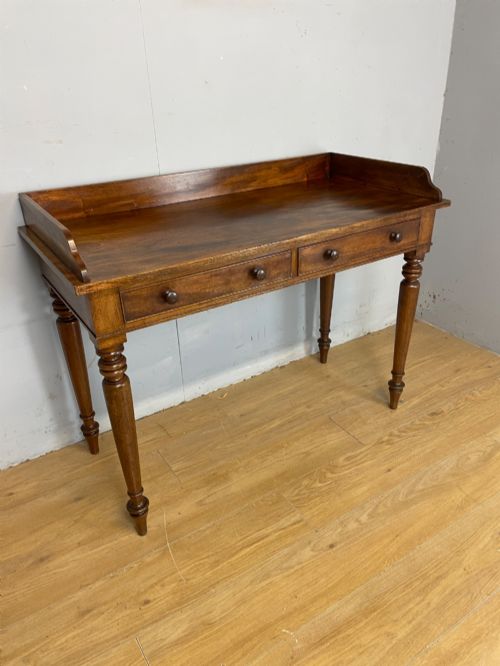
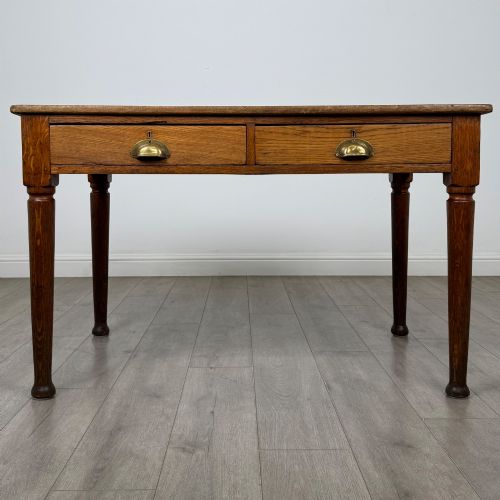
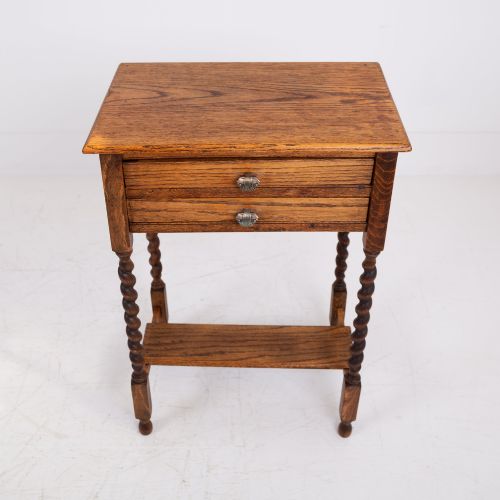
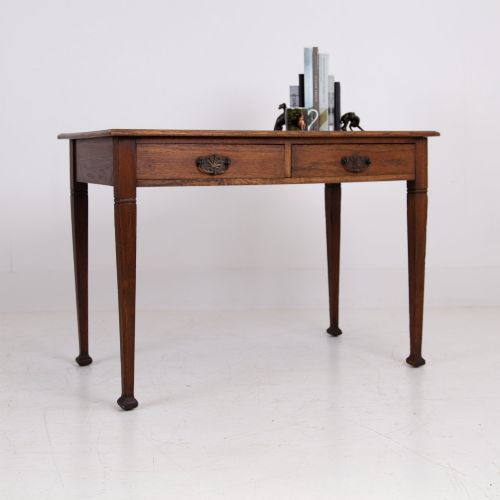
The two drawer hall table brings together narrow proportions and practical storage, offering a surface for correspondence and a spot for keys in a hallway.
Two Drawer Hall Table
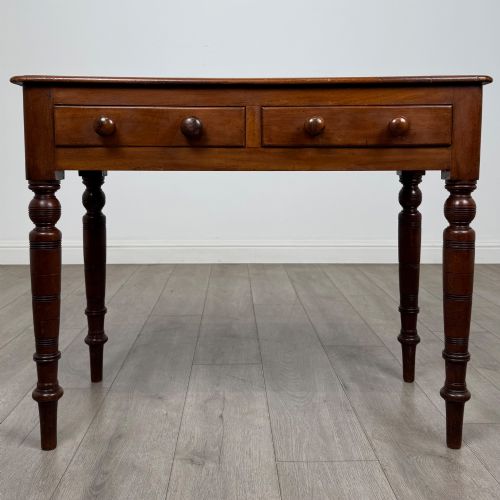
A two drawer hall table serves as a functional narrow surface designed to stand in entranceways, corridors, and reception rooms without obstructing movement. The form encompasses lowboys, side tables, and writing desks adapted over centuries to hold small items in their twin drawers while keeping a shallow profile against the wall.
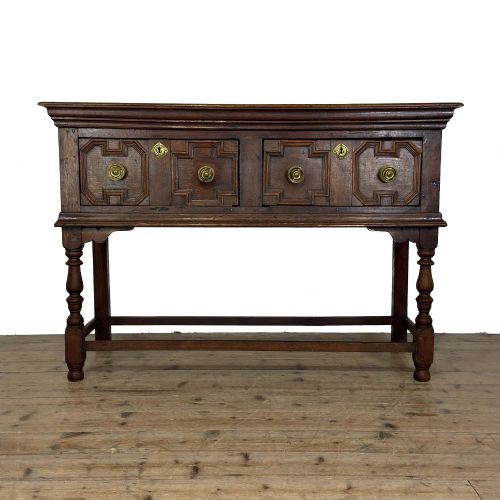
Most examples encountered here date from the Georgian, Victorian, and Edwardian eras, constructed in regional British hardwoods like oak, mahogany, and walnut. These tables range from plain country pieces in elm and fruitwood to formal Regency and Victorian creations finished with fine brass handles and flame veneers.
How they were made
Cabinet makers constructed these tables using solid timber frames joined with mortise and tenon techniques, mounting side-hung drawers with hand-cut dovetails at the corners. Timber selection dictated the character, balancing durable structural oaks and pines with decorative face veneers in mahogany, burr walnut, and satinwood.
Surface treatments relied on traditional hand-rubbed wax, shellac, and oil polishes that soaked into the grain to protect the wood while revealing natural figures. Brass drop handles, key escutcheons, and turned legs added decorative definition to otherwise utilitarian designs.
Two Drawer Hall Table Retail Price Guide 2026
Typical asking prices for two drawer hall table among the pieces listed under this phrase on Sellingantiques today, from the lower quarter to the upper quarter. They describe what is for sale here now, not the wider market.
The furniture styles range from plain 18th-century country pieces to elaborate Jacobean Revival and Arts and Crafts designs.
What varies in quality
The standard of a two drawer hall table rests on the crispness of its timber joinery and the selection of its wood. Superior pieces display book-matched veneers, carefully aligned drawer linings, and original hardware that integrates harmoniously with the proportions of the frame.
Design restraint and structural integrity separate workshop-made furniture from mass-produced items. A well-proportioned table maintains balance in its legs and apron, whereas lesser examples may rely on heavy, unrefined turnings or thick secondary timbers that clumsy alterations have obscured.
Heal and Son·Fortnum and Mason
The Two Drawer Hall Table Glossary
- Lowboy
- A small oak or walnut table with one or more rows of drawers, commonly used as a dressing table or side table in the eighteenth century.
- Dovetail
- A joint formed by interlocking wedge-shaped fingers, used extensively to secure drawer corners with high tensile strength.
- Flame mahogany
- A veneer cut from timber where the branch meets the trunk, producing a rippling flame-like pattern across the wood surface.
- Escutcheon
- A flat plate of brass or metal surrounding a keyhole, protecting the surrounding wood from wear.
Two Drawer Hall Table: Frequently Asked Questions
What is a two drawer hall table?
A two drawer hall table is a compact surface designed to fit narrow spaces like corridors and entryways. The twin drawers provide concealed storage for everyday items while the top supports lamps or decorative objects.
These pieces bridge the gap between utilitarian furniture and reception room display. Their shallow depth allows them to sit flush against walls without blocking walkways.
How do I date a wooden table?
Dating relies on observing construction methods, timber choices, and hardware styles. Hand-sawn marks, dovetail regularity, and secondary woods offer clues to the decade of manufacture.
Stylistic shifts from Georgian simplicity to Victorian ornamentation also guide identification. Comparing secondary timbers inside the drawers confirms regional origins.
Where should I place my table?
These tables suit narrow entrance halls, landings, and behind sofas where surface space is needed without deep footprints. Their low-profile drawers store letters, gloves, and small accessories out of sight.
Avoid placing antique timber tables in direct sunlight or near active heat sources. Consistent indoor climates protect the wood from shrinking and cracking over time.
How do I care for antique wood?
Maintain the finish by dusting with a dry, soft cloth and applying a light coat of traditional beeswax periodically. Avoid modern silicone sprays that build up and attract dust.
Keep humidity levels stable in the room to prevent the timber joints from loosening. Promptly wipe up any moisture spills to preserve the polish.