

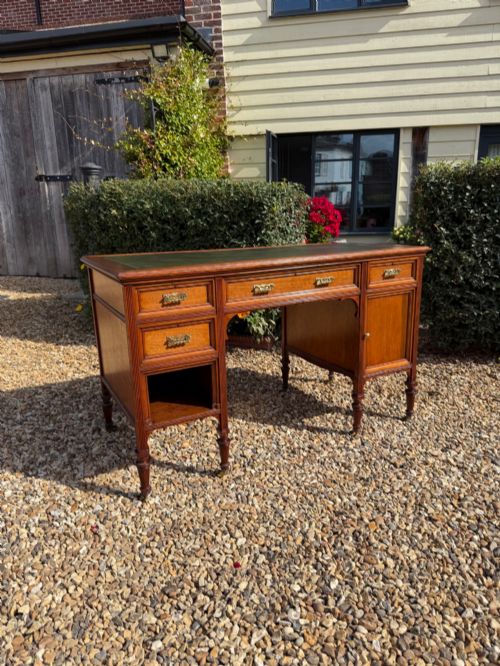

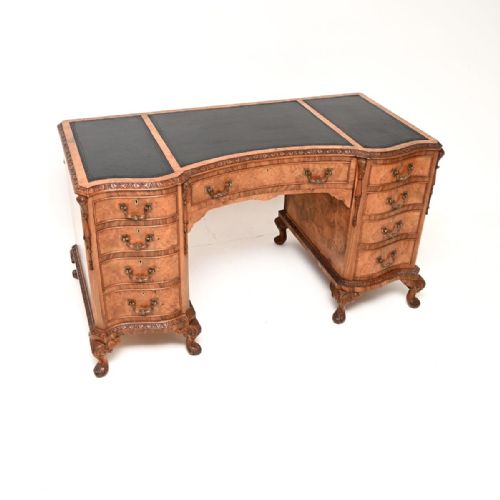
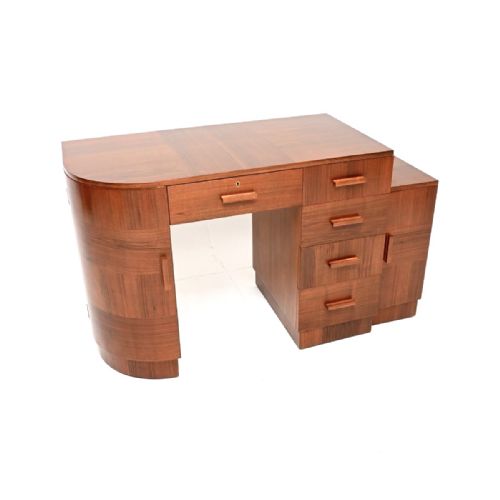
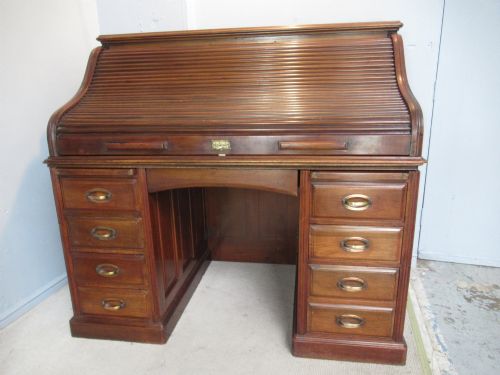
Vintage Walnut Study Desk
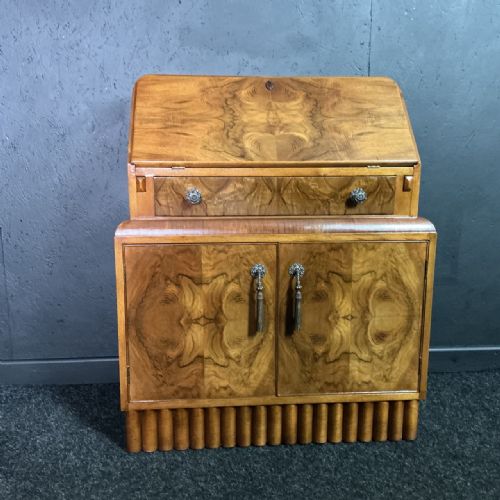
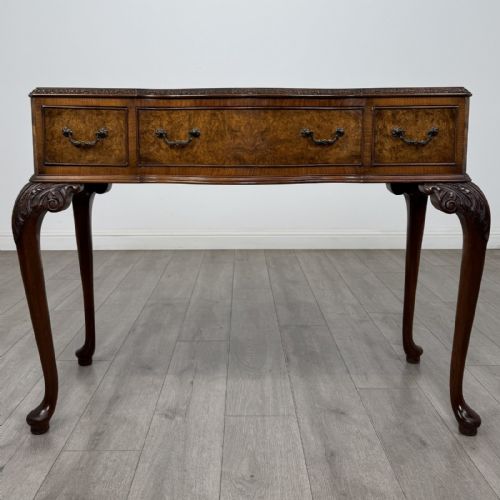
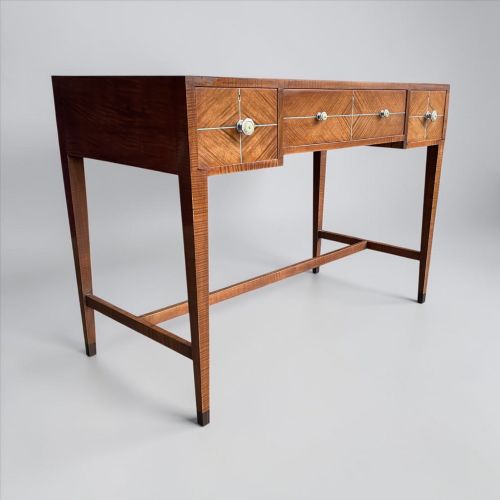
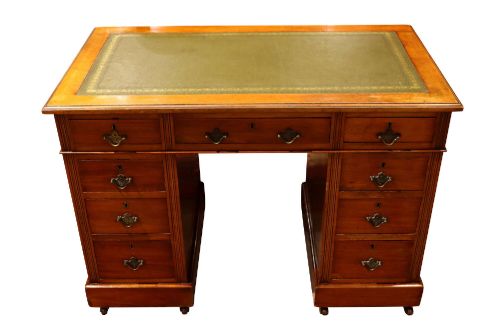
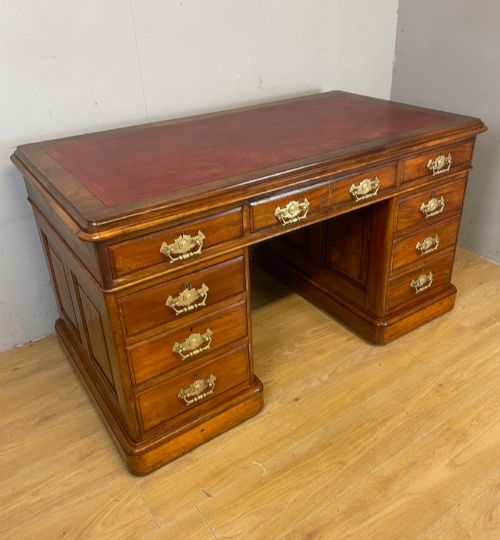
These vintage walnut study desks bring rich grain and serious workspace into a room.
Vintage Walnut Study Desk
A vintage walnut study desk brings together the rich timber tones and practical forms found in period workspaces. When you search for a vintage walnut study desk, you encounter pieces spanning from the eighteenth century through to the nineteenth century.
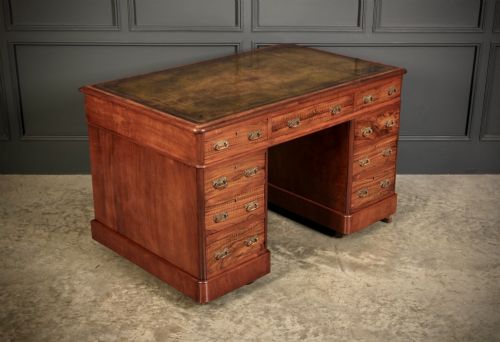
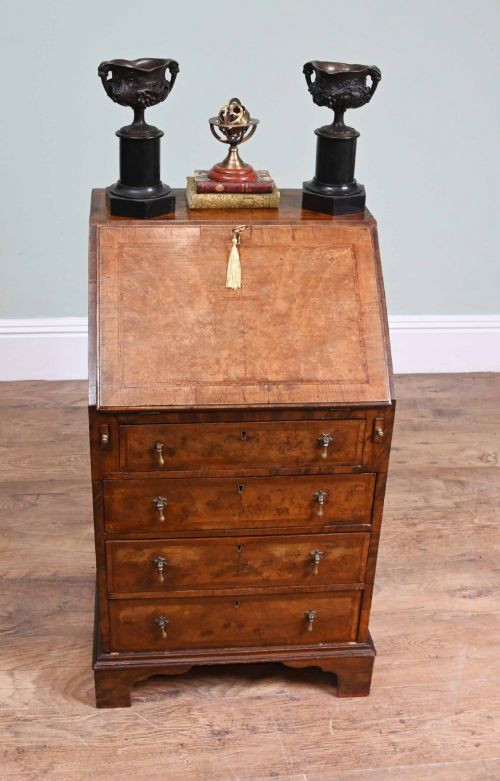
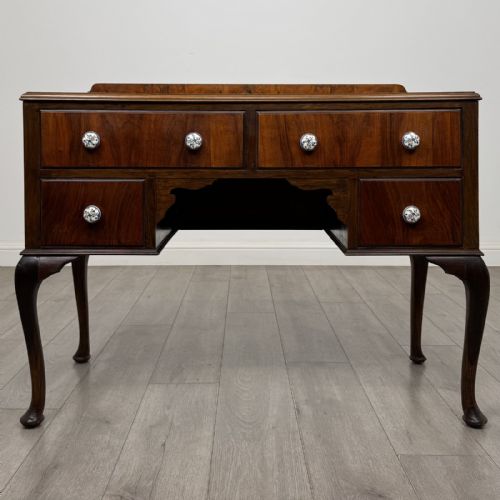
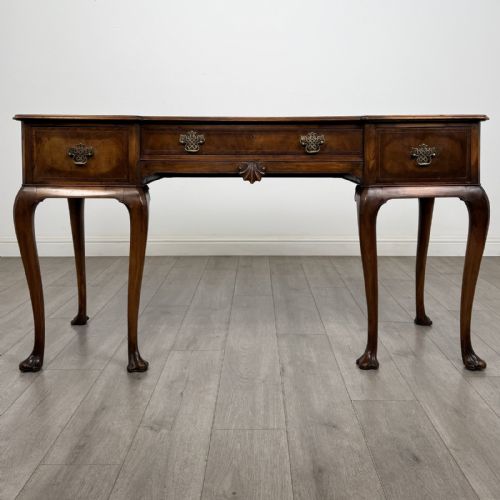
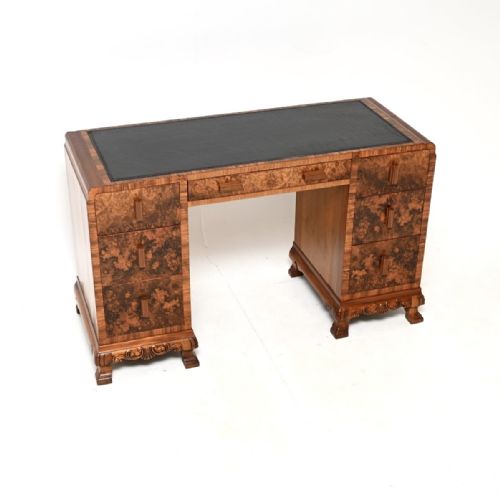
The selection ranges from George III kneehole desks to mid nineteenth-century burr walnut pedestal desks and Victorian writing tables. Cabinetmakers utilised both plain walnut and highly figured burr walnut alongside oak and burr oak.
Most examples you meet on the market combine deep writing surfaces with integrated drawer banks, often featuring brass hardware. These are functional working furniture pieces built to anchor a study or library.
Materials and construction
Cabinetmakers selected walnut and burr walnut for their striking decorative grain patterns, frequently pairing them with secondary timbers like oak and burr oak for internal structure. Writing surfaces often incorporated inset leather panels to provide a durable working area.
Hardware such as drawer pulls and key escutcheons were cast in brass, securing functional joints that have survived across centuries of daily use.
Vintage Walnut Study Desk Retail Price Guide 2026
Typical asking prices for vintage walnut study desk among the pieces listed under this phrase on Sellingantiques today, from the lower quarter to the upper quarter. They describe what is for sale here now, not the wider market.
Listings span from the 18th century to the 19th century, featuring walnut, burr walnut, oak, and burr oak timbers.
Judging quality and character
Quality in these desks rests upon the choice of timber veneer and the precision of the cabinetwork. Pieces utilising exceptionally figured burr walnut display a depth of grain that elevates the visual presence of the furniture.
Construction methods also separate standard production from superior workshop output, particularly in how drawer linings and internal dividers are jointed. The integration of original brass hardware and well-preserved leather inserts adds considerable integrity to a piece.
The Vintage Walnut Study Desk Glossary
- Kneehole desk
- A compact desk featuring a central recessed space for the user's legs, flanked by pedestals of small drawers. This form became popular during the eighteenth century.
- Pedestal desk
- A heavy freestanding desk supported by two banks of drawers reaching down to the floor. It offers substantial surface area and deep storage capacity.
- Burr walnut
- Timber taken from the gnarled growths of a walnut tree, yielding dense, swirling grain patterns. Cabinetmakers prized this veneer for high-status furniture facades.
- Escutcheon
- A protective plate surrounding a keyhole, usually cast in brass. It prevents the timber around the lock from wearing down through repeated use.
Vintage Walnut Study Desk: Frequently Asked Questions
How do I date a walnut desk?
Dating relies upon examining construction methods, timber choices, and hardware styles across periods like the Georgian and Victorian eras.
Changes in drawer linings and dovetailing techniques provide clear clues to the decade of manufacture.
What is the difference between walnut and burr walnut?
Standard walnut displays a straight, rich brown grain pattern suitable for solid timber frames and panels.
Burr walnut comes from tree growths that create intense, swirling patterns used primarily as decorative veneer.
Are these desks suitable for daily computer work?
Many period desks offer ample surface space and sturdy construction to accommodate modern writing equipment.
However, interior kneehole clearances should be checked against modern chair dimensions before daily use.
How do I care for the leather writing surface?
Leather inserts require gentle cleaning with specialised leather balms to maintain flexibility and colour.
Avoiding direct sunlight and excessive moisture preserves both the leather and the surrounding walnut timber.