


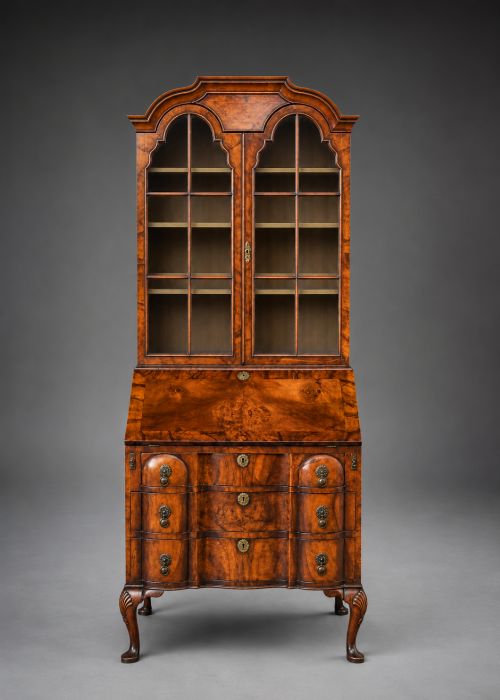
Vintage Walnut Bureau
A vintage walnut bureau brings warmth and working space into a room through rich timber grain and fitted writing compartments.
What a vintage walnut bureau is
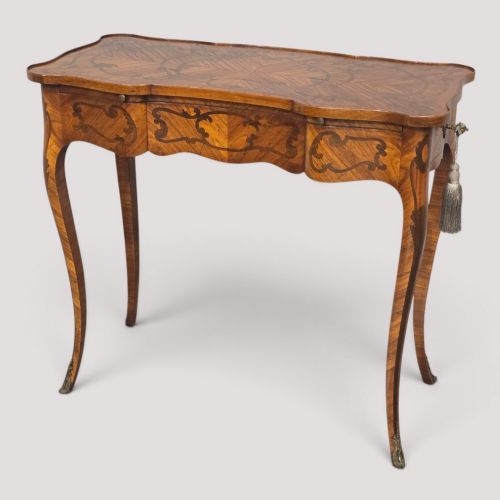
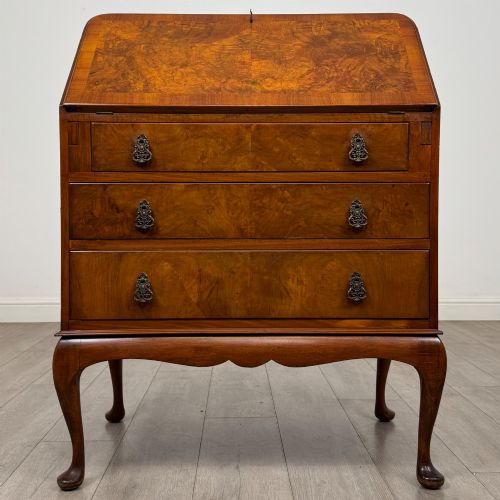
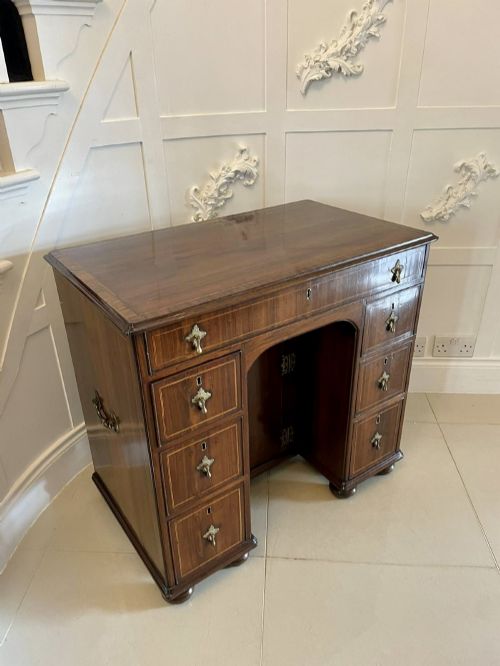
A vintage walnut bureau combines a practical writing surface with concealed compartments and drawers beneath a fall front or desktop. This selection spans desks, bureau bookcases, and writing tables rooted in styles from Victorian and Edwardian eras up to nineteen thirty.
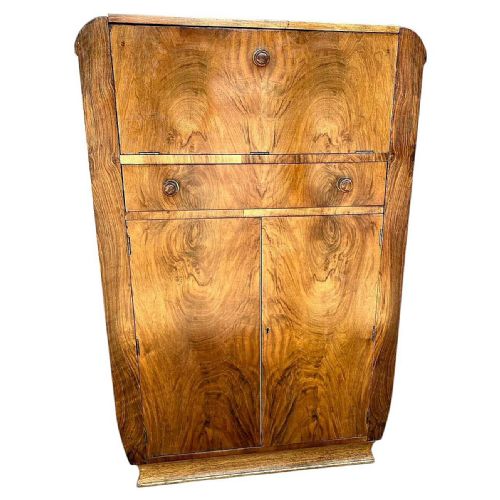
The pieces appearing here range from nineteenth-century forms to twentieth-century Art Deco and revival styles like Queen Anne and George I. Walnut and burr walnut dominate the construction, often enhanced by brass hardware and leather inserts.
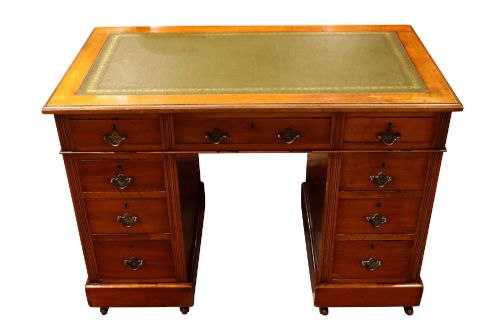
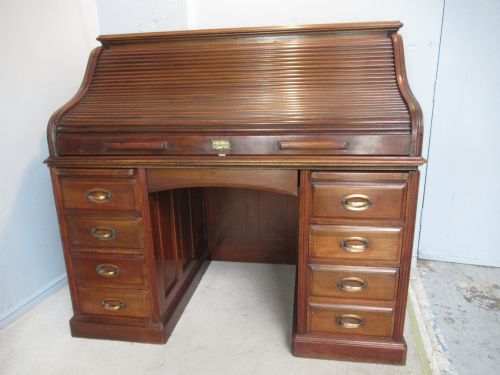
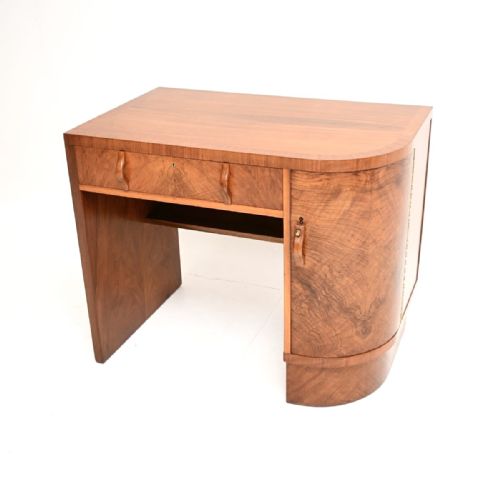
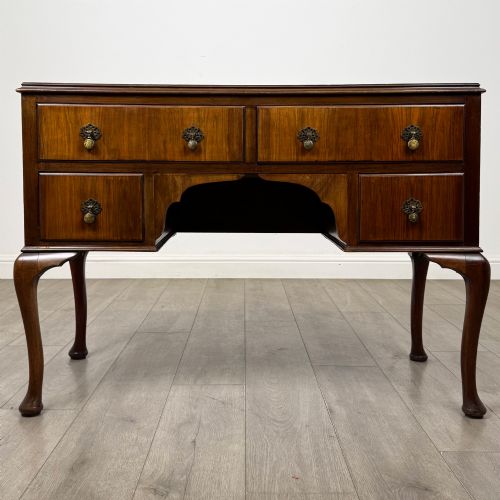
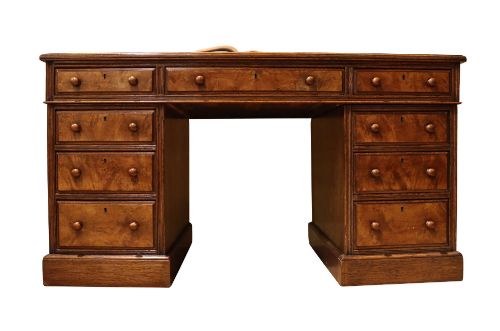
Buyers meet variations including cloud-shaped writing bureaux, pedestal office desks, and bureau bookcases with glass elements. Each piece reflects the functional requirements of domestic and office spaces across these periods.
How they were made
Craftsmen utilised solid walnut and walnut veneer, particularly figured and burr walnut, to create dramatic patterned surfaces on desk fronts and tabletops. Wood forms the primary structure, supported by brass fittings and occasionally glass doors.
Makers applied specialised veneering techniques to display the natural figuring of the timber, pairing rich grains with secondary woods. Leather inserts frequently provide a durable writing surface within the desk compartments.
Retail Price Guide 2026
Typical UK retail prices for vintage walnut bureau, calculated from the Sellingantiques database of over a million retail prices indexed since 2003. This retail price guide relies exclusively on Sellingantiques data; no external sources or auction records are used, so the figures do not describe the wider market.
Cloud-shaped writing bureaux bring a surprisingly soft silhouette to rigid nineteen thirties office routines.
What varies in quality
Quality rests in the selection of the timber veneer and the precision of the cabinetwork across the fall fronts and drawers. Burr walnut with striking, highly figured patterns commands attention through the depth of its grain.
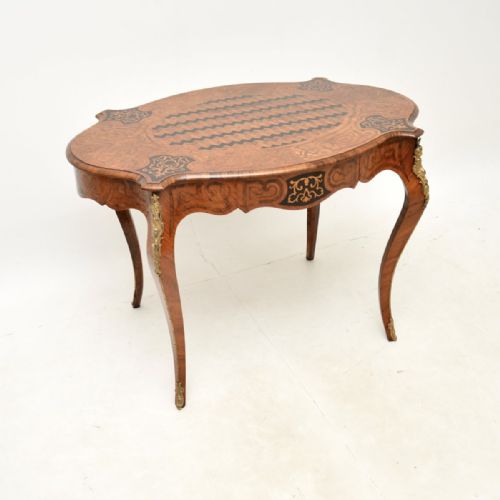
The refinement of the period style, whether Art Deco, Queen Anne, or Louis XV, dictates the sophistication of the piece. Integrated hardware in brass and well-executed joinery separate standard production from superior examples.
Wylie & Lochhead Glasgow
The Vintage Walnut Bureau Glossary
- Burr walnut
- A prized timber harvested from walnut tree growths that produces intricate, swirling grain patterns. It is frequently utilised for decorative veneer on bureau fronts and tabletops.
- Bureau bookcase
- A writing bureau combined with an upper section of shelving enclosed by doors. These doors often incorporate glass panels to display books.
- Fall front
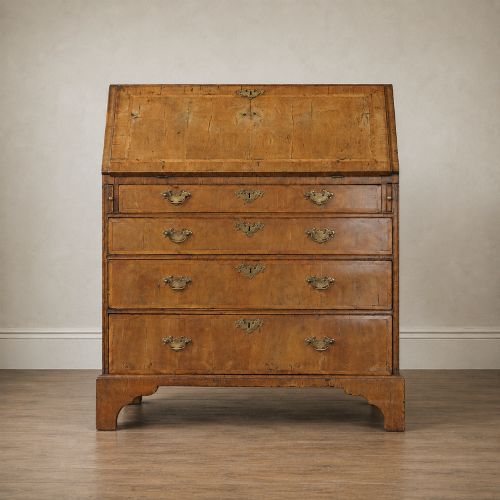
- A hinged flap that drops down to form a horizontal writing surface while concealing interior pigeonholes and small drawers. It lifts and secures vertically when not in use.
- Bureau plat
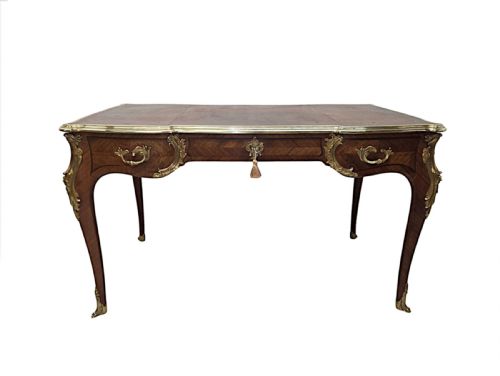
- A flat-topped writing table, often in a French style such as Louis XV. It provides a spacious working surface without a super-structure or fall front.
Frequently Asked Questions
What is a vintage walnut bureau?
A vintage walnut bureau is a writing desk featuring timber construction, often utilising burr walnut veneer and brass details. These pieces incorporate storage spaces and writing surfaces developed across Victorian, Edwardian, and Art Deco periods.
They serve as both functional workspaces and decorative furniture items in homes. The designs range from traditional revival styles to twentieth-century modern forms.
How do I identify the period?
Dating relies on stylistic clues such as Art Deco geometric shapes, Queen Anne revival curves, or Victorian proportions. Materials like glass, chrome, and leather also help anchor pieces to specific eras from eighteen fifty to nineteen thirty.
Examining the construction methods and hardware provides further evidence of the manufacturing date. Each style carries distinct decorative motifs typical of its time.
Where were these desks used?
These desks functioned primarily in studies, home offices, and formal living spaces for correspondence and daily administration. Bureau bookcases combined this writing facility with library storage.
Pedestal office desks provided larger work surfaces for professional environments. Their dual purpose allowed owners to conceal paperwork behind closed fall fronts.
How do I care for walnut furniture?
Walnut furniture requires protection from direct sunlight and extreme humidity changes to preserve the wood and veneer. Regular dusting with a soft cloth maintains the finish without harsh chemicals.
Leather inserts benefit from appropriate conditioning to prevent drying. Careful handling of brass hardware and glass components ensures longevity.