
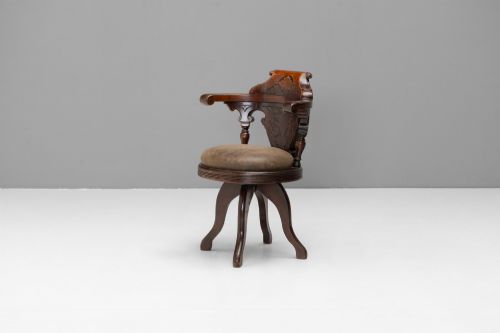


Vintage Swivel Armchair
A vintage swivel armchair brings solid nineteenth and twentieth-century timberwork and revolving comfort straight to the desk.
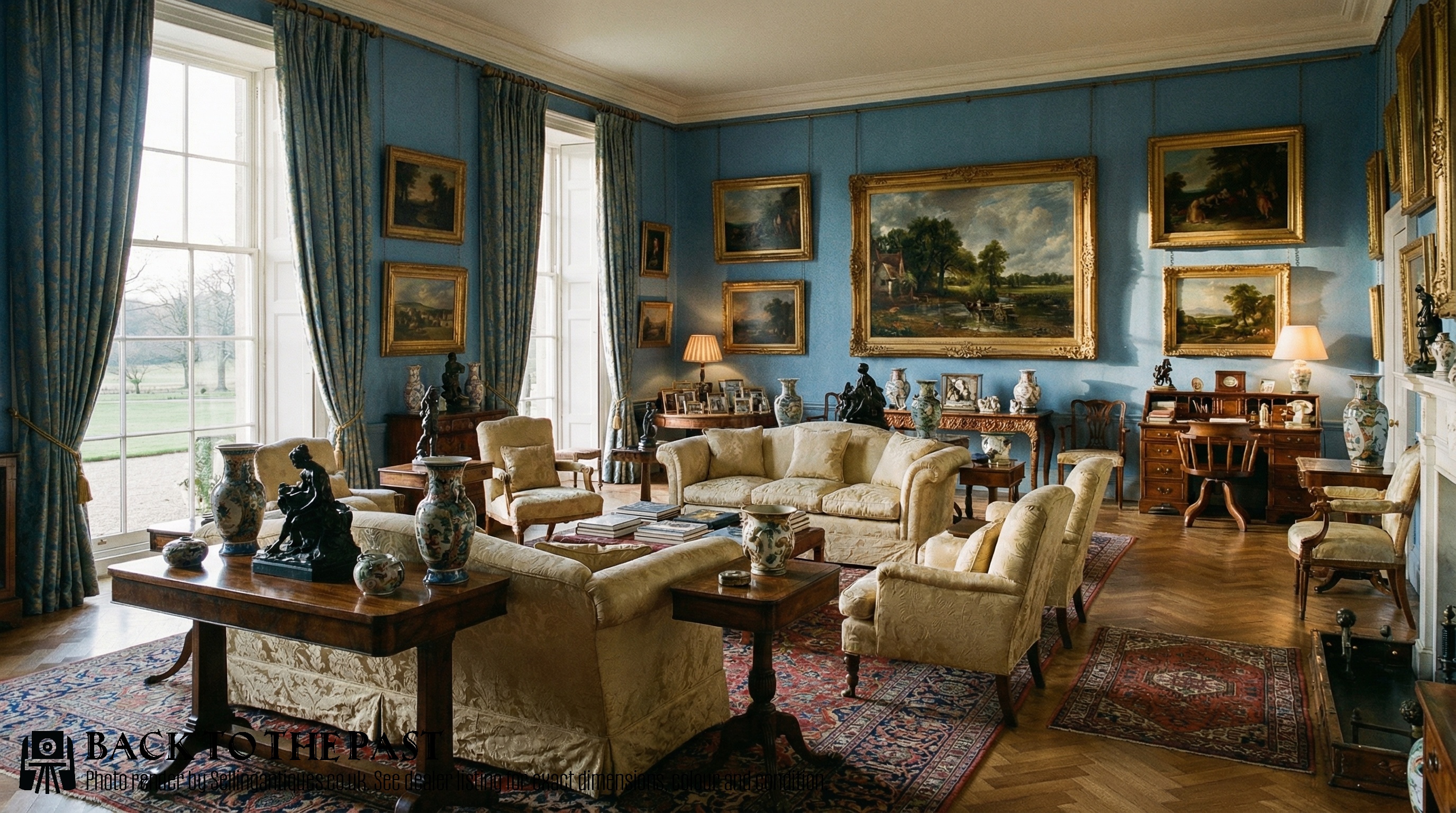
Vintage Swivel Armchair
A vintage swivel armchair combines the robust utility of a desk chair with the mobility of a revolving mechanism. Buyers searching for a vintage swivel armchair encounter sturdy seating designed primarily for nineteenth-century studies, offices, and libraries.
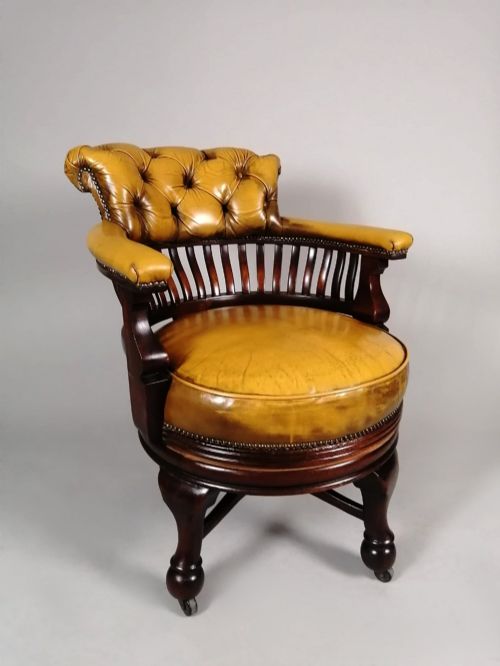
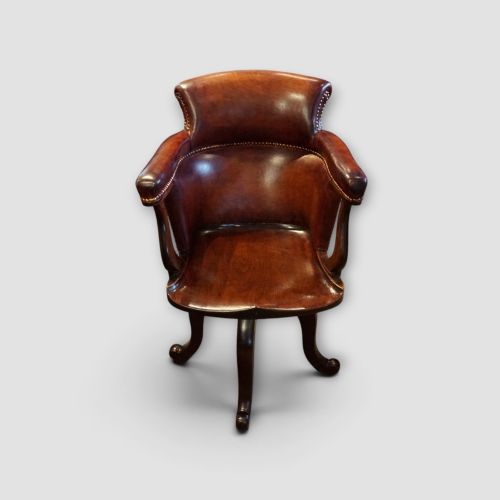
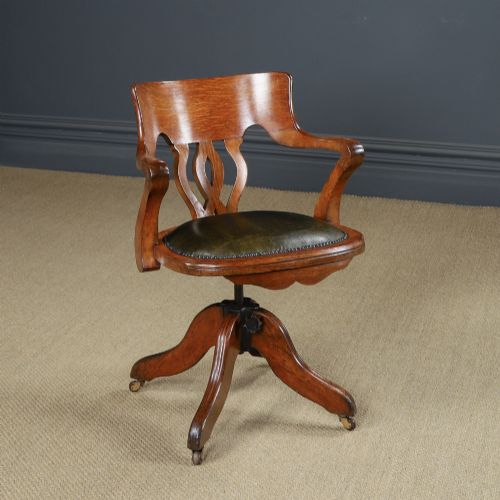
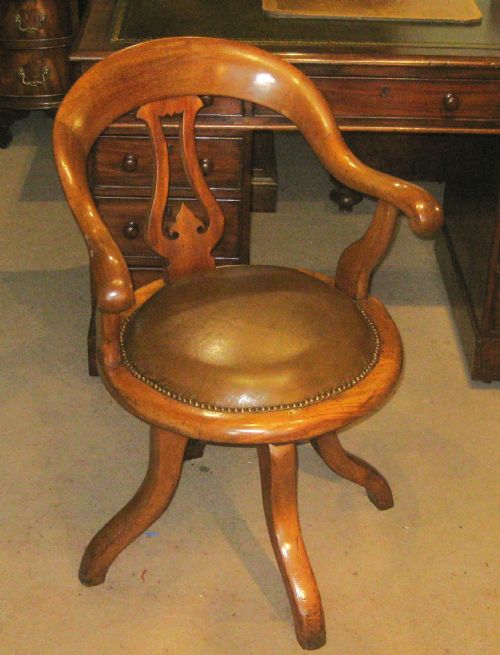
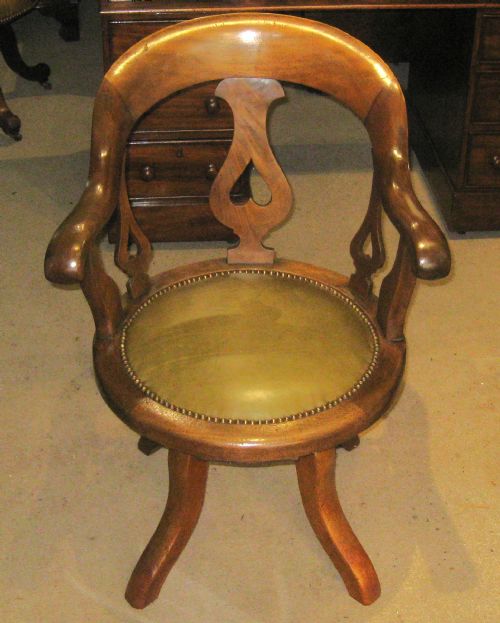
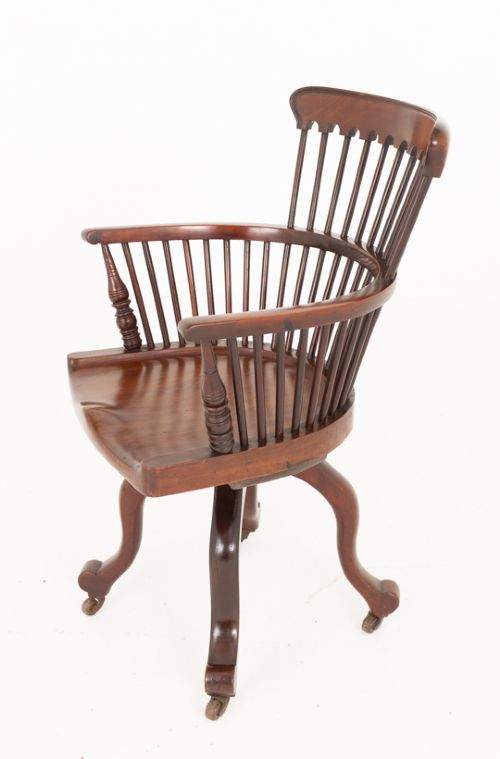
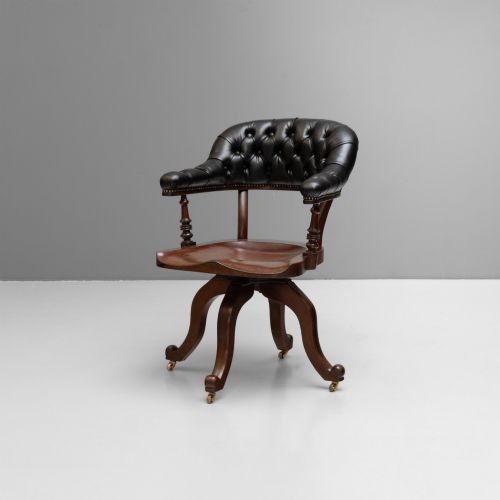
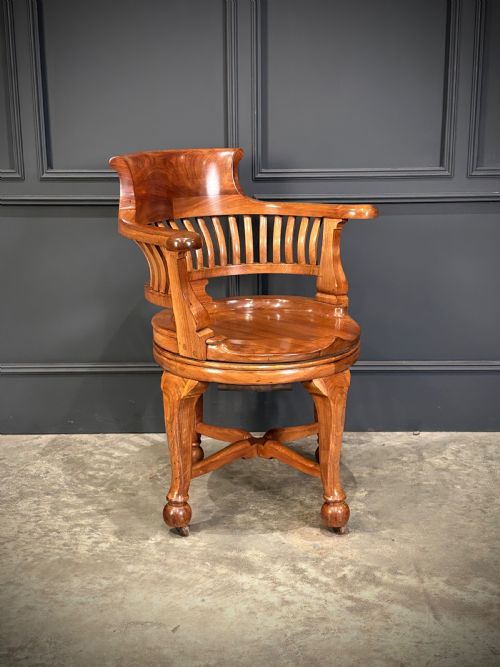
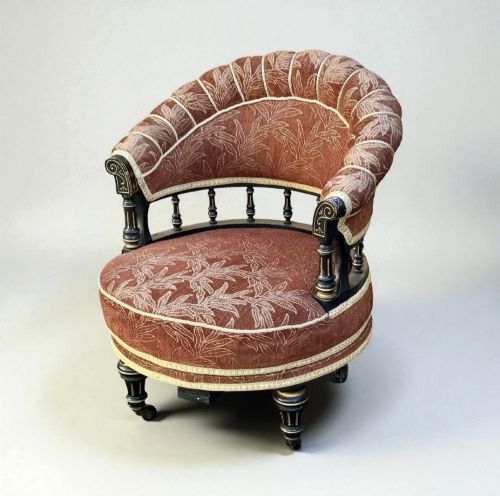
The selections span Victorian, Edwardian, and early twentieth-century periods, capturing forms such as revolving office chairs, captain's chairs, and deep lounge variants. Mahogany, oak, and walnut predominate among the timbers, frequently paired with hide or leather upholstery.
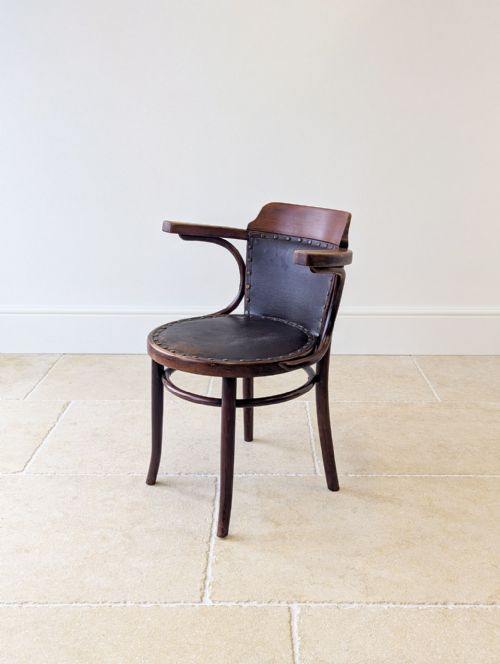
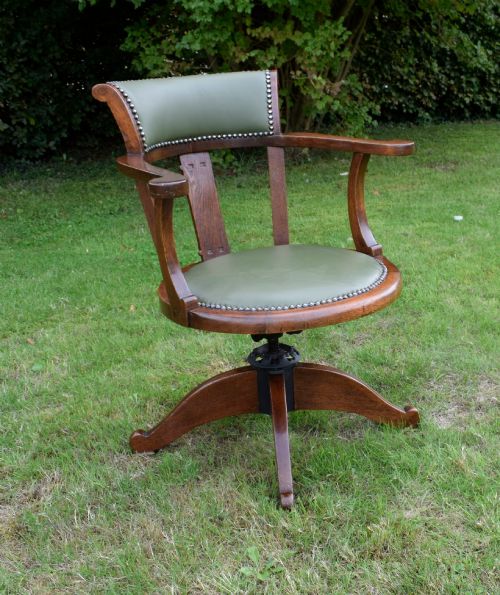
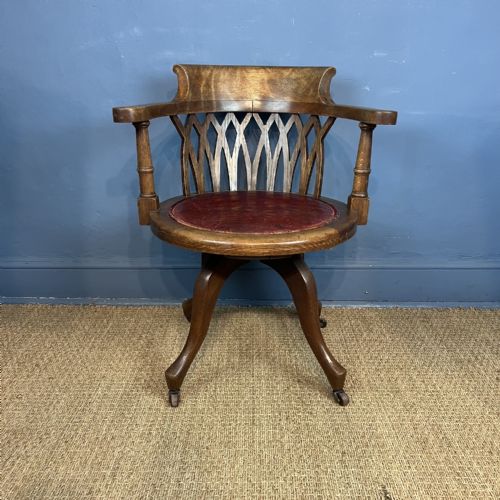
Edwardian and Victorian examples form the bulk of the available pieces, ranging from plain oak frames to carved walnut designs and bentwood constructions. These chairs serve daily working roles just as effectively today as they did in past offices.
Materials and construction methods
Cabinetmakers built these chairs using dense hardwoods like mahogany, oak, walnut, beech, and ash, selecting timber for structural endurance at stress points. Frame components often involved steam bending or secure joinery to withstand constant twisting and leaning.
The listings here feature oak, mahogany, walnut, and beech chairs spanning the Victorian, Edwardian, and early twentieth-century eras.
Distinctions in quality and finish
The integrity of the revolving mechanism and the original tension of the swivel action distinguish finer examples from standard office seating. Smooth operation without excessive wobble reflects superior initial engineering and careful preservation.
Timber selection and secondary carving details separate basic utilitarian seating from finer library and boardroom pieces. Rich grain patterns in the mahogany or walnut, alongside well-preserved leather upholstery, mark out the upper end of the range.
Edward William Godwin·S and H Jewell·Thonet
The Vintage Swivel Armchair Glossary
- Revolving mechanism
- The iron or brass assembly beneath the seat that allows the chair to turn full circle. This hardware often incorporates threaded spindles for height adjustment.
- Captain's chair
- A sturdy timber armchair with a rounded low back supported by vertical spindles. These seats frequently sit upon a swivel base for office use.
- Bergere
- A wooden-framed armchair with woven cane panels set into the back or sides. This lighter style appears on select turn-of-the-century models.
- Bentwood
- Timber shaped by applying steam until pliable and bending it into curves. This technique created the distinct arched components seen on Thonet and related designs.
- Ebonised
- Timber treated with a dark finish to imitate ebony. This decorative treatment appears on Victorian library seating.
Vintage Swivel Armchair: Frequently Asked Questions
How do I adjust the height?
Many of these chairs adjust simply by spinning the seat clockwise or anticlockwise on its central threaded iron spindle. The movement raises or lowers the wooden platform relative to the base.
Heavier cast iron mechanisms occasionally utilise a separate under-seat lever or screw to lock the height once set. Checking the thread condition ensures the screw action moves freely without binding.
Can I use one at a modern desk?
These revolving armchairs adapt well to contemporary workspaces, providing sturdy back support and convenient mobility. Their compact nineteenth and twentieth-century proportions often fit neatly beneath standard modern desk heights.
Buyers should verify both the lowest seat setting and the clearance beneath the desk arms. The wooden armrests on some Victorian designs require sufficient under-desk space to slide forward completely.
How do I care for the leather?
Leather upholstery benefits from regular dusting with a soft, dry cloth to prevent grit accumulation in the grain and creases. Applying a quality leather balm periodically preserves suppleness and protects against drying.
Avoid placing these chairs directly beside heat sources or strong sunlight, which causes hide to crack and timber to warp. Gentle maintenance preserves the natural patina accumulated over decades of use.
How do I date a revolving chair?
Dating relies on examining the construction methods, timber choices, and ironwork beneath the seat. Early Victorian examples often feature heavy mahogany frames with hand-forged iron spindles, whilst Edwardian pieces frequently incorporate oak and simpler mechanical hubs.
Stamps or paper labels from makers beneath the seat offer precise chronological clues. Stylistic details like Gothic revival carving or Aesthetic Movement lines further narrow the period of manufacture.