
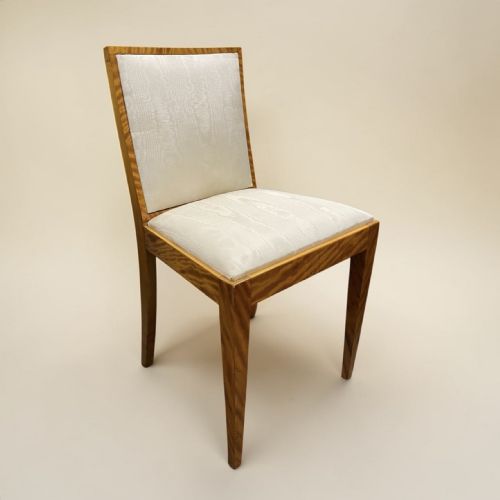
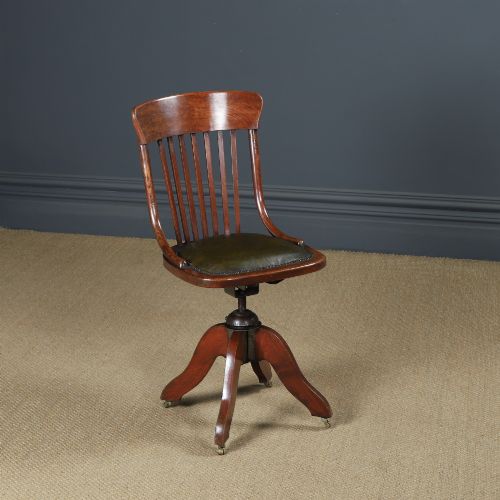


1920s Desk Chair
These 1920s desk chairs offer solid timber frames and swivel mechanisms that bring period character and practical seating to a study.
1920s Desk Chair
A 1920s desk chair combines early twentieth-century seating forms with sturdy timber construction suited to daily work. The selection on this page ranges from revolving office chairs with swivel mechanisms to library armchairs and side chairs designed for domestic studies.
Most pieces date from the 1920s or 1930s, reflecting a period when office and library furniture balanced traditional joinery with emerging ergonomic adjustments like height regulation and castors.
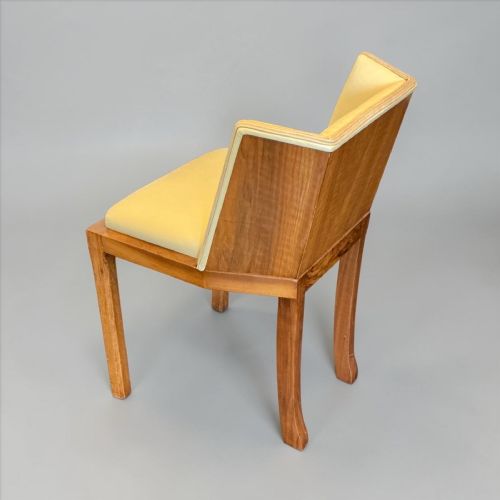
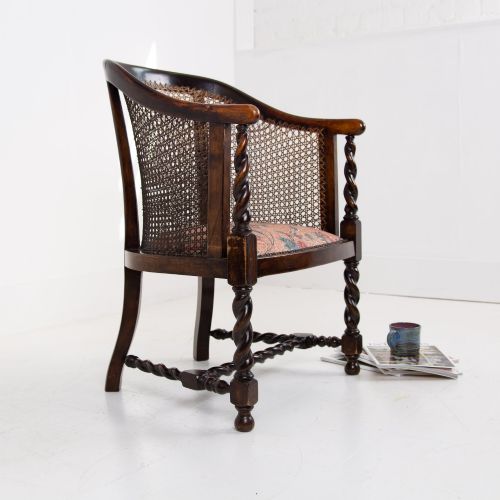
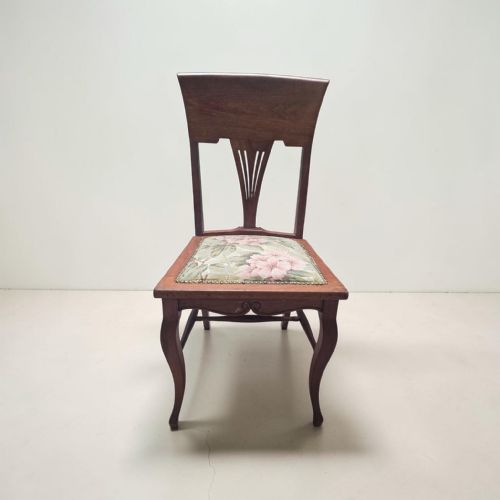
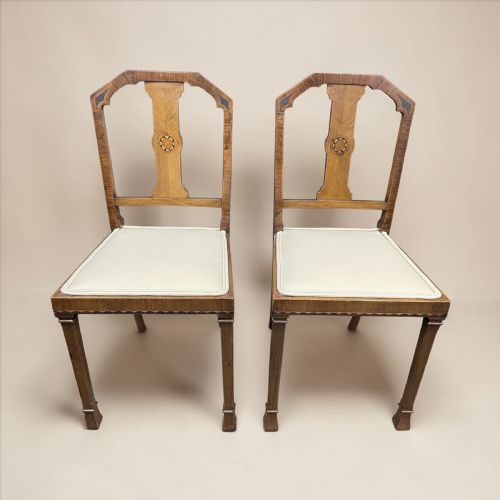
Common variations include open armchairs, revolving swivel designs, and smaller side chairs upholstered in leather or fitted with cane panels.
How they were made
Cabinet makers constructed these frames using hardwoods such as walnut, mahogany, oak, beech, and ash, often incorporating turned or carved details in revival styles.
Seating portions frequently utilised cane panels, split cane, or upholstered pads finished in leather and fabric, secured to the timber frames with traditional joinery.
Listings feature walnut, mahogany, oak, beech, and ash, paired with leather, fabric, and cane.
What varies in quality
The standard of timber selection and the complexity of the frame carving set individual pieces apart, alongside the robustness of internal swivel and tilting mechanisms.
Upholstery finish and the condition of woven cane work also distinguish standard side chairs from more elaborate revolving library armchairs.
Bath Cabinet Makers·Biddick and Co
The 1920s Desk Chair Glossary
- Revolving
- A chair equipped with a central spindle that allows the seat to turn through a full circle. This mechanism was popular in commercial and domestic offices for easy movement.
- Bergere
- An upholstered armchair with an enclosed wooden frame where the sides and back are typically filled with cane work. It provides a lighter appearance than solid padded upholstery.
- Castor
- A small wheel fitted to the base of furniture legs to permit rolling. These are frequently found on swivel desk chairs for mobility across office floors.
- Cane
- Woven material derived from rattan palm used for chair backs and seats. Split cane offers a flexible yet durable surface.
- Revival
- A design style that borrows motifs from earlier historical periods such as Queen Anne, Louis XVI, or Georgian eras. Makers reinterpreted these classic lines for twentieth-century interiors.
1920s Desk Chair: Frequently Asked Questions
What defines a 1920s desk chair?
These chairs combine early twentieth-century timber frames with functional office designs such as swivel mechanisms, castors, and adjustable heights.
They appear in various woods including mahogany, walnut, and oak, often styled with leather upholstery or cane panels.
How do I choose between a swivel and a fixed chair?
Swivel chairs with castors offer mobility and are suited for active workspace use where you need to turn or glide across the floor.
Fixed side chairs and library armchairs provide a stable seat and take up less floor space in smaller studies or bedrooms.
Are these chairs comfortable for daily work?
Many models feature ergonomic adjustments like tilting mechanisms and padded leather seats designed for extended periods of sitting.
Older cane seats offer firm support, though some users add a loose cushion for extra softness during long hours at a desk.
How do I identify the wood and style?
Grain patterns and natural colour help distinguish hardwoods like rich mahogany and figured walnut from lighter beech and oak frames.
Styling details such as cabriole legs point to revival movements, while clean geometric lines indicate Art Deco influences.