



Edwardian Style Swivel Chair
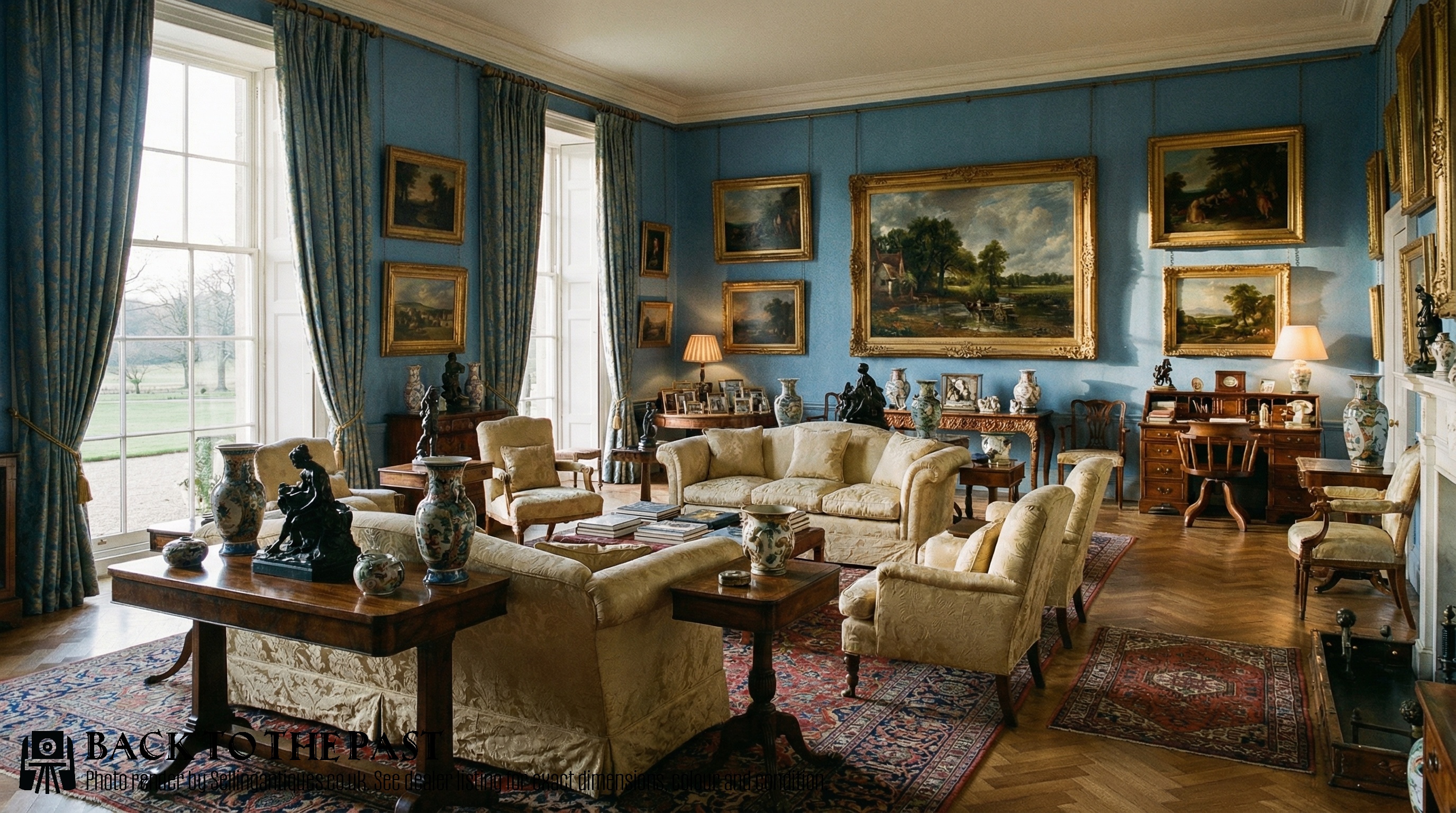
An Edwardian style swivel chair combines period seating design with a revolving mechanism for office and music room use.
Edwardian Style Swivel Chair
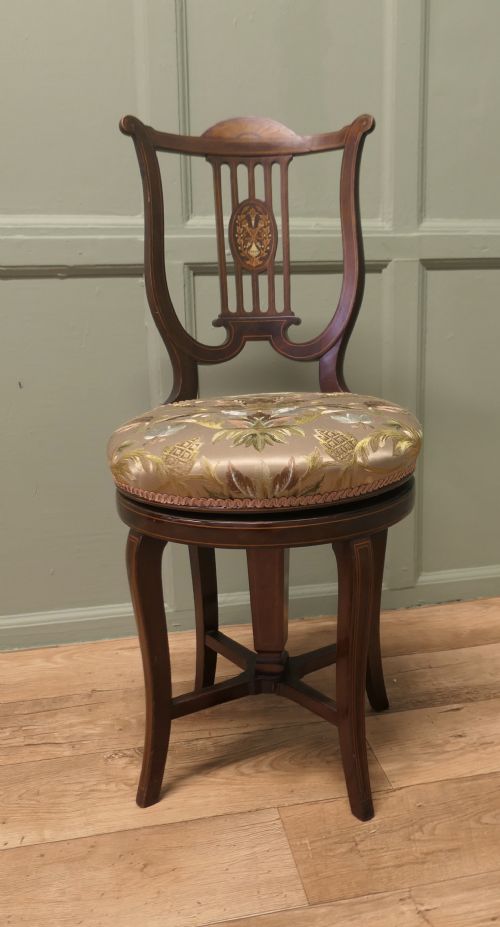
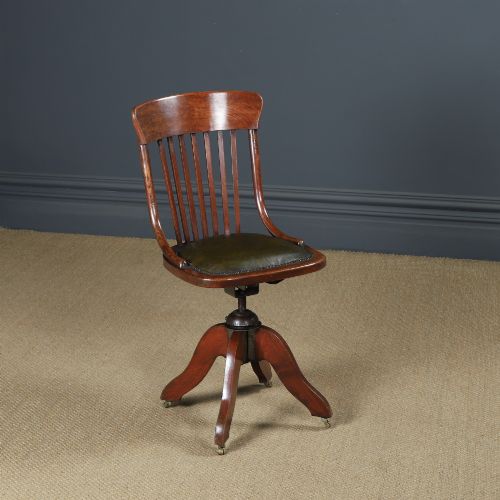
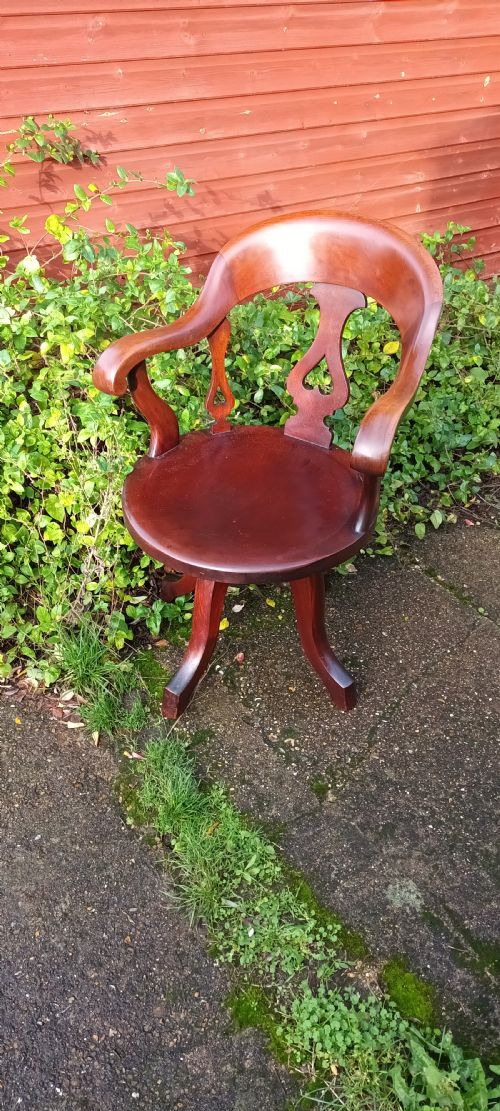
An edwardian style swivel chair sits on a revolving base, serving practical functions at a desk or in a music room. These seating pieces appear in various forms, including revolving music chairs, harpist and cello chairs, and desk armchairs.
The selections span multiple periods, touching the Victorian era, the Edwardian period, and the 1920s with George V examples. Stylistic influences include Sheraton Revival, Aesthetic Movement, Art Deco, and Queen Anne interpretations.
Makers utilised traditional forms and adapted them with swivel mechanisms to create functional seating for libraries and studies. Buyers frequently encounter desk chairs and music chairs constructed from various timbers and fitted with leather upholstery.
Materials and construction
Makers constructed these swivel chairs using a range of timbers including mahogany, light mahogany, satinwood, oak, beech, and ash. Marquetry inlay appears on select examples to add decorative detail to the wooden frames.
Functional metal components such as iron and brass facilitate the revolving and mechanical rise and fall actions. Upholstered versions incorporate leather, frequently in green tones, secured to the seats for regular daily use.
Periods represented span from the 1870s through the Victorian and Edwardian eras to the 1920s.
Assessing quality and finish
Quality rests upon the selection of timbers, from plain beech and ash to figured mahogany and satinwood with marquetry inlay. The sophistication of the frame design, whether a simple desk chair or a lyre back music chair, dictates the character.
The integration of the revolving mechanism and mechanical adjustments demonstrates the maker's technical skill. Upholstery finish and the execution of period styles, such as Sheraton Revival or Aesthetic Movement, influence the overall standard.
Edward William Godwin
The Edwardian Style Swivel Chair Glossary
- Swivel chair
- A chair fitted with a revolving base that allows the sitter to turn through a full circle without moving the legs. This mechanism suits office desks and music stands.
- Music chair
- A specialised revolving seat designed for musicians playing instruments such as the cello or harp, often featuring an adjustable height mechanism. These chairs provide stability and mobility during performance.
- Aesthetic Movement
- A nineteenth century design style emphasising visual beauty over narrative content, associated with makers such as Edward William Godwin. Pieces from this movement display clean structural lines and thoughtful material use.
- Marquetry inlay
- The art of applying pieces of veneer to a structural structure to form decorative patterns. This technique enhances the visual appeal of mahogany and satinwood surfaces.
Edwardian Style Swivel Chair: Frequently Asked Questions
What is an edwardian style swivel chair?
An edwardian style swivel chair is a revolving seat designed for working at a desk or playing a musical instrument. These pieces combine period woodworking styles with mechanical rotating bases.
They appear in forms ranging from simple armless office chairs to elaborate music stools with rise and fall actions.
How do you use a music chair?
A music chair is built to assist musicians while they practice or perform specific instruments. The revolving action allows the player to adjust position easily without leaving the seat.
Many examples feature adjustable heights to suit different players and instruments like the cello or harp.
Which woods were used for these chairs?
Cabinet makers utilised a diverse selection of timbers depending on the period and the workshop. Common woods include mahogany, light mahogany, satinwood, oak, beech, and ash.
Finer pieces sometimes incorporate marquetry inlay to decorate the wooden components.
How do I identify the period?
Dating relies on observing construction methods, timber choices, and stylistic details associated with specific eras. Pieces range from Victorian and Aesthetic Movement designs to Edwardian and 1920s George V examples.
Stylistic markers like Sheraton Revival or Art Deco provide further clues to the date of manufacture.