


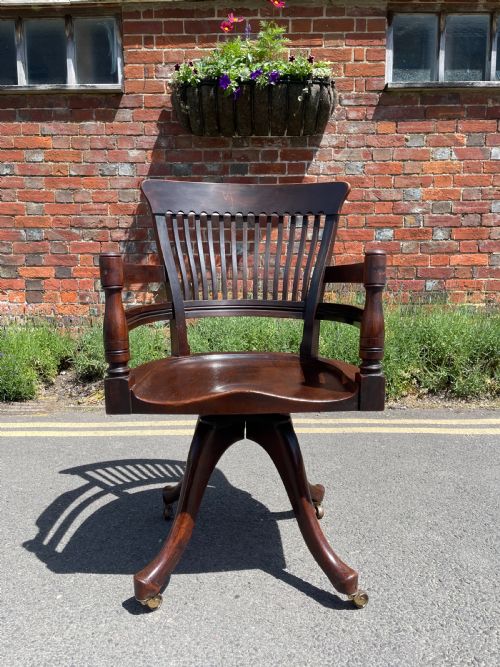

Late Victorian Swivel Chair
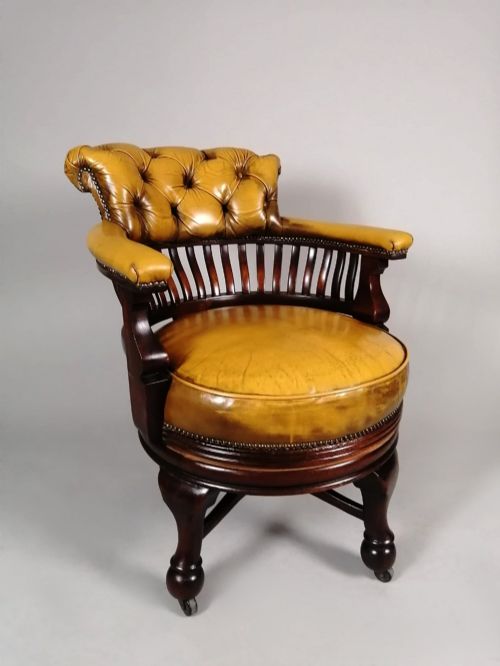
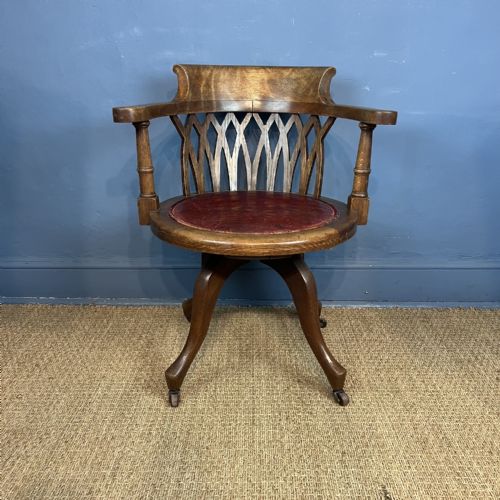
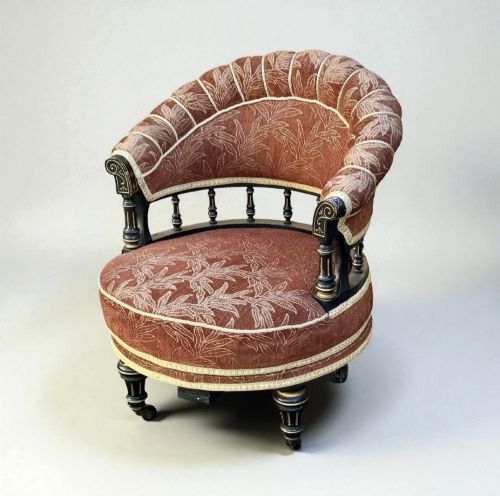
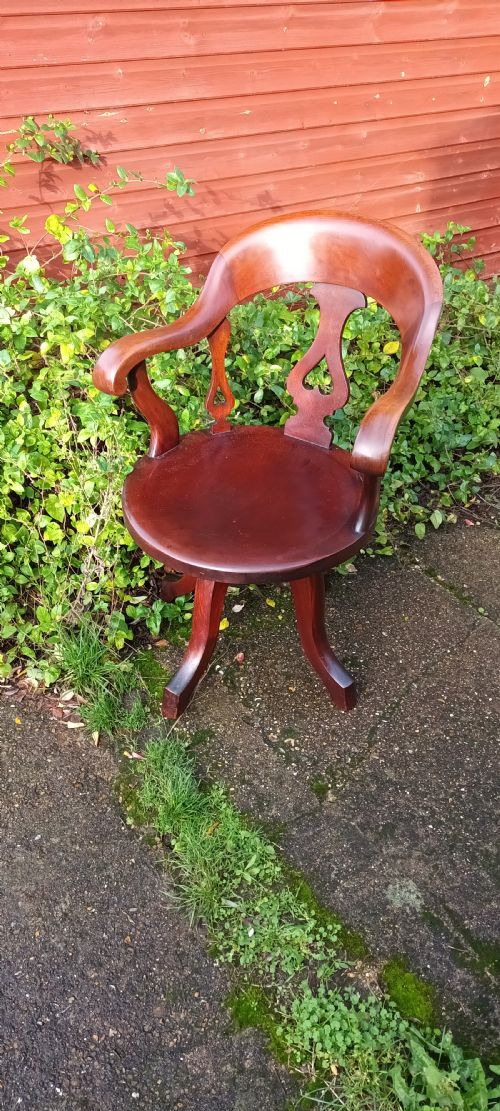
These late victorian swivel chair examples offer the mechanical ingenuity and robust timber work of the late nineteenth century workspace.

Late Victorian Swivel Chair
A late victorian swivel chair combines nineteenth-century mechanical innovation with practical seating for the study, library or office. These pieces range from revolving desk armchairs to piano stools and music chairs.
The selections on this page draw predominantly from the Victorian period, spanning the late nineteenth century around eighteen ninety to nineteen hundred. Oak and mahogany serve as the primary timber choices for these revolving designs.
Buyers encounter sturdy desk armchairs alongside specialised seating such as ships chairs and patent music stools. Each form utilises a central rotating mechanism to provide movement for the seated worker or musician.
Materials and Construction
Cabinet makers utilised dense hardwoods such as oak, mahogany, walnut and ebonised hardwood to build the frames of a late victorian swivel chair. These timbers provided the structural strength required to support heavy central rotating mechanisms.
Cast iron and brass components formed the working underpinnings that allowed the seats to revolve smoothly. Upholstery in leather or fabric was integrated into the desk armchairs and music stools for daily comfort.
Joinery techniques combined traditional framing with metal spindles and screws to secure the swivel action. The integration of wood and metal defined the manufacturing standard of the period.
Listings feature oak, mahogany, walnut, brass and cast iron across nineteenth-century Victorian forms.
Judging Quality and Craftsmanship
The quality of a late victorian swivel chair depends upon the weight of the timber and the complexity of the revolving mechanism. Superior examples display robust joinery in oak or mahogany alongside responsive and stable iron or brass underframes.
Design nuance separates standard office seating from exceptional pieces associated with specific aesthetic movements or patent designs. Finer variants incorporate thoughtful carving, quality leather upholstery and balanced proportions.
Edward William Godwin
The Late Victorian Swivel Chair Glossary
- Revolving mechanism
- The internal metal assembly of pivots, screws and iron brackets that allows the upper seat portion to turn through three hundred and sixty degrees.
- Ebonised hardwood
- Timber treated with a dark stain or finish to imitate expensive ebony wood, frequently utilised in late nineteenth-century seating.
- Aesthetic movement
- A design style spanning the late nineteenth century that emphasised visual and artistic qualities over heavy historical revivalism.
- Patent music chair
- An adjustable stool or chair engineered with a screw action or mechanical swivel to alter height for musicians.
Late Victorian Swivel Chair: Frequently Asked Questions
How do I date a swivel chair?
Dating relies on examining the timber species, the style of the turnings and the complexity of the cast iron or brass mechanism beneath the seat. Nineteenth-century examples display construction methods characteristic of the Victorian era.
Makers frequently utilised oak, mahogany and walnut, combining traditional cabinet joinery with emerging industrial metalwork to achieve the revolving action.
Were these chairs used in offices?
These revolving seats served primarily in studies, libraries, ship cabins and offices where movement and accessibility were required at the desk. The addition of arms and leather upholstery provided comfort for long working hours.
Variants also included music stools designed for piano players who needed to turn or adjust their height while seated.
What woods were used?
Makers relied on durable hardwoods such as oak, mahogany and walnut to construct the frames and seat bases. Ebonised hardwood also appears in pieces influenced by the Aesthetic Movement.
These dense timbers supported the stress placed on the central rotating column and metal underpinnings during daily use.
How does the swivel action work?
The mechanism typically involves a central iron spindle secured to a cast iron spider base with legs radiating outward. A threaded column or pivot allows the seat to turn smoothly above the base.
Some patent music chairs incorporated screw mechanisms that permitted vertical height adjustment in addition to the standard revolving motion.