
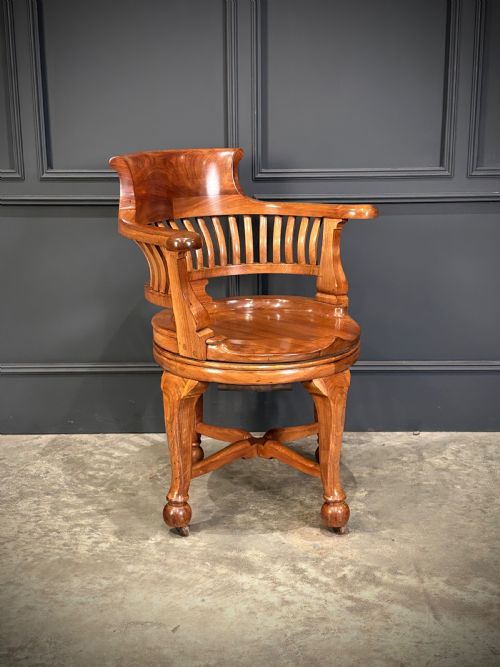
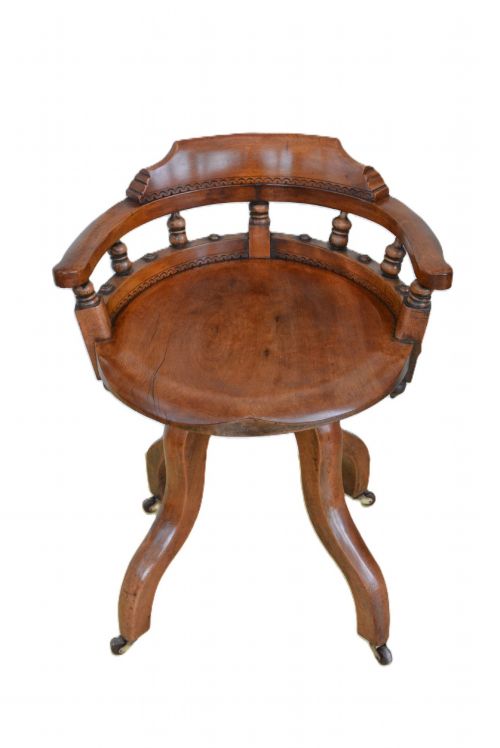


Edwardian Revolving Armchair
An edwardian revolving armchair offers sturdy timber frames and adjustable swivelling action for office and library desks.
Edwardian Revolving Armchair
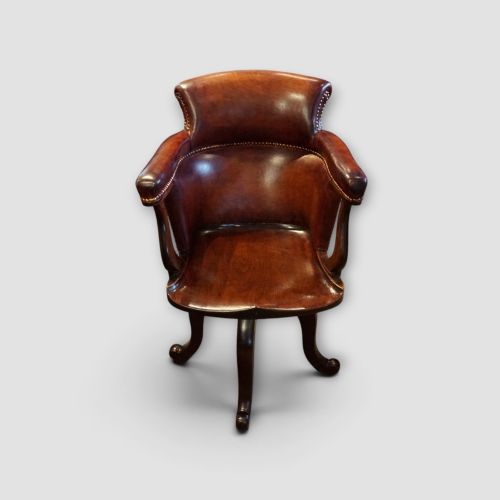
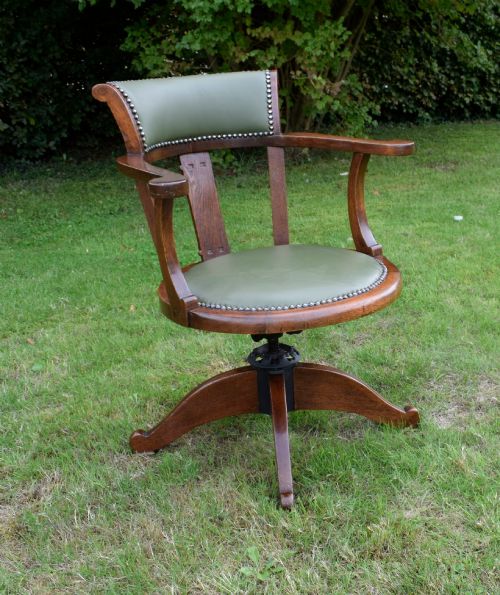
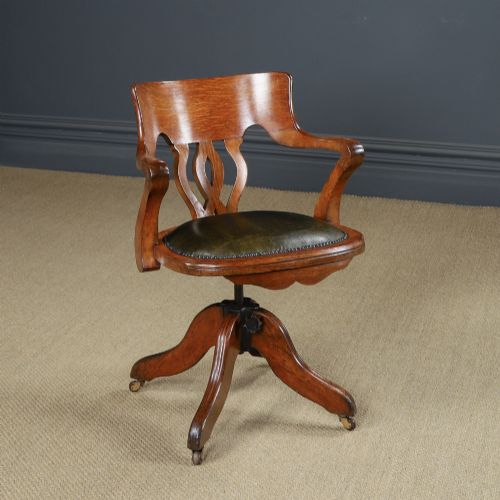
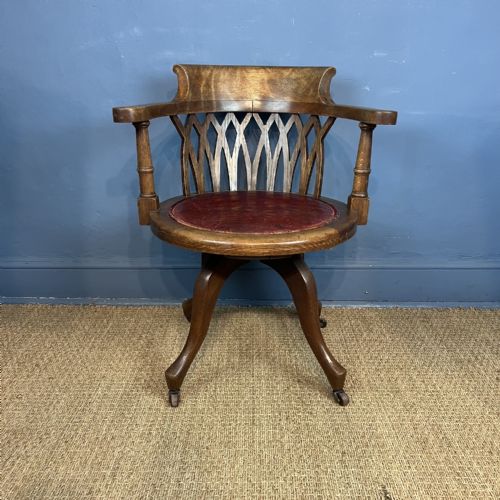
An edwardian revolving armchair serves as a functional seating option designed primarily for office desks, studies, and libraries. Buyers searching this phrase meet sturdy wooden frames featuring mechanical swivel actions, often accompanied by tilt mechanisms and height adjustment screws.
The most common examples on this page date from the Edwardian period and the early twentieth century, constructed largely in oak or mahogany. Many items incorporate upholstered leather pads on the seats and arms, alongside simpler wooden seat designs.
Forms span from standard office chairs and captain's chairs to specialised ships' chairs originating from maritime contexts. Victorian precursors and later variations from the 1920s also appear frequently among the selection.
How They Were Made
Cabinet makers utilised solid hardwoods such as oak, mahogany, walnut, beech, and ash to build durable chair frames capable of withstanding constant movement. Steam bending shaped components like bentwood backrests and arm bows.
Internal swivel mechanisms combined cast iron, brass, and metal columns with wooden spiders to allow rotation and tilting. Upholstered versions relied on leather secured with decorative brass studs over padding.
Edwardian Revolving Armchair Retail Price Guide 2026
Typical asking prices for edwardian revolving armchair among the pieces listed under this phrase on Sellingantiques today, from the lower quarter to the upper quarter. They describe what is for sale here now, not the wider market.
P & O liners supplied their passengers with heavy revolving chairs so they could follow the conversation regardless of the ocean swell.
What Varies in Quality
The sophistication of the revolving and tilting mechanism dictates much of the standard, ranging from basic swivel spindles to complex multi-action spring adjustments. Heavier cast iron underpinnings provide greater stability and smoother movement than lighter metal components.
Cabinetmaking detail distinguishes simpler utilitarian seating from finer pieces, evident in hand-carved ornamentation, inlaid satinwood accents, and bergere cane panels. The selection of timber, from plain oak to figured mahogany or walnut, likewise elevates the visual finish.
Kendrick & Jefferson·Edward William Godwin·Shoolbred
The Edwardian Revolving Armchair Glossary
- Swivel
- A rotating mechanism allowing the upper seat section to turn full circle on a central spindle. This movement relies on a cast iron or steel column housed beneath the seat.
- Captain's Chair
- A low-backed wooden armchair designed with a rounded top rail supported by vertical spindles. These seats provide compact support suitable for office desks.
- Bergere
- A type of chair featuring woven cane panels set into the backrest or arm framing. This technique introduces lighter textural contrast to heavy timber frames.
- Aesthetic Movement
- A late nineteenth-century design style emphasising artistic visual qualities over strict historical revival. Pieces often display simpler lines and Japanese-inspired decorative details.
- Tilt mechanism
- An integrated spring arrangement enabling the backrest to lean backward under pressure. Adjusting screws alter the tension to suit the user.
Edwardian Revolving Armchair: Frequently Asked Questions
How do I adjust the height on these chairs?
Many vintage office chairs utilise a threaded metal spindle beneath the seat that raises or lowers the upper structure when turned. Rotating the entire chair body winds the mechanism up or down along the central column.
Other examples employ a fixed height set by the original manufacturer, relying instead on tilt springs for user comfort during long hours at a desk.
Where were these chairs originally used?
Original locations included executive offices, private home studies, legal chambers, and shipboard cabins where secure seating was essential. Maritime versions featured heavily weighted bases or specific locking mechanisms to maintain stability at sea.
Libraries and municipal buildings also utilised these swivelling designs for administrative clerks and readers requiring mobility.
How do I care for the leather upholstery?
Leather seat pads and armrests benefit from occasional conditioning with specialist leather balms to maintain flexibility and prevent drying out. Regular dusting with a soft, dry cloth removes surface particles without damaging the material.
Avoiding direct sunlight and excessive heat sources protects both the leather hide and the underlying timber frame from warping.