
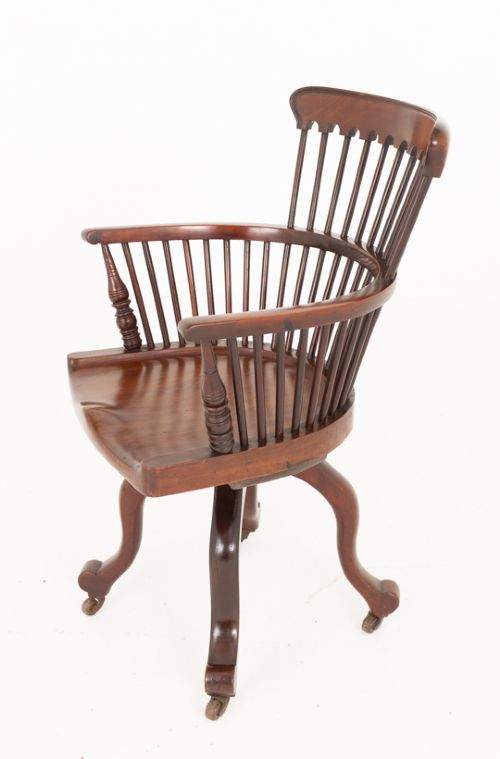
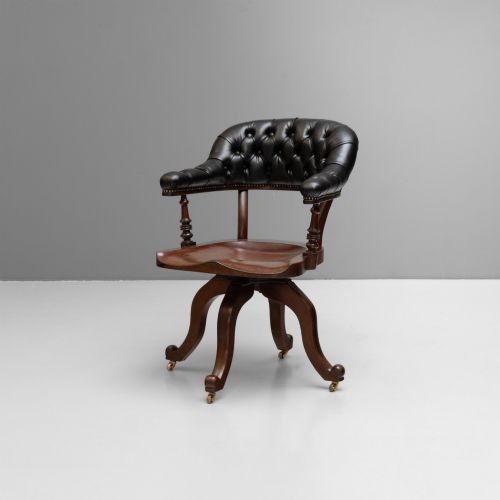
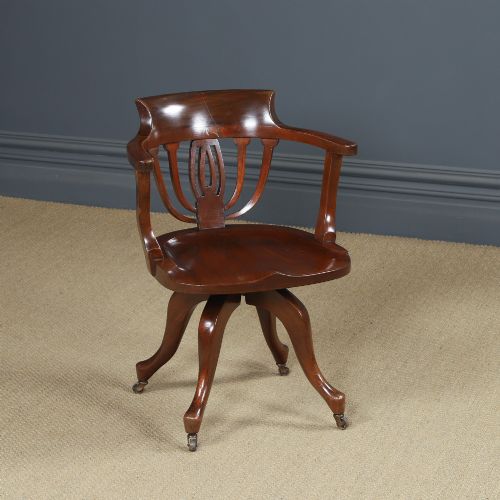
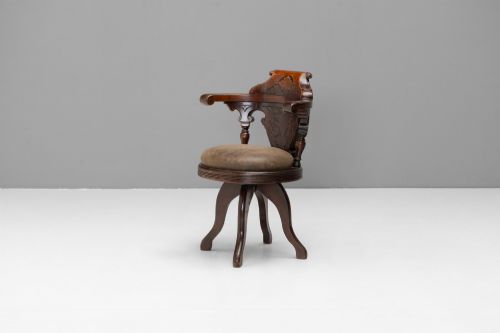


Mahogany Swivel Armchair
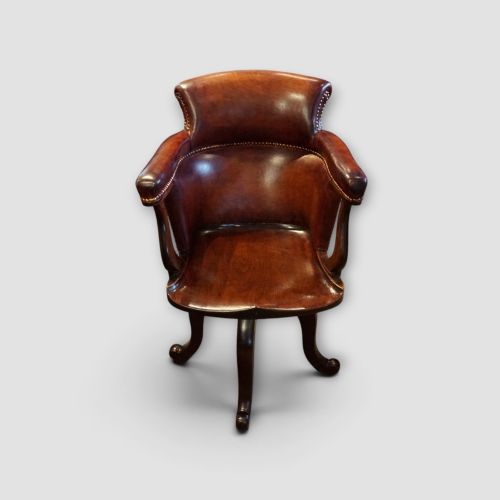
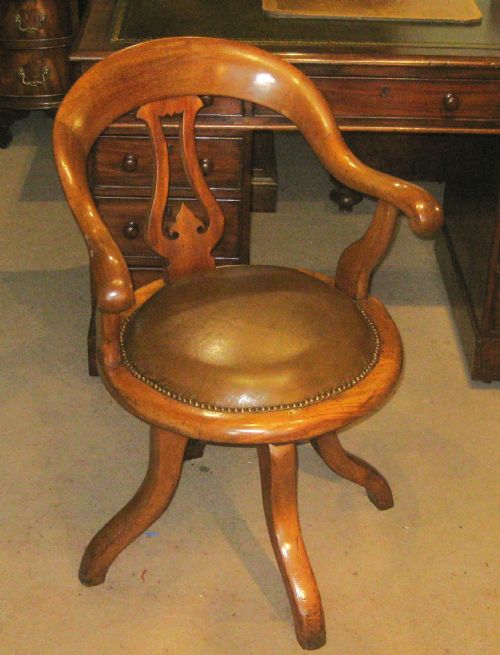
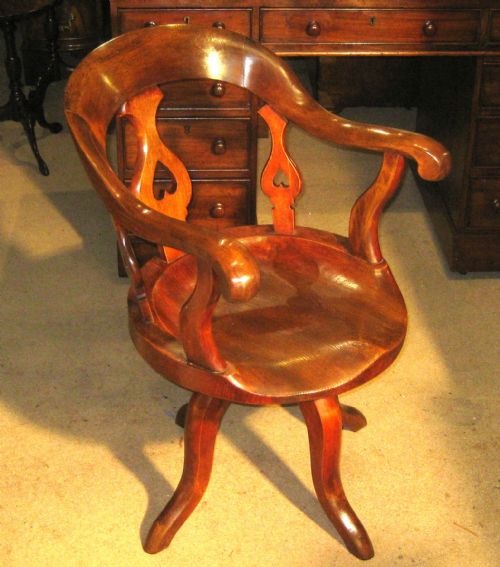
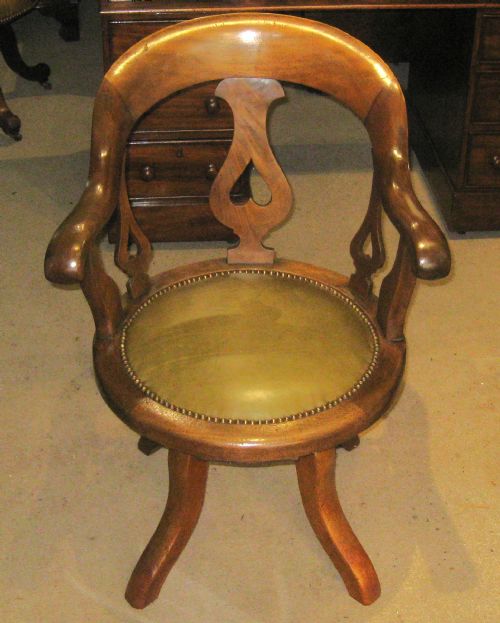
A mahogany swivel armchair offers the ideal blend of executive comfort and practical mobility for the study or office.
Understanding the mahogany swivel armchair
A mahogany swivel armchair provides functional seating designed primarily for desks, studies and libraries. These pieces combine traditional woodwork with revolving mechanisms to assist working life.
The versions met most frequently on this page span the Victorian and Edwardian eras, with dates reaching back into the nineteenth century. Most examples function as desk chairs, library chairs or office seating.
Makers shaped these items from solid timber, incorporating revolving seats and adjustable heights to suit the working user. The form appears consistently across both British and American workshops of the period.
Materials and construction
Mechanical elements rely upon iron and brass components to enable the swivel and revolving functions. These metal mechanisms allow the upper chair structure to rotate independently of the base.
Retail Price Guide 2026
Typical UK retail prices for mahogany swivel armchair, calculated from the Sellingantiques database of over a million retail prices indexed since 2003. This retail price guide relies exclusively on Sellingantiques data; no external sources or auction records are used, so the figures do not describe the wider market.
Early desk chairs let Victorian clerks spin in circles while pretending to consult the library ledger.
Judging quality in a revolving chair
Quality rests heavily upon the calibre of the timber and the engineering of the swivel mechanism. Heavier proportions and solid mahogany construction distinguish the more substantial examples from lighter alternatives.
The integration of the leather upholstery and the complexity of the revolving iron or brass mechanism dictate the overall standard of the piece. Refined joinery and good proportions separate the finest desk chairs from standard office seating.
WM Heywood Chair Co
The Mahogany Swivel Armchair Glossary
- Swivel armchair
- A seating piece featuring a revolving mechanism beneath the seat and supporting arms at the sides. This allows the occupant to turn freely while remaining seated at a desk.
- Revolving desk chair
- A functional seat designed for office or library use that turns on a central spindle. These chairs often include adjustable height settings.
- Solid mahogany
- Dense tropical hardwood used for the primary structural frame of the chair. It provides both strength and a rich natural grain pattern.
- Edwardian
- The period spanning the reign of King Edward VII, noted in furniture for lighter proportions and refined styles. Pieces from this era often display simplified classical details.
Frequently Asked Questions
What periods do these revolving chairs come from?
These chairs date primarily from the Victorian and Edwardian eras, spanning the latter half of the nineteenth century into the early twentieth century. Listings include specific dates and broader period classifications.
Makers working during these decades produced revolving office and library seating using traditional timber framing and mechanical upgrades.
How were these chairs used originally?
Occupants used them primarily at desks, tables and in libraries where mobility and reach were necessary. The swivel function allowed workers to turn between different areas of a workspace without standing.
Office and executive environments favoured these designs for their combination of upholstered comfort and mechanical rotation.
How do Victorian and Edwardian examples differ?
Victorian examples tend to feature heavier proportions, solid timber construction and deep leather seats designed for substantial office environments. They often emphasise robust executive comfort.
Edwardian pieces generally present lighter mahogany frames and more streamlined profiles while retaining the practical swivel mechanism.