
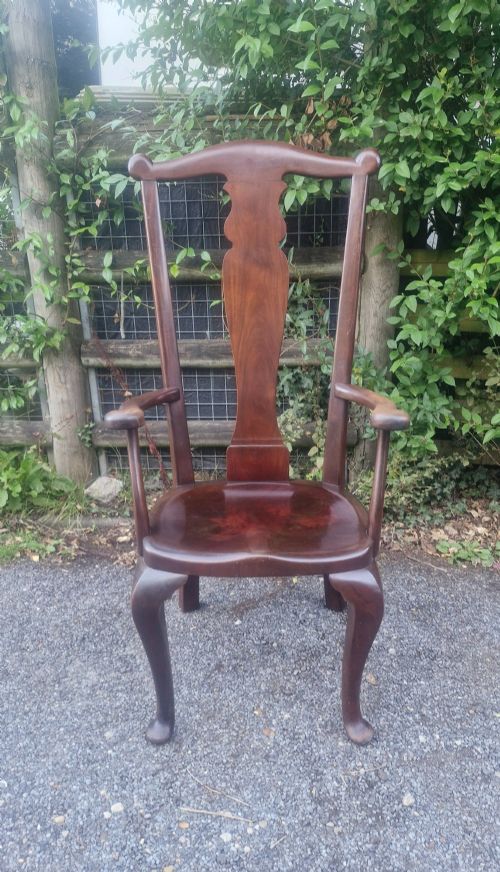
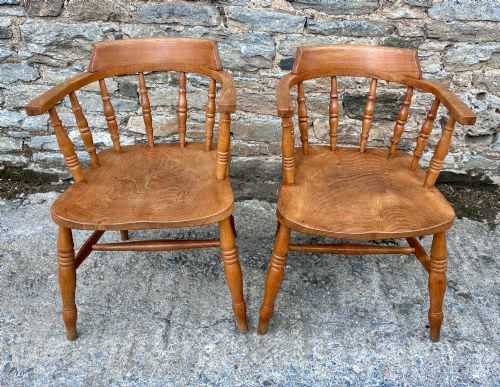
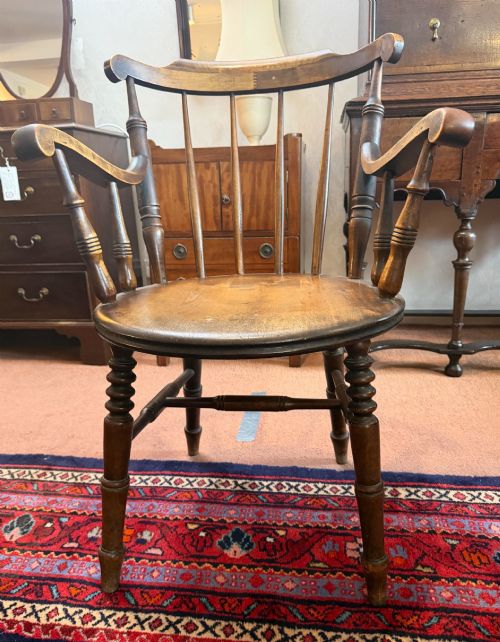
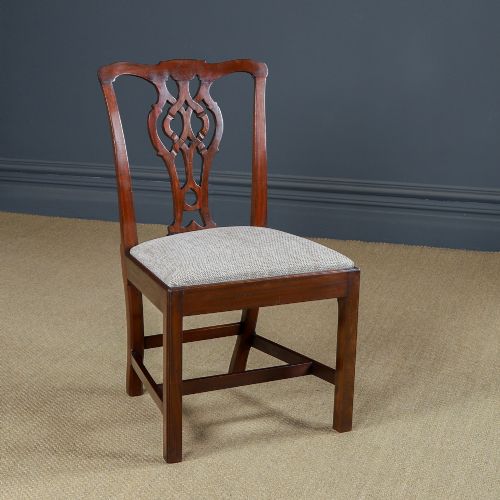
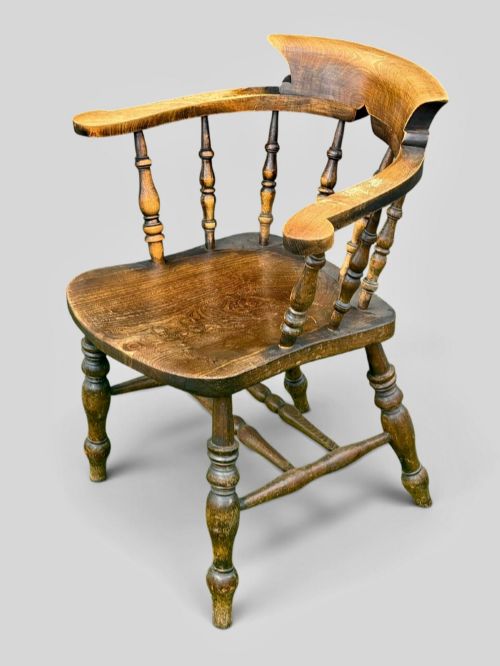
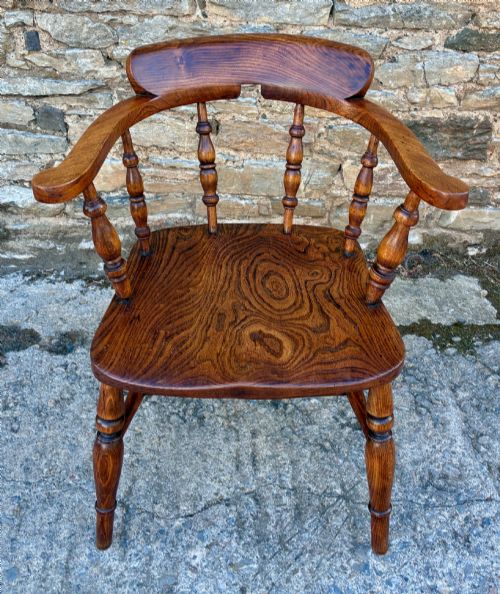
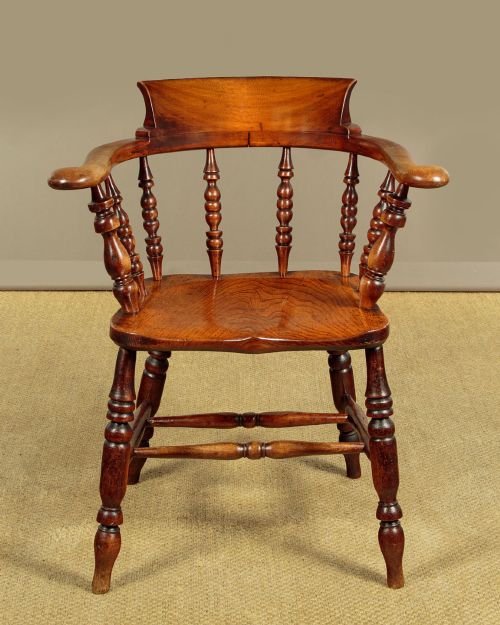
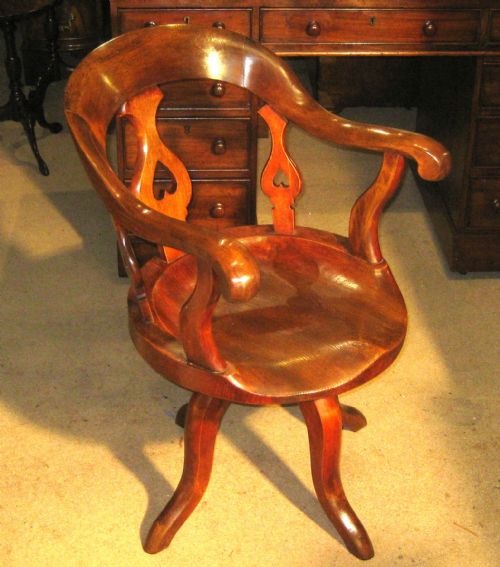
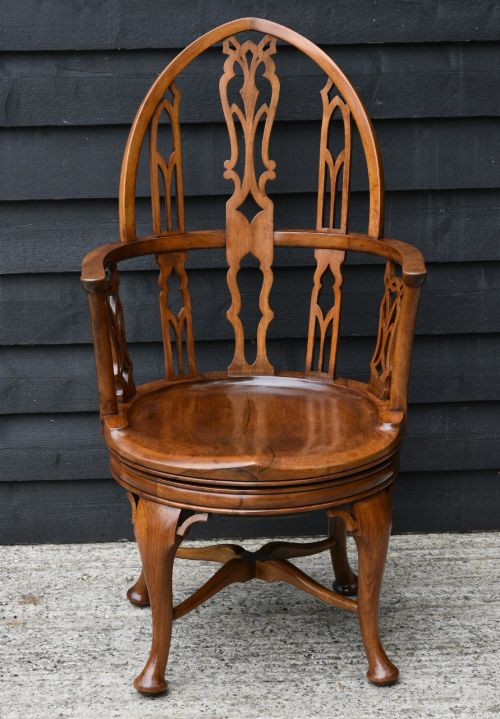
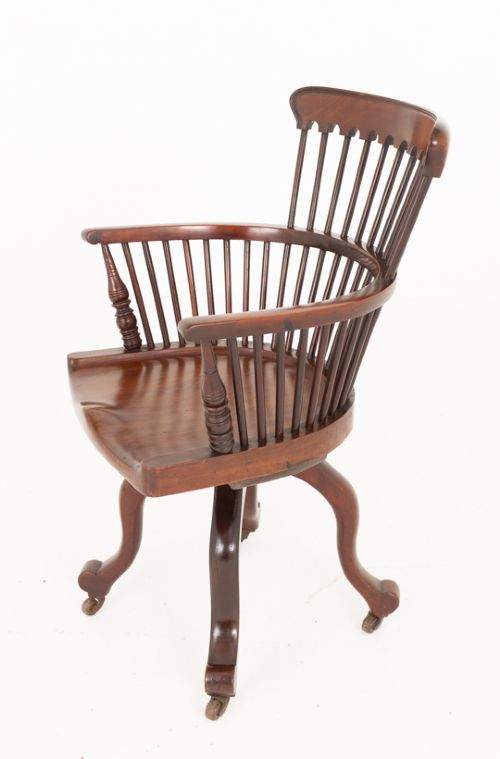
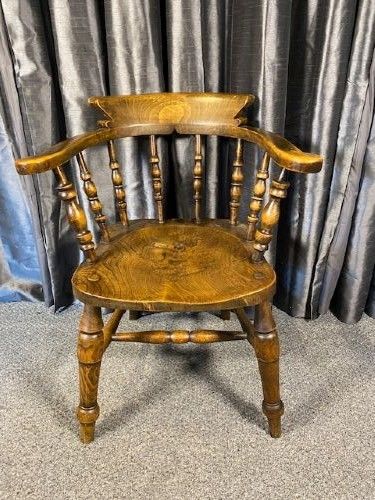
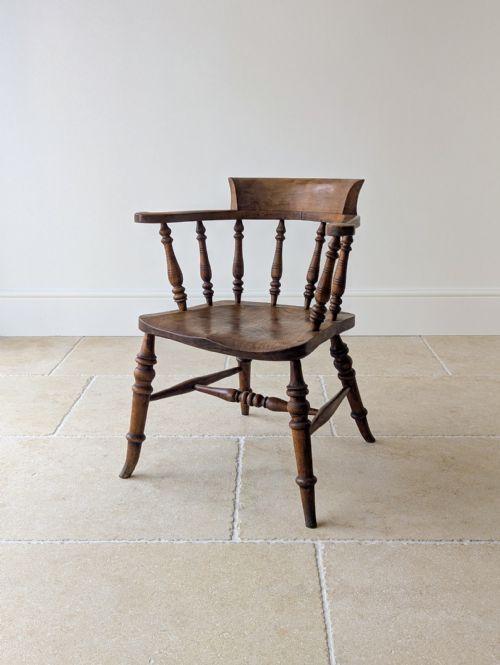
Brown Wooden Office Chair
A brown wooden office chair brings solidity and practical design to a workspace, drawing on centuries of sturdy carpentry.
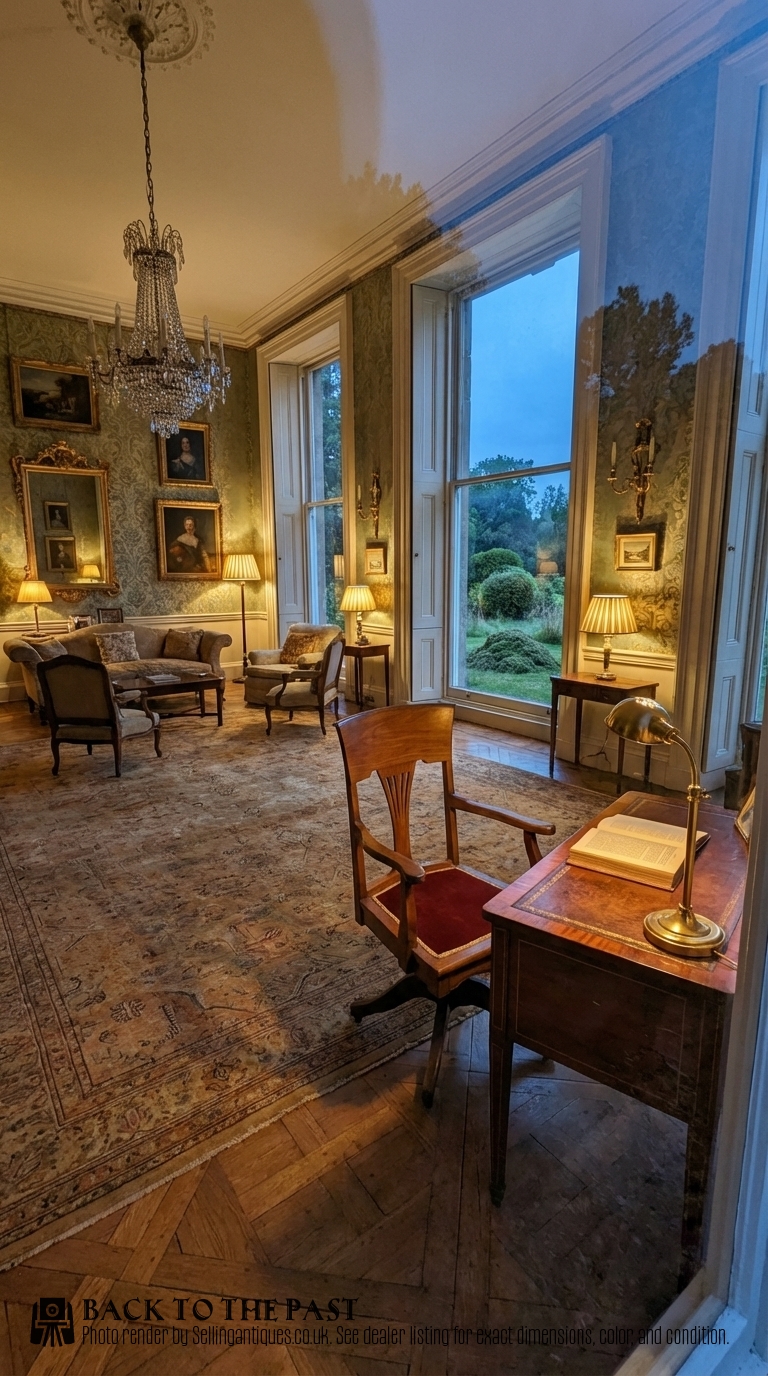
Brown Wooden Office Chair
A brown wooden office chair meets the practical demands of a workspace through robust seating designed for daily use. When searching for a brown wooden office chair, buyers encounter forms ranging from stationary armchairs to swivel seating created for desks.
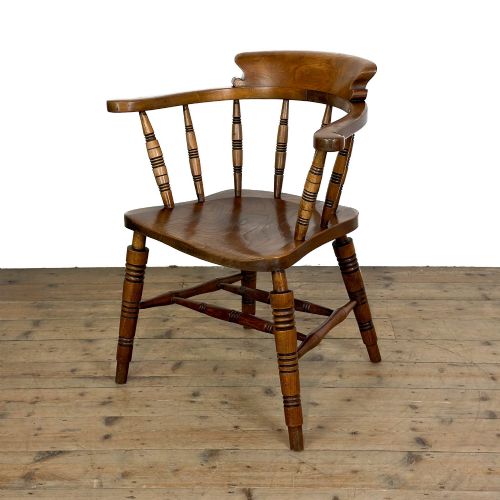
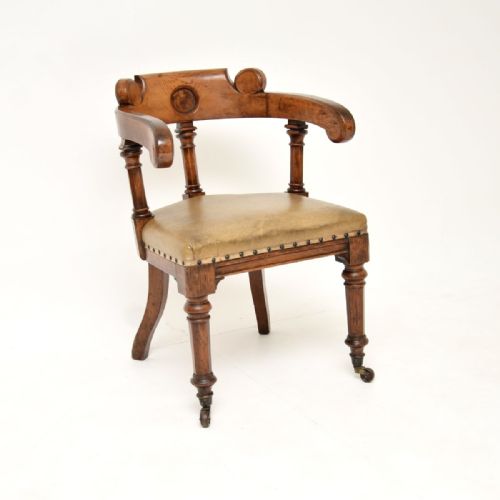
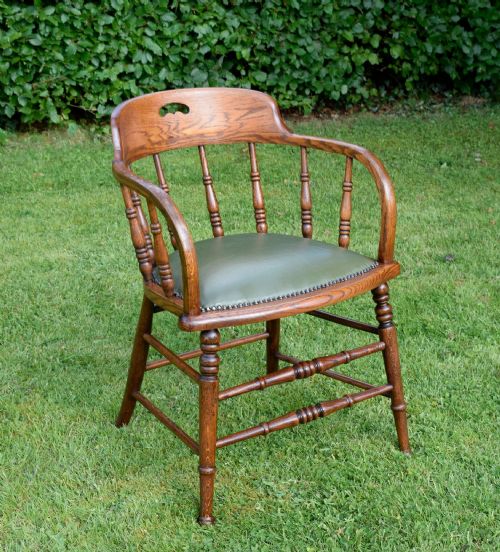
The selection includes pieces originating from the nineteenth and early twentieth centuries, spanning periods such as the Victorian and Edwardian eras. Common regional variations incorporate classic British seating types like the captain's chair, smoker's bow and Windsor styles.
Workspaces benefit from the variety of functional designs available, including high-back models and revolving desk chairs. These items bridge traditional woodworking traditions and administrative utility.
Materials and construction
Carpenters utilised durable hardwoods such as mahogany, oak, elm, beech and walnut to build lasting frames. Elm frequently supplied resilient seats capable of withstanding heavy daily use, while mahogany and oak provided structural rigidity for upright and swivel models.
Secondary elements incorporated iron and brass for mechanical swivelling components, alongside leather and fabric inserts for padded seats. Traditional joinery methods united bentwood and turned spindles to create stable armchairs and desk seating.
The inventory records mechanical swivel chairs alongside traditional stationary armchairs, Windsor styles and military desk seating.
Assessing craftsmanship
The standard of a piece depends on the selection of timber and the complexity of its construction, particularly in turned spindles and steam-bent components. Solid wood frames demonstrate superior durability compared to examples with compromised joinery or replaced elements.
Integration of mechanical swivel actions and hardware distinguishes standard seating from more elaborate revolving desk chairs. Grain selection in burr elm or mahogany further elevates the visual merit of individual items.
The Brown Wooden Office Chair Glossary
- Captain's chair
- A sturdy low-backed armchair with a rounded wooden seat, often utilised at a desk. These chairs typically feature spindle backs and bentwood arm rails.
- Smoker's bow
- A traditional Windsor-derived armchair featuring a low back and a deep, comfortable wooden seat. This form shares similarities with the captain's chair.
- Revolving desk chair
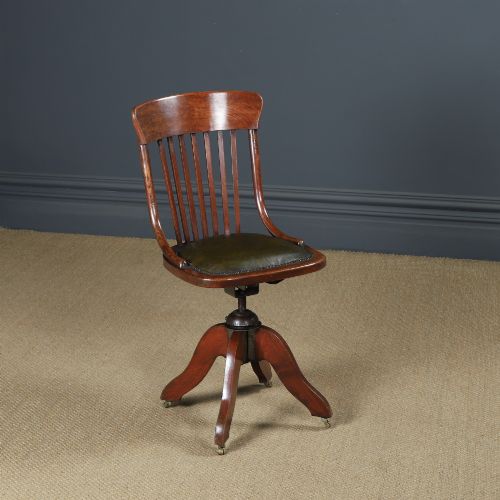
- An office seat mounted on a mechanical swivel base allowing rotation. Versions from the nineteenth century often incorporate iron and brass underframes.
- Bentwood
- Wood softened through steam and bent into curved shapes, frequently utilised for chair backs and arms. This technique produces strong, flowing lines without heavy joinery.
- Chippendale style
- A decorative style inspired by eighteenth-century cabinet maker designs, notable for carved mahogany details and openwork splat backs.
Brown Wooden Office Chair: Frequently Asked Questions
What is a captain's chair?
A captain's chair is a sturdy wooden armchair featuring a rounded back rail supported by spindles above a solid contoured seat. These seats originated for functional office and domestic use.
Versions span the nineteenth and early twentieth centuries, utilising timbers such as elm, beech and oak. They provide reliable support for daily seating at a desk.
How do I identify a Victorian desk chair?
Victorian desk chairs display characteristic nineteenth-century styles, heavy timber construction and dark polished finishes in mahogany or walnut. Many incorporate turned legs and supportive spindle backs.
Revolving versions from this period often reveal iron and brass swivel mechanisms underneath. Fixed-leg armchairs frequently adopt Windsor or captain's chair configurations.
Are swivel desk chairs antique?
Swivel desk chairs date back to the nineteenth century, when manufacturers developed mechanical iron and brass bases to aid office work. These early revolving models often paired wooden seats with bentwood or upholstered components.
Victorian and Edwardian examples demonstrate the evolution of office furniture towards greater mobility. They combine traditional timber joinery with functional metal hardware.
Which woods were used for office chairs?
Cabinet makers utilised a range of domestic and imported hardwoods, including mahogany, oak, walnut, elm, beech and ash. Elm was frequently chosen for seats due to its resistance to splitting.
Mahogany and oak provided strong frames for formal desk chairs, while beech and birch supported bentwood designs. Yew wood occasionally appeared in higher-grade regional seating.