



Victorian Mahogany Swivel Chair
When you select a victorian mahogany swivel chair, you acquire a sturdy revolving seat built for the Victorian study or office.
Victorian Mahogany Swivel Chair
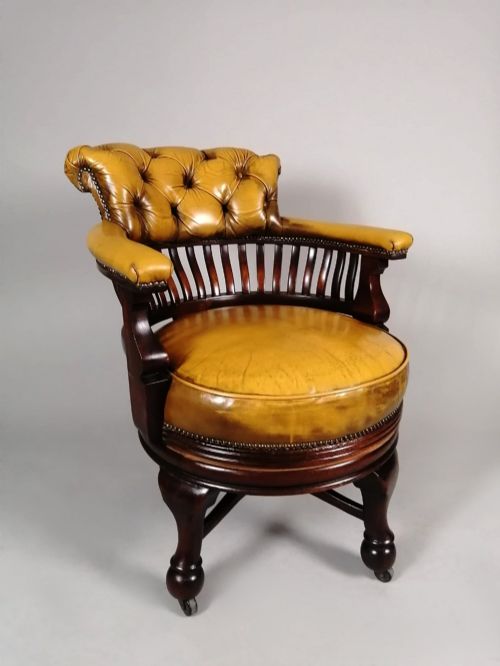
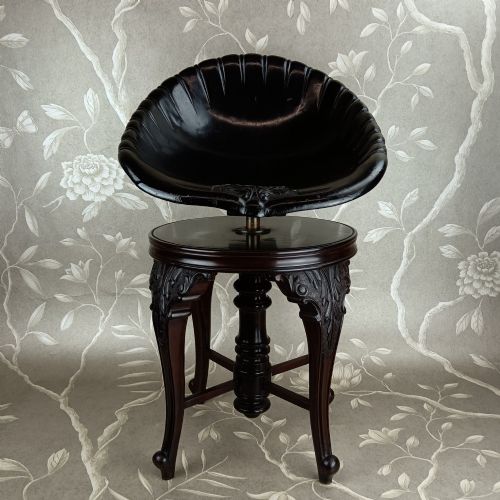
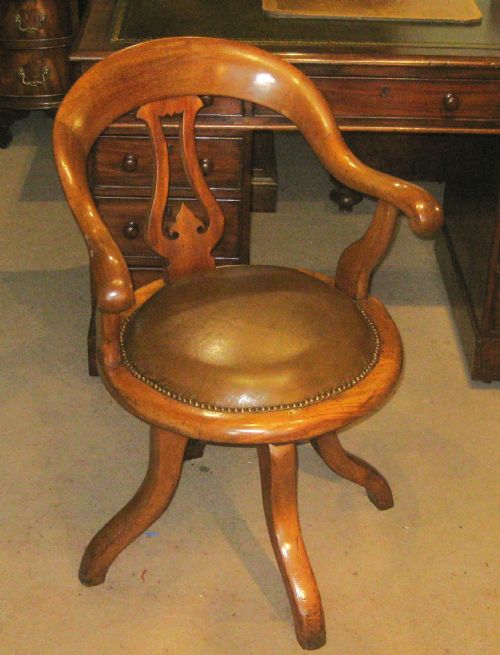
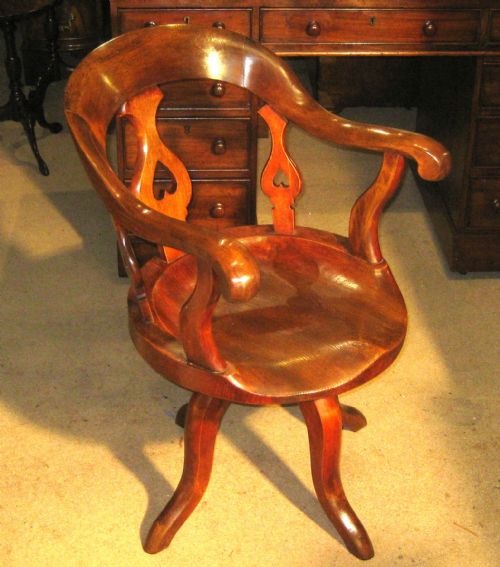
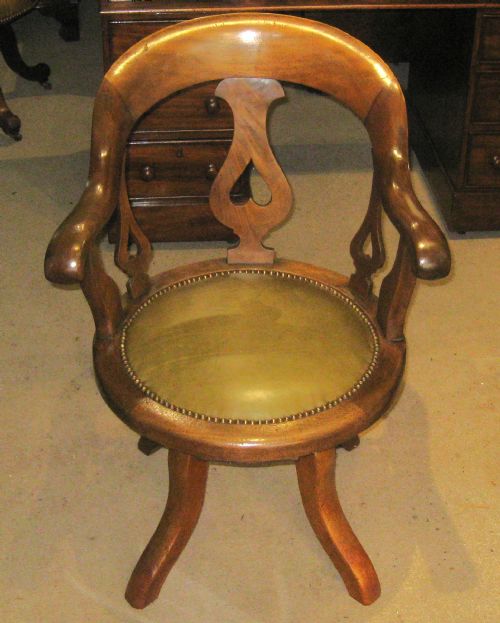
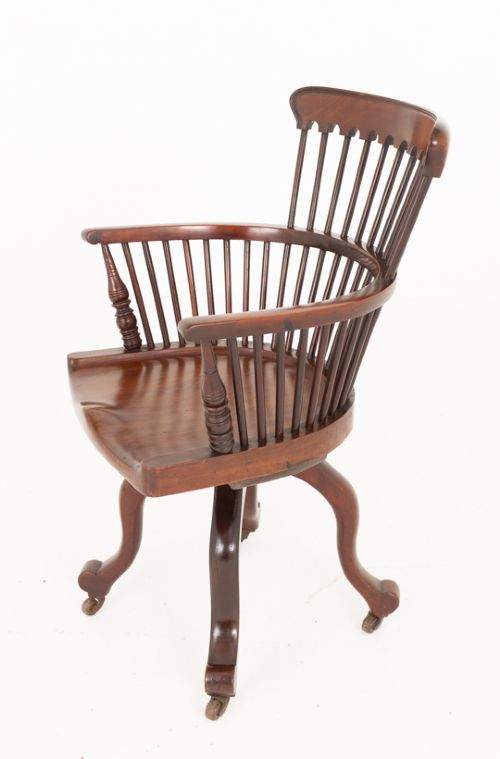
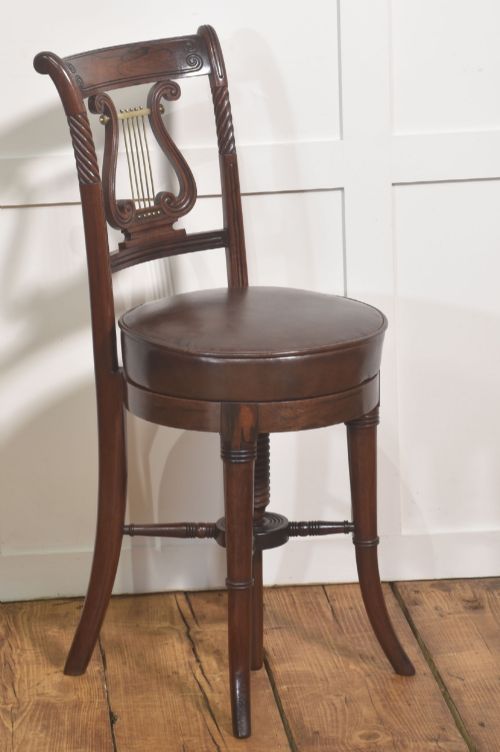
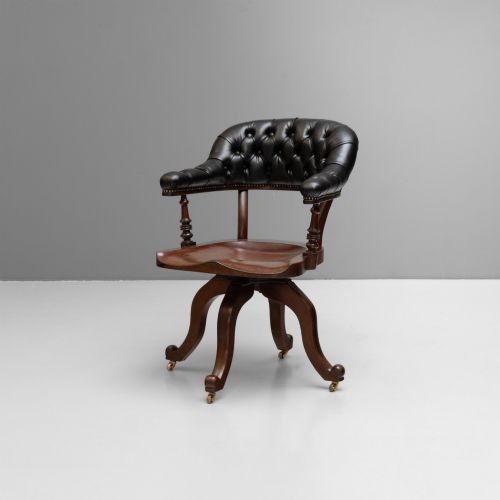
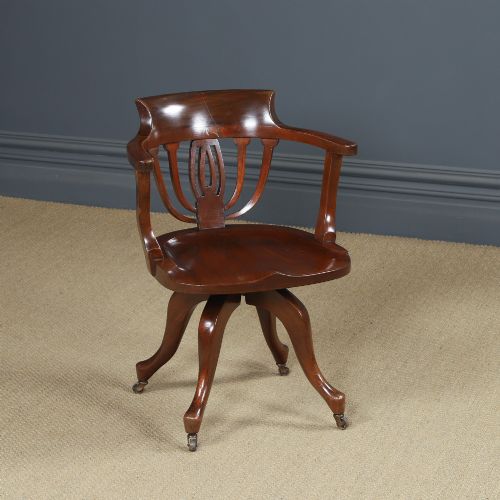
A victorian mahogany swivel chair combines a heavy rotating mechanism with deep timber frames designed for long hours at a desk. The predominant forms include revolving desk armchairs, office chairs and adjustable piano stools spanning the nineteenth century.
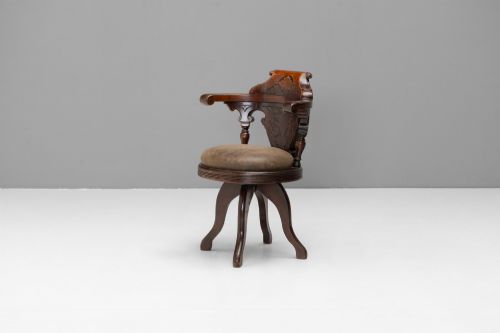
Makers adapted the revolving mechanism for varied working and musical environments, resulting in pieces with leather inserts, wooden saddle seats or upholstered pads. These items bridge domestic comfort and functional workspace demands from the late Victorian and Edwardian periods.
How they were made
Cabinet makers utilised dense tropical hardwoods, particularly solid and golden mahogany, paired with cast iron and brass components to construct the central revolving screw and spider legs. Leather, velvet and fabric upholstery completed the seats, secured with brass tacks.
Structural integrity relied on sturdy turning and joinery to support the rotational stress of the swivel action. Brass castors allowed movement across heavy carpets in libraries and offices.
Some Victorian musicians required papier-mâché harpist stools that spun freely during intense practice sessions.
What varies in quality
The sophistication of the revolving mechanism and the gauge of the iron or brass screw determine the structural ambition of the piece. Heavier gauge timbers and finely turned spindle supports separate standard production from workshop-marked examples.
The retention of original leather upholstery, patination on the mahogany surface and the stability of the central swivel axis dictate the overall integrity of the survivor.
Jennens and Bettridge·Gillows·Shoolbred·James Shoolbred·George Bartholomew and Co
The Victorian Mahogany Swivel Chair Glossary
- Revolving
- A seating mechanism allowing the top portion of the chair to rotate fully on a central iron or brass spindle. This design facilitated movement around heavy partners desks.
- Captain's Chair
- A low-backed armchair featuring a rounded top rail supported by vertical spindles above a timber or leather-upholstered seat. These seats offered compact support in offices and ships.
- Rise and Fall
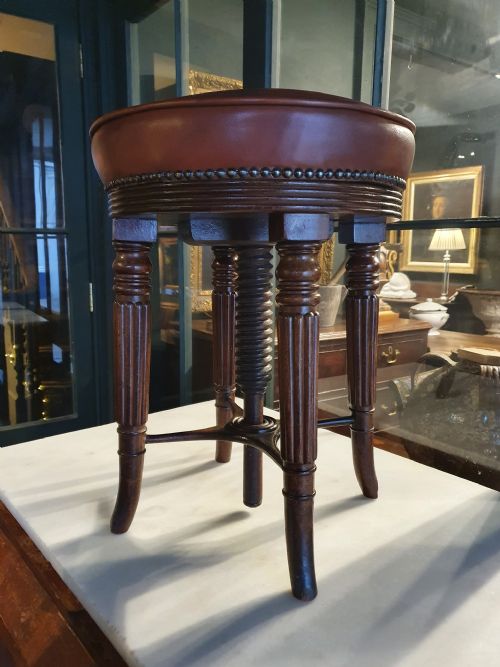
- An adjustable height mechanism operated by a central screw thread that raises or lowers the seat. This allowed the user to customise the height for desks or musical instruments.
- Papier-Mâché
- A moulded composite material formed from paper pulp and binders, utilised on decorative music stool tops. Jennens and Bettridge patented advanced methods for this durable surface.
- Castor
- A small wheel mounted in a swivel fork attached to the foot of a leg. Brass and iron versions permitted smooth shifting of heavy office chairs.
Victorian Mahogany Swivel Chair: Frequently Asked Questions
How do I adjust the height?
Most revolving desk chairs and piano stools rely on a central wooden or iron screw mechanism. You simply turn the seat clockwise or anticlockwise to raise or lower the platform.
Older Victorian designs utilise a threaded steel spindle hidden beneath the seat frame. Ensure the locking nut, where present, is loosened before attempting height adjustments to protect the thread.
Are these chairs suitable for daily desk use?
Victorian office and desk chairs were built to support heavy daily administrative work in nineteenth century studies. Their robust mahogany frames and iron swivel mechanisms handle modern seating demands.
Checking the stability of the central spider legs and the tightness of the spindle ensures safe use on modern flooring.
What is the difference between a desk chair and a piano stool?
Desk chairs typically feature supportive arms and enclosed back rails upholstered in leather or wood to sustain long working hours. Piano stools are generally backless with a circular revolving top designed for musicians.
Stools often incorporate adjustable rise and fall mechanisms to suit different instrument heights rather than traditional desk clearance.
How do I care for the leather seat?
Leather upholstery on Victorian revolving chairs benefits from occasional conditioning with appropriate balms to prevent drying and cracking. Avoiding direct sunlight preserves the original tone of the hide.
Gentle dusting maintains the surface without disturbing the traditional brass tack borders.