
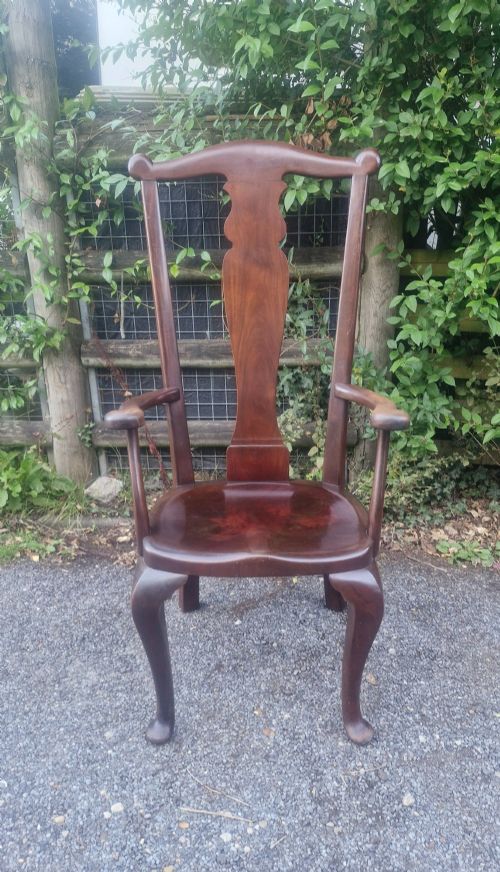

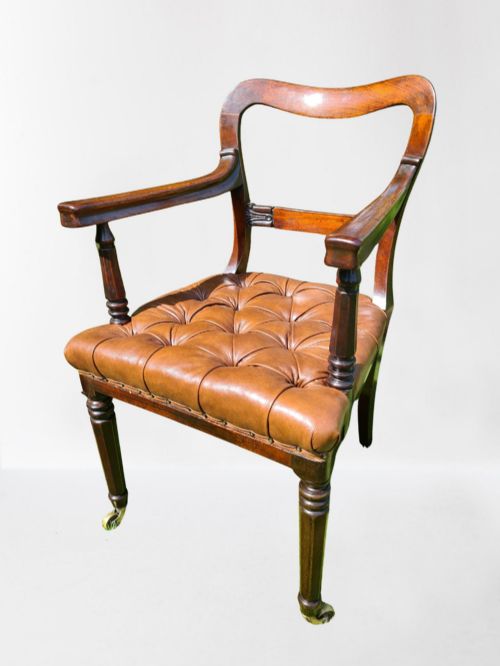
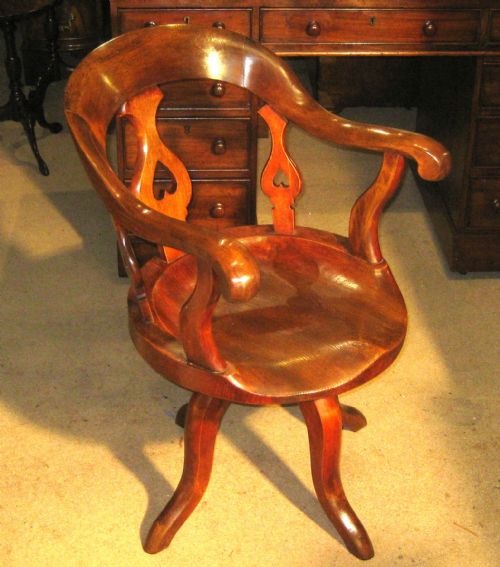
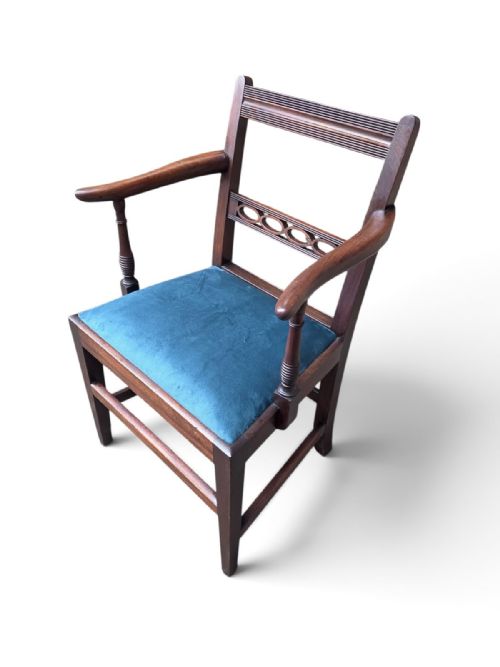


Carved Mahogany Office Chair
A carved mahogany office chair combines solid timber and working mechanics to anchor a study with enduring proportion and practical comfort.
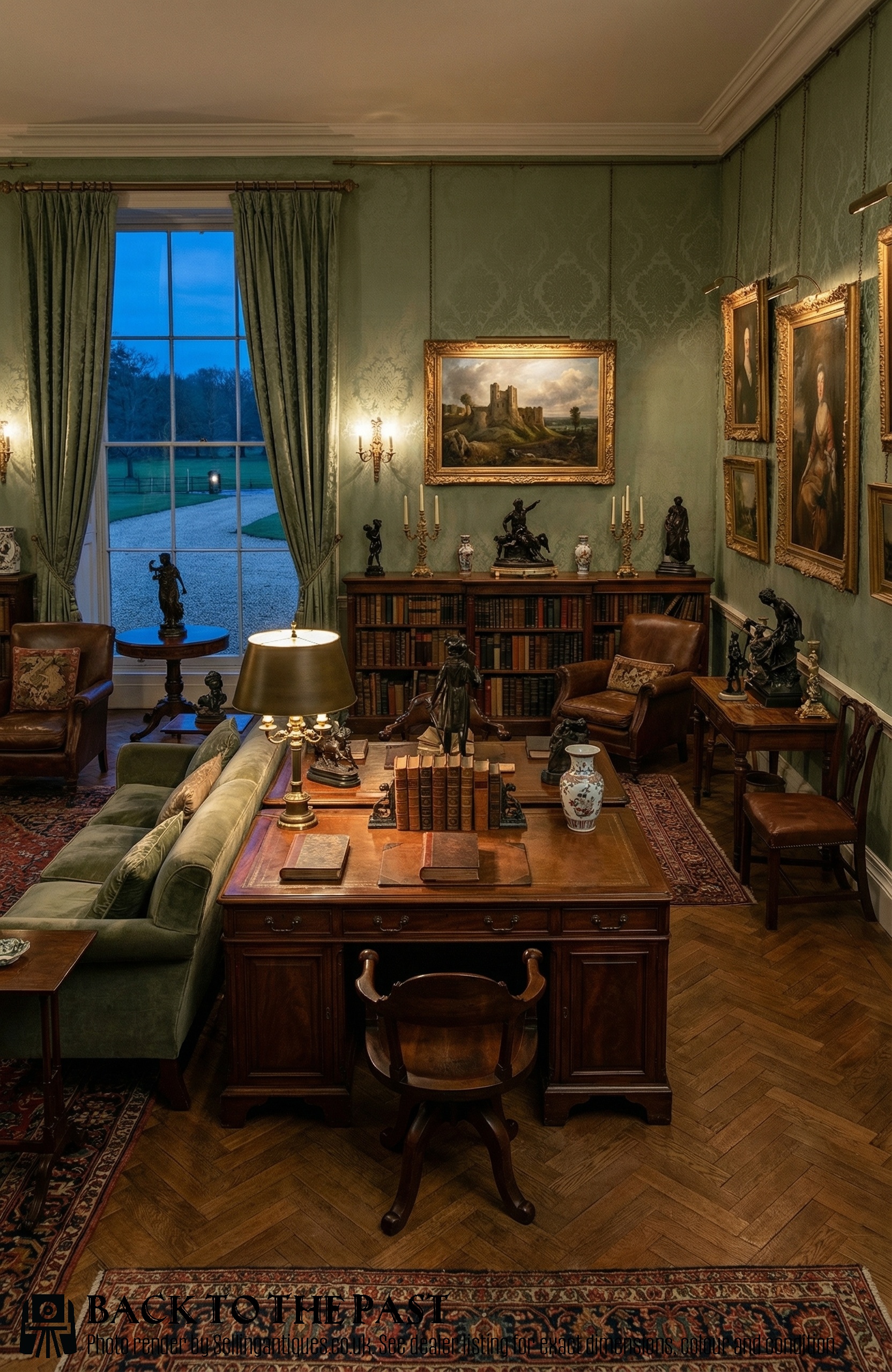
Carved Mahogany Office Chair
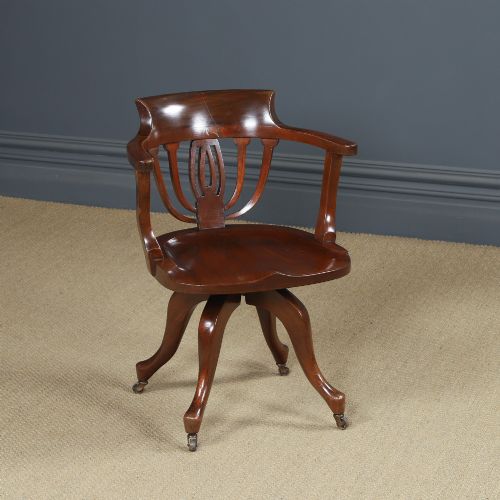
A carved mahogany office chair is a substantial seating form designed for working at a desk, library table, or bureau. These pieces combine the heavy joinery of domestic seating with mechanical elements such as swivel actions and rise-and-fall columns.
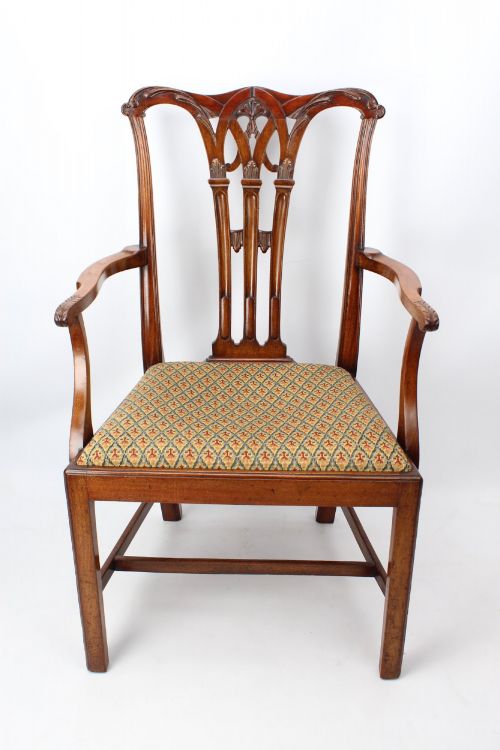
The versions most commonly met on this page date from the nineteenth century and the Edwardian period, often reflecting revivalist aesthetics like Chippendale and Georgian styles. They appear primarily as armchairs, elbow chairs, and revolving desk chairs outfitted with timber frames.
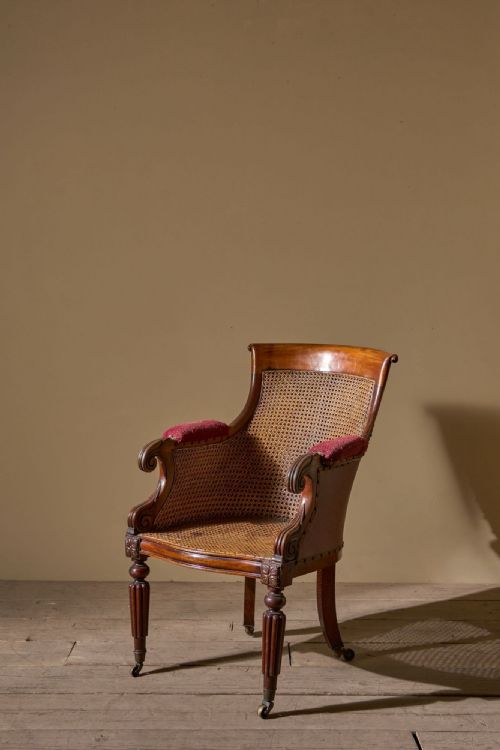
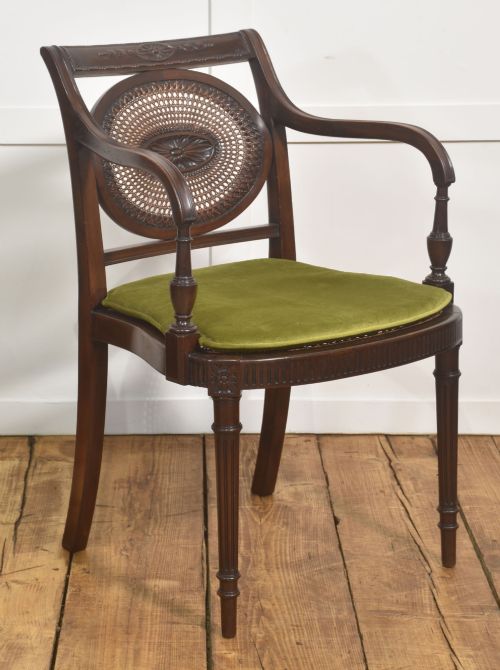
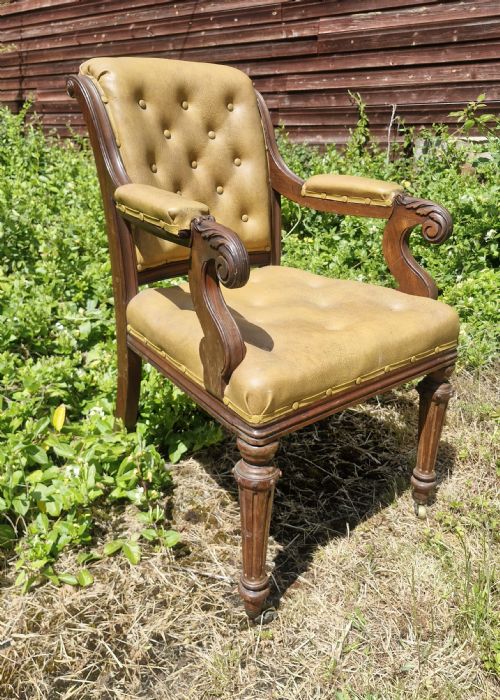
Makers adapted classical seating forms for functional workspaces by integrating sturdy underframes, deep mahogany arms, and sometimes cane or leather seats. The resulting chairs bridge formal drawing room aesthetics with the practical demands of the nineteenth-century study.
How they were made
Makers relied heavily on solid mahogany for the structural frames, legs, and carved splats, often selecting timber with rich grain patterns. Brass components were incorporated into swivel mechanisms, castors, and structural brackets to allow mobility and mechanical movement.
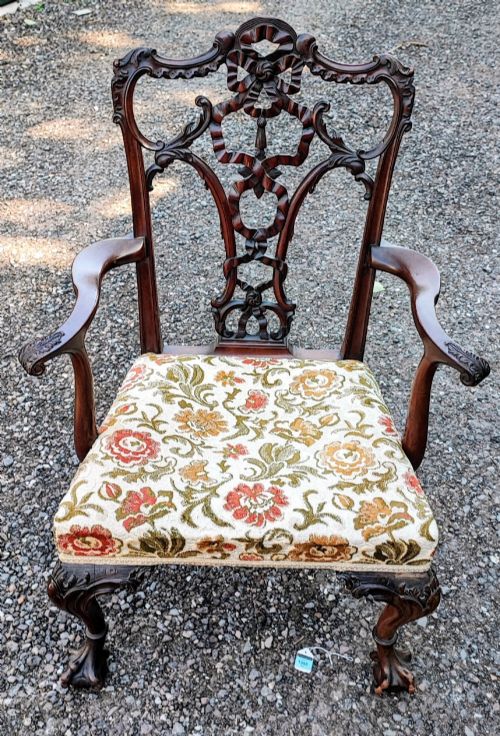
Upholstery materials such as leather, velvet, fabric, and cane were fitted to the seats and backs using traditional tacking and weaving methods. Carved details like spider web backs, ribbon splats, and scrolling arms were shaped by hand before being polished to a deep sheen.
The listings on this page span the late eighteenth century through the Edwardian era, incorporating mahogany, brass, cane, and leather.
What varies in quality
The distinction between ordinary and exceptional examples rests in the crispness of the timber carving and the architectural ambition of the frame. Chairs with complex pierced splats, solid revolving mechanisms, and well-proportioned library arms demonstrate superior workshop execution.
SHOOLBRED
The Carved Mahogany Office Chair Glossary
- Mahogany
- A durable tropical hardwood prized for its deep reddish-brown colour and stable grain, forming the primary structural material for these chairs.
- Swivel mechanism
- The under-seat iron or brass apparatus that allows the chair to rotate fully, often paired with rise-and-fall height adjustment.
- Chippendale style
- A classic eighteenth-century design vocabulary featuring elaborate carved splats and scrolling arms that was frequently revived in later periods.
- Library armchair
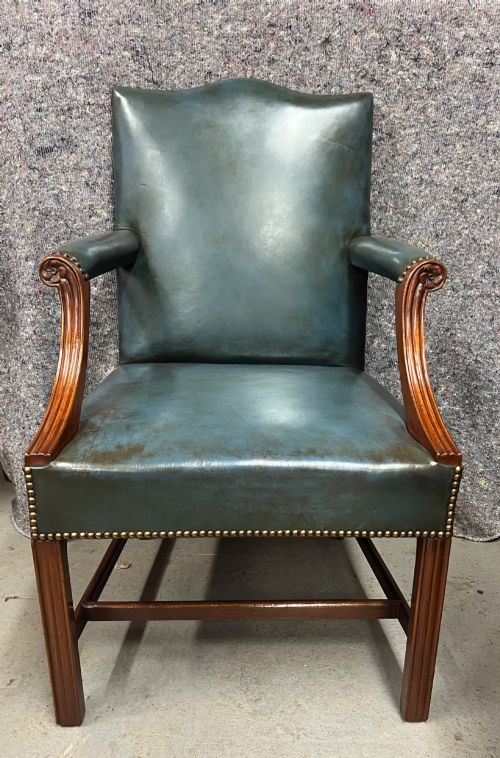
- A generous seating form with supportive armrests designed for long periods of reading or writing at a large partners desk.
- Cane
- Split rattan woven into a tight mesh pattern to form resilient, lightweight seats and backs on open frames.
Carved Mahogany Office Chair: Frequently Asked Questions
Are these chairs comfortable for daily sitting?
Many examples feature wide mahogany elbow rests and upholstered leather or fabric pads designed to support hours of desk work.
Their substantial timber frames and ergonomic proportions make them practical for modern workspaces as well as traditional studies.
How do I identify a revolving desk chair?
Revolving chairs typically feature an iron or brass spindle mechanism concealed beneath the seat or supported on a four-legged spider base with castors.
This central pivot allows the upper frame to turn independently of the floor carriage.
What distinguishes an Edwardian version from a Victorian one?
Victorian examples often display heavier carved decoration and solid mahogany frames with deep upholstery or cane work.
Edwardian pieces tend to employ lighter revival styles, such as Sheraton or Chippendale, with slender members and refined inlay work.
Can I replace the leather seat pad?
The drop-in or tack-applied leather pads on these chairs can be reupholstered using traditional methods that respect the original timber rebate.
Many surviving pieces retain their historic hide coverings, which develop a soft patina through decades of use.