

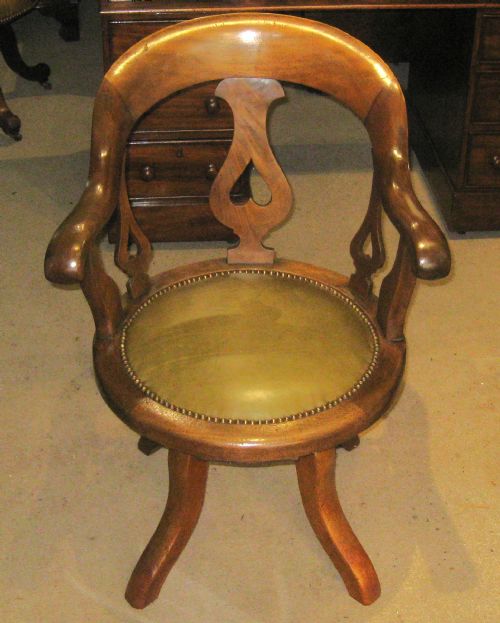
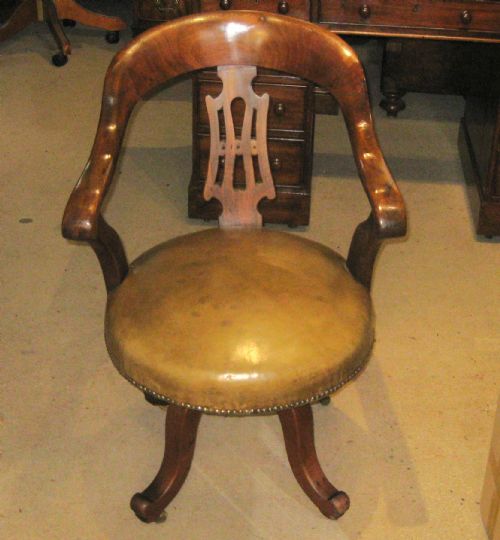
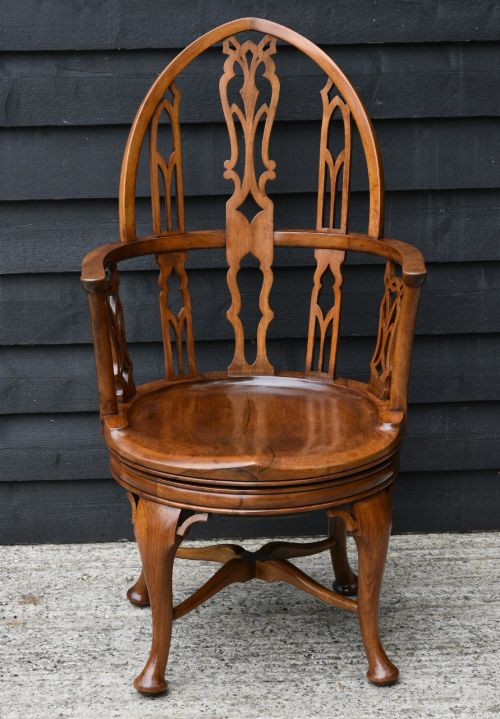
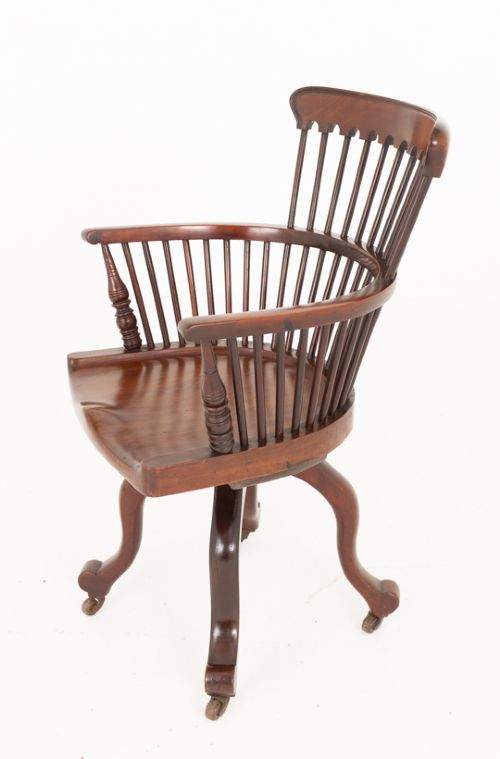
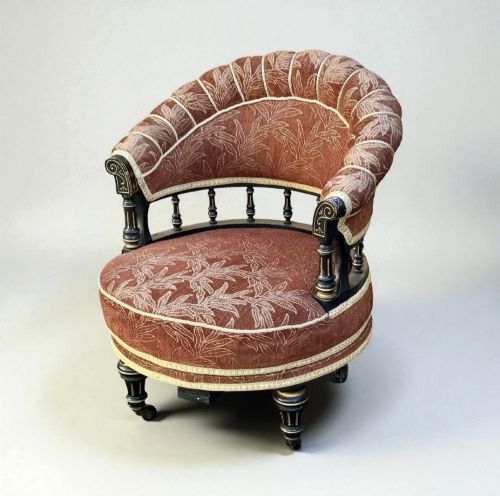
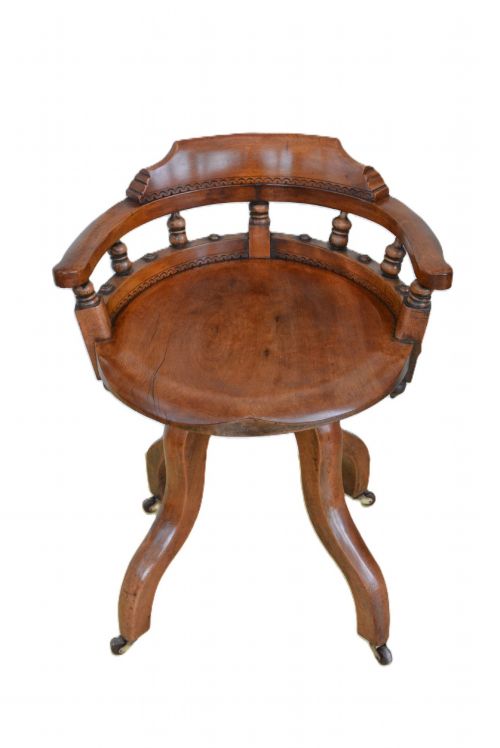
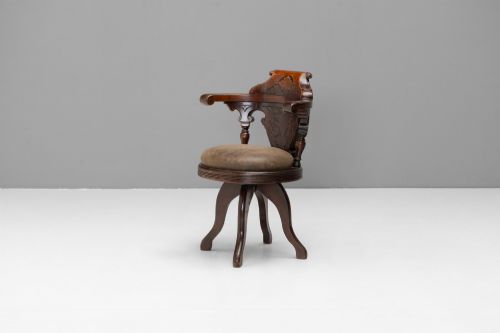
Victorian Swivel Armchair
A victorian swivel armchair offers heavy timber and mechanical action, designed for nineteenth-century studies and ships.
Victorian Swivel Armchair
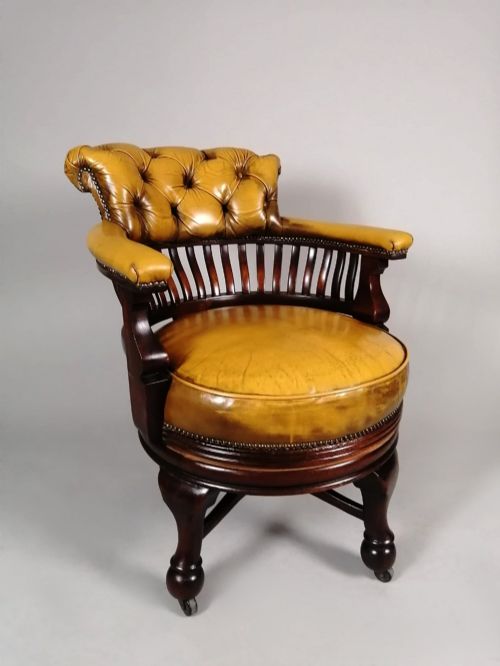
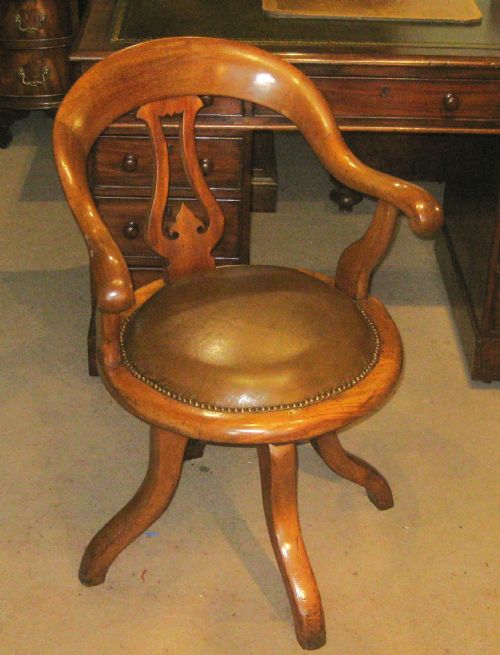
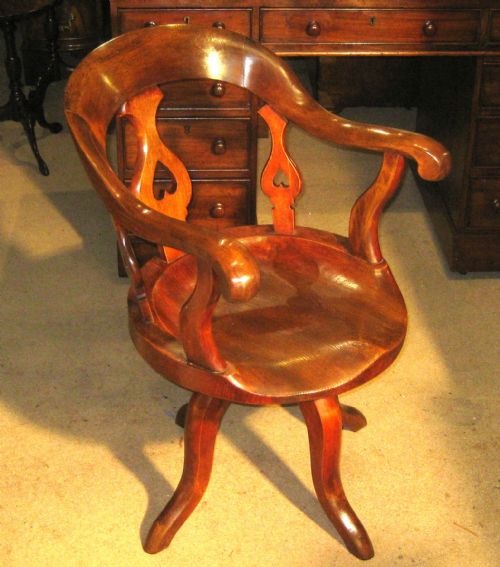
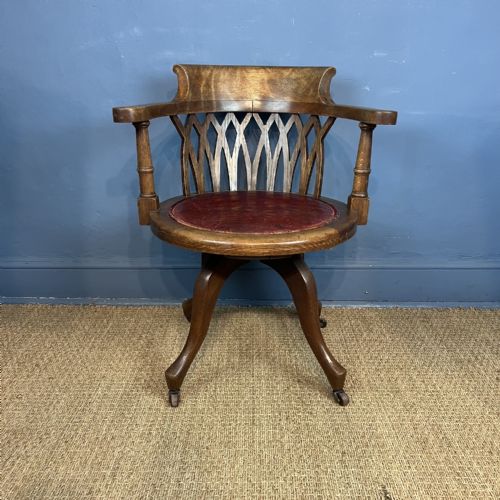
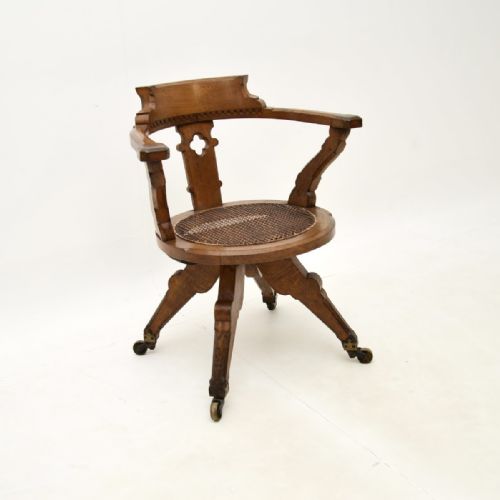
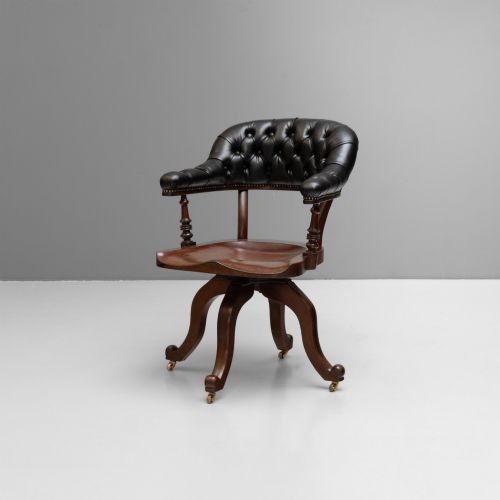
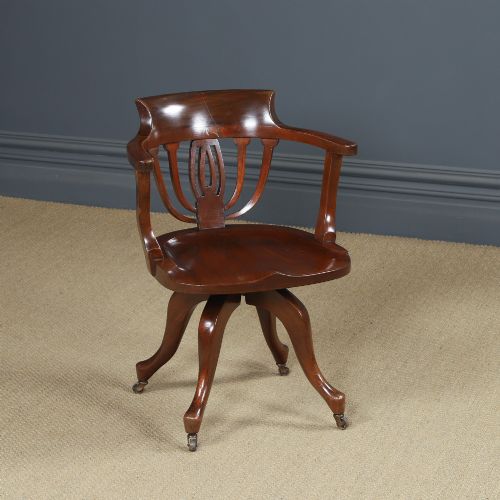
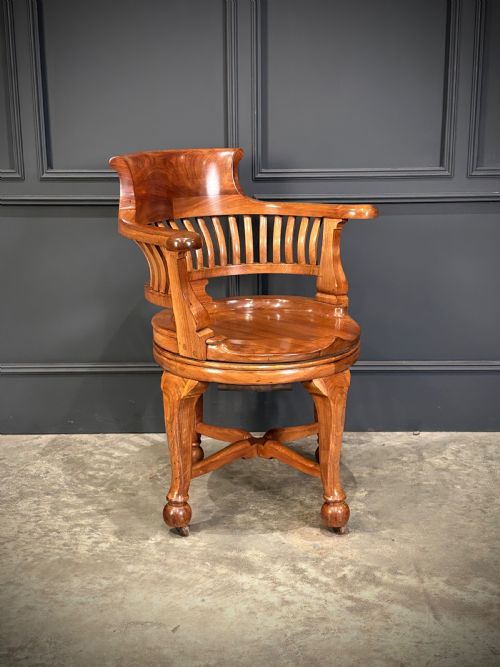
When searching for a victorian swivel armchair, buyers encounter rotating seating built primarily for offices, desks, and maritime use during the nineteenth and early twentieth centuries. These pieces appear most frequently as mahogany, oak, or walnut revolving desk chairs with integrated swivel mechanisms.
The selection also encompasses heavily carved ship's chairs, library armchairs, and aesthetic movement seating produced across periods ranging from the eighteen-seventies to the nineteen-twenties. These rotating seats combine traditional upholstery or leather insets with functional swivel engineering tailored for working environments.
How they were made
Constructed from durable timbers such as mahogany, oak, and walnut, these armchairs rely on solid wood framing combined with cast iron and brass internal mechanisms. Metal swivel pivots and iron underframes allow the seats to rotate smoothly above wooden bases.
Upholstery techniques involve fitted leather seats and panels, sometimes secured with brass tacks, alongside turned wooden spindles and carved detailing. Ebonised finishes and satinwood inlay appear on specific stylistic variants from the period.
Several heavy oak armchairs left dry land entirely behind to serve aboard nineteenth-century ships.
What varies in quality
The distinction between tiers rests on the integrity of the timber framing and the complexity of the carving, ranging from plain functional office models to heavily carved ship's chairs and aesthetic movement designs. Superior examples maintain original rotating mechanisms that operate without excessive lateral play.
Material selection also dictates distinction, with finely grained golden mahogany and rich walnut commanding attention over standard utilitarian oak. The quality of the leather upholstery and the subtlety of turned wooden components further separate standard workshop output from exceptional cabinet maker production.
S&H Jewell·Shoolbred·Edward William Godwin·George Bartholomew & Co
The Victorian Swivel Armchair Glossary
- Swivel mechanism
- The internal iron and brass pivot hardware concealed beneath the seat that allows the chair to rotate fully. This engineering is central to the function of any revolving desk chair.
- Aesthetic movement
- A late nineteenth-century design style focusing on artistic visual value rather than narrative storytelling. Pieces from this movement often feature ebonised wood or distinct structural lines.
- Gothic revival
- An architectural and decorative style drawing inspiration from medieval forms. These chairs display pointed arches, heavy tracery, and formal carved detailing.
- Ship's chair
- A robust revolving seat designed for maritime environments, often featuring heavily carved wooden frames and secure low profiles to withstand motion at sea.
- Golden mahogany
- A specific warm-toned variant of mahogany timber favoured by nineteenth-century cabinet makers for office furniture.
Victorian Swivel Armchair: Frequently Asked Questions
How do I spot a genuine swivel movement?
Genuine nineteenth-century swivel actions utilise heavy cast iron and brass spindle assemblies hidden beneath the wooden seat. They tend to have visible wear patterns on the central pivot points.
Modern replacements generally use steel bearings and contemporary fixings that look distinct from period engineering.
Were these chairs used only in offices?
While most serve as desk or library chairs, many recorded examples were built specifically for maritime use on ships. These nautical variants often feature heavier timber frames designed to remain stable.
Domestic studies and captain's quarters also utilised these rotating seats for practical daily work.
What woods were commonly used?
Mahogany, oak, and walnut dominate the construction of these rotating armchairs. Golden mahogany and figured walnut appear frequently on high-status office furniture.
Oak is typically found on heavy library models, Gothic revival pieces, and ship's chairs.
How do I care for the leather seat?
Leather seats benefit from regular cleaning with a damp cloth and mild soap to remove dust. Natural waxes help maintain suppleness in older hides without sealing the surface.
Avoid placing these chairs in direct sunlight to prevent the leather from drying out and cracking.