
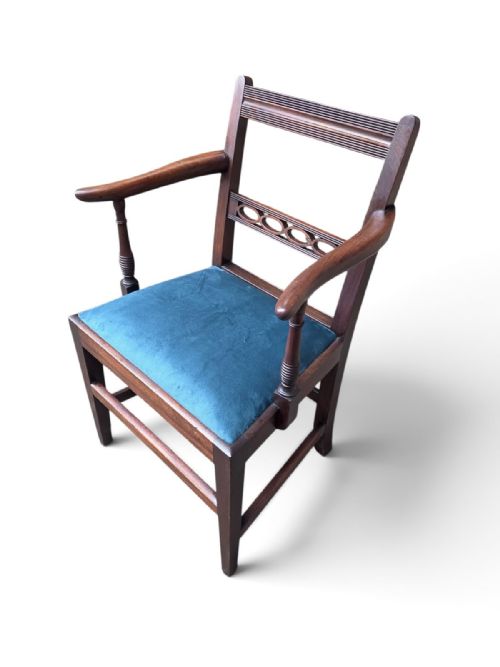
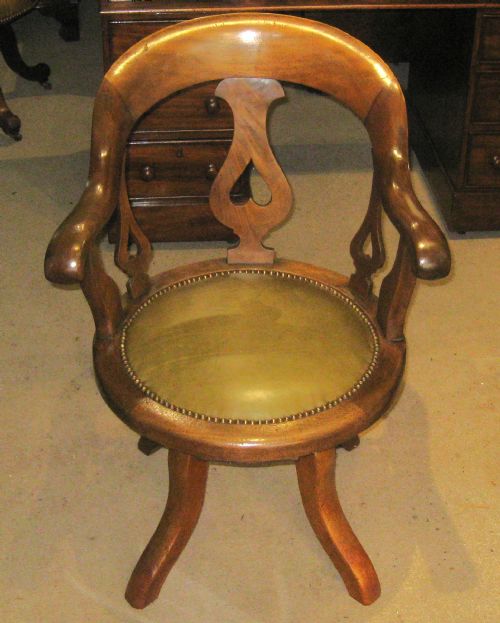
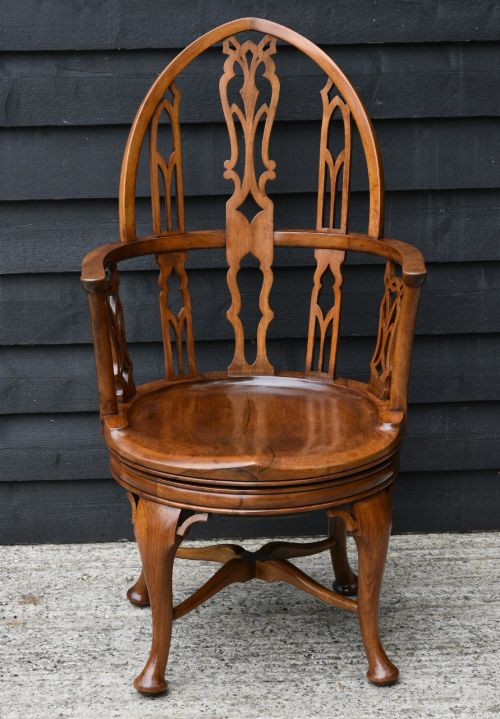
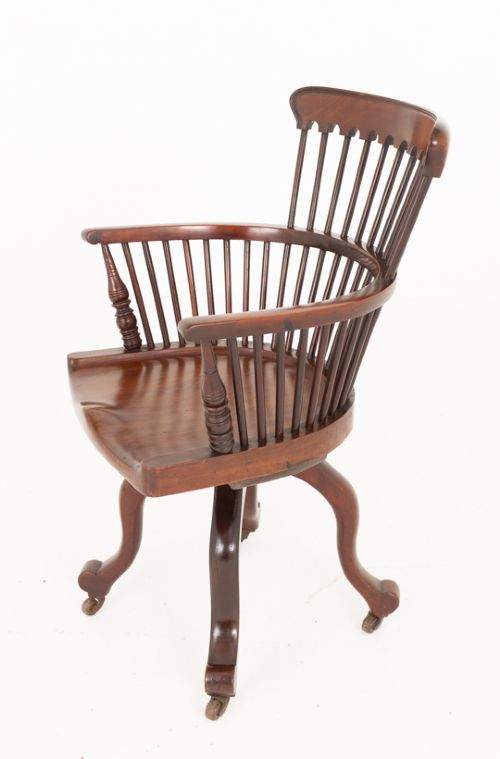
Wooden Office Armchair
A wooden office armchair is a solid working seat designed for the desk, built to support long hours of labour with enduring timber frames.
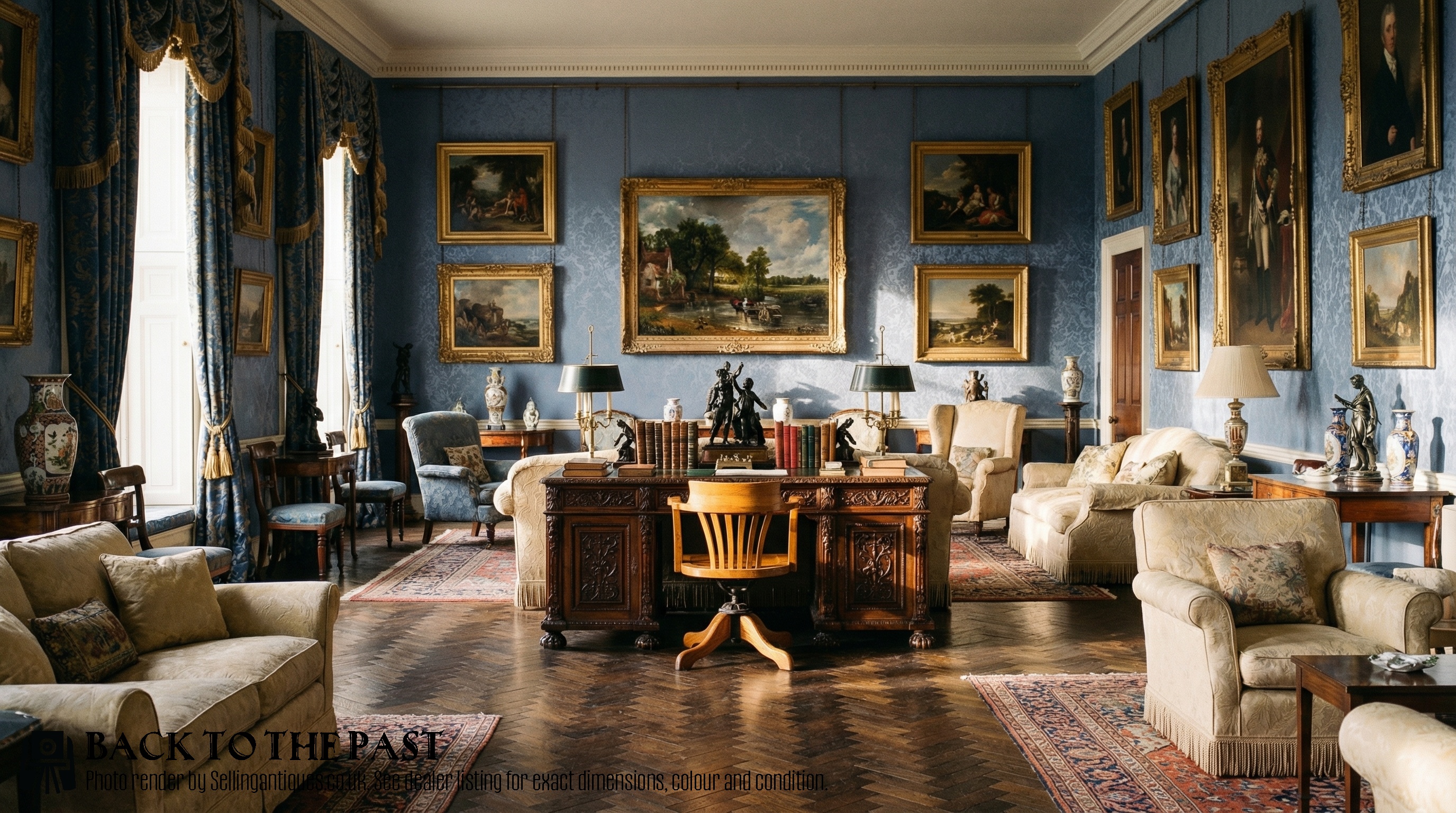
Wooden Office Armchair
A wooden office armchair serves as a sturdy seat for daily desk work, combining traditional cabinet-making with functional utility. When exploring a wooden office armchair, buyers encounter forms intended for study rooms, counting houses and studies.
The selections span Victorian, Edwardian and late nineteenth-century periods, showing regional English and provincial craftsmanship. Common variants include captain's chairs, smoker's bows and revolving desk chairs fitted with swivelling mechanisms.
Makers utilised established seating types such as the Windsor framework and solid timber armchairs. These pieces reflect the transition from domestic seating to specialised office furniture during the industrial era.
Materials and construction methods
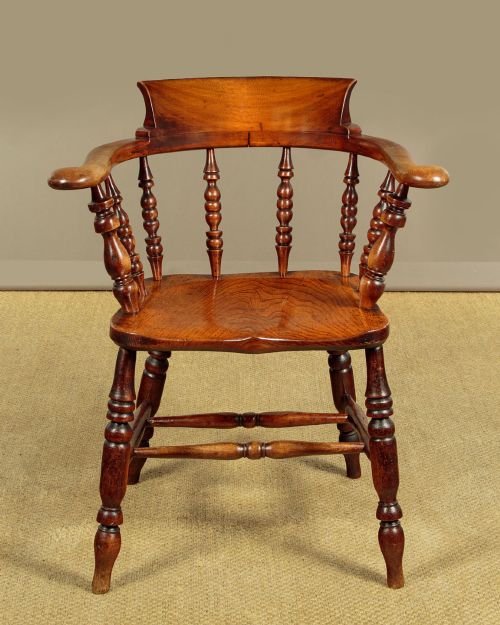
Carpenters constructed these chairs using dense domestic hardwoods like elm, oak, mahogany, beech, ash and walnut. Turners shaped spindles and legs on lathes, while joiners pegged and jointed frames to withstand heavy daily use.
Metal components such as brass fittings and iron swivel mechanisms were integrated into revolving office variants. Leather and hide upholstery appeared on select desk chairs, secured with brass tacks to wooden seats.
Listings feature solid timber construction across Victorian and Edwardian periods, utilising elm, oak, mahogany and beech.
Assessing quality in construction
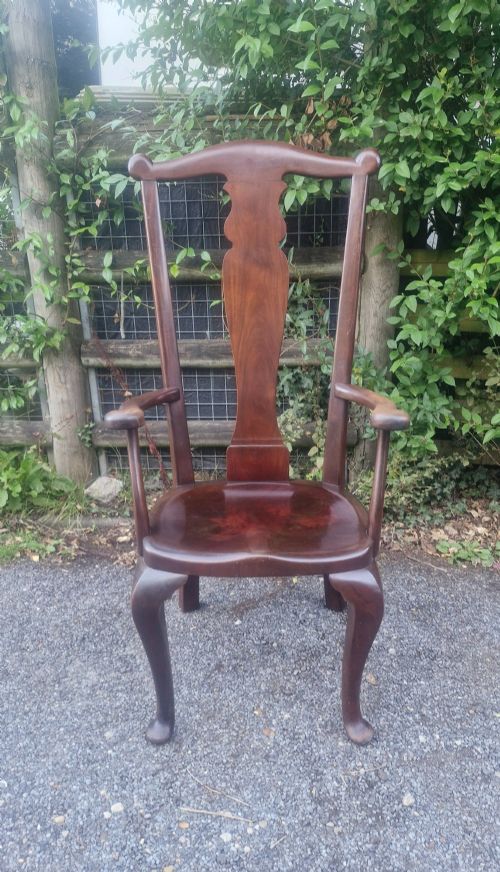
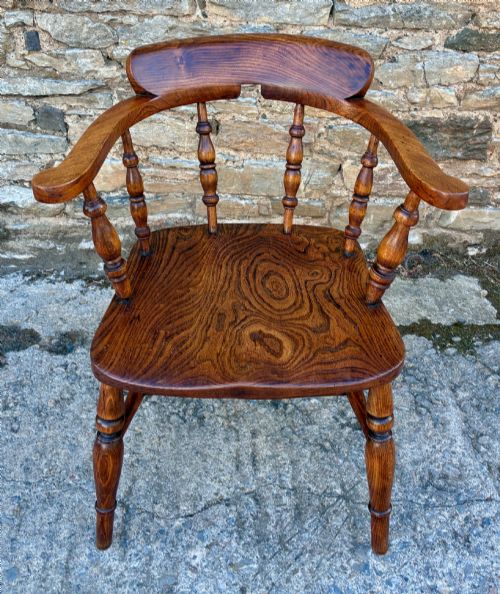
Quality rests upon the selection of timber and the integrity of the joinery rather than surface ornamentation. Solid burr elm, figured mahogany or dense oak provide structural stability that lesser timbers lack over decades of use.
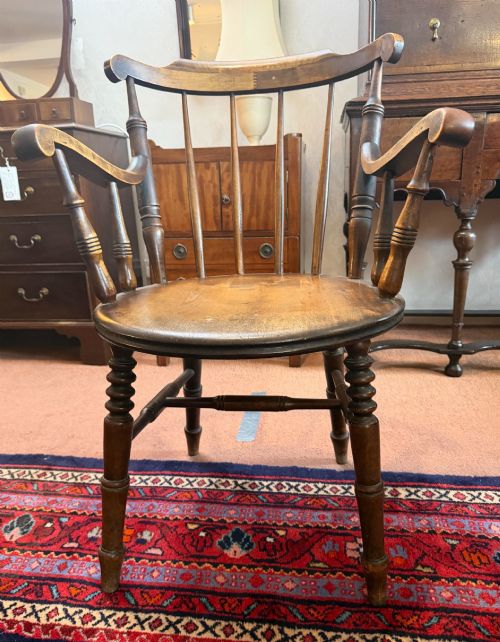
The refinement of the turning on spindles and the smooth action of swivel mechanisms distinguish finer workshop output. Original brass hardware and patinated timber surfaces indicate a higher standard of preservation and manufacture.
The Wooden Office Armchair Glossary
- Captain's chair
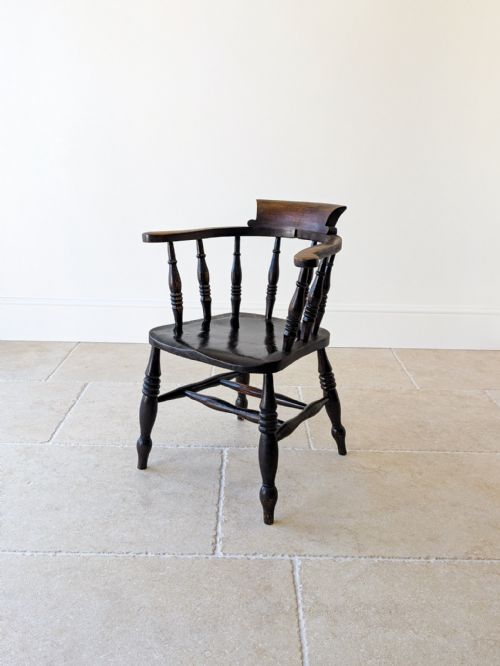
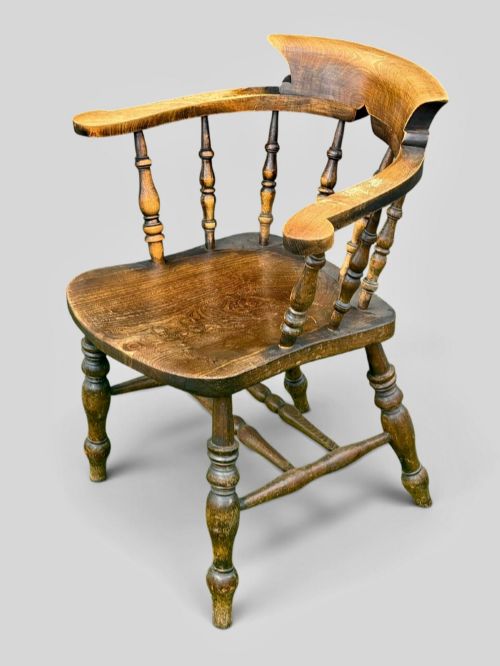
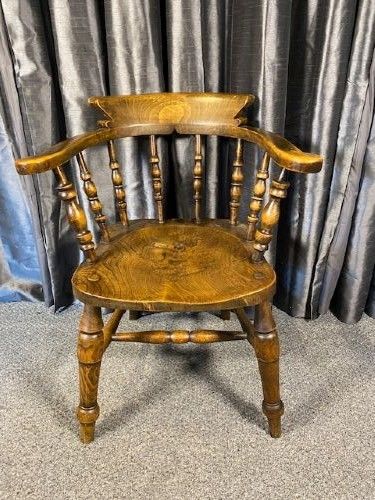
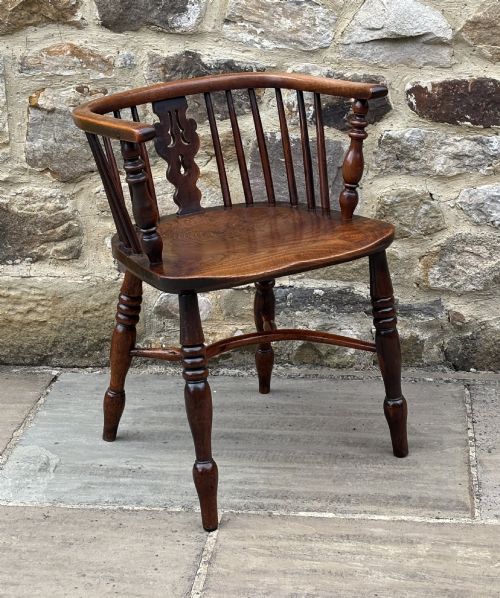
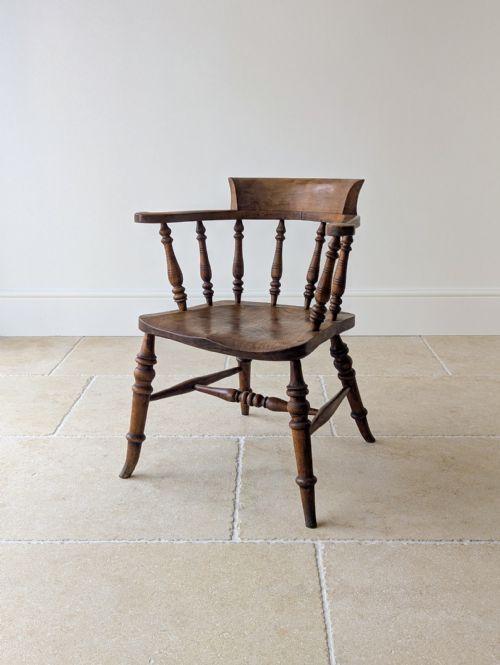
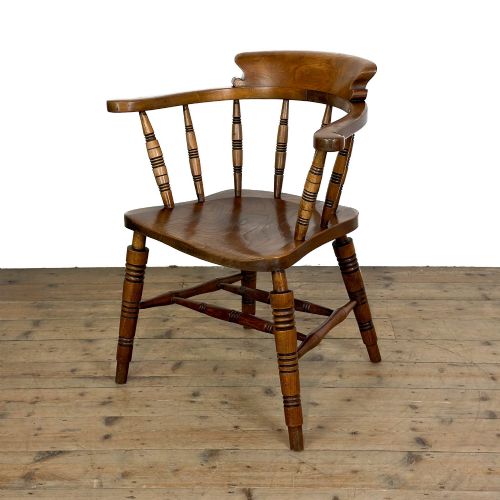
- A sturdy low-backed wooden armchair designed for comfort and stability during long periods at a desk. These typically feature a continuous curved armrail supported by numerous small spindles.
- Smoker's bow
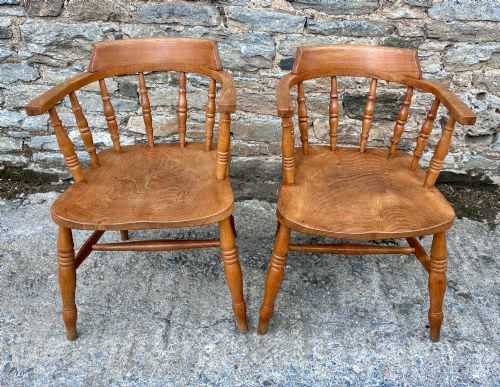
- A low wooden armchair closely related to the captain's chair, featuring a rounded backrest and a solid saddle-shaped wooden seat. It derives from vernacular provincial seating traditions.
- Windsor chair
- A chair built with a solid wooden seat into which the legs and back spindles are directly bored and wedged. This technique creates a remarkably resilient and rigid frame.
- Revolving desk chair
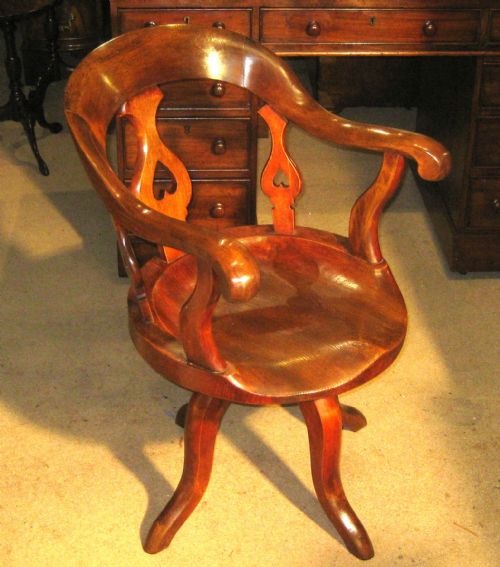
- An office seat mounted on a central pivot mechanism allowing rotation, often paired with a tilt function. These frequently utilise walnut, oak or mahogany.
- Bergere
- An upholstered armchair with woven cane panels set into the wooden frame. This style appears on select swivel models from the Edwardian period.
Wooden Office Armchair: Frequently Asked Questions
What is a captain's chair?
A captain's chair is a traditional wooden armchair featuring a low, curved back rail supported by small spindles. It provides sturdy side support while allowing freedom of movement for the arms.
These chairs were widely used in offices, ships and studies where a compact yet comfortable seat was required for daily tasks.
How do I identify a swivel desk chair?
A swivel desk chair rests upon an iron or brass central mechanism hidden beneath the seat, allowing the upper portion to rotate. They often include four-legged wooden or metal bases.
Originating in the nineteenth century, these chairs were designed for clerks and professionals needing access to multiple ledgers.
Which woods were used for office armchairs?
Cabinet-makers utilised durable domestic hardwoods including oak, elm, mahogany, beech, ash and walnut. Elm and ash provided tough, flexible timber for bent parts and curved armrests.
Mahogany and walnut were chosen for more formal library and office settings, often displaying rich grain patterns and polished finishes.
How do I care for antique wooden office chairs?
Maintain antique wooden chairs by keeping them away from direct heat sources and sudden humidity changes to prevent timber splitting. Regular dusting and occasional application of appropriate wax polish protect the finish.
Check joinery periodically to ensure that pegged joints and swivel mechanisms remain secure and stable during use.