


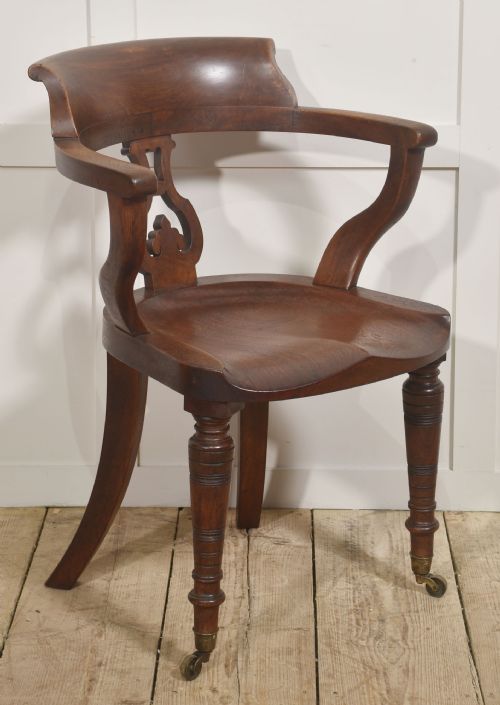


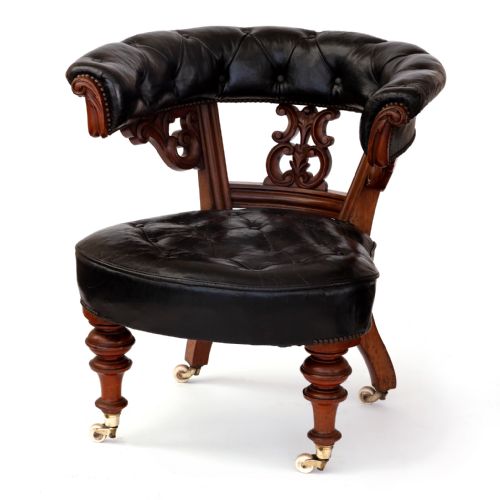


Carved Walnut Captain Chair
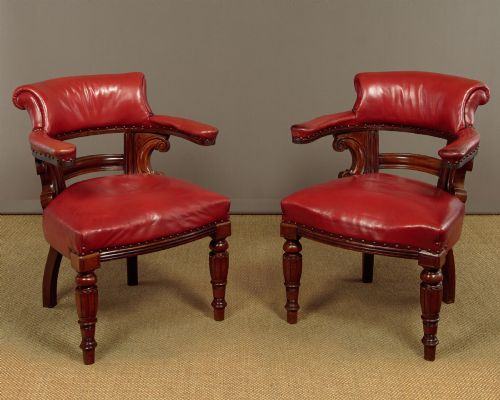
A carved walnut captain chair brings handsome timber and sturdy seating to a study, offering the swivel action and desk-ready comfort that writers and clerks relied upon.
Carved Walnut Captain Chair
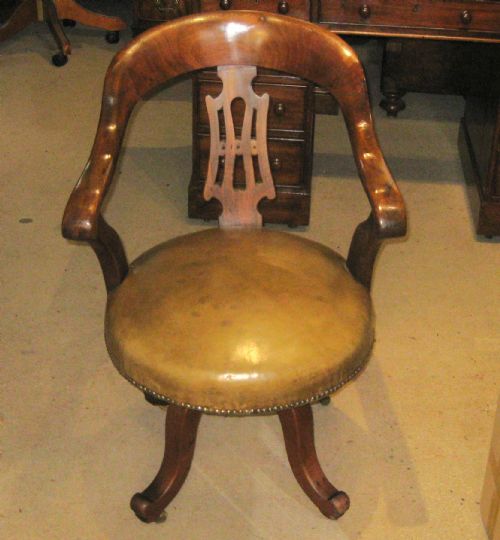
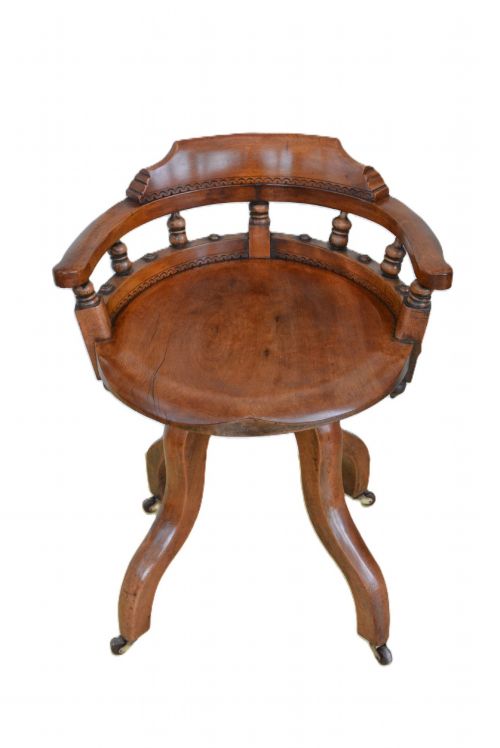
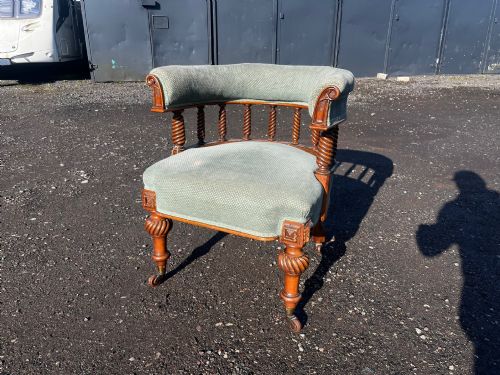
A carved walnut captain chair is a practical working seat built for the desk, library or office, appearing frequently in Victorian and Edwardian iterations. These pieces span desk chairs, armchairs, and revolving designs that combine robust timber frames with comfortable upholstery.
Makers of the period designed these chairs for daily utility at a writing table or ledger desk. They bridge domestic comfort and functional workspace requirements through generous proportions and supportive armrests.
How they were made
Cabinet makers built these chairs using solid walnut, shaping the timber into curved backs, sturdy armrests, and decorative carved details. The wood was often left with a warm polish that highlights the natural grain.
Upholstery formed a central part of the construction, utilising materials such as leather, oil cloth, velvet, and fabric fastened over padding. Iron and brass swivel mechanisms or cast iron components were frequently integrated into revolving desk chairs to allow movement.
Some nineteenth-century clerks clearly enjoyed a spin, as swivelling office chairs arrived equipped with surprisingly heavy iron mechanisms.
What varies in quality
The refinement of the carving dictates the distinction between standard workshop output and superior examples. Deeply carved details on the walnut frame and back show greater artisan effort.
The sophistication of the mechanical components also separates pieces, particularly in revolving or swivelling desk chairs where smooth turning action matters. Original upholstery materials and intact leather coverings enhance the integrity of the design.
The Carved Walnut Captain Chair Glossary
- Revolving desk chair
- A seat fitted with a central spindle or iron mechanism allowing the sitter to turn in a circle while remaining seated at a table.
- Bow back
- A curved wooden backrest that sweeps around the sitter in a single continuous arc, often supporting the arms.
- Library chair
- A heavy, comfortable armchair designed for reading rooms, typically featuring upholstered arms and a supportive back.
- Oil cloth
- A heavy cotton fabric treated with boiled linseed oil to create a waterproof and durable surface, often used for early office chair cushions.
- Aesthetic Movement
- A late nineteenth-century design style focusing on visual beauty and artistic expression rather than narrative or historical revival.
Carved Walnut Captain Chair: Frequently Asked Questions
What is a captain chair?
A captain chair is a sturdy wooden armchair originally designed for functional use at a desk or table.
These pieces typically feature low, rounded backs supported by spindles and comfortable armrests suited for working hours.
How do I date a walnut desk chair?
Dating relies on observing the construction methods, style influences such as Gothic Revival or Aesthetic Movement, and the type of swivel mechanism used.
Victorian and Edwardian examples often display distinct carving patterns and hardware characteristic of their specific decades of manufacture.
Were these chairs meant for offices?
Many examples served as office or library seating, constructed with revolving mechanisms and leather pads for working environments.
They provided the necessary mobility and durability for clerks, writers, and professionals managing correspondence.
How do I care for walnut and leather?
Walnut benefits from occasional polishing with suitable wax to maintain the timber's natural lustre without causing buildup.
Leather and oil cloth surfaces require gentle cleaning and conditioning to keep the material supple and prevent drying over time.