

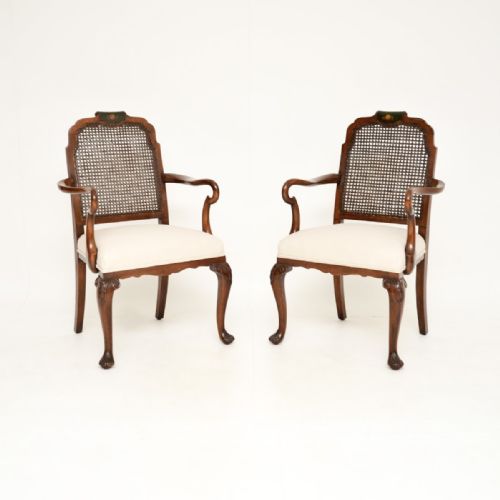
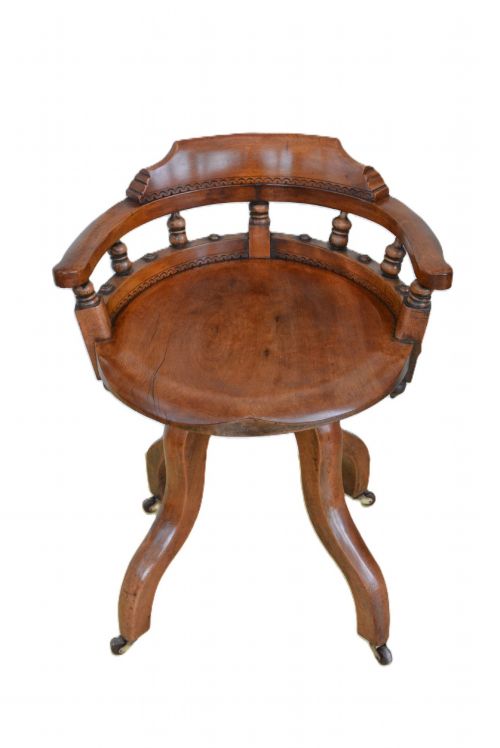

Antique Walnut Desk Seat
An antique walnut desk seat brings rich timber and practical comfort to a study, built to serve at a writing table.
Antique Walnut Desk Seat
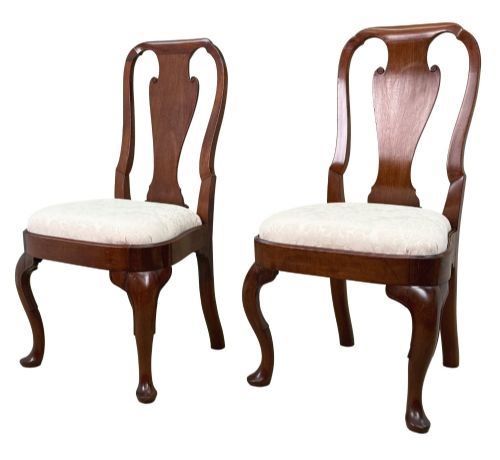
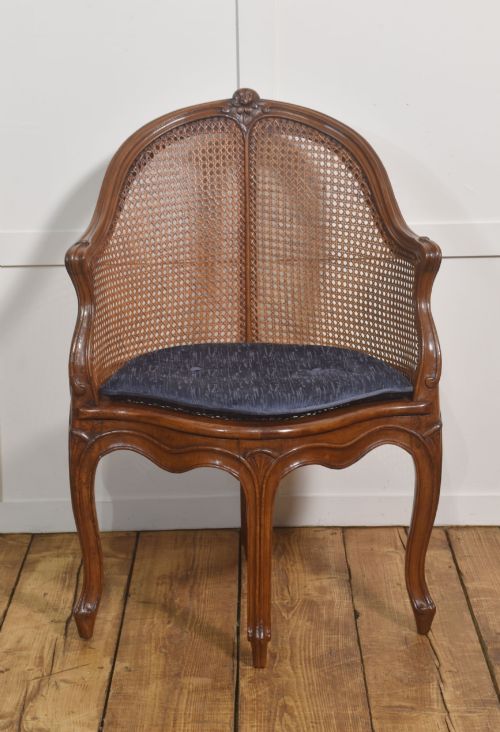
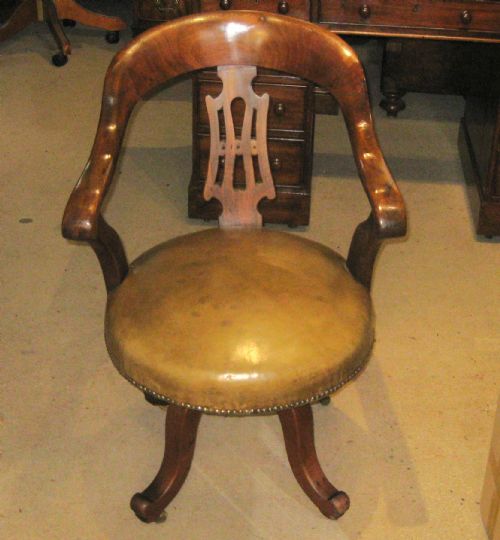
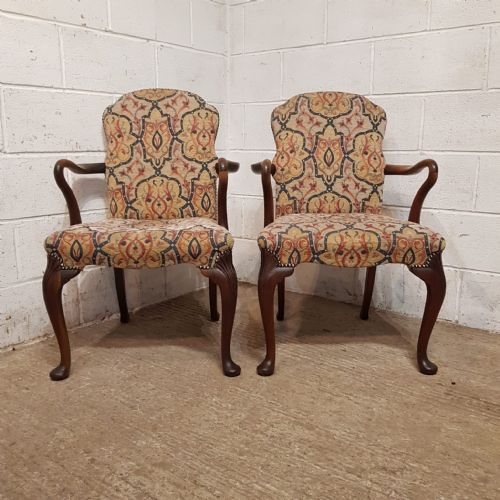
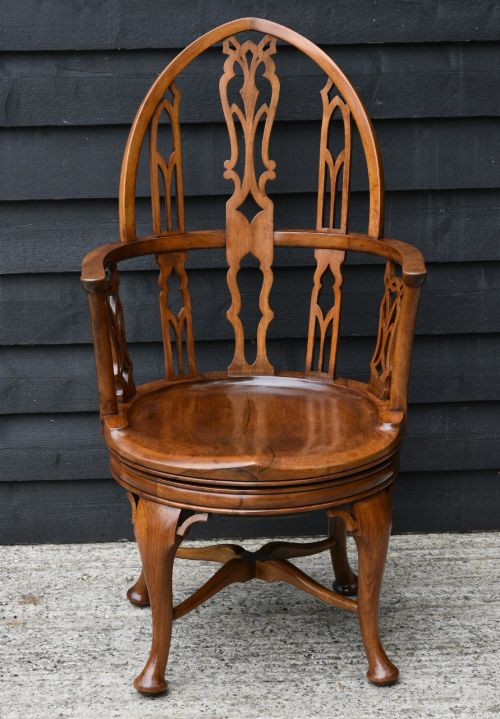
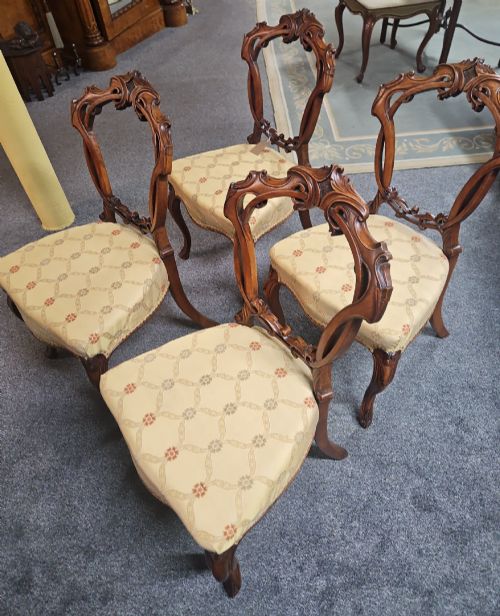
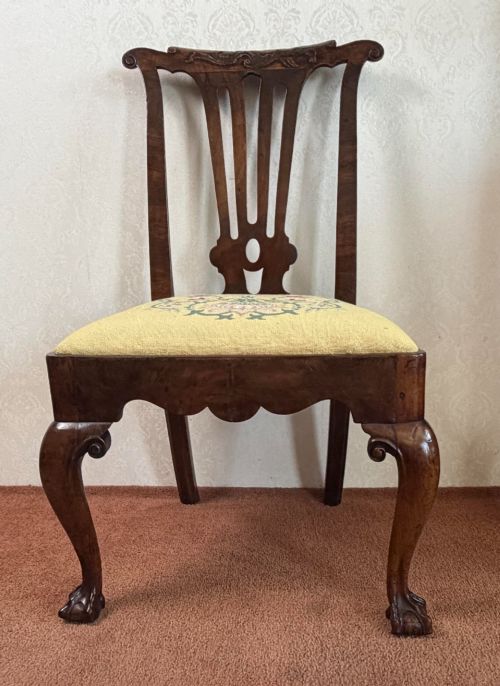
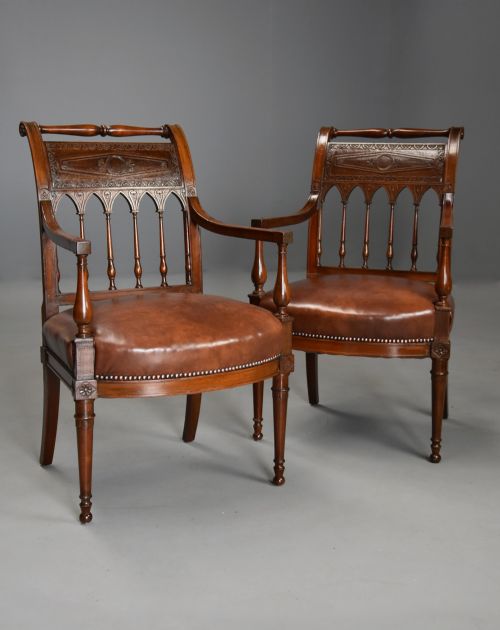
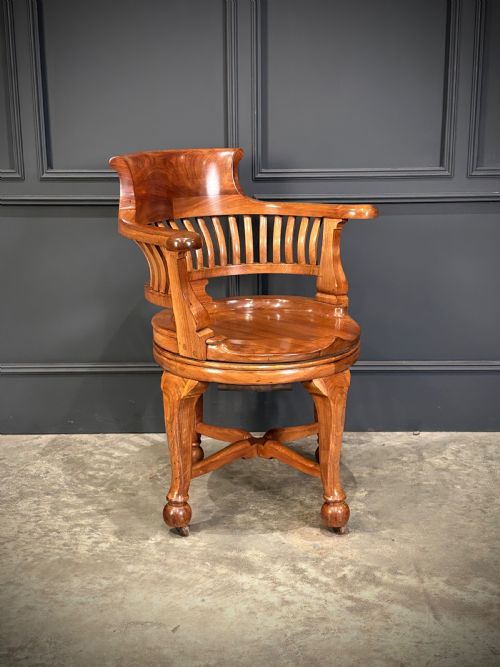
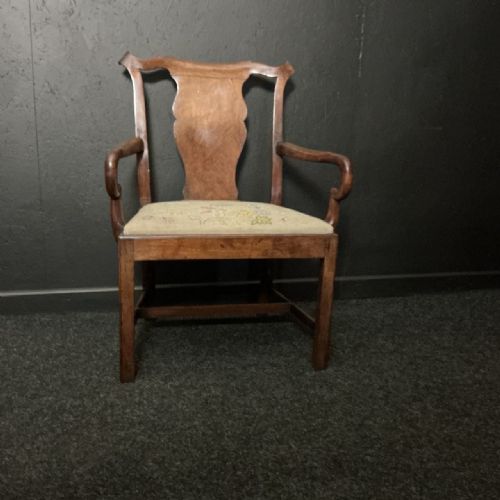
An antique walnut desk seat takes various forms, from swivel office chairs and library armchairs to simpler side and corner chairs used at a writing surface. The pieces appearing here span the eighteenth century through the Edwardian period and the early twentieth century, showing styles such as Queen Anne, Georgian, Victorian, and Arts and Crafts.
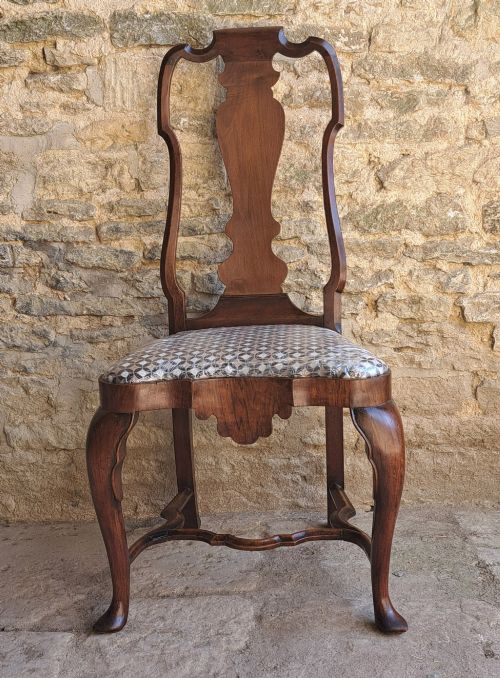
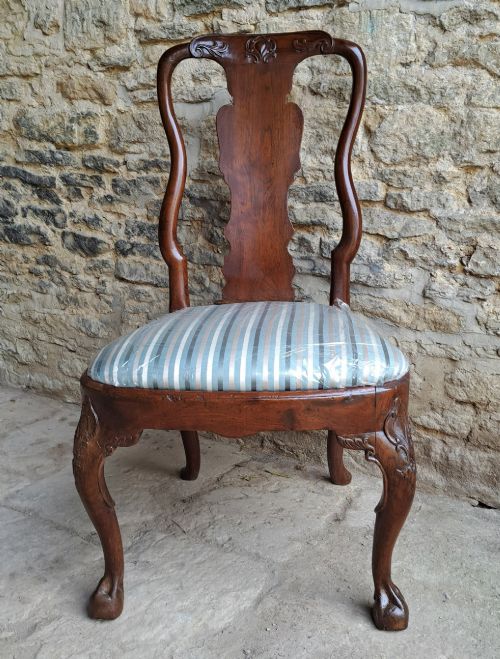
Early eighteenth-century examples display the curved lines of the Queen Anne and George I eras, often featuring drop-in seats. Later nineteenth-century versions introduce revolving mechanisms, cane panels, and upholstery in leather, velvet, tapestry, and fabric.
English, Scottish, French, and Italian examples populate the selection, ranging from country house library chairs to compact study armchairs. Buyers find both single seating pieces and matched pairs ready for daily use at a desk.
Evaluating Quality and Character
Quality rests in the figure of the walnut timber, the crispness of hand-carving on the back and legs, and the structural integrity of the frame. Superior pieces retain their original swivel actions or undisturbed joinery without excessive modern intervention.
The choice of seating material also distinguishes the tier of a piece, from simple cane and plain wood to fine leather, tapestry, and needlework textiles secured with traditional methods.
Listings feature walnut desk seats spanning the eighteenth, nineteenth, and early twentieth centuries, including Victorian, Georgian, and Edwardian examples.
Charles Tozer·Hille·J. and T. Scott·Shoolbred
The Antique Walnut Desk Seat Glossary
- Drop-in seat
- A removable frame upholstered separately and dropped into a recess in the chair rails. This construction allowed easy reupholstery over the life of the furniture.
- Cabriole leg
- A furniture leg that curves out and then narrows inward, imitating an animal's leg. It frequently ends in pad or claw-and-ball feet on walnut seating.
- Ribbon back
- A chair back featuring carved splats that intertwine to resemble flowing ribbons. This decorative treatment appears on Georgian seating.
- Cane
- Woven rattan material used for chair seats and back panels. It provides a resilient, light surface favoured in warm climates and domestic interiors.
- Corner chair
- A seat designed to fit into the corner of a room, featuring a diagonal orientation with a curved backrest supported by multiple posts.
Antique Walnut Desk Seat: Frequently Asked Questions
Are revolving desk chairs sturdy enough for daily use?
Many nineteenth-century and early twentieth-century swivel chairs utilise robust iron and brass mechanisms housed beneath solid walnut frames. These engineering solutions were designed for heavy office work.
Regular maintenance of the central spindle and tightening of the undercarriage keep these working antiques stable for modern study use.
What is the difference between a library chair and a side chair?
Library chairs usually feature upholstered arms and wider proportions intended for prolonged reading and comfort at a large desk or table. They often incorporate leather or fabric cushioning.
Side chairs lack arms and offer a more compact footprint, making them suitable for smaller writing desks or occasional placement around a room.
How should I care for antique leather and walnut?
Keep walnut furniture away from direct heat sources and strong sunlight to prevent the timber from drying out or splitting. Dust regularly with a soft, dry cloth.
Nourish leather upholstery periodically with appropriate conservation balms to maintain flexibility, avoiding harsh chemical cleaners that strip natural oils.