






Turned Leg Office Chair
A turned leg office chair brings solid nineteenth-century presence to a desk, combining sturdy timber frames with practical seating for daily work.
Turned Leg Office Chair
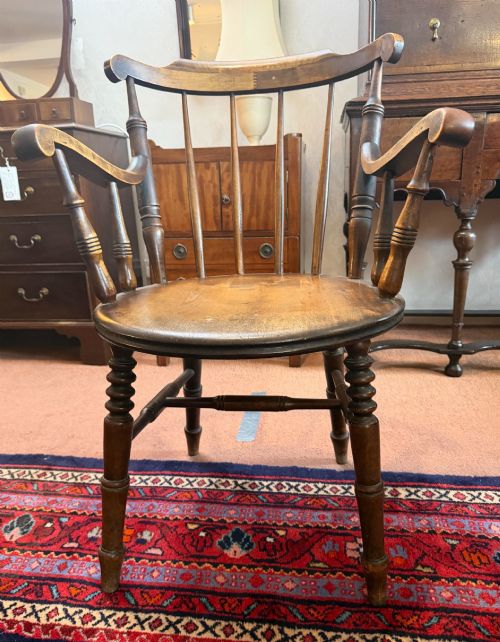
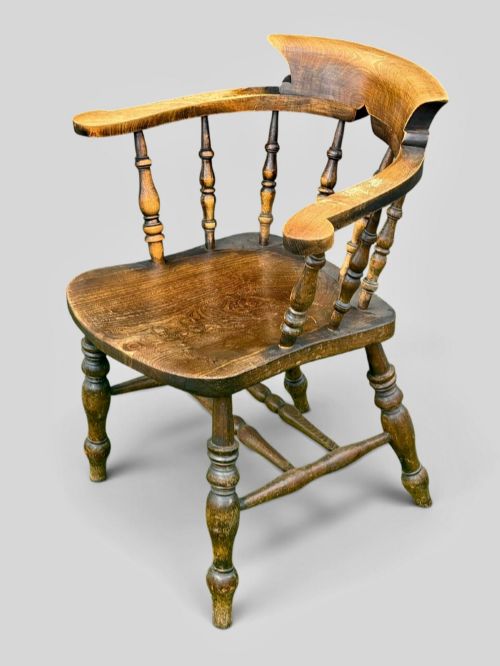
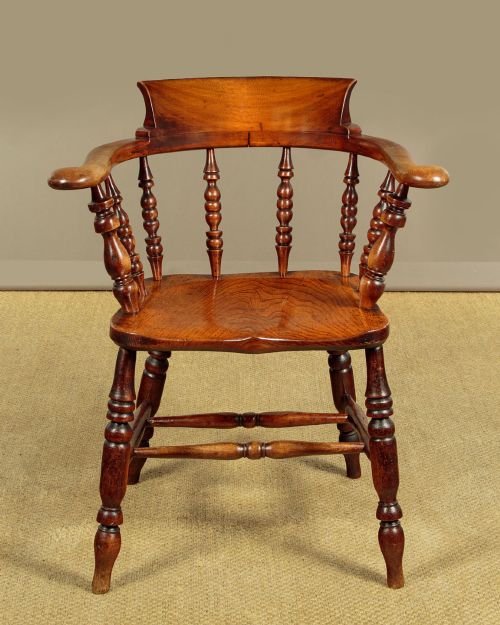
A turned leg office chair sits at the intersection of practical workspace seating and traditional nineteenth-century craftsmanship. When searching this phrase, a buyer encounters forms ranging from robust provincial smokers bows to formal mahogany library chairs.
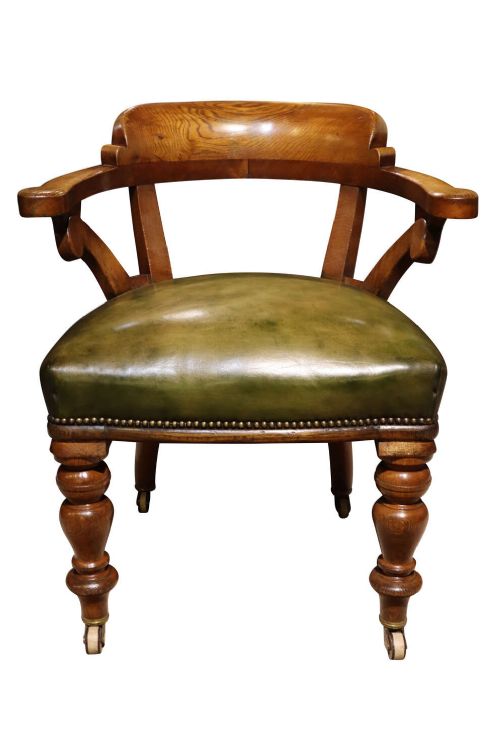
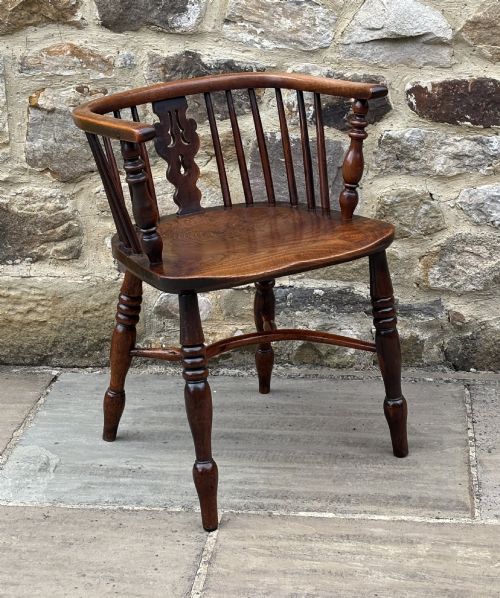
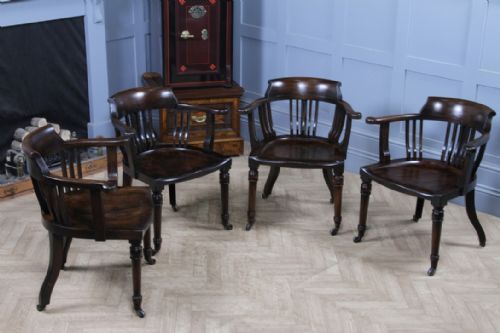
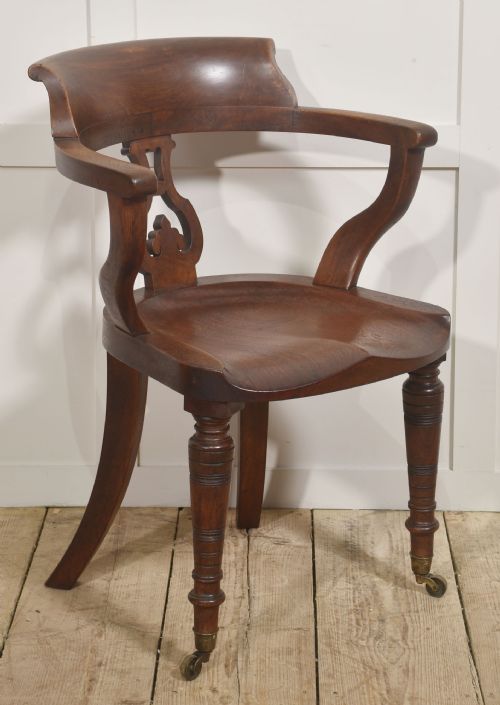
The version most commonly met on this page is the Victorian or Edwardian captain's chair or desk armchair, usually constructed from native timbers like elm, beech, and oak, or formal woods such as mahogany and walnut.
These pieces originate predominantly from the nineteenth century, spanning periods from the 1850s through to Edwardian times. They serve as functional seating that retains the distinct character of English provincial and Victorian design.
How they were made
Makers utilised a combination of sturdy hardwoods and resilient seating materials, selecting mahogany, walnut, and oak for formal frames while employing beech, elm, and ash for provincial Windsor and smoker's bow designs. Brass fittings and turned components provided structural support.
Upholstery elements incorporate leather, oil cloth, velvet, and various fabrics, often paired with swab cushions for added comfort in office and library settings. Joinery methods relied on traditional turning and framing techniques to ensure durability.
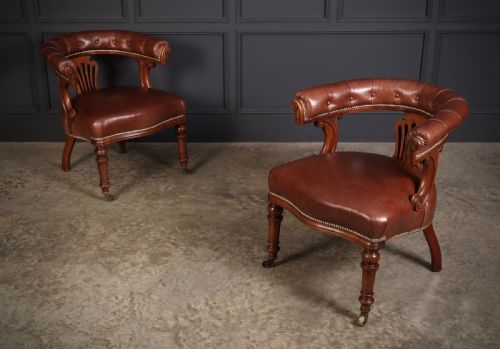
Several gentleman's gaming chairs hide sturdy timber frames beneath red leather, ready for nineteenth-century wagers.
What varies in quality
The distinction between standard examples and the top of the range lies in the choice of timber and the refinement of the turning. Finer pieces employ dense mahogany or golden oak with carefully shaped spindles and arms, whereas simpler provincial items utilise mixed woods like beech and elm.
Original upholstery materials, such as aged leather or period oil cloth, elevate an example above later replacements. The integrity of the frame construction and the balance of the proportions ultimately determine the standing of each piece.
The Turned Leg Office Chair Glossary
- Smoker's bow
- A low-backed wooden armchair with a rounded backrest supported by turned spindles, often associated with nineteenth-century provincial seating. These chairs frequently feature elm seats shaped for comfort.
- Captains chair
- A robust desk armchair featuring a continuous curved top rail supported by vertical spindles above the seat. They appear frequently in nineteenth-century oak and mahogany.
- Windsor chair
- A traditional chair constructed with timber seats into which the legs and back spindles are directly inserted. Regional examples often combine ash, beech, and elm.
- Gothic Revival
- An architectural and decorative style from the nineteenth century characterised by pointed arches and medieval motifs. Pieces in this style utilise polished oak.
- Oil cloth
- A heavy cotton fabric treated with boiled linseed oil to render it waterproof and durable. It is found on nineteenth-century office armchairs as a practical alternative to leather.
Turned Leg Office Chair: Frequently Asked Questions
What is a turned leg office chair?
A turned leg office chair is a nineteenth-century desk or library armchair featuring legs shaped on a lathe. These chairs range from simple elm smokers bows to formal mahogany library seating.
They combine practical workspace utility with traditional period timber construction.
How do I identify a Victorian desk chair?
Victorian desk chairs are identified by nineteenth-century timber choices such as mahogany, walnut, and oak, often paired with leather or oil cloth upholstery. Turned wooden legs and spindle-backed designs are common.
They reflect the prevalent styles of the period, including Gothic Revival and English provincial forms.
Were these chairs used in offices?
These armchairs served in nineteenth-century offices, libraries, and studies as functional seating for desks. Their sturdy frames and supportive curved armrests suited long hours of work.
Many examples feature leather or fabric squab cushions for added comfort during daily use.
What woods were used for these chairs?
Makers utilised both formal and native timbers depending on the intended setting of the chair. Mahogany, walnut, and oak appear in formal library and desk chairs.
Beech, elm, ash, and alder are typical of provincial Windsor and smoker's bow designs.
How do I care for antique leather upholstery?
Antique leather upholstery benefits from gentle cleaning and regular conditioning to preserve the surface of the hide. Avoid harsh chemical cleaners that strip the original finish.
Keeping the leather away from direct heat sources prevents the material from drying out over time.