

Captains Chair Wood
Captains chair wood describes sturdy seated furniture built from timber, created for steady support at desks and tables.
Captains Chair Wood
A captains chair wood selection brings together sturdy seating forms designed for daily use at a desk or table. Buyers seeking this type will encounter low backs, rounded arm rails and solid timber seats built for practical endurance.
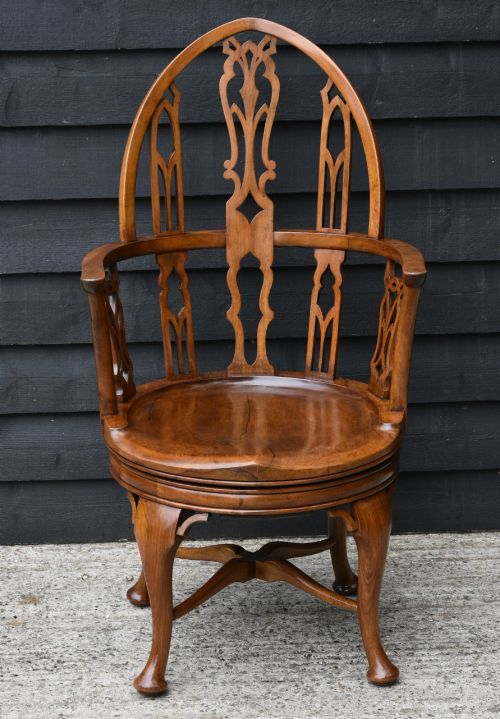
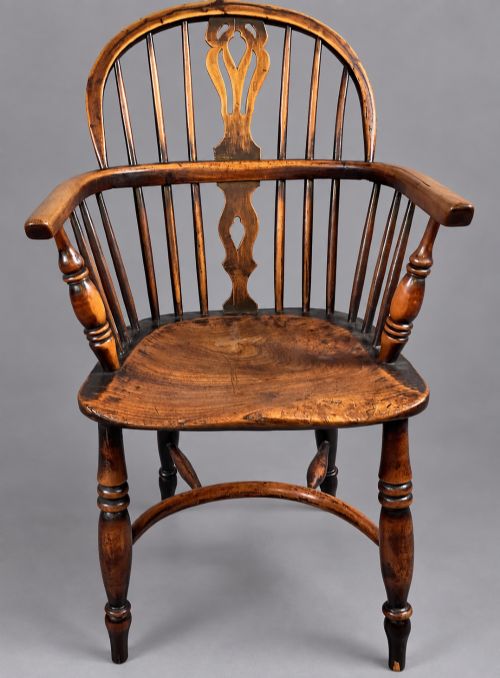
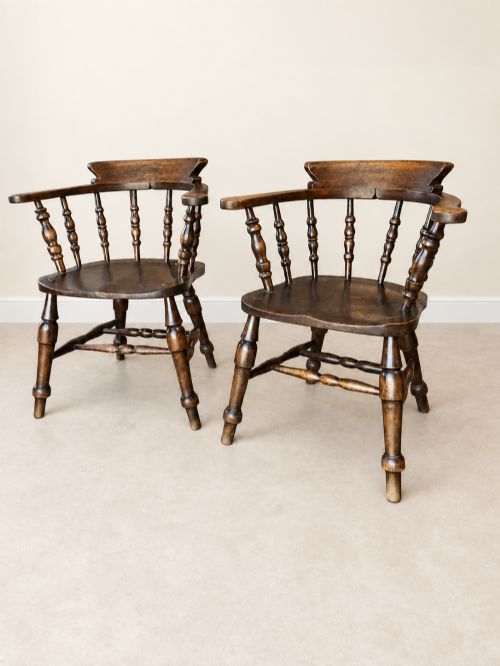
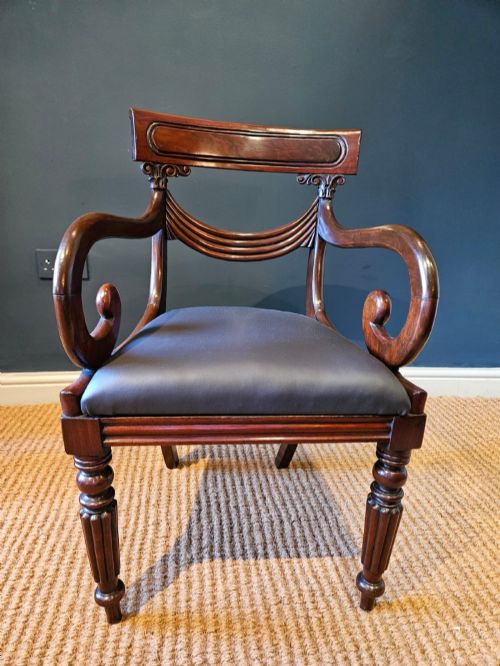
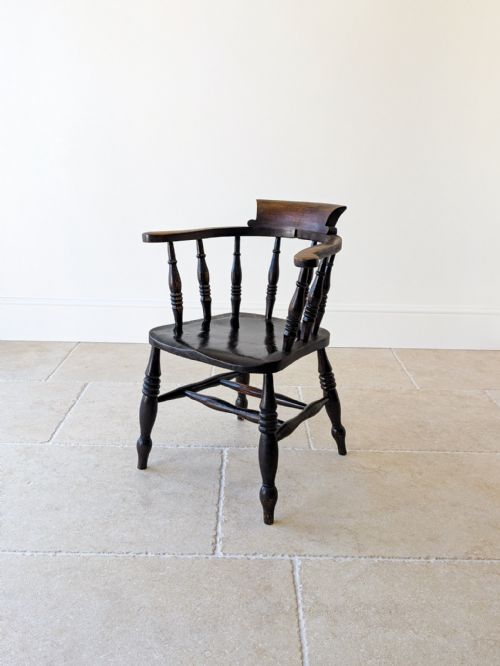
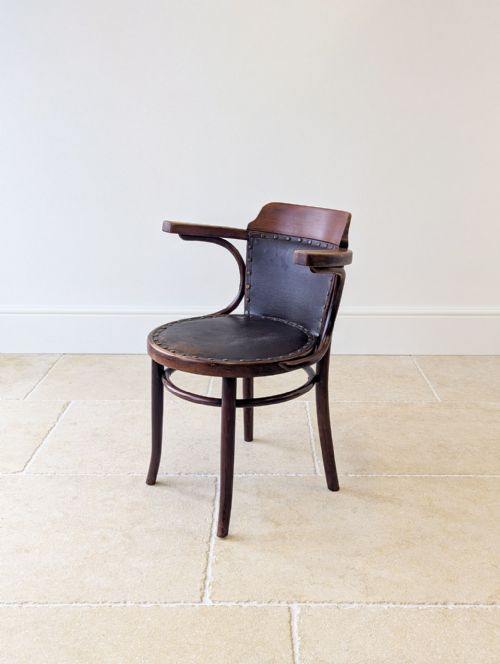
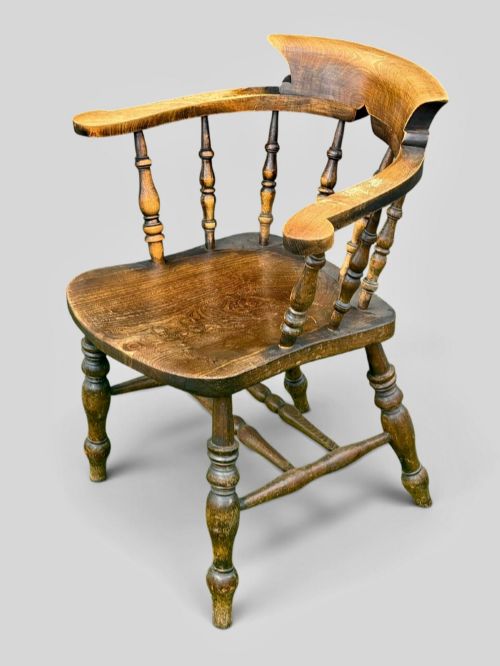
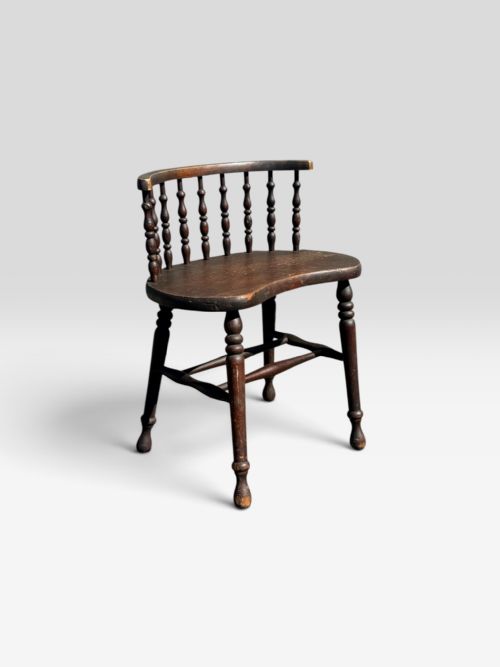
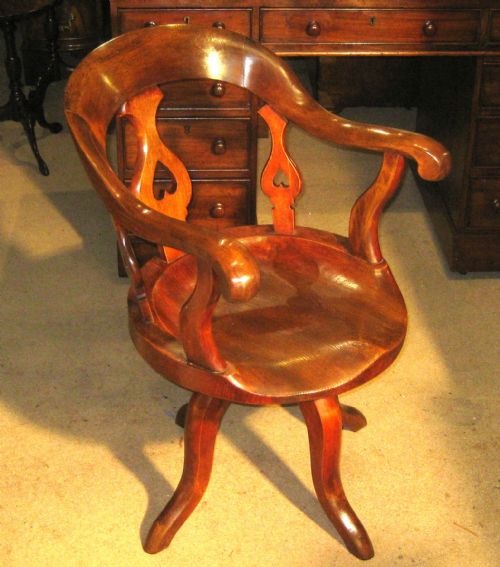
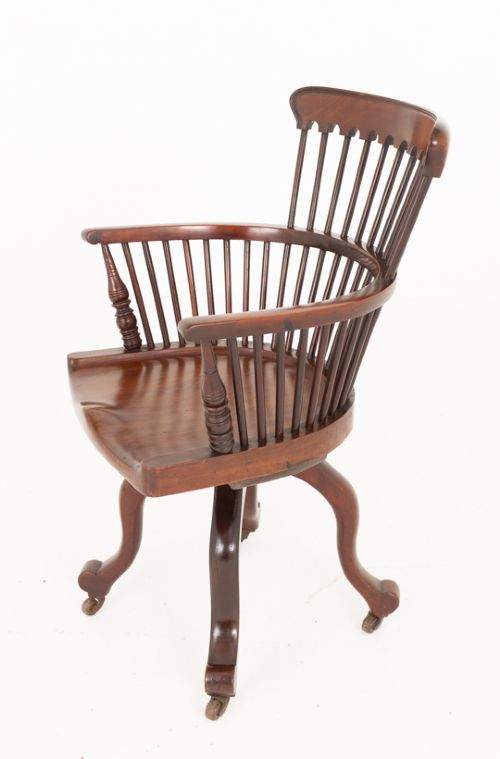
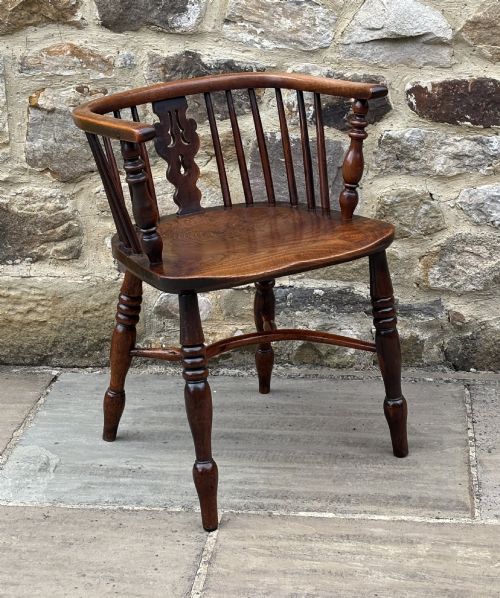
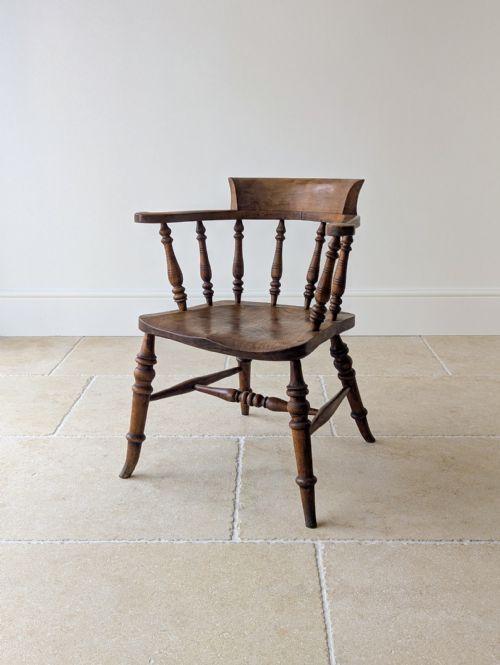
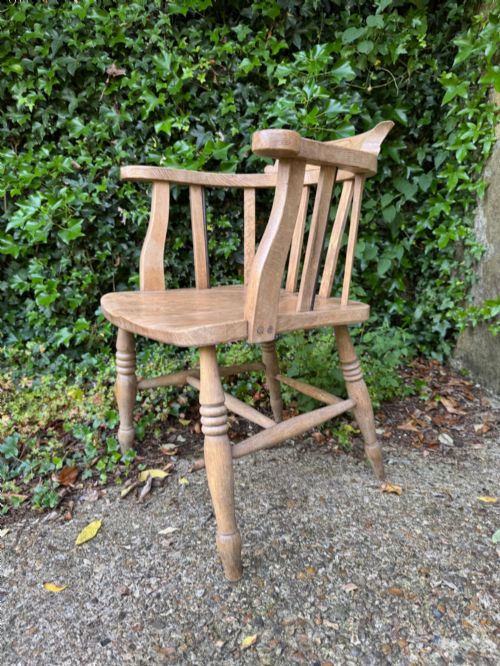
The versions most frequently met on this page span the Victorian and Edwardian eras, reaching back through the nineteenth century into provincial English workshops. These pieces appear in forms such as smokers bows, Windsor chairs and revolving office seats.
Originating in domestic studies, offices and ships, these chairs combine generous proportions with robust construction. Their enduring appeal lies in the straightforward joinery and comfortable curved armrests suited to long hours of sitting.
How they were made
Construction relies on a combination of turned spindles, bent timber and solid plank seats. Makers joined legs and uprights using traditional wedged tenons to ensure structural strength under heavy daily use.
Cabinet makers and provincial joiners utilised native timbers, pairing flexible woods for steam-bent back rails with dense woods for durable seats. Brass mechanisms and iron swivel fixings appear on later desk adaptations.
Finishes were kept simple, allowing the natural grain of the timber to show through layers of wax or polish. Over decades of handling, the wood develops a rich patina on the high-contact areas of the arms and seat.
Listings feature timbers including elm, beech, mahogany, yew, ash, oak and fruitwood across the nineteenth and early twentieth centuries.
What varies in quality
The standard of timber selection marks the difference between basic utility seating and finer examples. Dense grains in yew or deeply figured elm command greater interest than plain beech or standard fruitwood.
Proportion and comfort dictate the success of the design, with balanced arm arcs and well-turned spindles showing the maker's skill. Altered heights or replaced components alter the integrity of the piece.
The depth of the accumulated surface patina reflects how well a chair has aged in domestic or institutional settings. Original fixings and undisturbed joints maintain the historical character of the furniture.
The Captains Chair Wood Glossary
- Smokers Bow
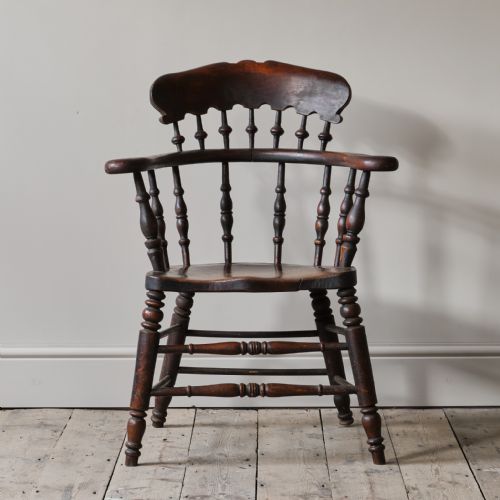
- A low-backed Windsor armchair with a continuous curved arm rail resting on short turned spindles. This form offers sturdy seating suitable for parlours and offices.
- Windsor Chair
- A wooden chair constructed with a solid plank seat into which the legs and back spindles are separately socketed. Regional variations feature comb backs and solid central splats.
- Bentwood
- Timber shaped by exposure to steam until pliable, then placed in forms to dry into curves. This technique creates lightweight yet strong chair frames.
- Yew Wood
- A dense, highly figured softwood prized by makers for its rich amber colour and fine grain. It appears frequently in better quality nineteenth-century seating.
- Patina
- The surface sheen developed on timber through age, handling and wax polishing. This quality layer distinguishes older wood from modern finishes.
Captains Chair Wood: Frequently Asked Questions
What is a captains chair wood?
A captains chair wood is a sturdy wooden armchair featuring a low, rounded back and arms designed to fit beneath a desk. These seats combine solid plank construction with turned spindles for practical support.
Originating in offices, ships and libraries, they evolved to provide comfortable seating during long hours of work. Their robust build ensures they remain functional pieces of furniture today.
How do I date a wooden captains chair?
Dating relies on observing the timber types, turning styles and construction methods used in the frame. Nineteenth-century examples often display hand-turned spindle work and pegged joints.
Later Victorian and Edwardian versions may incorporate swivel mechanisms, iron fixings or bentwood elements. Comparing the wear patterns and wood species helps narrow down the period of manufacture.
Where were these chairs used?
These chairs served primarily in studies, ships' cabins, offices and country houses where durable seating was essential. Their compact proportions allowed them to slide close to tables and desks.
Today, they function well as desk chairs, dining seats or standalone armchairs in living spaces. Their traditional forms blend easily with both antique and modern interiors.
What woods were used to make them?
Makers utilised a variety of native timbers, frequently pairing elm seats with beech, ash or fruitwood spindles. Yew wood was reserved for finer provincial examples due to its distinctive grain.
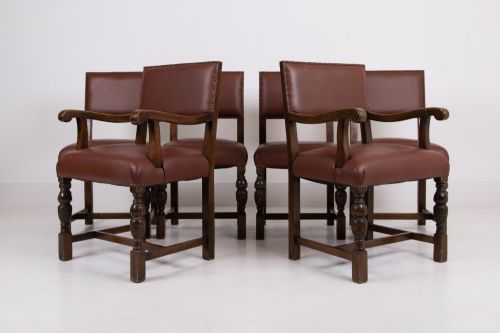
Mahogany and oak appear in later Victorian desk chairs, sometimes accompanied by leather upholstery. The choice of timber usually reflects the region of manufacture and the intended function.