
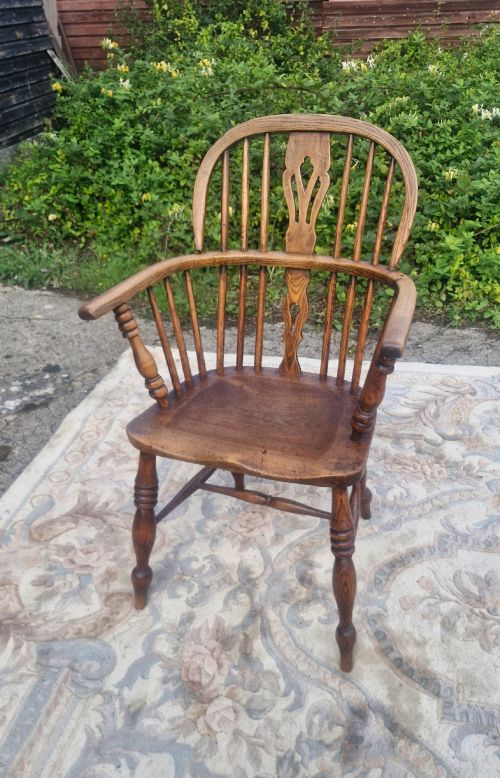
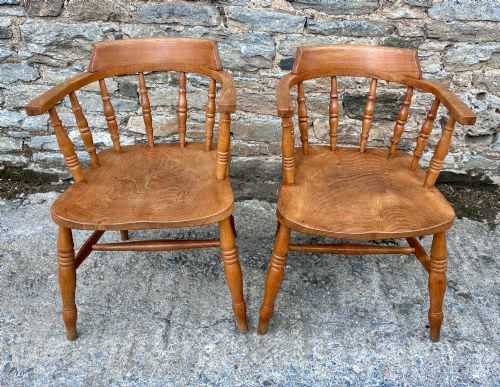
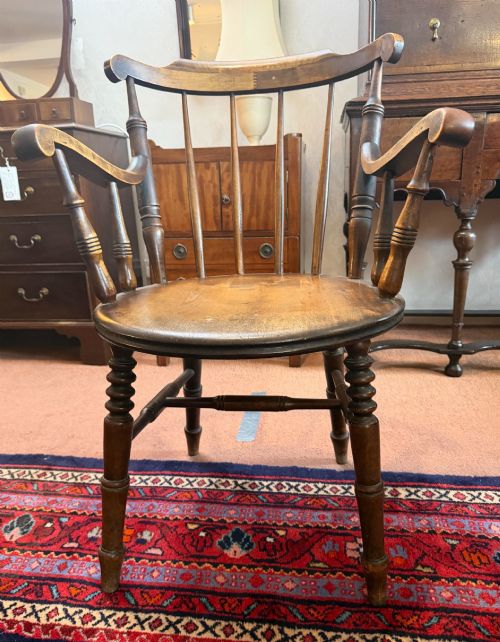
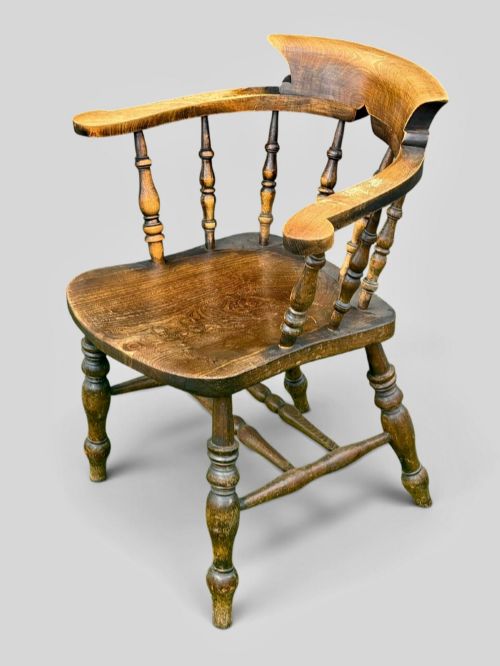
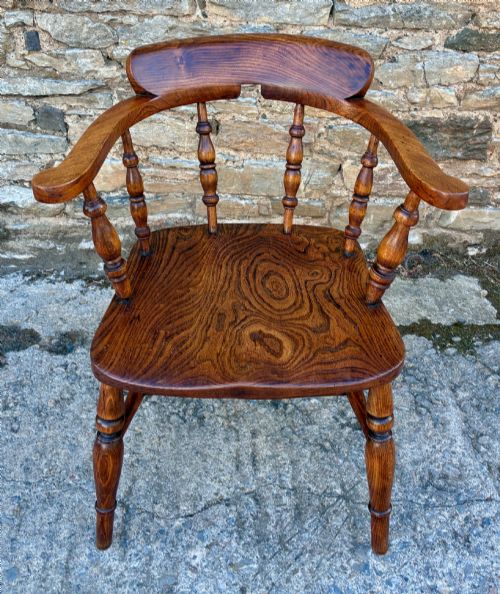
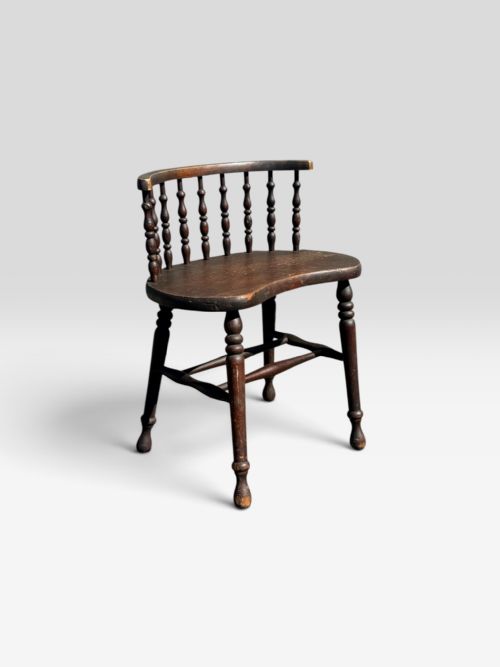
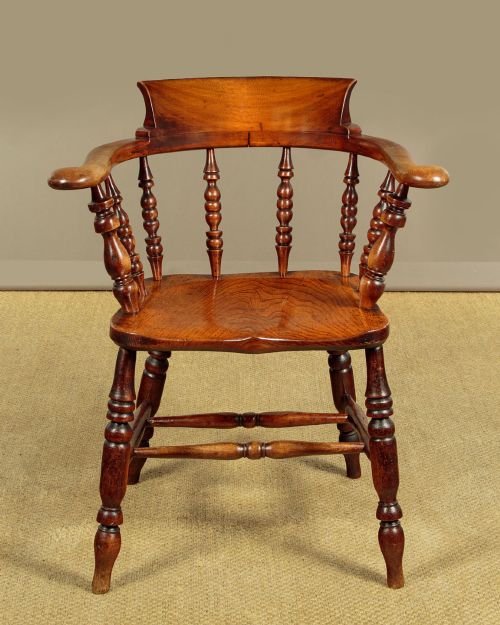
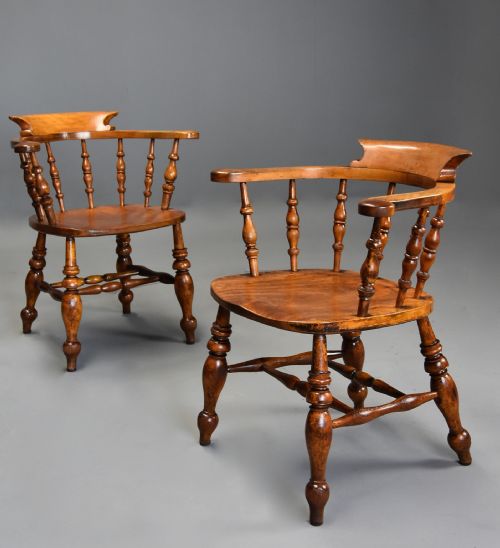
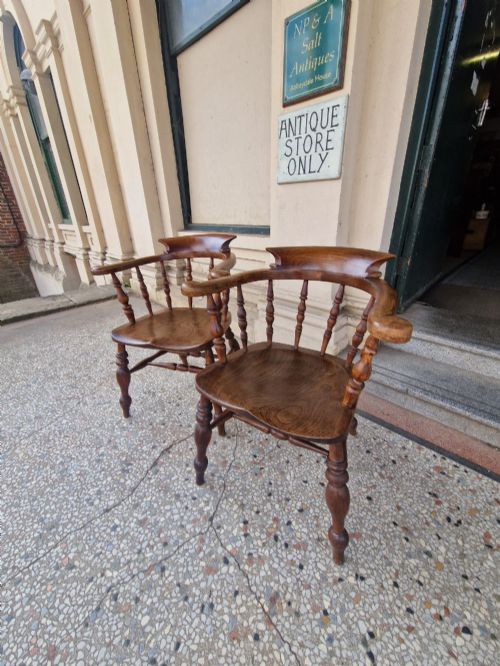
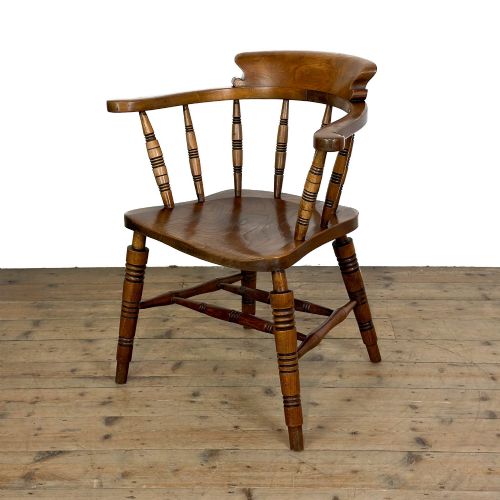
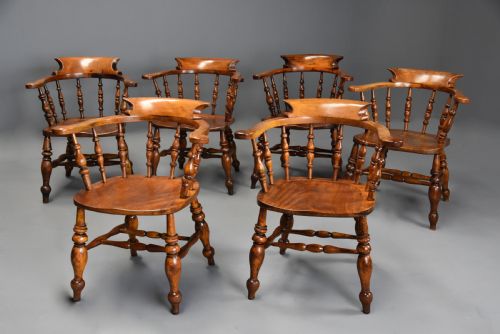
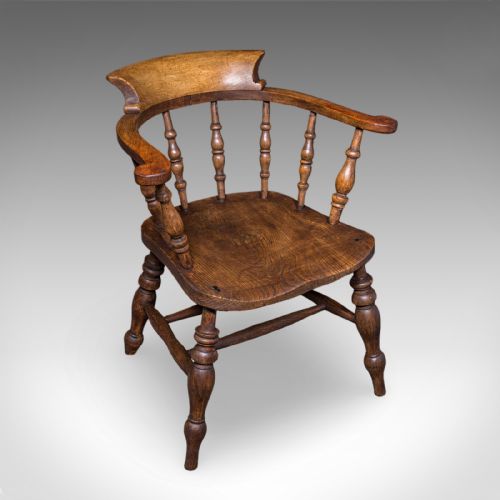
Smokers Bow Desk Chair
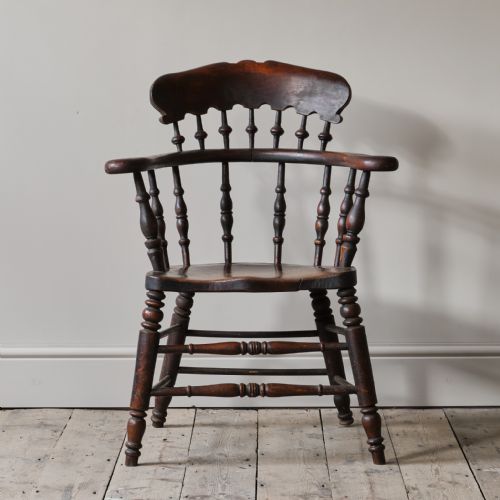
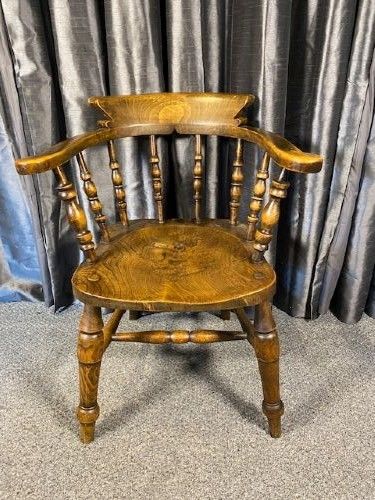
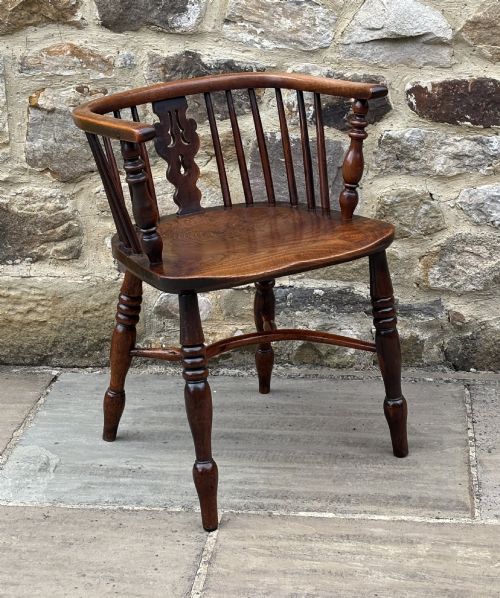
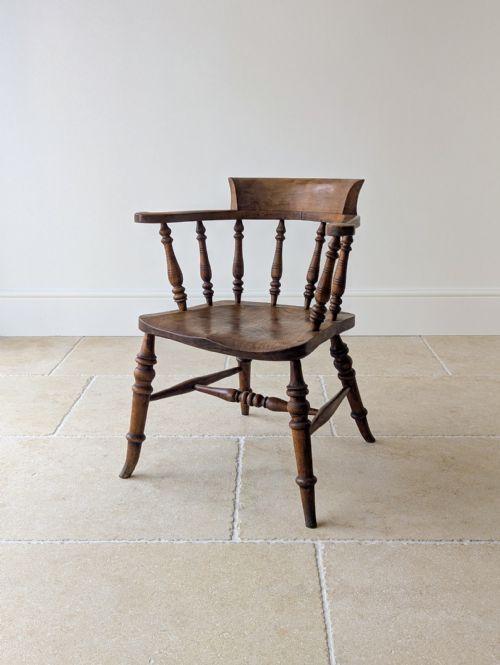
A smokers bow desk chair offers sturdy elm seats and low spindle backs, built for country studies and Victorian offices.
Smokers Bow Desk Chair
A smokers bow desk chair is a sturdy low-back Windsor armchair, typically found in Victorian and Edwardian iterations across English country houses and offices. Buyers search for these pieces to gain a supportive, robust wooden seat suited to daily workspace use.
The most common examples on this page pair an elm seat with ash, beech, or birch spindles and legs. They bridge the gap between regional Windsor seating and formal office armchairs.
Makers utilised local hardwoods to shape continuous arm rails and deep saddle seats. These forms appear alongside oak and mahogany variations from the late nineteenth and early twentieth centuries.
How they were made
Elm provided a tough, interlocking grain for the solid saddle seats, resisting splits under heavy daily sitting. Ash and beech were steamed and bent to form the continuous curved back rails and bows.
Turned spindles and legs slotted into bored holes in the seat plank, secured with wooden wedges. Workshops combined these native timbers to build resilient armchairs designed for long-term functional service.
Listings span from the mid-nineteenth century through the Edwardian era, predominantly featuring elm, beech, and ash timbers.
What varies in quality
The depth of the saddle seat carving and the thickness of the bentwood bow set superior examples apart from standard utility seating. Artisans invested extra time in shaping comfortable arm scrolls and balanced proportions.
Timber selection dictates the overall visual strength of the piece, with richly figured elm and select yew commanding greater presence than plain beech. Original surface patination accumulated through decades of use completes the upper tier of quality.
J.W. Read & Co.
The Smokers Bow Desk Chair Glossary
- Smokers bow
- A low-backed Windsor armchair featuring a continuous curved arm rail and turned spindles, originating in nineteenth-century England. These seats served country houses, offices, and smoking rooms alike.
- Saddle seat
- A thick wooden seat base scooped and hollowed by hand into a shallow basin for comfort. This technique prevents the dense elm timber from cracking.
- Comb back
- A Windsor chair design where the vertical spindles extend upward through a top rail resembling the teeth of a comb. This construction adds upper back support.
- Windsor
- A chair built with a solid wooden seat into which the legs and back spindles are directly fitted. Provincial English makers refined this style across various regional forms.
- Patina
- The deep sheen and surface character acquired by timber through age, handling, and wax polishing over generations. It marks genuine historic use.
Smokers Bow Desk Chair: Frequently Asked Questions
How do I date a smokers bow desk chair?
Inspect the turning style of the legs and the method used to join the arm bow to the seat. Earlier nineteenth-century examples often display deeper saddle carving and distinct ash-and-elm pairings.
Later Edwardian versions tend to feature lighter oak frames or simpler turned components. Comparing the construction details against documented regional Windsor traditions helps narrow the manufacturing decade.
Were these chairs originally used at desks?
Many of these low-backed armchairs served multiple domestic and commercial functions, including office work, smoking rooms, and provincial studies. Their sturdy build made them practical for writing tasks.
While some bear specific office designations in historical listings, others functioned as general elbow seating in country houses. Their ergonomic curved arms comfortably accommodate desk work.
What woods were used to build them?
Elm served as the primary material for the shaped seats because its twisted grain resists splitting under pressure. Ash, beech, and birch were selected for the turned legs and steam-bent arm bows.
More substantial variations occasionally utilise oak or yew wood. This combination of native hardwoods ensured structural resilience in busy workspaces.
How should I care for an antique wooden seat?
Maintain the timber by applying traditional beeswax sparingly to nourish the dry grain and preserve the historic surface finish. Avoid placing the chair near direct heat sources that could cause the elm seat to split.
Gentle dusting with a soft cloth prevents dirt accumulation in the spindle joints. Regular maintenance protects the original patination built up over generations.