


Mahogany Captain Chair
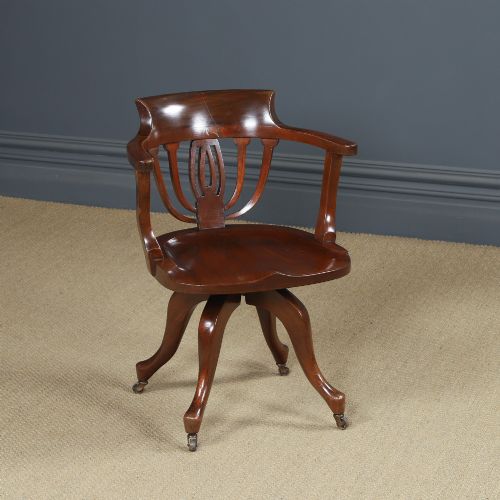
A mahogany captain chair is a sturdy revolving or stationary desk armchair designed for office and library use, offering solid timber support and comfortable seating.
What mahogany captain chairs are
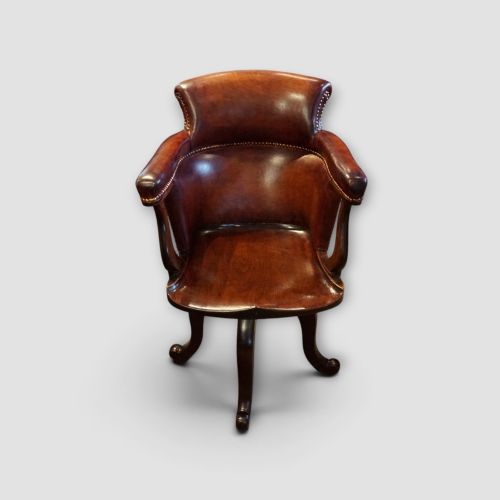
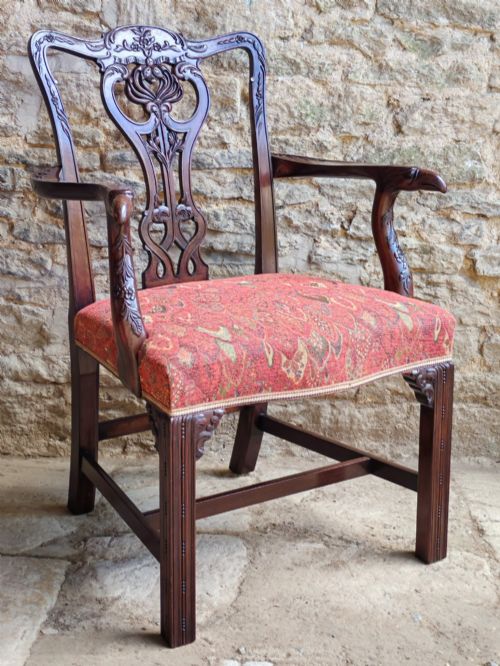
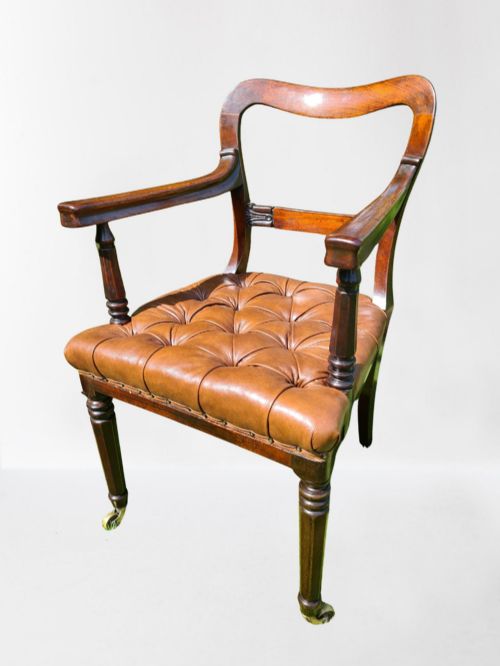
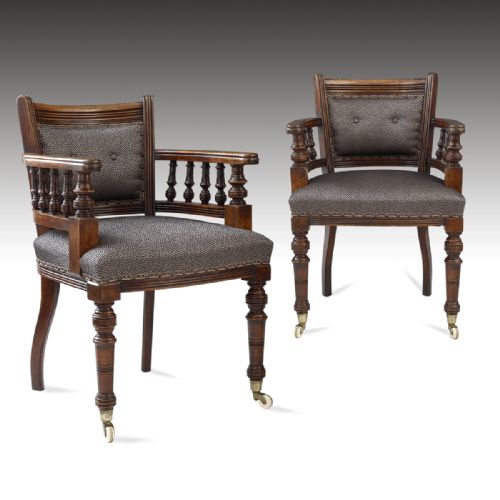
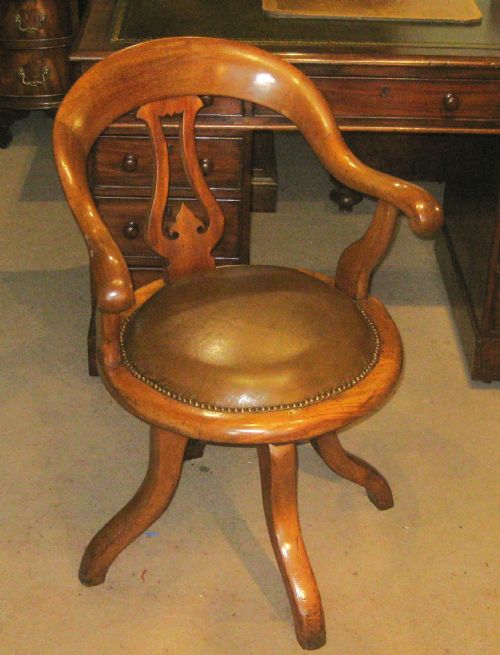
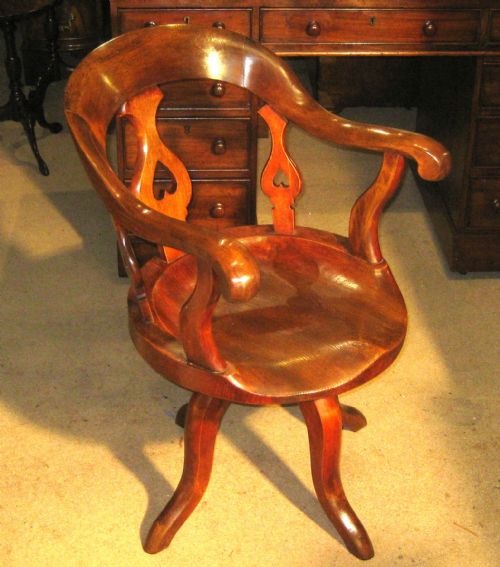
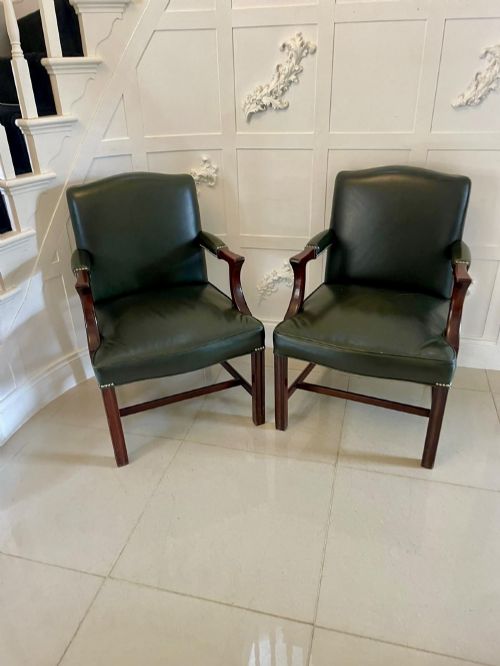
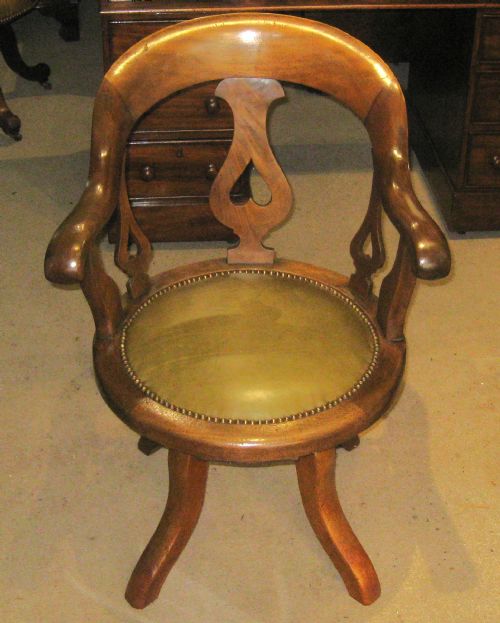
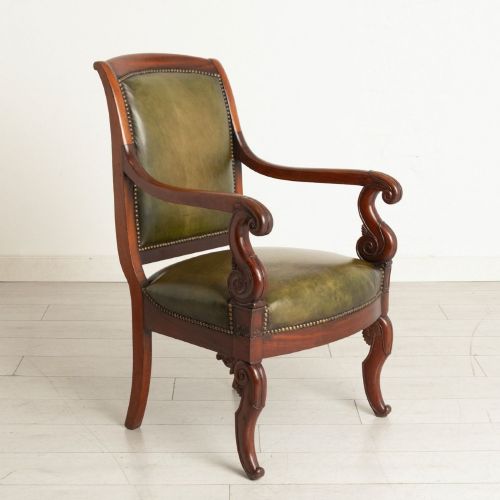
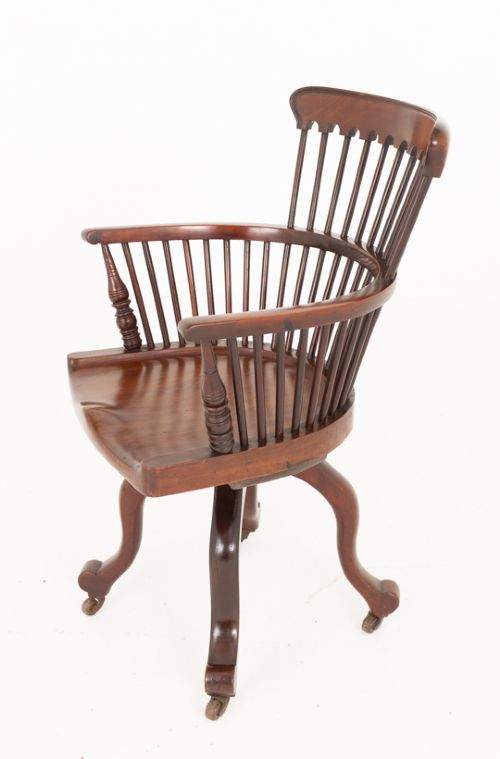
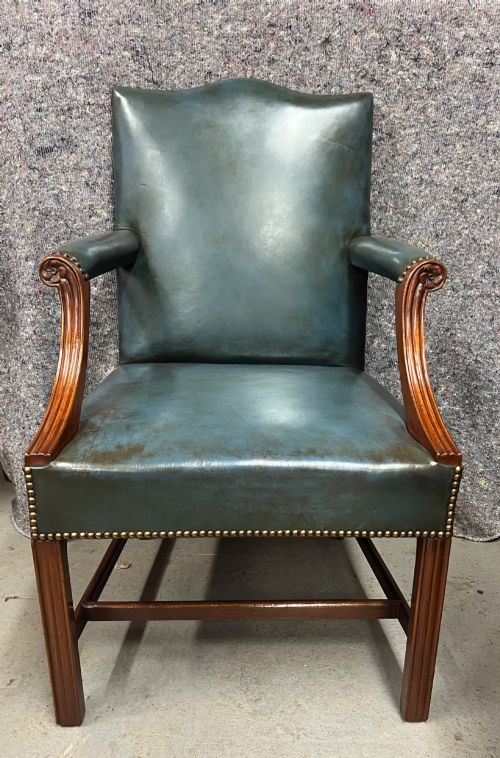
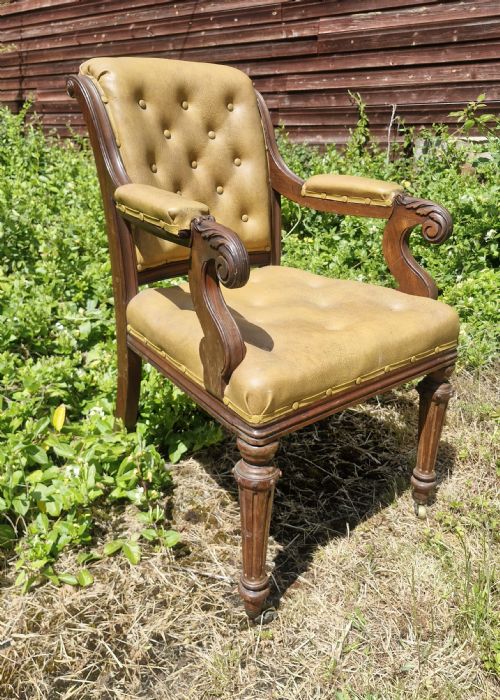
A mahogany captain chair combines the heavy timber frame of a traditional armchair with the practical requirements of a desk or office seat. The pieces on this page span the Victorian and Regency periods, showing the evolution from stationary library armchairs to swivel mechanisms.
Most examples found here date from the nineteenth century, appearing as desk chairs, library tub armchairs and revolving office seats. They serve as functional seating for a study or home office while retaining traditional cabinet-making proportions.
How they were made
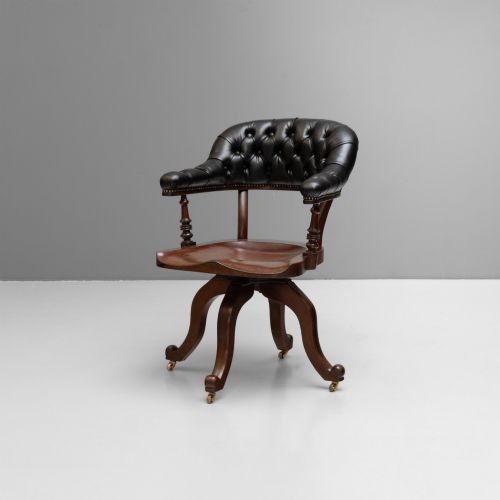
The primary structural timber is mahogany, shaped into curved backrests, solid frames and sturdy legs. Cabinet makers integrated brass castors and swivel mechanisms into many nineteenth-century examples to allow movement around a desk.
Upholstery materials include leather, velvet and fabric, often secured with buttoning or brass tacks along the seat and back panel. Iron components appear hidden within the swivel actions of revolving desk chairs.
Retail Price Guide 2026
Typical UK retail prices for mahogany captain chair, calculated from the Sellingantiques database of over a million retail prices indexed since 2003. This retail price guide relies exclusively on Sellingantiques data; no external sources or auction records are used, so the figures do not describe the wider market.
Nineteenth-century clerks evidently spun around with such enthusiasm that makers had to invent heavy iron swivels.
What varies in quality
The distinction between standard office seating and superior examples lies in the weight of the timber and the complexity of the turning. Finer pieces display carefully figured mahogany grain and robust internal swivel mechanisms rather than simple fixed frames.
Upholstery finish also separates the grades, with hand-tooled leather and neat buttoning indicating higher workshop standards. Maker attribution, such as Cope and Collinson castors or Gillows design influences, marks out the most accomplished nineteenth-century production.
Cope and Collinson·Gillows
The Mahogany Captain Chair Glossary
- Captain chair
- A sturdy wooden armchair designed for office, desk or library use, typically featuring a curved mid-height backrest. Many nineteenth-century versions incorporate revolving swivel mechanisms.
- Tub armchair
- An upholstered seat where the arms curve continuously into a rounded back enclosing the sitter. This form provides enclosed support suitable for reading desks.
- Swivel chair
- A seat mounted on a central pivot allowing the top section to rotate. Nineteenth-century examples often use concealed iron and brass mechanisms beneath the timber seat.
- Castors
- Small wheels attached to the base of chair legs to ease movement across floors. Brass and ceramic varieties help date nineteenth-century furniture.
- Buttoned leather
- An upholstery technique where the leather surface is pulled into recessed points secured by buttons or tacks. This creates a padded grid pattern across the backrest.
Frequently Asked Questions
How do I identify a Victorian captain chair?
Victorian examples use solid mahogany framing combined with leather or fabric upholstery. They frequently feature nineteenth-century turning, curved spindle supports and occasionally swivel actions.
Looking beneath the seat often reveals brass castors or iron mechanisms characteristic of the period between eighteen-seventy and nineteen-hundred.
Were all captain chairs swivel chairs?
Not all captain chairs revolve; many nineteenth-century library armchairs remain stationary with fixed wooden legs. Swivel versions became increasingly common as office furniture developed later in the Victorian era.
Both stationary and revolving types share the characteristic curved back and solid mahogany construction.
How should I care for leather upholstery?
Leather upholstery on these chairs benefits from occasional cleaning and conditioning to keep the material supple. Avoiding direct sunlight prevents the leather from drying and cracking over time.
Original buttoned leather should be treated gently to preserve the surface grain and existing patina.