
Vintage Storage Drawers
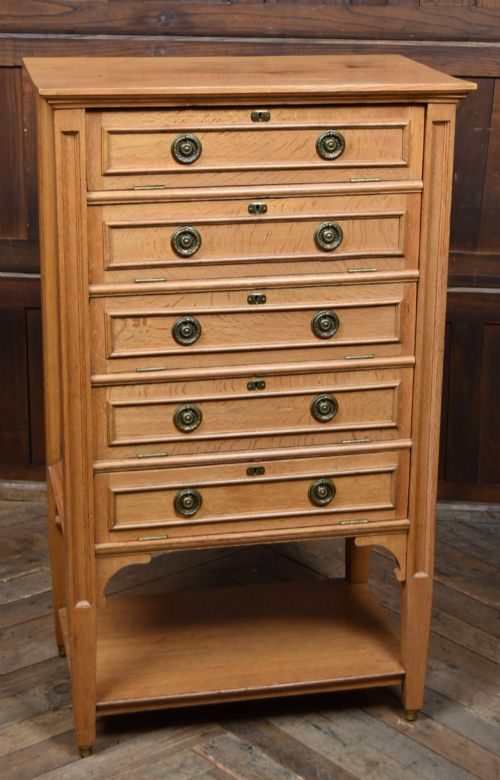
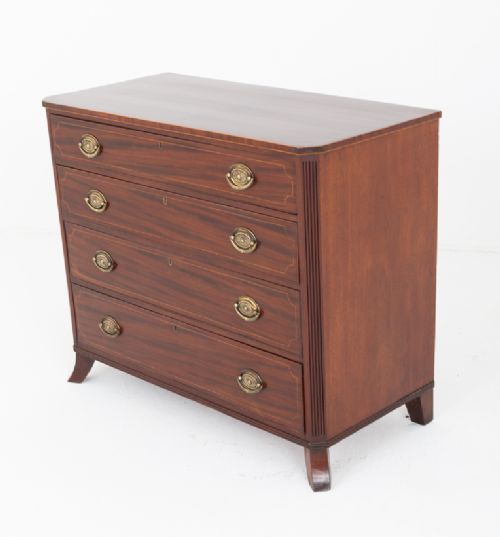
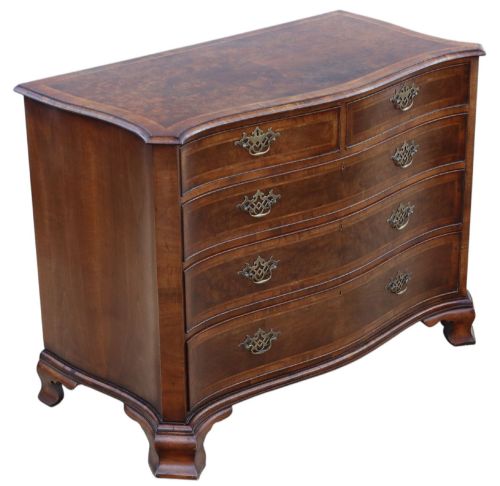
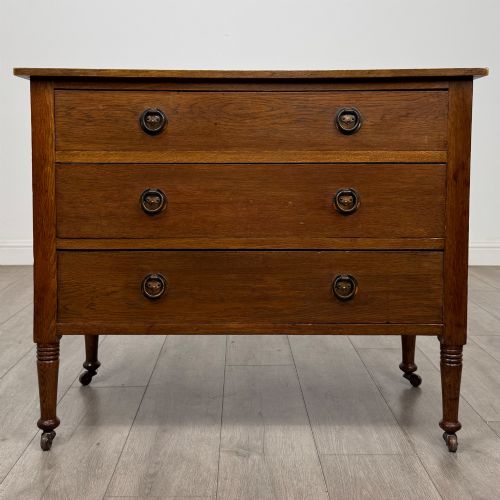
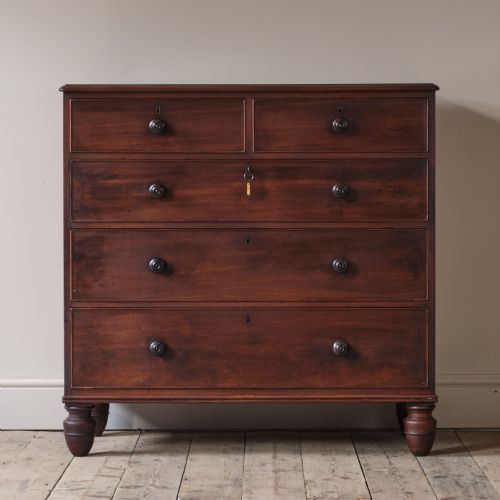
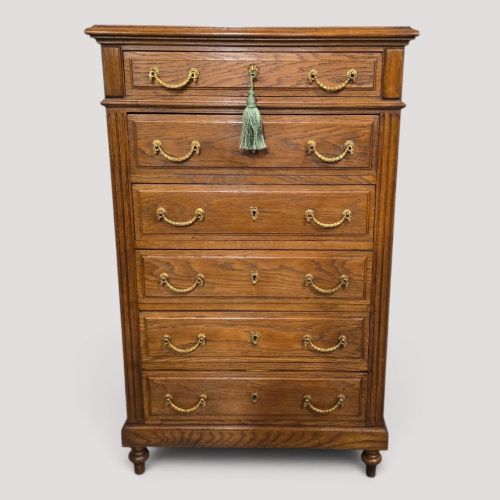
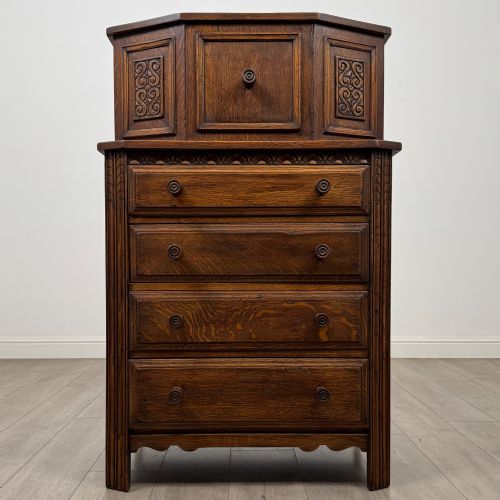
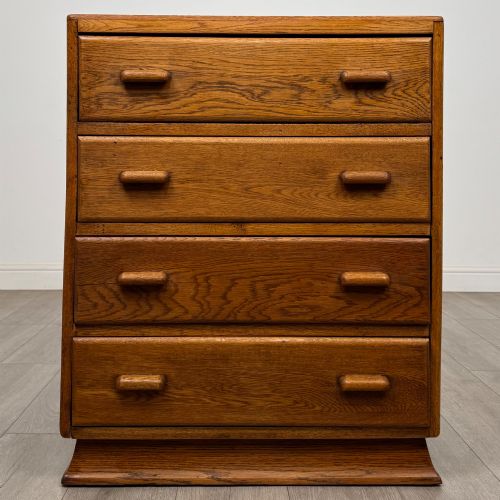
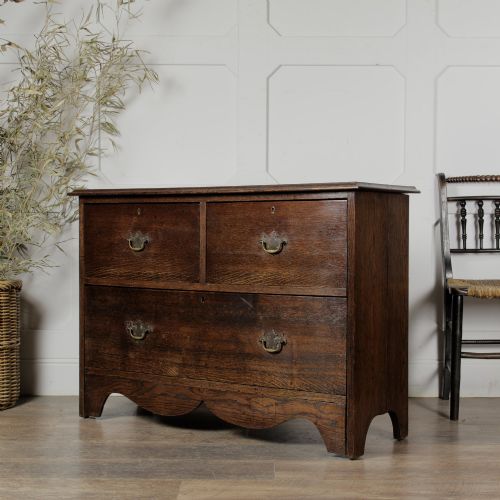
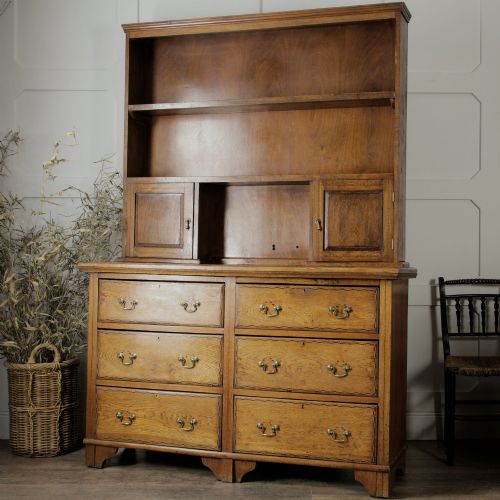
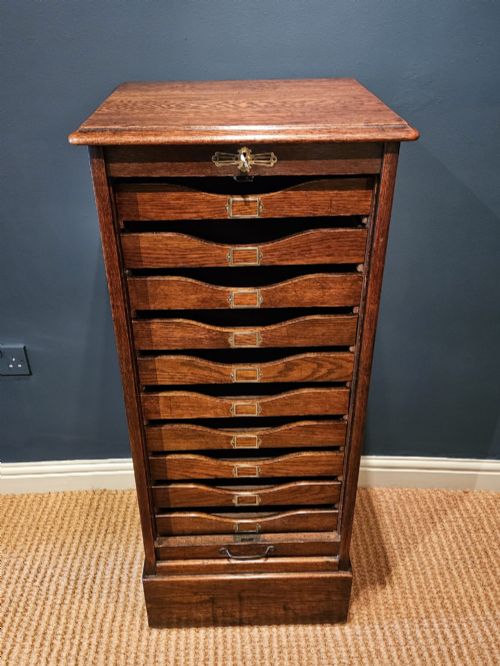
These vintage storage drawers comprise sturdy oak filing cabinets, mahogany chests, and walnut commodes designed to organise living spaces with period character.
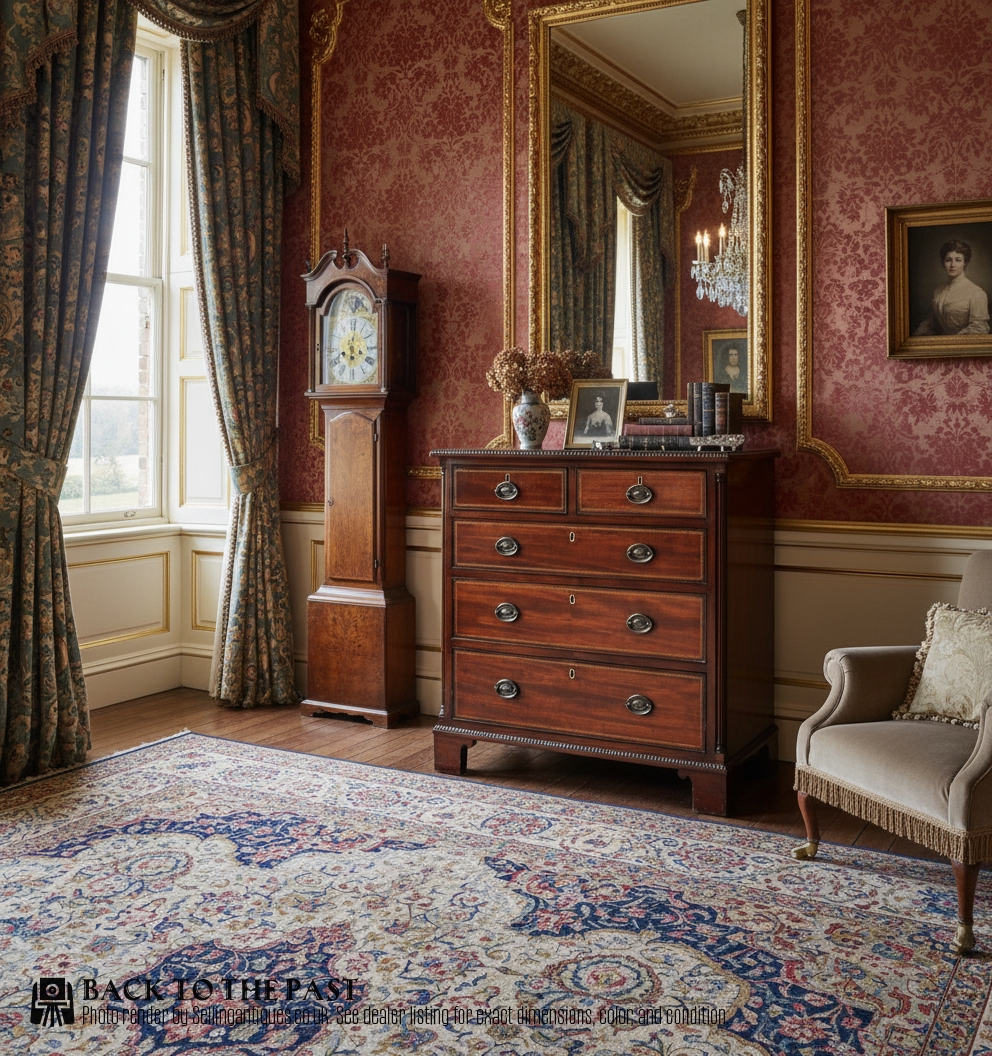
Vintage Storage Drawers
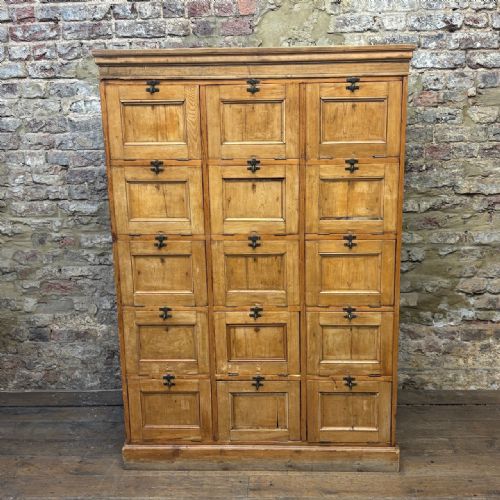
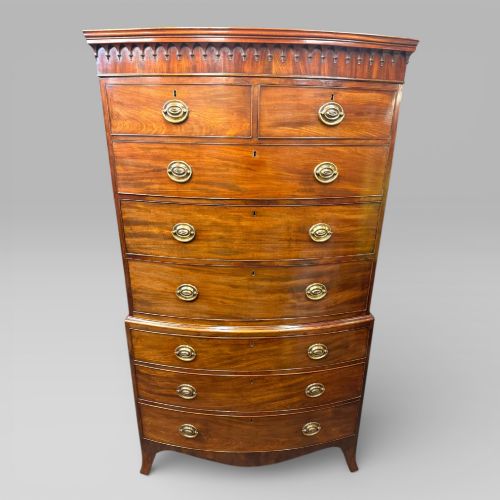
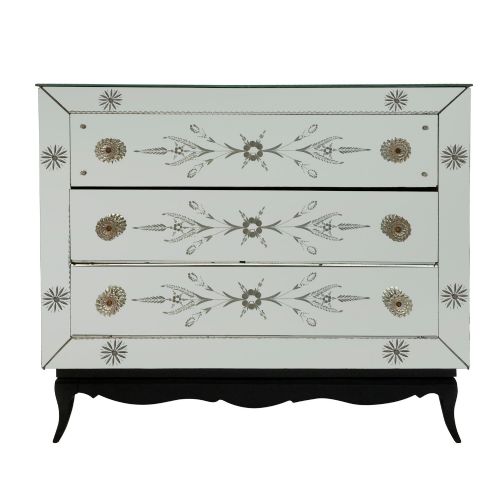
Buyers searching for vintage storage drawers encounter a variety of period forms including nineteenth-century pine chests, Edwardian oak filing cabinets, and Regency mahogany chests of drawers. These pieces served domestic and professional functions in earlier households and offices, offering compartmentalised storage for clothing, documents, and household goods. The selection ranges from compact three-drawer units to large tallboys and fifteen-door locker cabinets.
The most frequent examples on this page date from the Edwardian period and the early twentieth century, constructed primarily in solid or veneered oak. Alongside these are Georgian, Victorian, and Regency items built from mahogany and walnut. Forms extend beyond standard chests to include French commodes, linen presses, and tambour front cabinets.
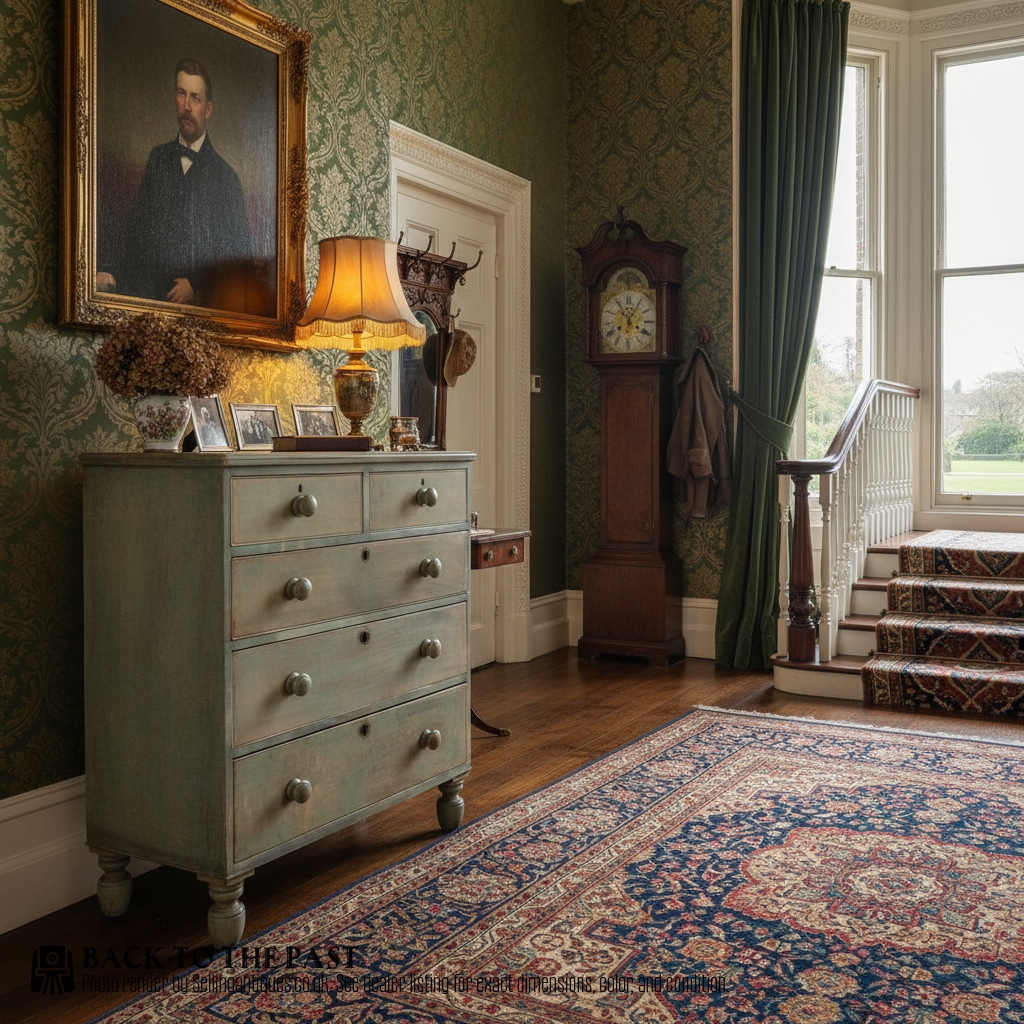
How they were made
Cabinet makers utilised dense hardwoods such as mahogany, walnut, and oak alongside softer pine for carcass construction and drawer linings. Timber selection dictated the structural integrity of each piece, with solid boards used for heavy-duty filing cabinets and finer veneers applied to decorative commodes.
Surface ornamentation involved crossbanding with contrasting timbers like satinwood, flame mahogany veneers, and applied brass hardware for handles and escutcheons. Joinery methods relied on tongue and groove boards, dovetail joints for drawers, and specialised mechanisms for tambour doors and locking cupboards.
Vintage Storage Drawers Retail Price Guide 2026
Typical asking prices for vintage storage drawers among the pieces listed under this phrase on Sellingantiques today, from the lower quarter to the upper quarter. They describe what is for sale here now, not the wider market.
Fifteen-door locker cabinets lurk among the delicate walnut commodes, proving that industrial bulk storage shares floor space with refined Edwardian dressing chests.
What varies in quality
The distinction between standard examples and the finest pieces lies in the selection of figured veneers and the precision of the cabinetwork. Burr walnut, flame mahogany, and crossbanded borders elevate the visual impact of a commode or chest.
Structural refinement also separates the grades, visible in the snugness of drawer joints, the integration of marble tops on French commodes, and the preservation of original brass fittings. Solid timber framing throughout rather than secondary pine linings indicates superior workshop origin.
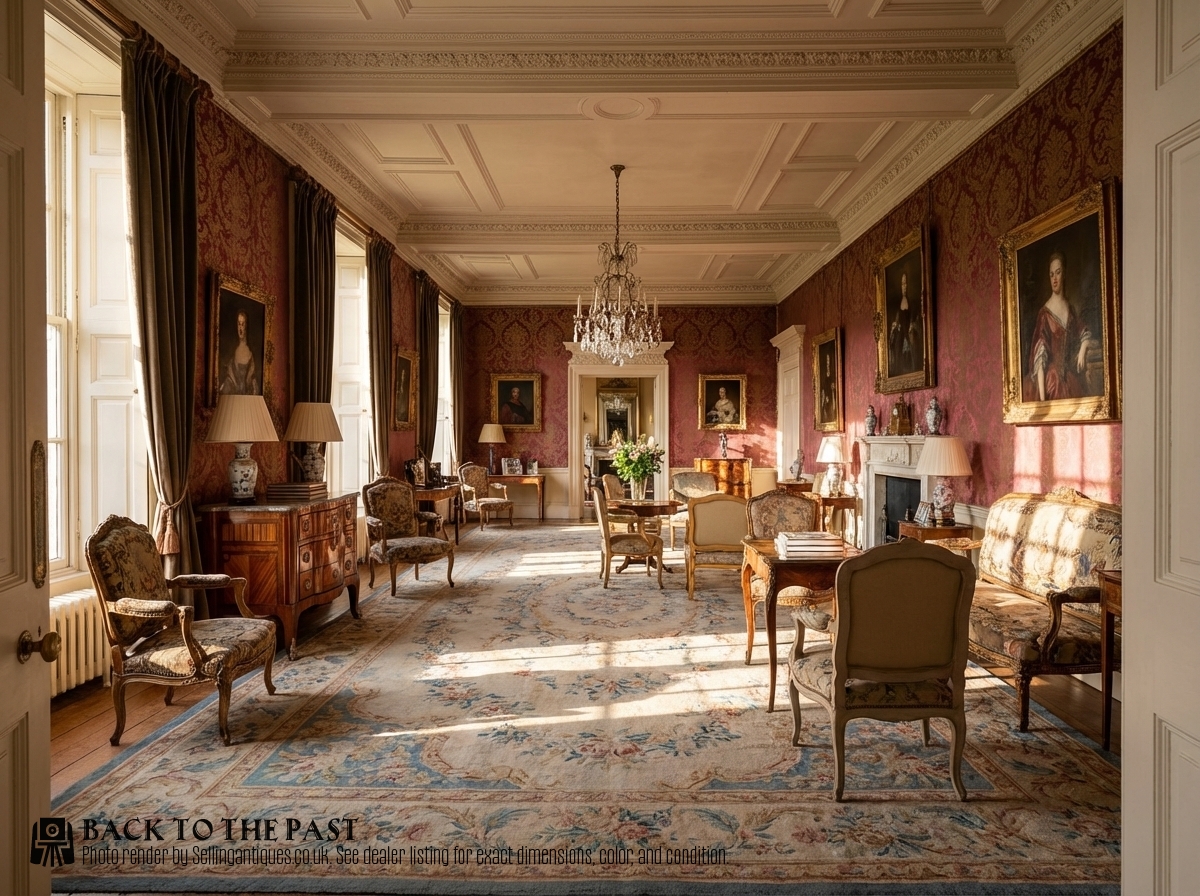
T & G Seddon·maples & co·Sir Clough Williams-Ellis
The Vintage Storage Drawers Glossary
- Commode
- A low cabinet or chest of drawers, often with decorative French or English styling. These pieces frequently feature marble tops and fine walnut veneers.
- Tambour
- A sliding door made of narrow vertical strips of wood glued to a canvas backing. This mechanism allows access to filing cabinets and cupboards without swinging doors.
- Linen Press
- A tall storage cabinet containing shelving in the upper section and multiple drawers below. Originally utilised for storing household linens and garments.
- Crossbanding
- A strip of veneer applied to the borders of a drawer front or tabletop with the grain running perpendicular to the main panel. This technique creates a neat framed effect.
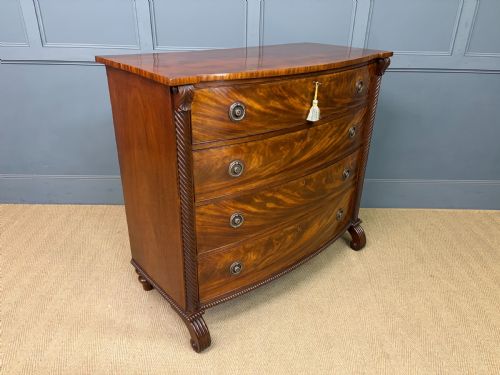
- Bow Front
- A convex curved cabinet front popular in Regency and Victorian furniture design. It softens the profile of a chest of drawers while maintaining internal storage capacity.
Vintage Storage Drawers: Frequently Asked Questions
What periods do these storage pieces cover?
The inventory spans the eighteenth, nineteenth, and early twentieth centuries, encompassing Georgian, Regency, Victorian, and Edwardian eras. Each period brings distinct proportions and timber preferences to the design.
Later items extend into Art Deco styles from the 1930s, offering figured walnut finishes and streamlined silhouettes alongside older traditional forms.
How do I identify a Regency chest?
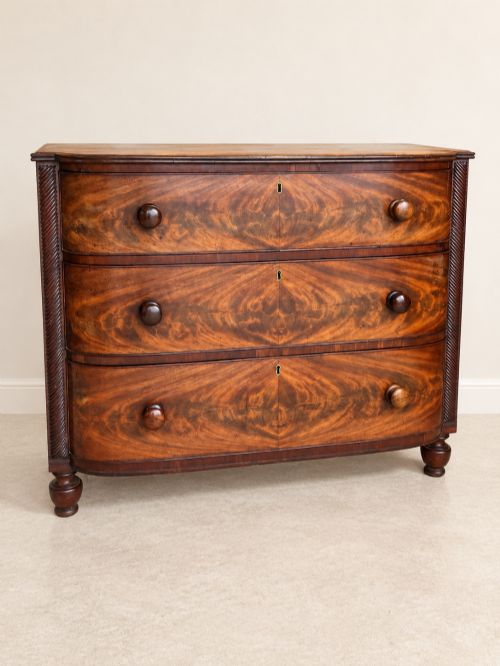
Regency chests typically utilise rich mahogany, sometimes with satinwood banding or flame figuring. Their proportions remain classical and restrained, often featuring bow fronts.
Original brass ring pulls and bracket feet or turned legs help confirm the period construction of these mahogany pieces.
Are filing cabinets suitable for modern use?
Edwardian oak filing cabinets and tambour front units provide practical document storage for contemporary studies and home offices. Their robust construction handles daily filing requirements reliably.
Internal drawer configurations accommodate standard paper sizes while introducing period craftsmanship into a working environment.
What is the difference between a chest and a commode?
Standard chests consist entirely of stacked horizontal drawers used primarily for clothing storage in bedrooms. Commodes often originate from French traditions and may combine cupboard doors with drawers.
French commodes frequently incorporate decorative marble tops and ornate walnut or mahogany veneers, serving as statement pieces in hallways and living rooms.
How should I care for antique veneer?
Burr walnut and flame mahogany veneers require stable indoor humidity levels away from direct sunlight and heat sources to prevent warping or splitting. Gentle dusting with a dry cloth maintains the surface.
Occasional application of appropriate wax polish preserves the sheen of the timber without building up heavy residues over time.