
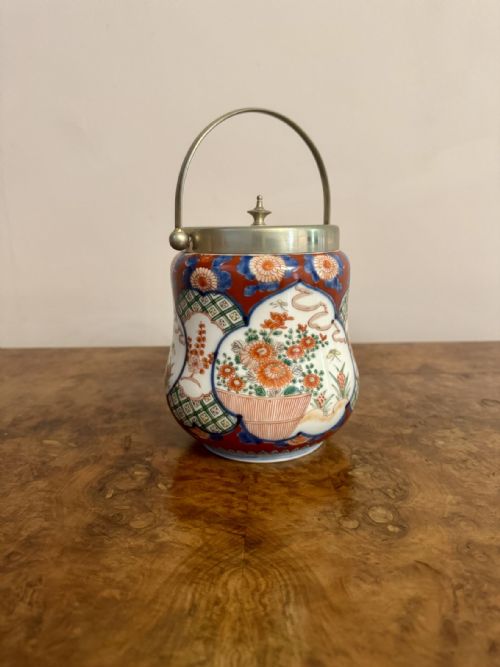

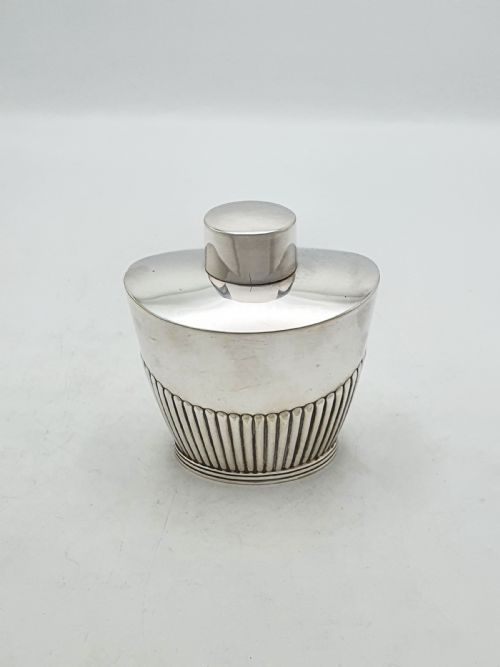


Vintage Silver Plated Jar
A vintage silver plated jar brings a gleam of Victorian or Edwardian craftsmanship to the table, holding biscuits, honey, or preserves with quiet utility.
Vintage Silver Plated Jar
A vintage silver plated jar often takes the form of a biscuit barrel, tea caddy, or preserve dish, designed for formal dining and drawing room hospitality. These pieces date principally from the Victorian and Edwardian eras, spanning into the mid-century with diverse forms.
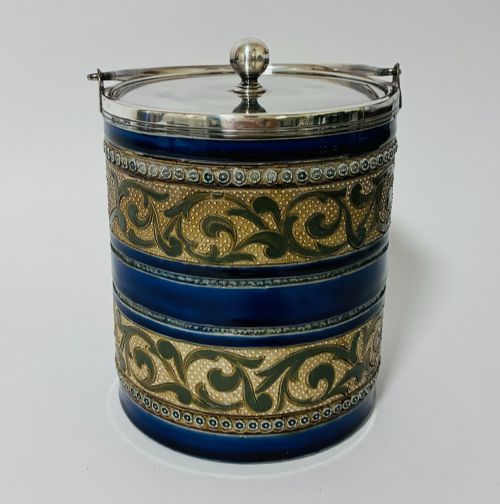
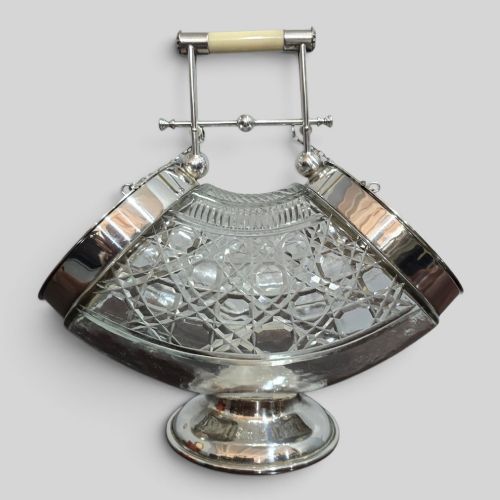
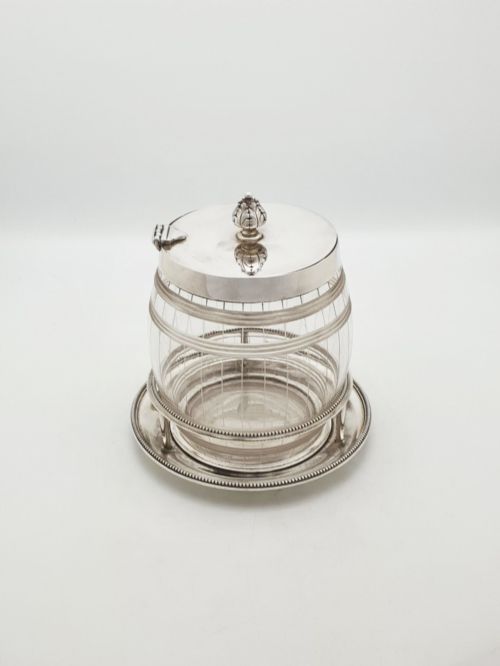
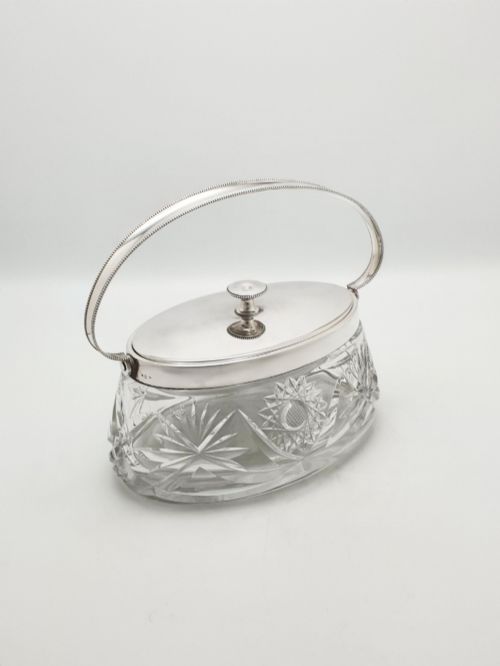
The version most commonly met on this page is the silver plated and cut glass biscuit barrel, featuring a hinged lid, a swing handle, and decorative chasing or engraving upon the metal mount. Such vessels reflect the tastes of nineteenth and early twentieth century domestic life, combining metalwork with ceramic or glass bodies.
Beyond standard glass and plate, varieties incorporate oak, earthenware, stoneware, and cranberry glass. Some examples adopt novelty shapes, such as drums or weights, showcasing the playful design sensibilities of period manufacturers.
Materials and construction
Makers formed the metal components using silver plating techniques over base metals, often employing Old Sheffield plate methods on earlier pieces or electroplating on later Victorian and Edwardian examples. This created a durable metallic sheen that emulated solid silver while providing structural strength.
Vessels combined silver plate with heavy cut glass, crystal, or ceramics such as Wedgwood Jasper Ware, Doulton Lambeth stoneware, and Crown Devon earthenware. Metal mounts, hinged lids, and swing handles were securely fitted to these bodies, sometimes incorporating locking mechanisms or elaborate finials like heraldic dragons.
One novelty jar takes the surprising form of a standard metal weight, proving that nineteenth-century hosts loved a quiet kitchen joke.
Distinctions in quality
Quality rests in the crispness of the glass cutting, the weight and depth of the ceramic body, and the precision of the silver plated mounts. Finer examples display deep hobnail or faceted crystal and heavy, well-balanced ceramic or wooden structures that sit solidly upon the table.
The artistry of the metalwork defines the upper tier, seen in detailed engraving, robust hinges that hold their position, and maker marks from notable firms. Inferior pieces show thin plating worn down to the base metal, loose mechanics, and plain, uninspired glass bodies.
Elkington·Mappin & Webb·William Hutton·John Grinsell & Sons·Doulton Lambeth·Crown Devon·Carlton Ware·Wedgwood·Le Coultre·Crevillen
The Vintage Silver Plated Jar Glossary
- Biscuit Barrel
- A covered ceramic or glass jar with a silver plated mount and handle, used for serving dry biscuits in the Victorian and Edwardian periods.
- Cut Glass
- Glass shaped and patterned by grinding wheels, creating refractive facets that catch the light on nineteenth-century tableware.
- Silver Plate
- A thin layer of silver bonded or electroplated onto a base metal substrate, allowing for ornate decorative metalwork at lower cost than solid silver.
- Tea Caddy
- A small jar or box designed to store loose tea leaves securely, often fitted with a snug lid to preserve aroma and flavour.
- Jasper Ware
- A fine stoneware developed by Josiah Wedgwood, characterised by a matte surface and contrasting raised white relief figures.
Vintage Silver Plated Jar: Frequently Asked Questions
What were vintage silver plated jars used for?
These jars served functional roles in domestic dining, primarily holding dry biscuits, tea, preserves, or honey for household guests. They sat on sideboards or dining tables as part of formal hospitality rituals.
Over time, their uses evolved, but their primary purpose remained the containment and presentation of household provisions with decorative flair.
How do I clean silver plated jars safely?
Clean the silver plated mounts gently with a soft cloth and a specialised silver polish, avoiding abrasive pads that might strip the thin metal layer. Keep moisture away from internal wooden components or glued ceramic joints.
Wash glass or ceramic body inserts in warm, soapy water separately from the metal mounts to preserve the integrity of both materials.
How can I tell the period of a jar?
Examine the style of the glass cutting, the ceramic body, and any maker marks stamped onto the metal base. Victorian pieces often feature heavy ornamentation and dense floral engraving, while Edwardian examples lean towards lighter, refined silhouettes.
Materials like cranberry glass and specific ceramic types such as Jasper Ware also point toward distinct decades of manufacturing popularity.
Are these jars suitable for daily use?
Many of these vessels remain entirely functional for storing dry goods or serving condiments during meals. Care must be taken with antique glass and delicate silver plating during regular handling and washing.
Using them thoughtfully allows you to integrate historical tableware into modern routines without causing undue wear.