


Antique Silver Glass Barrel
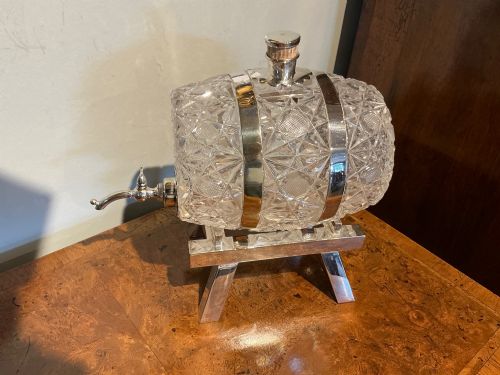
An antique silver glass barrel is a handsome table container that combines heavy cut glass with gleaming metal mounts to serve dry biscuits or spirits.
Antique Silver Glass Barrel
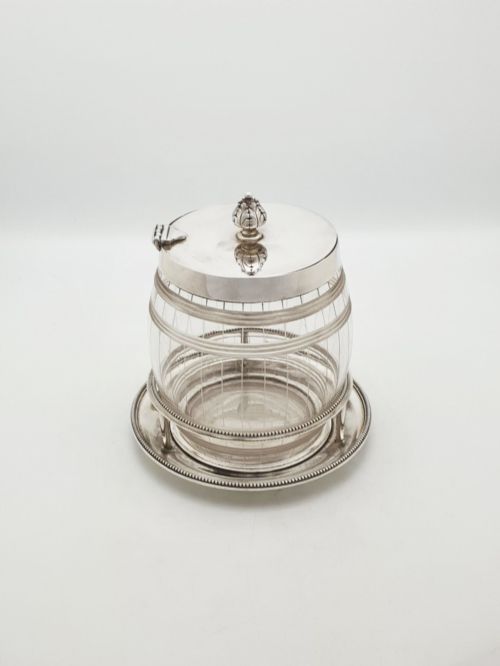
The antique silver glass barrel most commonly appears as a biscuit barrel or spirit container designed for the Victorian and Edwardian dining table. These cylindrical vessels sit on sideboards or tables to hold dry biscuits, sweets, or spirits for guests.
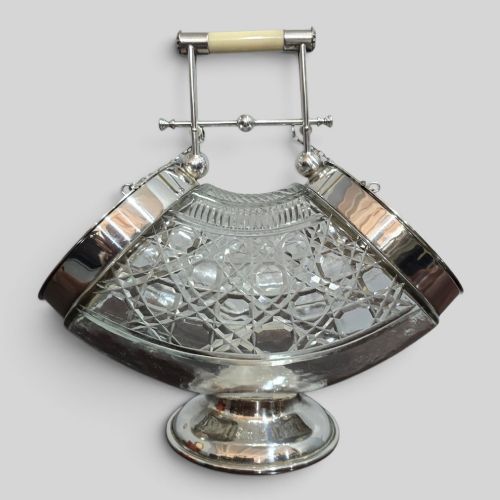
Most examples date from the late nineteenth century through to the early decades of the twentieth century, spanning the Victorian, Edwardian, and George V periods. Forms range from simple glass cylinders with metal lids to elaborate triple-barrel dispensers mounted on stands.
How they were made
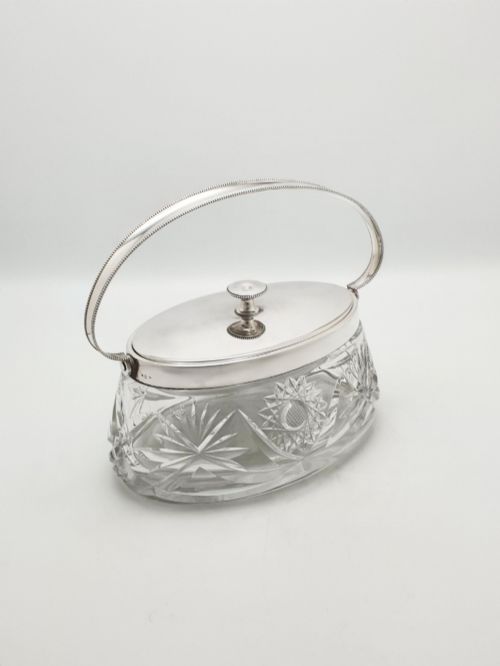
Makers shaped the heavy body using thick glass, crystal, or vibrant cranberry glass, often finishing the surface with deep hobnail cutting, geometric facets, or delicate fern engraving. Metal components utilised either sterling silver or silver plate, shaped into hinged lids, swing handles, and protective mounts.
Internal elements sometimes included cork or glass liners to preserve the contents, while metal parts relied on secure mounts fixed directly to the glass rim or base. Details such as cast finials shaped like heraldic dragons added decorative finish to the metal lids.
Heraldic dragon finials keep watch over the biscuits inside.
What varies in quality
The weight and depth of the glass cutting distinguish standard pieces from superior examples, with heavy hobnail patterns and sharp facets reflecting greater skill. The thickness and finish of the silver plating or the presence of full sterling silver hallmarks elevate the standing of the metal mounts.
Design complexity also sets items apart, moving from straightforward cylindrical jars to unusual twisted forms, oversized proportions, or multi-barrel dispenser sets equipped with matching tot pails.
Elkington·WMF·Walker and Hall·James Dixon and Sons·John Grinsell and Sons
The Antique Silver Glass Barrel Glossary
- Biscuit barrel
- A lidded container specifically made for storing and serving dry biscuits at the dining table. These vessels became particularly popular during the Victorian period.
- Silver plate
- A layer of silver fused to a base metal core such as copper or nickel silver. Many nineteenth-century tablewares utilised this method to achieve the look of solid silver at a lower cost.
- Hobnail cut
- A raised geometric pattern carved into the surface of glassware, resembling the head of a hobnail boot. This technique catches the light brilliantly.
- Cranberry glass
- A rich red glass coloured by the addition of gold chloride to the molten batch. It gained immense popularity in Victorian decorative tableware.
- Finial
- The decorative knob or ornament attached to the top of a lid. On these barrels, they often take floral or figurative shapes such as dragons.
Antique Silver Glass Barrel: Frequently Asked Questions
What were glass barrels used for originally?
These vessels served primarily to keep dry biscuits crisp on the Victorian and Edwardian sideboard before hosts offered them to guests.
Some larger or partitioned examples also held spirits and brandy, functioning as table barware.
How do I clean the glass and silver?
Wash the glass body gently in warm soapy water, taking care to remove liners if the barrel includes them.
Polish the silver mounts separately using a soft cloth and a gentle silver cleaner, avoiding harsh abrasives near the glass.
How can I tell a Victorian barrel from an Edwardian one?
Victorian pieces often feature heavy ornamentation, deep hobnail cutting, and elaborate figural finials like dragons.
Edwardian examples tend to show lighter, cleaner lines and simpler geometric cutting reflecting changing tastes after 1901.
Are the lids supposed to be airtight?
Most antique lids fit closely to keep dust away, but they rarely create a modern airtight seal.
Cork liners inside some collars helped cushion the glass and improve the fit of the metal mount.