
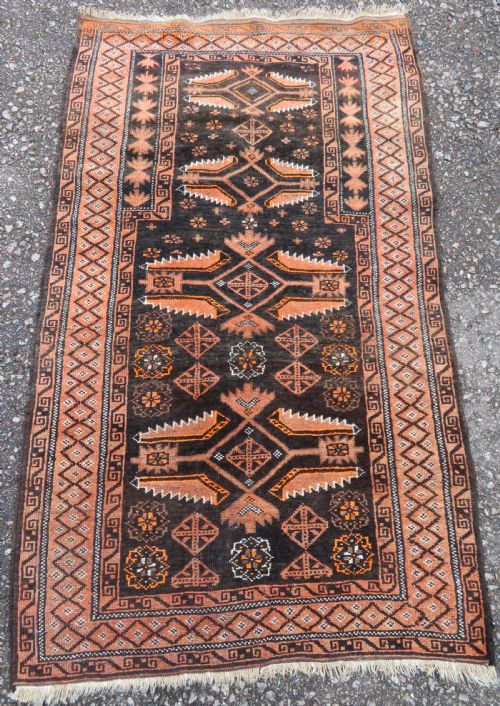
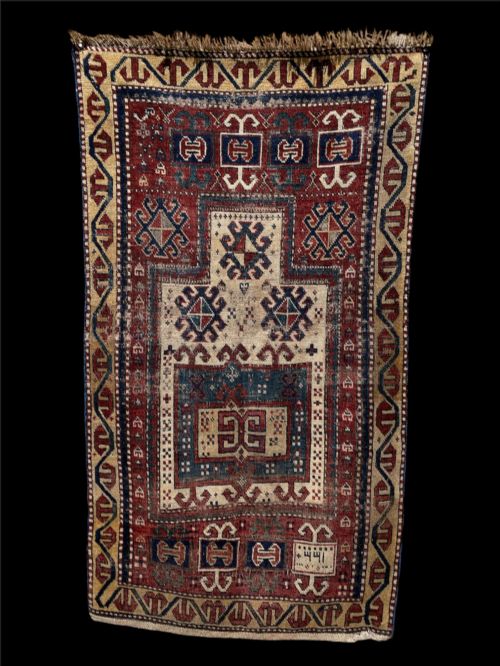
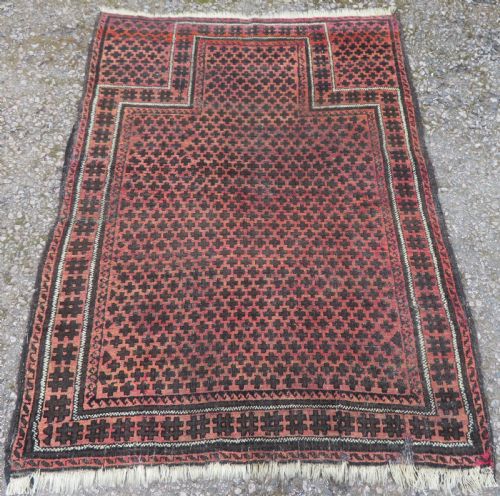


Vintage Prayer Rug
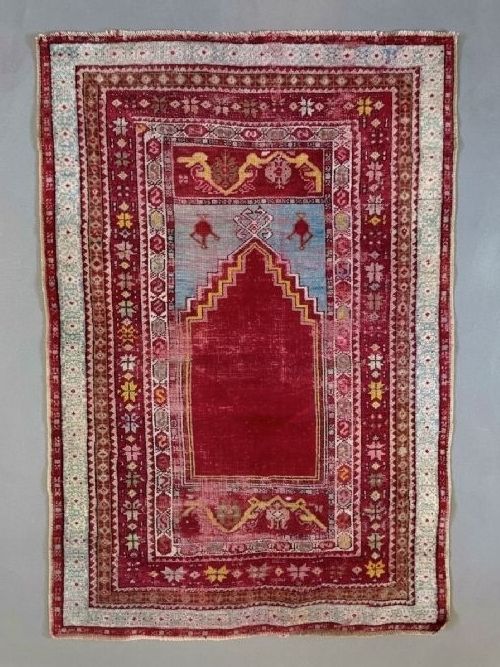
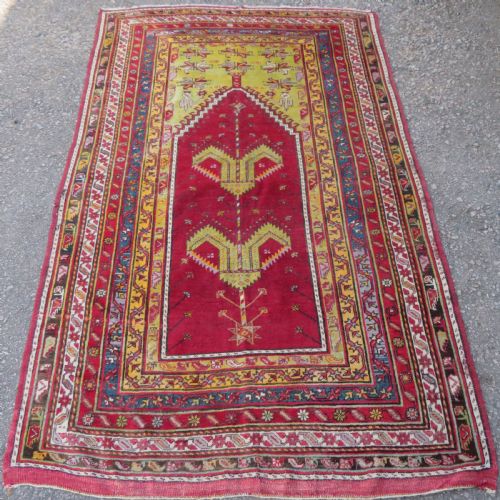
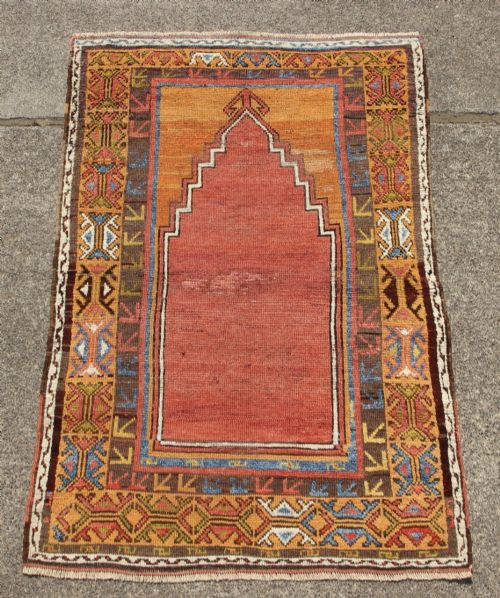
When you search for a vintage prayer rug, you are looking at woven textiles defined by a mihrab arch, originating from Anatolia, the Caucasus, Persia, and Central Asia.
Vintage Prayer Rug
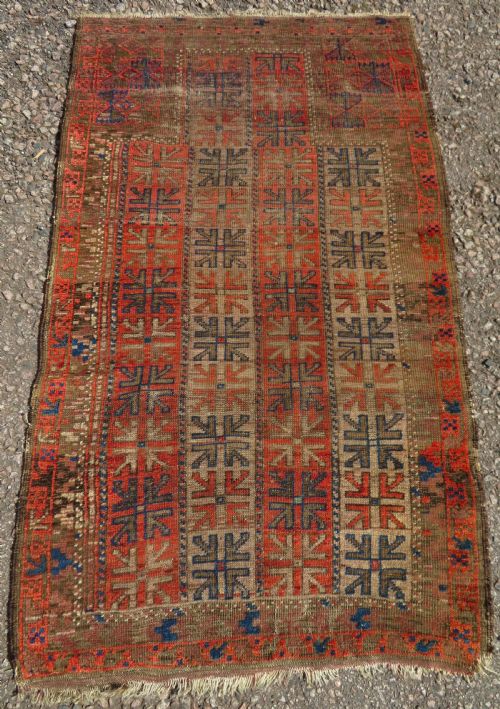
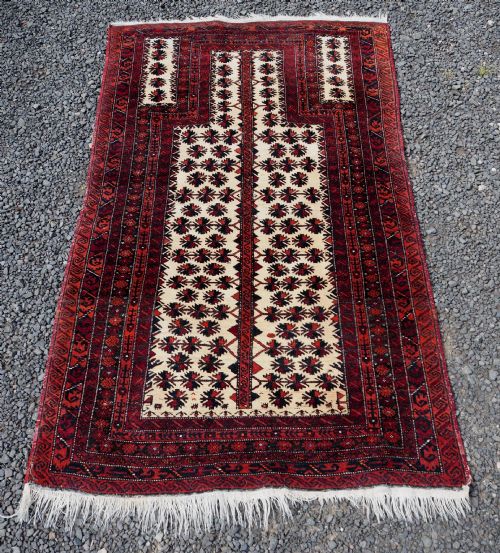
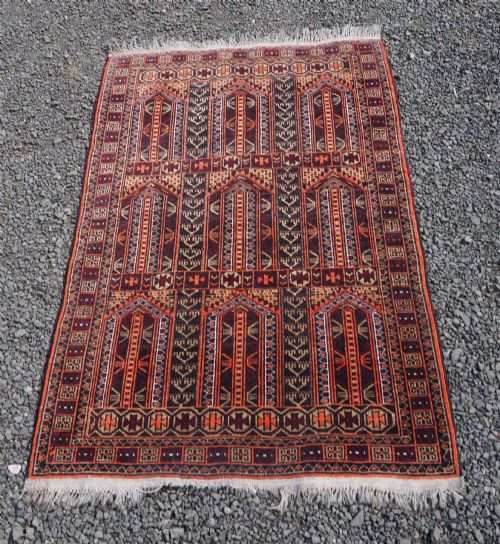
A vintage prayer rug is a portable textile historically utilised for personal devotion, characterised by a distinctive architectural niche or arch motif known as the mihrab, which directs the user towards Mecca. On this page, the most frequent examples hail from the 19th and early 20th centuries, spanning Anatolian, Caucasian, Persian, and Afghan tribal workshops.
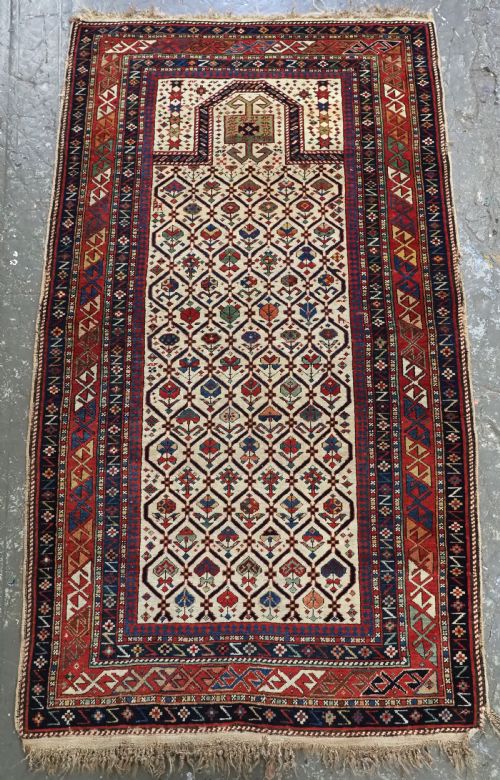
These pieces function both as floor coverings and wall hangings, displaying regional motifs that range from geometric medallions to floral lattice designs. Village weavers and nomadic groups created these textiles for daily use, incorporating local symbols into the borders and spandrels surrounding the central arch.
How they were made
The construction of these textiles relies predominantly on hand-spun wool, cotton, and occasional camel wool or goat hair foundations, depending on whether the piece originated from a nomadic camp or a settled village workshop. Natural dyes impart the characteristic colour palette, yielding deep tones that mellow gradually across decades of light exposure.
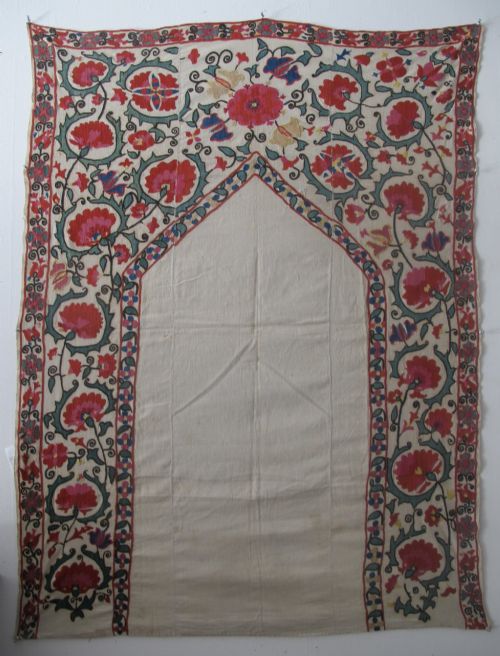
Weavers knotted the pile by hand onto warp and weft threads, finishing the ends with kilim webings or fringes as seen in Afghan Pashtun and Anatolian examples. Silk appears in specific types such as Uzbek Suzanis executed in prayer format on cotton grounds, demonstrating alternative needlework traditions alongside knotted pile construction.
Nomadic weavers occasionally embedded stray goat hairs into the wool pile, leaving a tactile signature of the flock that walked the pastures centuries ago.
What varies in quality
Knot density and the precision of the wool preparation determine the crispness of the architectural mihrab lines and the overall durability of the pile. Pieces with tightly packed knots hold complex geometric or floral lattice designs with greater clarity than looser weaves.
The purity and depth of the natural dyes influence how the colour settles over time, with well-balanced dye lots creating harmonious contrasts across the field. The handling of secondary materials, such as the quality of the goat hair or hand-spun cotton foundations, marks the distinction between standard village production and finer regional examples.
Kirsehir·Kashan·Ghiordes·Konya
The Vintage Prayer Rug Glossary
- Mihrab
- The arched architectural niche depicted on the rug, which indicates the direction of prayer. This motif forms the focal point of the design.
- Spandrel
- The triangular spaces situated above the shoulders of the mihrab arch. These areas are frequently filled with floral sprays or geometric patterns.
- Suzani
- An embroidered textile originating from Central Asia, sometimes executed in a prayer format with silk threads on a cotton ground.
- Warp
- The vertical threads stretched lengthwise on the loom before weaving begins. The foundation yarns carry the structural tension of the textile.
- Weft
- The horizontal threads passed alternately over and under the warp threads to bind the knots in place. Together with the warp, they form the foundation grid.
Vintage Prayer Rug: Frequently Asked Questions
How do I identify a prayer rug?
A prayer rug is immediately distinguished by the mihrab, an arch motif that dominates the field and points towards Mecca during use. This architectural design separates devotional textiles from standard area rugs.
Additional indicators include compact dimensions designed for individual use and specific regional spandrel patterns surrounding the main arch.
Where were these rugs made?
These textiles originate from traditional weaving centres across Anatolia, the Caucasus, Persia, and Central Asia. Specific regions like Konya, Kirsehir, and various Afghan tribal areas produced distinct local variations.
Nomadic groups and village workshops each contributed their own materials, such as camel wool or hand-spun wool, reflecting their local environments.
How should I care for a vintage rug?
Protect the textile by placing it in low-traffic areas away from direct sunlight to preserve the natural dyes. Gentle vacuuming without a rotating brush helps remove dust without stressing the foundation.
Professional cleaning tailored to antique wool textiles should be employed when deep maintenance is required.
What materials were used?
The primary material is hand-spun wool, often paired with cotton foundations for warp and weft threads. Some nomadic pieces incorporate camel wool or goat hair.
Natural dyes provide the colour palette, while specific regional pieces utilise silk embroidery on cotton grounds.