
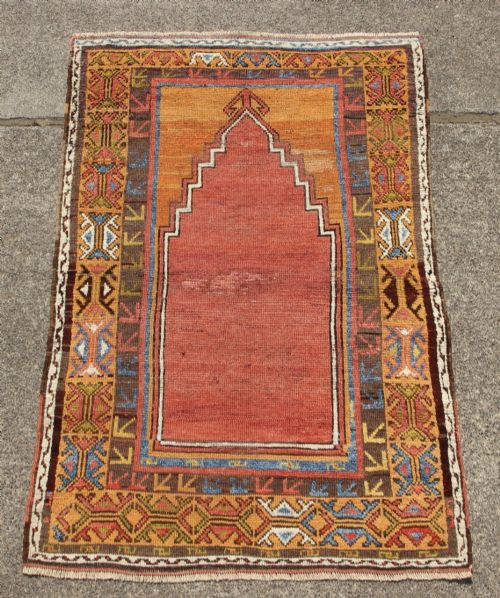


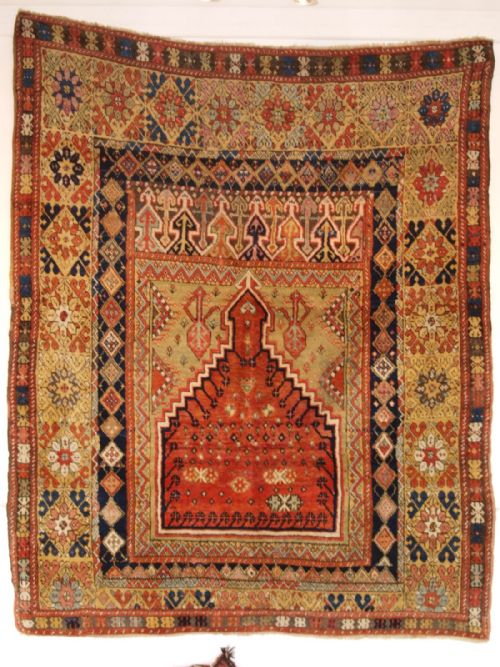
Stepped Mihrab Rug
A stepped mihrab rug brings centuries of Anatolian, Ottoman and Central Asian tribal weaving tradition directly onto the floor.
Stepped Mihrab Rug
When you search for a stepped mihrab rug, you encounter traditional prayer rugs and kilims originating from Anatolia, Central Asian tribal regions, and Turkey. These woven textiles display the characteristic arched prayer niche form, often featuring geometric stepped outlines within the design.
The pieces available here span from the mid-nineteenth century up through the early twentieth century, encompassing specific regional types such as Konya, Kirsehir, Taimani Baluch, Monastir, Sivrihisar, and Mujur. Most examples function as portable floor coverings or devotional prayer mats created by skilled regional weavers.
Makers shaped these floor coverings using traditional village and tribal weaving methods, passing down specific border motifs and mihrab structures across generations. Each rug records the distinct aesthetic choices of its particular Anatolian or tribal origin.
How they were made
The construction of these antique textiles relies on hand-spun wool and standard wool pile knotted onto supporting foundations, alongside flatwoven kilim structures. Natural dyes provide the palette, yielding rich tones across the regional types recorded in the inventory.
Weavers utilised cotton alongside wool for structural elements in specific rugs, creating stable foundations for the dense pile or flatweave surfaces. Every piece reflects manual carding, spinning, and dyeing techniques common to nineteenth and early twentieth-century village workshops.
Stepped Mihrab Rug Retail Price Guide 2026
Typical asking prices for stepped mihrab rug among the pieces listed under this phrase on Sellingantiques today, from the lower quarter to the upper quarter. They describe what is for sale here now, not the wider market.
Listings feature prayer rugs and kilims spanning five distinct decades between 1850 and 1930.
What varies in quality
Quality across these regional prayer rugs rests in the precision of the wool preparation and the vibrancy achieved through natural dyes. Better examples display careful handling of the hand-spun materials, resulting in enduring pile density and clear graphic definition in the stepped mihrab outline.
The nuance of the regional design, from Konya region Sivrihisar kilims to Mujur and Kirsehir prayer rugs, dictates the visual sophistication of the piece. Finer weaving shows greater control over the geometric motifs and harmonious integration of secondary borders.
The Stepped Mihrab Rug Glossary
- Mihrab
- The arched niche in a prayer rug design that indicates the direction of prayer, often featuring stepped outlines in these regional examples.
- Kilim
- A flatwoven textile produced without a pile, represented here by regional Anatolian pieces from the Sivrihisar area.
- Natural Dyes
- Colourants derived from plant and mineral sources rather than synthetic chemicals, utilised in the historical wool yarns of these rugs.
- Hand-Spun Wool
- Sheep fleece processed and spun by hand into yarn, creating the characteristic texture and variable thickness found in antique tribal rugs.
- Prayer Rug
- A devotional textile format featuring a central mihrab niche, historically used for individual daily prayers.
Stepped Mihrab Rug: Frequently Asked Questions
What is a stepped mihrab rug?
A stepped mihrab rug is a traditional textile featuring an arched prayer niche with geometric stepped borders. These pieces originate from Anatolian, Ottoman, and Central Asian tribal traditions.
The design serves a devotional purpose, guiding the user during prayer while displaying regional weaving patterns unique to areas like Konya and Kirsehir.
How old are these prayer rugs?
The pieces recorded in this collection date from the mid-nineteenth century through the early twentieth century, specifically spanning the years between 1850 and 1930.
This era encompasses late Ottoman production alongside traditional village and tribal weaving from Central Asia and Anatolia.
What materials were used?
Weavers constructed these rugs using wool, hand-spun wool, and cotton foundations. Natural dyes provide the authentic colour palette seen across all the regional examples.
Some pieces are woven as flat kilims, while others feature a traditional knotted wool pile.
Where were these rugs made?
These textiles originate from regions including central Anatolia, Turkey, and Central Asian tribal territories. Specific stylistic groups include Konya, Kirsehir, Mujur, Monastir, and Taimani Baluch.
Each location developed distinct local variations in the stepped mihrab design and border ornamentation.
How do I care for an antique rug?
Antique wool and natural dye textiles require gentle maintenance, including regular light vacuuming without a rotating brush head. Professional cleaning suited for vintage pile rugs and flatweaves helps preserve the fibres.
Keeping the rug out of direct, harsh sunlight prevents the natural dyes from fading prematurely over time.