
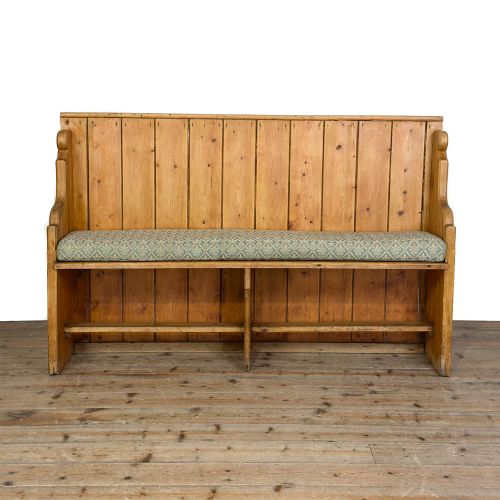
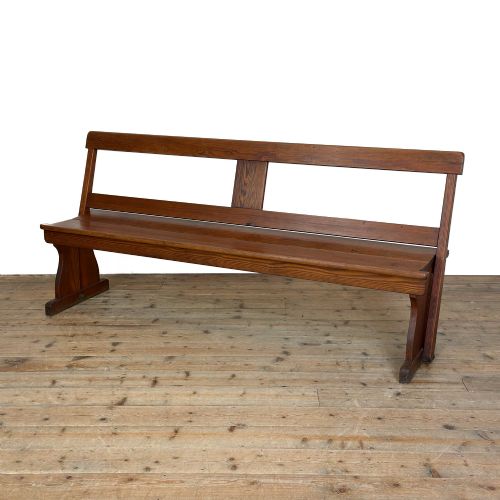
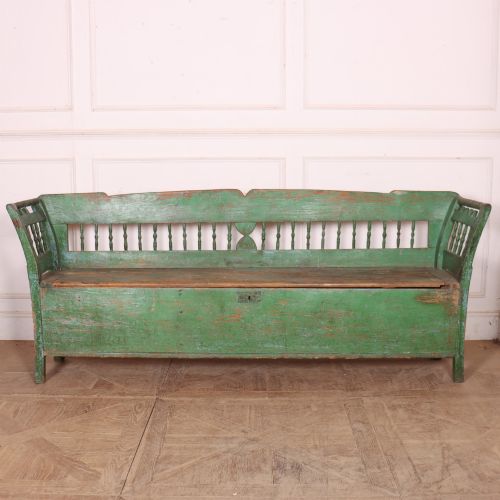
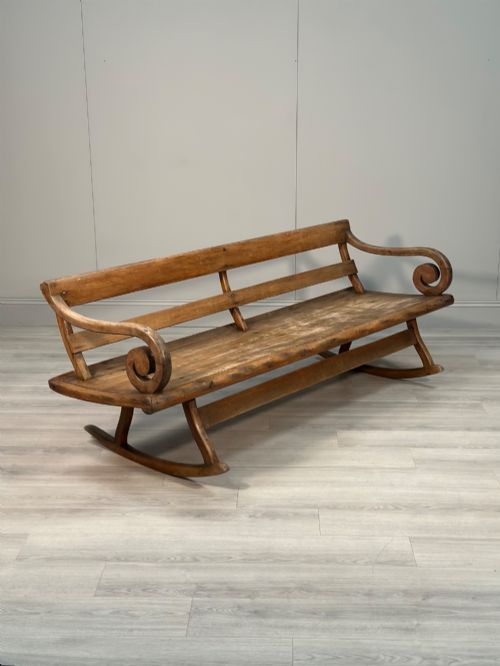
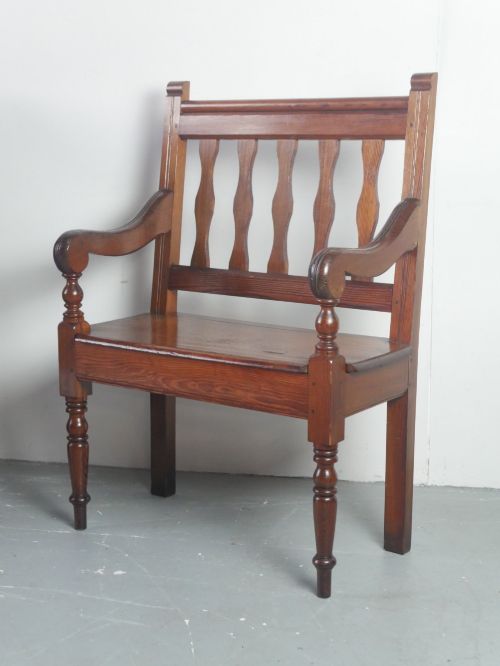
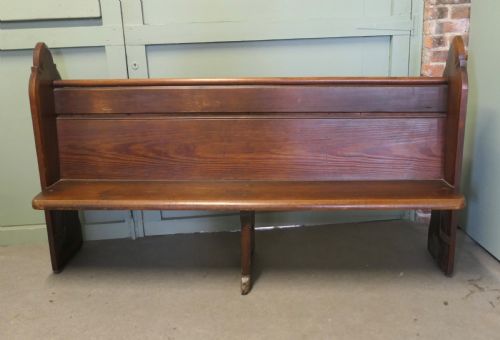
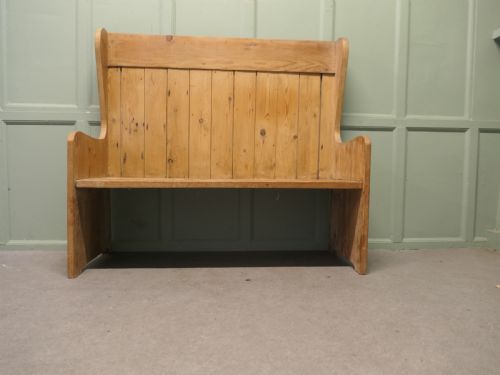
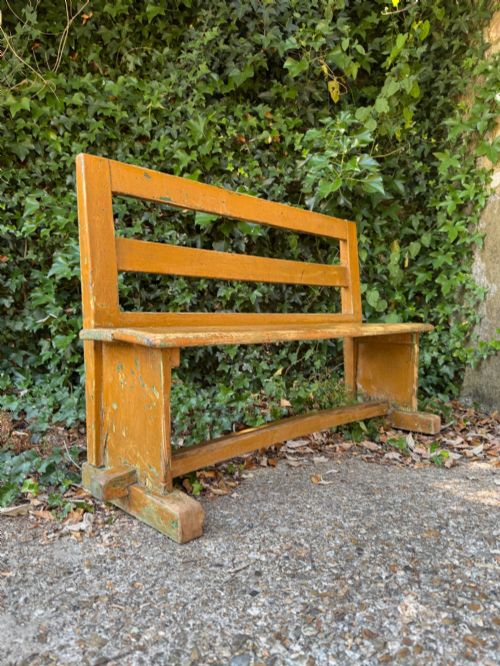



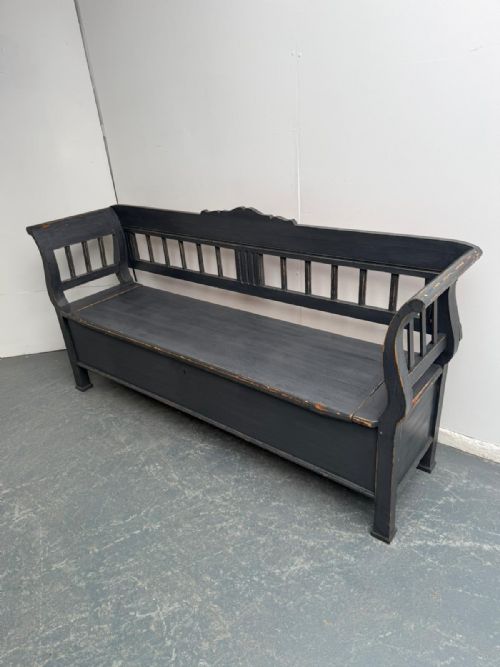
Vintage Pine Settle
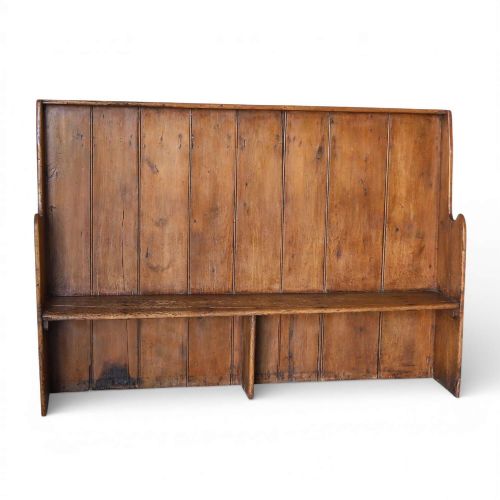
A vintage pine settle brings robust country utility and high-backed warmth to a hallway or kitchen.
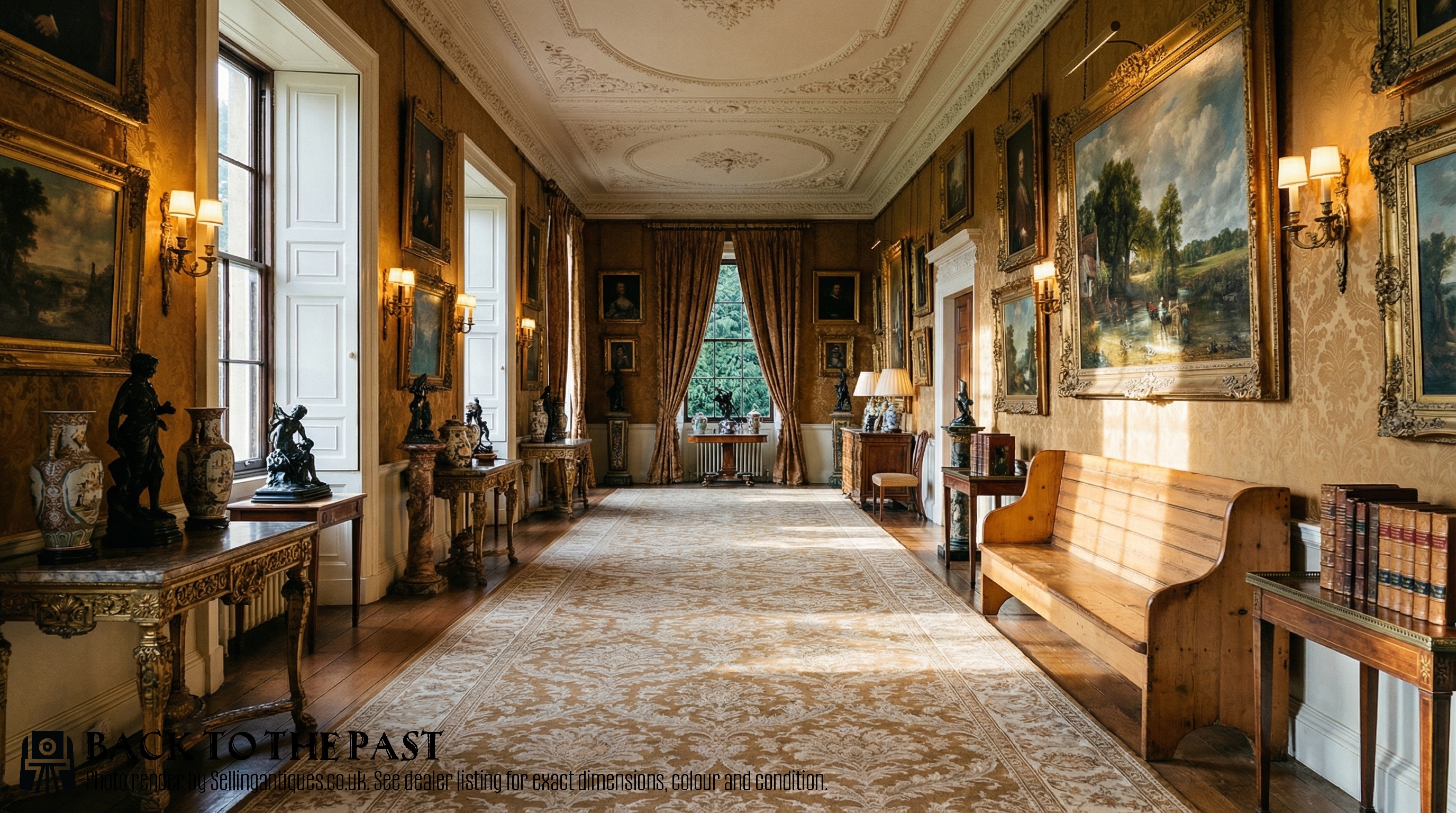
Vintage Pine Settle
When you search for a vintage pine settle, you encounter sturdy wooden seating designed to block draughts in farmhouses, taverns and churches. These pieces span the Georgian, Victorian and Edwardian eras, with many examples originating from English, Hungarian and Scandinavian country traditions.
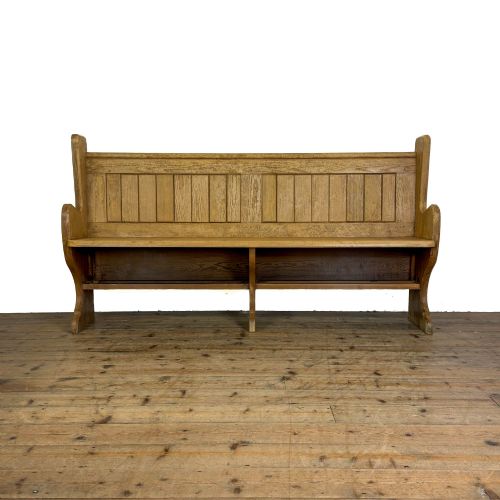
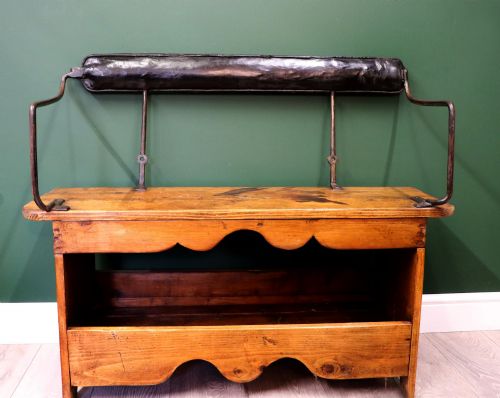
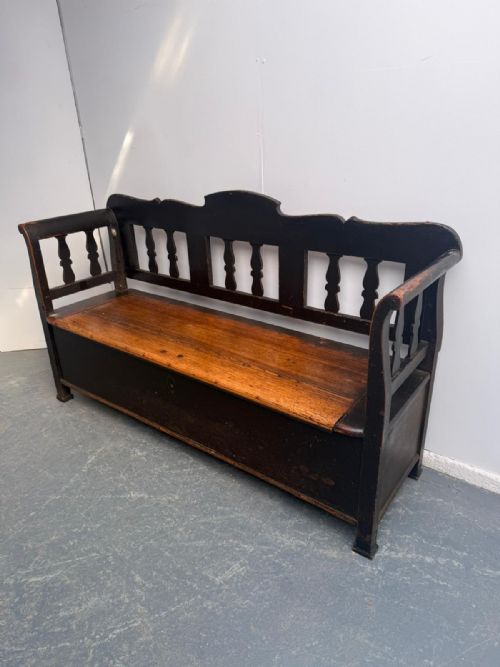
The most common forms on this page include high-back settles with integrated storage boxes, church pews, flip-over chapel benches and rustic hall seats. They range from simple plank construction to painted folk art finishes.
Origins vary widely, encompassing English tavern benches, Austrian farmhouse seats and large painted Swedish storage benches. Each piece reflects the utilitarian needs of domestic and public spaces from past centuries.
Materials and Construction
These items rely on solid pine, including pitch pine, fashioned into board and panel structures designed to withstand heavy daily use. Makers frequently employed traditional joinery alongside iron fixings for structural stability.
Surfaces receive varied treatments, spanning from natural wax and honey brown patina to layers of blue, black, grey or cream paint. Some examples incorporate added upholstery materials such as leather and leatherette on seats or backs.
The inventory spans the Georgian, Victorian, Edwardian periods alongside unspecific nineteenth-century dates.
Assessing Quality and Character
Quality rests upon the integrity of the timber, the honesty of the construction and the retention of original surface treatments like historic paint or deep patinated wax. Pieces that maintain their structural soundness without heavy timber replacement command greater respect.
The distinction between a humble utility bench and a finer regional folk art piece lies in the subtlety of the proportions, the charm of turned spindles and the undisturbed wear of age across the pine boards.
The Vintage Pine Settle Glossary
- Settle
- A wooden bench with a high back, solid arms and often a box seat below. It was traditionally placed near a hearth to shield occupants from cold draughts.
- Box settle
- A form of bench featuring a hinged seat that lifts to reveal storage space underneath. This dual purpose made it essential for small domestic interiors.
- Patina
- The surface sheen and colour acquired by wood through decades of handling, polishing and exposure to light. It serves as a visual indicator of age.
- Pew
- A long bench with a back, commonly found in churches and chapels. Many examples utilise sturdy pine and straightforward joinery.
- Folk art
- Decorative design and craftsmanship rooted in regional tradition rather than academic fine art. Painted Hungarian and Swedish benches often display these distinct vernacular styles.
Vintage Pine Settle: Frequently Asked Questions
What is a pine settle?
A pine settle is a traditional wooden bench featuring a high back and solid arms designed to keep out cold draughts in older homes and taverns.
Many versions also include a hinged seat that opens to reveal a box for storing household goods.
How do I use a settle today?
These benches fit naturally in hallways, large kitchens and dining areas where they provide substantial seating and discreet storage.
Their high backs also create a visual partition in open-plan rooms or long corridors.
Are these benches original period pieces?
The listings include pieces dating from the eighteenth, nineteenth and early twentieth centuries originating from various European countries.
Construction details, timber shrinkage and surface wear help identify their age and regional origins.
What is the difference between a settle and a pew?
A settle typically includes solid wooden sides and a high back intended for domestic comfort near a fire, along with optional box storage.
A church pew is generally an open-ended bench designed for communal seating in religious buildings.