


Vintage Persian Rug Cushion
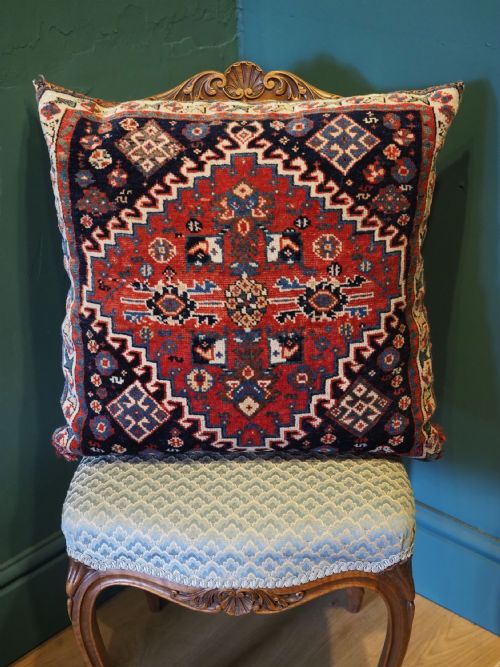
These vintage persian rug cushion pieces bring genuine nomadic textile history into everyday seating, offering rich tribal patterns and deep wool pile.
Vintage Persian Rug Cushion
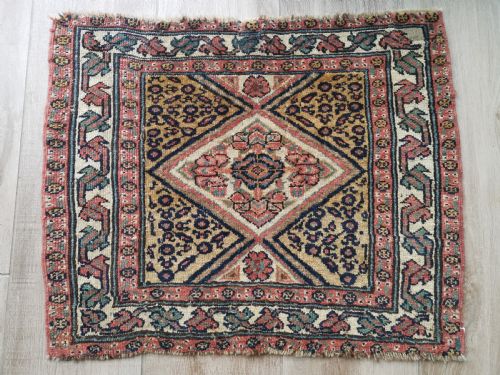
A vintage persian rug cushion repurposes authentic tribal weaving into functional home textiles, transforming antique saddle bags, storage bags, and rug fragments into scatter cushions and pillows. These items derive from nineteenth and early twentieth century nomadic and village traditions across Persia, utilising genuine tribal formats.
The most common forms on this page stem from specific tribal groups such as the Qashqa'i, Afshar, Baluch, Kurdish, and Bakhtiari. Buyers encounter transformed bag faces, half saddle-bags, and flatwoven kilims adapted into cushions with either original or complementary textile backs.
These textiles represent practical items made by nomadic weavers, repurposed to suit modern interiors while retaining their original regional motifs and structural integrity. Each piece displays the distinct hand of a tribal weaver working within traditional village environments.
Materials and construction methods
Weavers constructed these pieces using hand-spun wool and cotton foundations, frequently incorporating goat hair for added durability along the edges and structural load points. The pile wool, where present, exhibits high lanolin content due to traditional processing methods.
Colour derives from natural dyes and vegetable colourants, creating nuanced tonal variations across the field and borders over decades of oxidation and light exposure. Flatweave techniques like kilim and soumak alternate with knotted pile construction depending on the specific tribal origin.
Geographic origins range from Fars and Kerman to the Chahar Mahal valley in western Persia.
Factors of quality and distinction
Quality rests upon the fineness of the weave, the clarity of the tribal motifs, and the integrity of the surviving textile structure. Pieces retaining their original plain weave backs or complete bag faces command greater interest among purists.
The vibrancy and depth of the natural dyes separate standard examples from exceptional ones, with luminous wool quality elevating the visual impact of designs such as boteh or geometric medallions.
The Vintage Persian Rug Cushion Glossary
- Bag face
- The decorative front panel of a nomadic storage bag or saddle-bag. This panel typically displays the primary geometric or figural design of the piece.
- Tacheh
- A traditional woven wheat-sack or storage container produced by pastoral tribes in western Persia. These large utilitarian pieces are frequently adapted into cushions.
- Soumak
- A flatweave technique utilising a wrap-and-weft patterning method that creates a durable, textured surface without a knotted pile.
- Boteh
- An ancient motif resembling a stylized almond, leaf, or flame shape. This pattern appears frequently across Afshar and other tribal rug designs.
- Kilim
- A tapestry-woven flat textile lacking a pile. These pieces rely on interlocking weft threads to form crisp geometric patterns.
Vintage Persian Rug Cushion: Frequently Asked Questions
Are these cushions made from authentic antique rugs?
The pieces utilise authentic nineteenth and early twentieth century tribal textiles, including antique bag faces and rug fragments.
Craftsmen adapt these genuine woven artefacts into cushions, preserving the original wool and natural dye work.
How do I care for a vintage wool cushion?
Wool naturally resists dirt and moisture due to residual lanolin in the fibre.
Gentle surface cleaning or professional textile maintenance preserves the natural dyes and hand-spun structure.
What tribes produced these textile cushions?
Makers include nomadic and village groups such as the Qashqa'i, Afshar, Baluch, Kurdish, and Bakhtiari.
Each tribe employs distinct geometric vocabulary, colour palettes, and weaving structures specific to their region.
What is a saddle bag face?
Nomadic groups used paired bags strapped over animals for transport and storage.
The decorative front panel, or bag face, survived while structural backs often wore away, leaving intricate panels suitable for cushion conversion.