




Antique Qashqai Khorjin
These antique qashqai khorjin are nomadic woven wool transport bags from south-west Persia that bring bold tribal geometry and rich natural dyes into modern interiors.
Antique Qashqai Khorjin
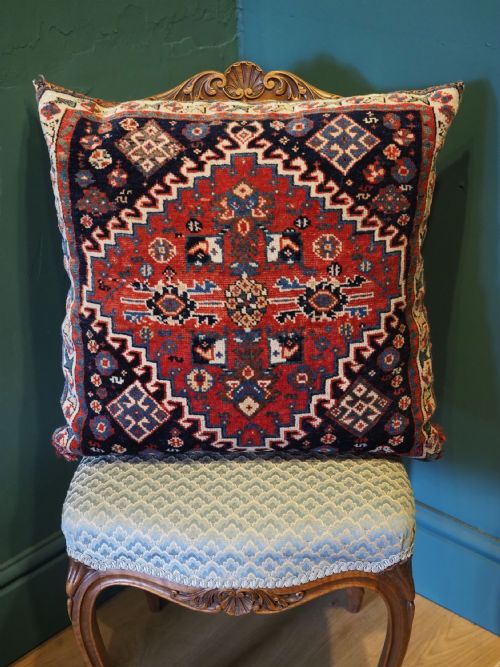
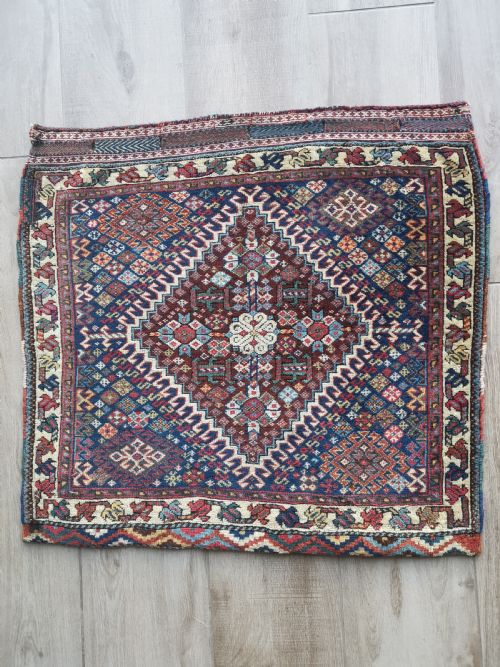
An antique qashqai khorjin is a traditional double saddlebag woven by tribal nomads in the Fars province of Persia. Buyers exploring this page will encounter complete pairs with plain weave backs alongside individual bag faces adapted into cushions or small rugs.
The surviving pieces span the late nineteenth century and the early twentieth century, originating from specific tribal groups such as the Darrehshuri and Ard Kapan. They served a practical nomadic purpose for carrying possessions during seasonal migrations before finding appreciation as collectible tribal textiles.
How they were made
These textiles rely entirely on hand-spun wool for both the foundation and the pile, utilising natural dyes derived from local plants and minerals to achieve lasting colour. The weavers employed hand-knotting techniques alongside flatweave structures to create durable storage containers designed to withstand hard nomadic use.
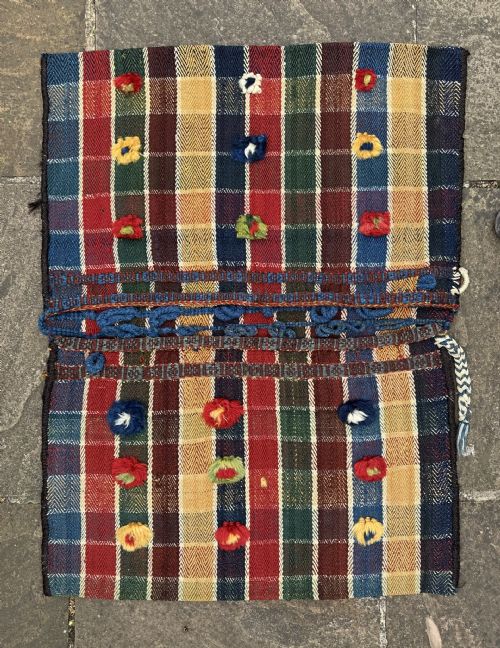
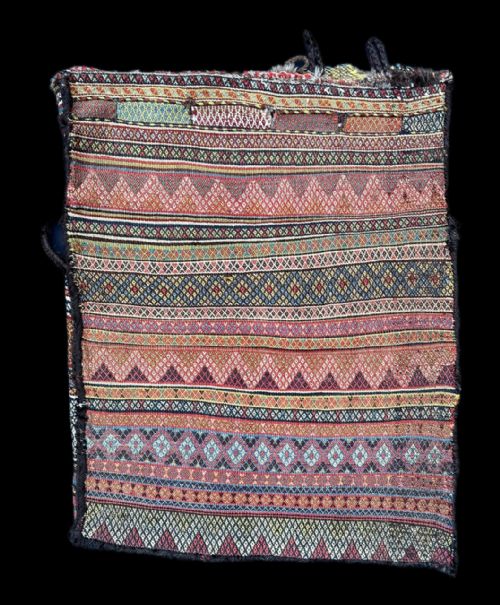
The construction typically pairs a dense pile face featuring geometric motifs with a sturdy plain weave back or decorative reverse. This combination of materials gave the bags the flexibility and strength needed for life on horseback or camelback.
Nomadic weavers occasionally hid small personal symbols or accidental asymmetries in their geometric grids, ensuring no two bags ever matched completely.
What varies in quality
Quality in these tribal pieces rests upon the fineness of the wool and the tightness of the knotting, which dictates the clarity of the geometric design. Superior examples display a dense, precise handle where the weaver's skill allows intricate medallions and motifs to appear sharp and well-defined.
The vibrancy and depth of the natural dyes also separate standard examples from the finest work. Pieces that retain rich, saturated colour variations across the wool show superior dye-pot chemistry and careful material selection by the nomad weaver.
The Antique Qashqai Khorjin Glossary
- Khorjin
- The traditional Persian term for a double-sided saddlebag used by nomadic tribes for transport and storage. These textile containers are woven in one piece and then folded.
- Bag face
- The decorative piled front section of a saddlebag. Many surviving examples have been separated from their plain weave backs to be used as small decorative mats or cushions.
- Fars province
- The historical region in south-west Persia where the Qashqai confederation and allied tribes traditionally migrated and produced their distinctive weaving.
- Plain weave
- A flat, unpiled textile technique often used for the backs and connecting strips of saddlebags to reduce weight and bulk while maintaining structural strength.
- Natural dyes
- Colourants sourced from plants, insects and minerals rather than synthetic compounds. They provide the varied, harmonious tones seen in older nomadic work.
Antique Qashqai Khorjin: Frequently Asked Questions
What is a qashqai khorjin?
A qashqai khorjin is a traditional double-sided transport bag woven by the nomadic tribes of south-west Persia. These pieces combine practical storage functions with intricate geometric tribal artistry.
They were essential items for nomads on the move, used to carry personal possessions during seasonal migrations across the Fars province.
How were these saddlebags used?
Nomadic families draped these heavy wool bags across horses, camels or donkeys to transport household goods, grain and belongings. Their sturdy construction protected the contents during long journeys.
Today, complete sets and individual bag faces are collected as textile art, used as small floor rugs, or mounted and displayed on walls.
How do I care for a tribal wool bag?
Keep these wool and natural dye textiles out of direct, harsh sunlight to prevent the colours from fading over time. Gentle vacuuming without a rotating brush roll helps remove dust.
For thorough cleaning, consult a specialist in antique oriental rugs rather than attempting home washing, as natural dyes can react unpredictably to moisture.
Are these pieces complete pairs?
Some listings feature complete pairs of saddlebags joined by their original connecting web, sometimes retaining their plain weave backs. Others consist of single bag faces that were separated long ago.
Many single faces were historically adapted into cushions or small mats after the connecting panels wore out from heavy nomadic use.