


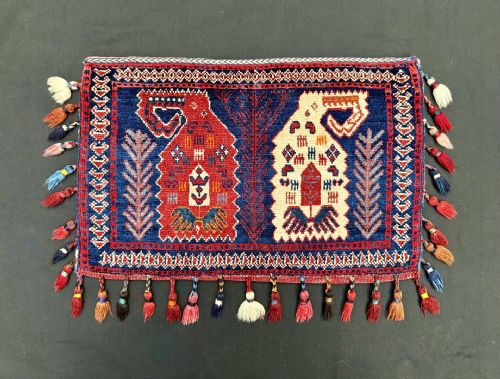

Antique Tribal Saddle Bags
Antique tribal saddle bags are woven nomadic carriers fashioned into practical pouches, offering authentic regional artistry and enduring textile heritage.
Antique Tribal Saddle Bags
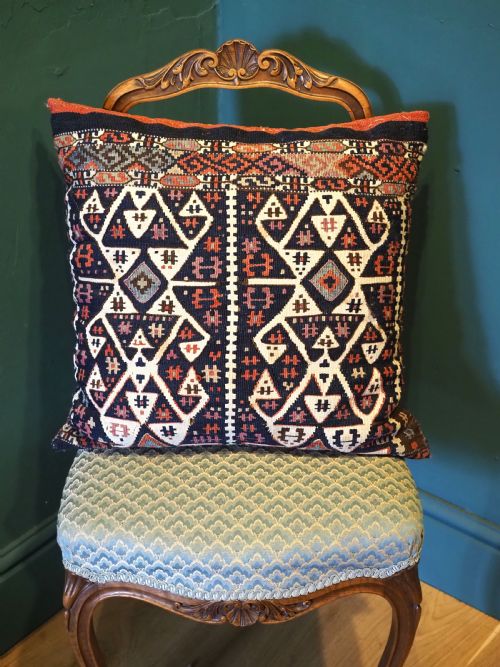
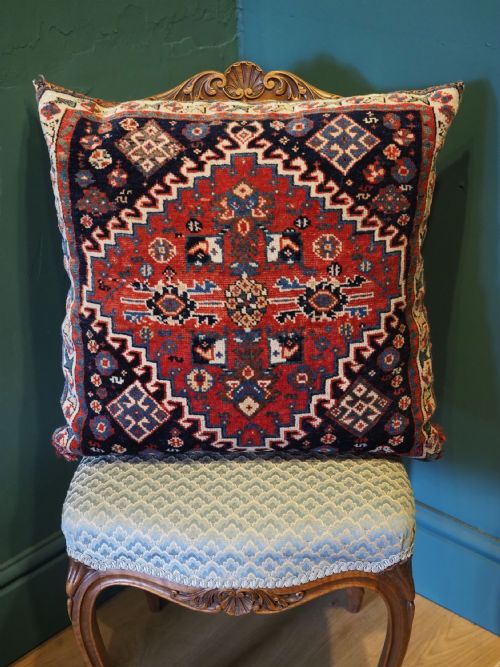
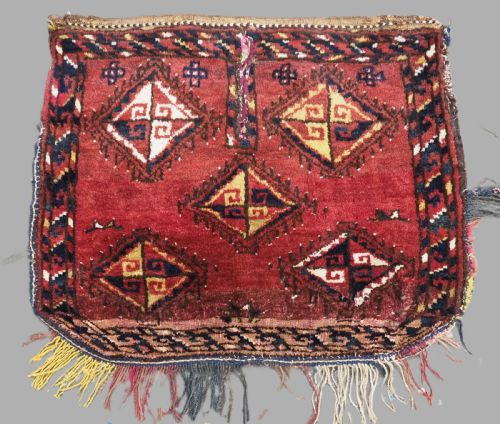
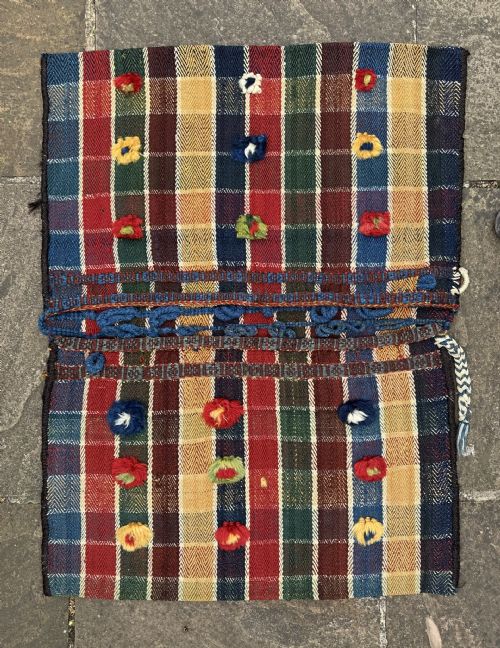
These woven carriers originate from nomadic and village weavers across Persia, Anatolia, the Caucasus, and Central Asia during the nineteenth and early twentieth centuries. When searching for antique tribal saddle bags, buyers encounter complete paired pouches, individual faces, and flattened fragments adapted into cushions.
The material record demonstrates diverse regional weaving traditions, from Shahsavan sumac pieces to Afshar and Qashqa'i nomadic examples. Many survivors represent single bag faces or complete sets featuring flat-woven backs alongside pile-woven fronts designed for daily utility.
Materials and construction
Nomadic weavers utilised hand-spun wool and natural dyes to create durable structures capable of withstanding rigorous travel on pack animals. Cotton foundations and occasional metal or leather elements appear alongside traditional wool components.
Techniques vary between intricate pile weaving and flat-woven kilim or soumak structures, producing crisp geometric patterns and textured surfaces. The interplay of hand-spun fibres and natural dyestuffs yields the characteristic handle observed in these historical textiles.
Current listings feature pieces spanning the nineteenth and early twentieth centuries, constructed from hand-spun wool and natural dyes.
Evaluating quality and execution
Quality rests upon the fineness of the knotting or weave density, the clarity of the design motifs, and the saturation of the natural dyes. Superior examples exhibit exceptional wool lustre and precise execution within complex tribal patterns such as boteh or gul designs.
The survival of original plain weave backs or complete paired pouches elevates the historical integrity of a piece. Artisanal skill shines through balanced proportions and harmonious colour palettes unique to specific tribal groups.
The Antique Tribal Saddle Bags Glossary
- Khorjin
- The traditional Persian term for a double-sided saddle bag utilised by nomadic tribes for transport and storage.
- Soumak
- A flat-weave technique involving wrap-threads that produce a textured, durable surface without pile.
- Chuval
- A large Turkmen storage bag face often distinguished by repeated gul motifs.
- Gul
- A repeating medallion or floral-like octagonal stamp characteristic of Central Asian tribal weaving.
- Heybe
- The Turkish designation for a traditional saddle bag or woven carrier.
Antique Tribal Saddle Bags: Frequently Asked Questions
How were these bags originally used?
Nomadic families slung these woven pouches across horses, donkeys, or camels to transport personal possessions during seasonal migrations.
Once settled in camp, the bags served as domestic storage containers within tents for bedding, clothing, and household provisions.
How do I live with them at home?
Many collectors mount individual bag faces on walls as textile art or place complete pairs across benches and low furniture.
Cut-down fragments converted into cushions offer a practical way to incorporate historical nomadic woolwork into everyday seating arrangements.
How do I tell different tribal groups apart?
Weavers from distinct regions utilised specific structural techniques, such as Shahsavan soumak work or Afshar boteh motifs.
Palettes and border designs also provide clues to origin, connecting pieces to specific tribes across Persia, the Caucasus, and Anatolia.
Are complete sets difficult to find?
Complete pairs featuring both original pouches and their connecting web are scarcer because bags were frequently separated over time.
Many surviving examples exist as single faces or halves due to the practical wear and tear of nomadic life.