


Hand Woven Wool Khorjin
These hand woven wool khorjin bring genuine nomadic character into a room through authentic tribal weaving.
Hand Woven Wool Khorjin
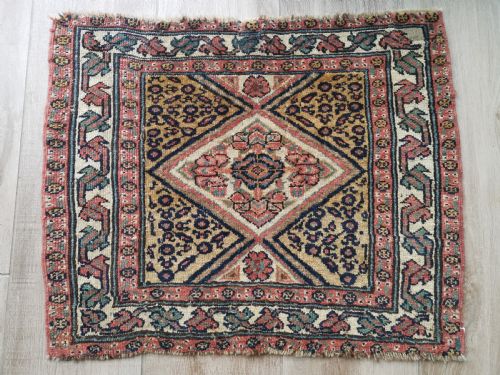
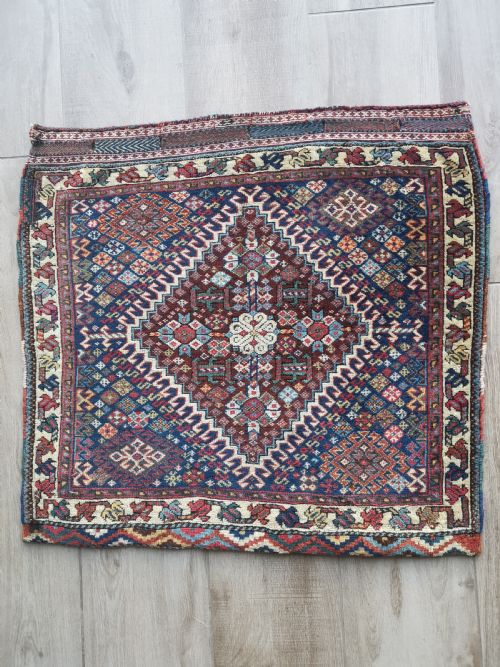
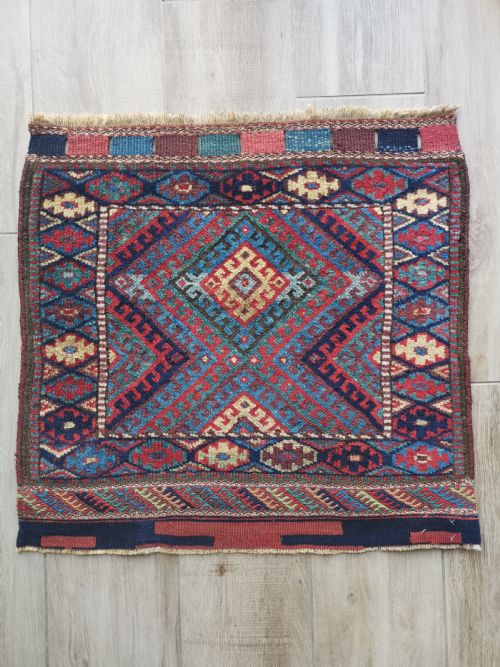
A hand woven wool khorjin is a traditional tribal bag or saddlebag face originating from Persian nomadic groups. When you search for this phrase, you encounter textiles that served practical transport functions across arid landscapes before entering the decorative sphere.
Most examples found here date from the nineteenth century into the early twentieth century. These pieces typically present as complete bag faces, half saddlebags, or finished cushions created by weavers working within specific tribal confederations.
The regional origins span across south west Persia, Luristan, Fars, and Kerman provinces. Tribal groups such as the Qashqai, Afshar, Jaf, Khamseh, Baluch, and Luri produced these utilitarian objects using traditional geometric and medallion formats.
What varies in quality
The refinement of the wool and the handling of natural dyes dictate the visual depth of a piece. Lustrous, luminous wool demonstrates superior material selection during the preparation stage.
Structural integrity depends on the density of the hand knotting and the precision of the tribal motifs. Greater care in execution separates standard utilitarian items from exceptional examples of nomadic weaving.
Nomadic weavers frequently added tiny protective amulets or deliberate minor flaws into their rugs to ward off the evil eye.
Afshar Nomads·Jaf Kurd·Luri Tribes·Bakhtiari
The Hand Woven Wool Khorjin Glossary
- Khorjin
- A traditional Persian saddlebag used by nomadic tribes for carrying possessions during migration. These items were woven in pairs and joined by a central web.
- Bagface
- The decorative front panel of a saddlebag that survived after the connecting web and back panel wore away or were separated. Many surviving examples are mounted or used as small decorative mats and cushions.
- Natural Dyes
- Colourants derived from plant, insect, and mineral sources prior to the widespread introduction of synthetic alternatives. They produce complex tones that age with considerable character.
- Hand-Spun Wool
- Wool yarn processed manually using a drop spindle rather than industrial machinery. This method creates irregularities in thickness that contribute to the texture of tribal weaving.
- Tribal Confederations
- Large socio political alliances of nomadic and semi nomadic groups in Persia. Each group maintained distinct design repertoires and weaving techniques.
Hand Woven Wool Khorjin: Frequently Asked Questions
What is a khorjin used for?
Nomadic tribes utilised these double-sided bags loaded across pack animals to transport personal belongings, grain, and household goods during seasonal migrations.
Today, collectors repurpose surviving bag faces as small wall hangings, table mats, or small floor cushions within domestic interiors.
How do I identify a bagface?
A bagface displays the finished pictorial or geometric weaving from the front of the original saddlebag, often showing cut or finished edges where the connecting web was removed.
These panels concentrate the finest tribal patterns into a compact square or rectangular format designed to be viewed from the front.
Are natural dyes used in these?
Traditional Persian nomadic weaving from the nineteenth and early twentieth centuries relied primarily on natural dye sources extracted from local plants and minerals.
These colourants yield subtle variations across the wool surface that mature with exposure to light and handling over decades.
How do I care for a tribal bag?
Gentle surface cleaning and regular light vacuuming without a rotating brush help maintain the integrity of the hand-spun wool pile.
Keep these textiles away from direct sunlight and damp environments to preserve the natural dyes and fibres.