
Vintage Painted Storage Chest
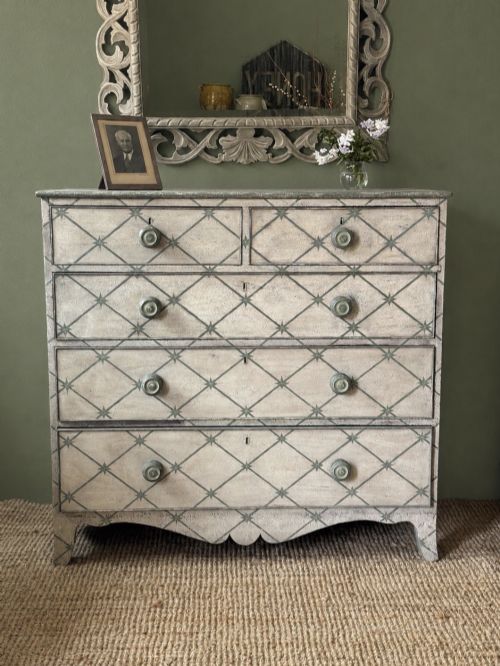
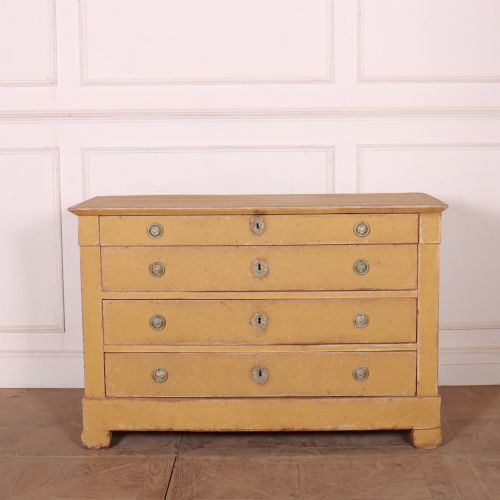
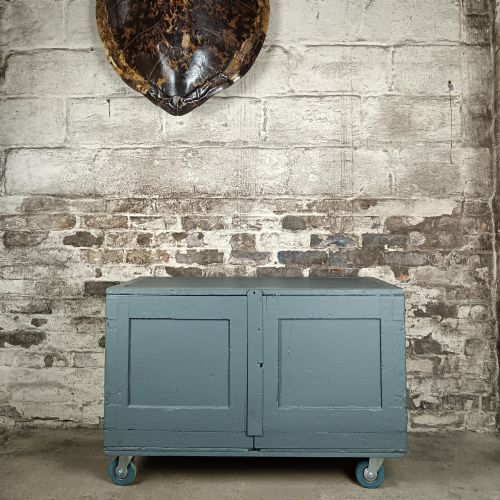
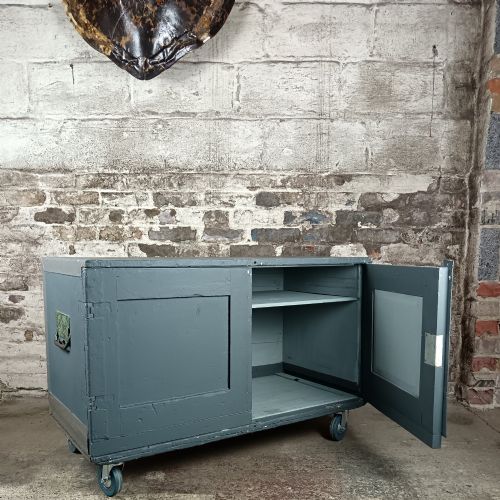
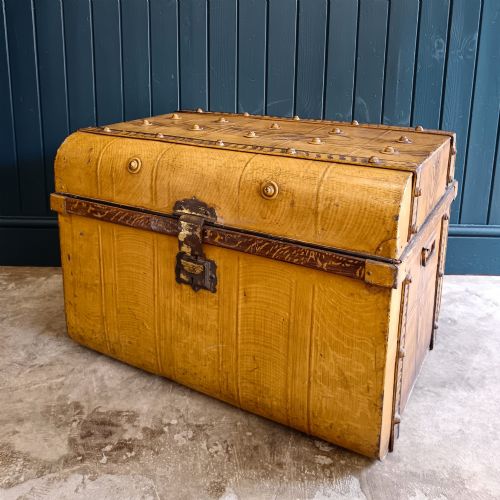
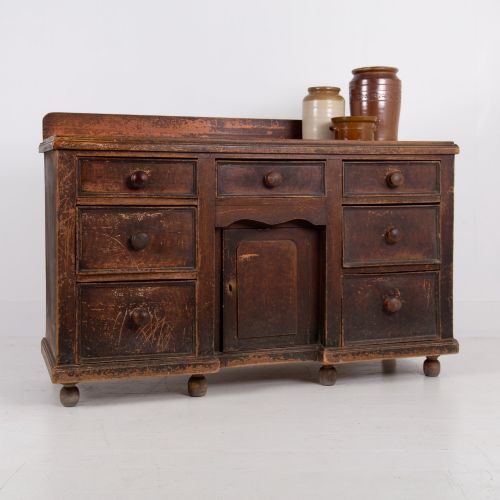
A vintage painted storage chest provides practical storage wrapped in folk art character and the rich patina of age.

Vintage Painted Storage Chest
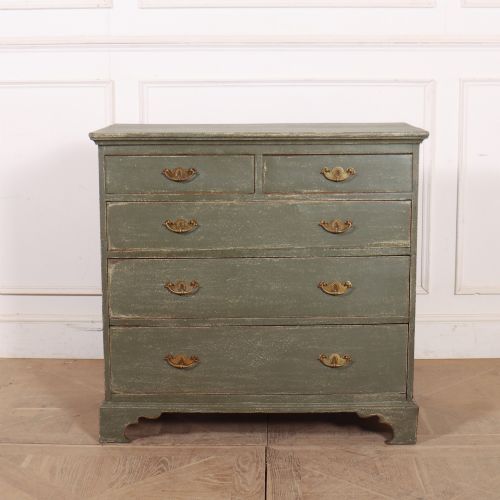
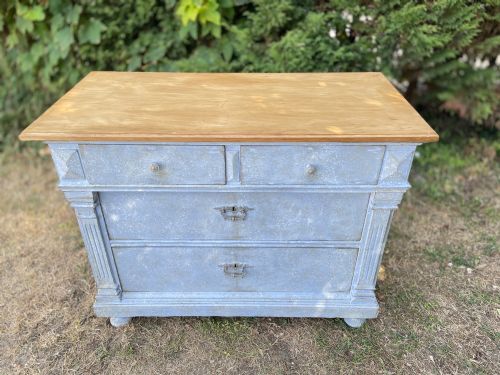
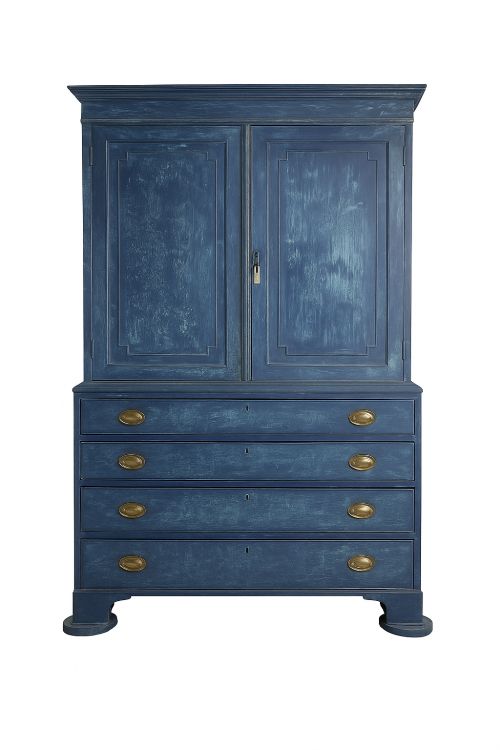
A vintage painted storage chest encompasses utilitarian pieces built to hold linens, garments, and household goods while displaying decorative surface treatments. You encounter formats ranging from simple hinged trunks and blanket boxes to multi-drawer chests, commodes, and tall linen presses.
The pieces span several centuries and geographic origins, drawing heavily on English, French, Scandinavian, and Hungarian traditions. Examples include simple pine boxes alongside sophisticated serpentine commodes and campaign military packing cases.
Makers utilised native softwoods and hardwoods, applying layers of pigment that survived through generations of domestic use. The resulting objects function equally well as focal points in modern hallways or as practical storage in bedrooms.
Materials and Construction
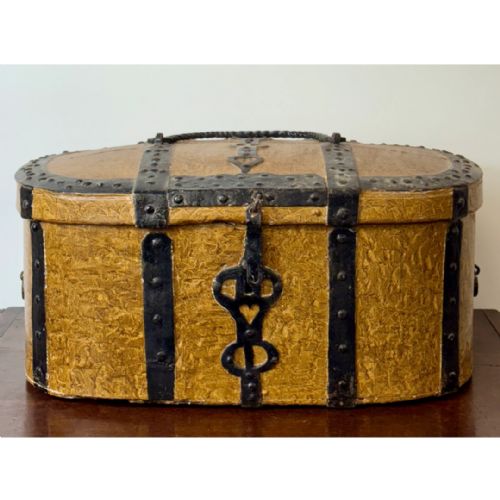
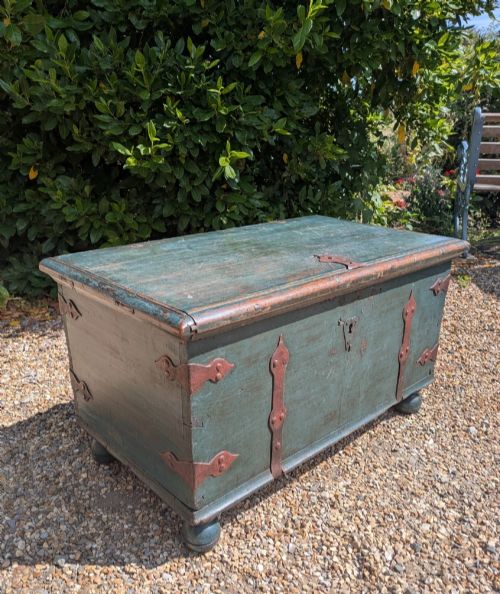
Makers built these storage pieces predominantly from solid pine and other utilitarian woods, joined with dovetails, pegged mortise and tenon joints, or hand-forged iron strapwork for structural strength. Metal elements such as brass handles and iron hinges secure heavy lids and drawers against daily wear.
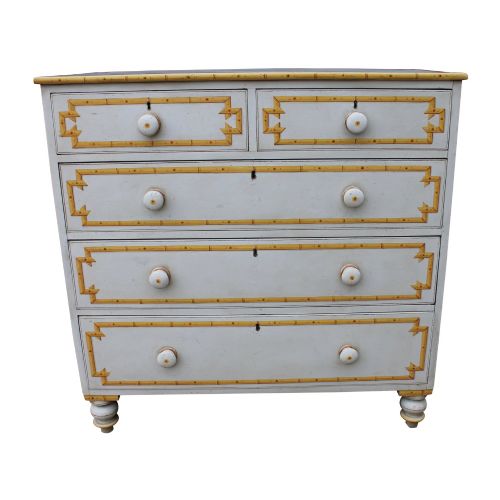
Surfaces received layers of oil- or water-based paint, sometimes finished with scumble glazes to imitate finer timbers or decorated with hand-painted floral motifs and Chinoiserie lacquer. Original paint surfaces survive through careful maintenance, retaining the distinctive brushmarks and wear patterns of the workshop.
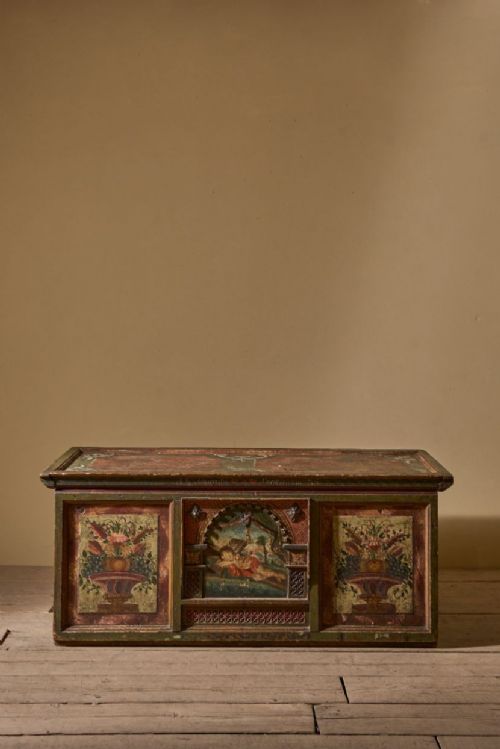
An eighteenth-century trunk holds the quiet secret of a Hungarian farmer's Sunday best.
Judging Quality
Quality rests primarily in the integrity of the original painted surface and the degree to which a piece retains its early or untouched finish. Surfaces that show honest, period wear without unsympathetic stripping or modern repainting command greater interest from collectors.
Construction standards also separate standard utilitarian items from exceptional pieces, visible in tight joinery, original ironwork, and sophisticated decorative painting styles such as folk art or Chinoiserie.
Sir Clough Williams-Ellis·Edwards and Roberts
The Vintage Painted Storage Chest Glossary
- Scumble
- A translucent layer of dark paint manipulated over a lighter ground to simulate the grain of more expensive woods. This decorative technique appears frequently on nineteenth-century household cupboards and pine trunks.
- Commode
- A low chest of drawers or cabinet originating in French furniture design. These pieces often feature serpentine fronts or decorative commode commode painting.
- Linen Press
- A tall piece of furniture featuring upper cupboard doors enclosing sliding trays, placed above a base of wider drawers. They served to store household linens flat before the widespread adoption of fitted wardrobes.
- Strapwork
- Flat bands of metal, often iron or brass, fixed across the exterior of a trunk or chest to reinforce the joints and corners. Hand-forged examples add structural strength alongside decorative texture.
- Chinoiserie
- European imitation and adaptation of Chinese artistic traditions, characteristically featuring gilt motifs on a dark lacquered background. This style appears on cupboards and cabinets from the early twentieth century.
Vintage Painted Storage Chest: Frequently Asked Questions
What is a vintage painted storage chest?
A vintage painted storage chest is a historic wooden container, trunk, or multi-drawer cabinet finished with decorative paint rather than clear polish. These pieces served practical domestic functions for holding clothes, blankets, and household supplies.
Today, they function as decorative furniture that brings colour and texture into interior spaces while offering concealed storage.
How do I care for original paint?
Caring for historic painted surfaces requires keeping the furniture away from direct sunlight and fluctuating humidity, which can cause wood to warp and paint to flake. Dust the surface gently with a dry, soft cloth without applying commercial polishes or harsh chemical cleaners.
Allowing the piece to acclimatise to a stable indoor environment helps preserve the fragile layers of historic pigment.
Where were these chests made?
These storage pieces originate from various European and international workshops, reflecting regional preferences in form and decoration. Listings include examples from English country workshops, French provincial towns, and Scandinavian or Hungarian rural communities.
Each regional tradition employed distinct colour palettes and construction methods native to local materials.
How do I date a painted chest?
Dating relies on examining construction techniques, joinery methods, hardware, and the composition of the underlying wood and paint layers. Hand-cut dovetails, hand-forged iron strapwork, and specific nail types point towards earlier nineteenth-century or eighteenth-century origins.
Stylistic cues such as Regency proportions or Victorian cabinet forms also help narrow down the period of manufacture.